
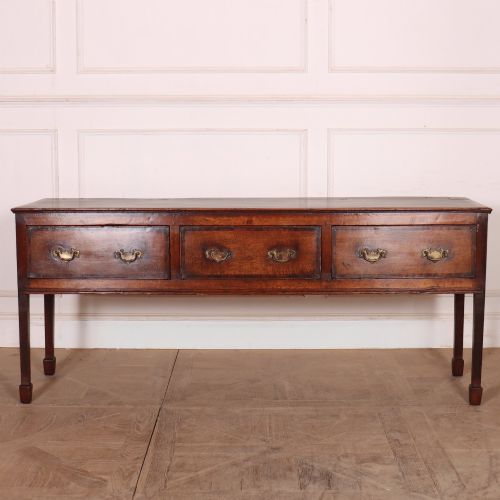

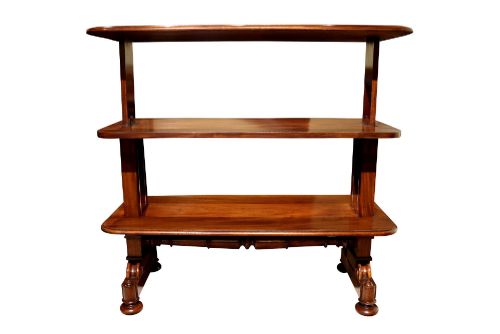
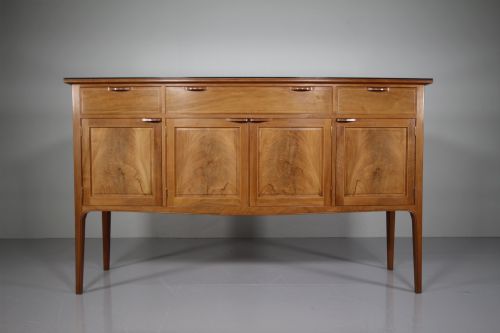
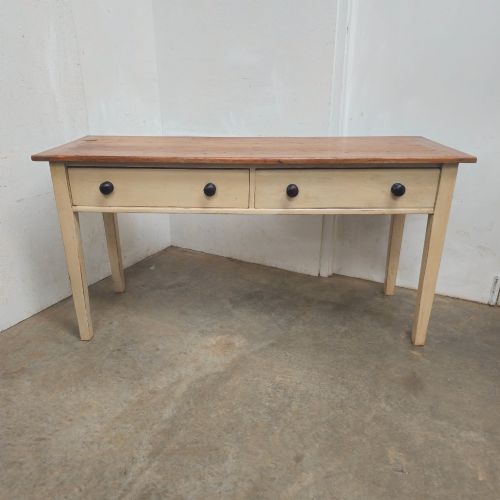
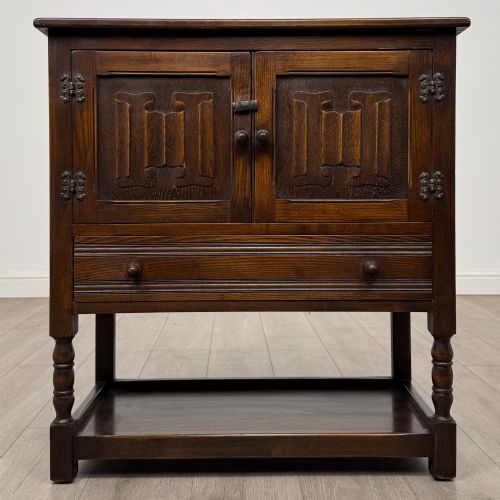
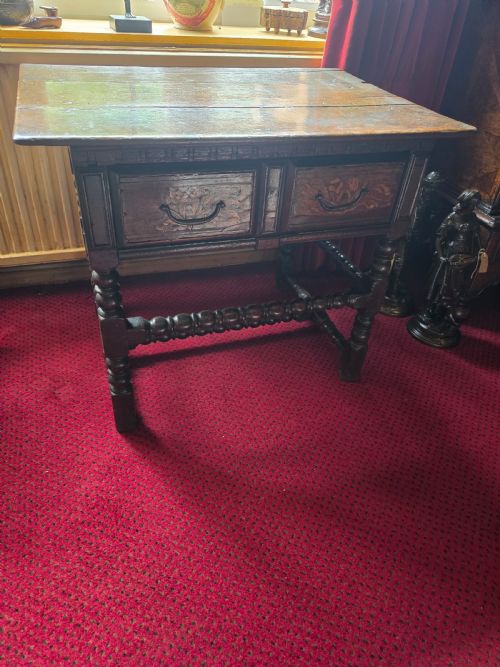
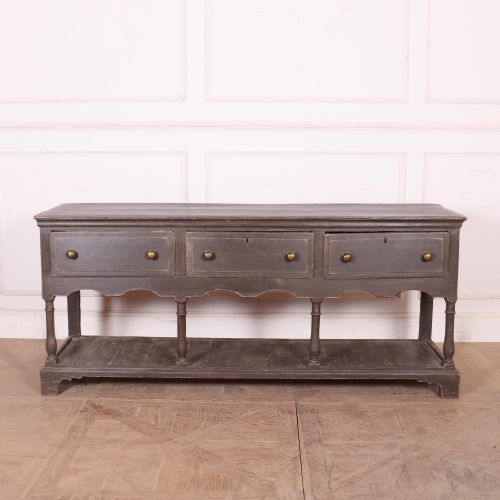
Antique English Server Table
An antique english server table brings sturdy period craftsmanship and generous utility to a dining room or hallway.
Antique English Server Table
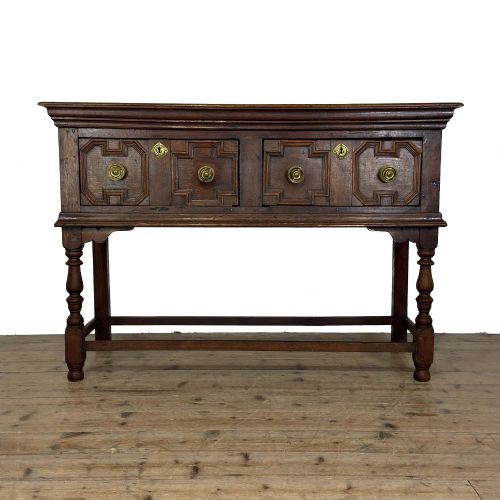
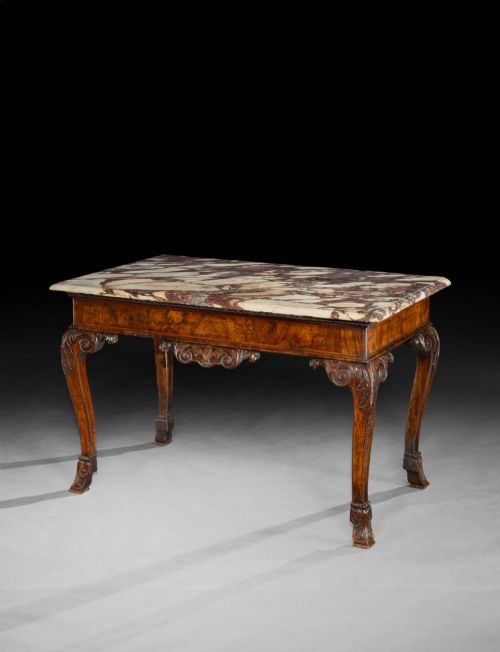
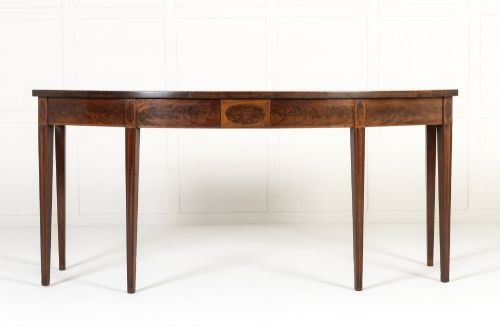
An antique english server table encompasses forms designed for food preparation and hospitality, drawing from centuries of British domestic life. Buyers look for substantial surfaces and practical storage designed to serve dining spaces.
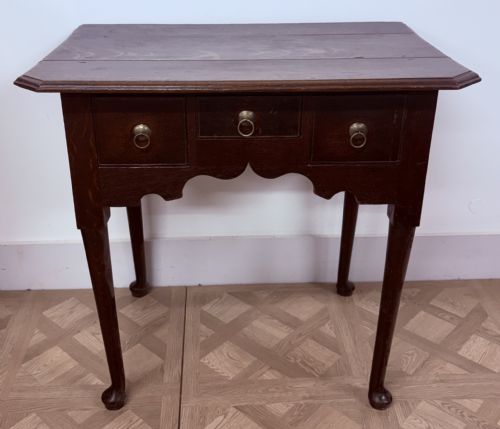
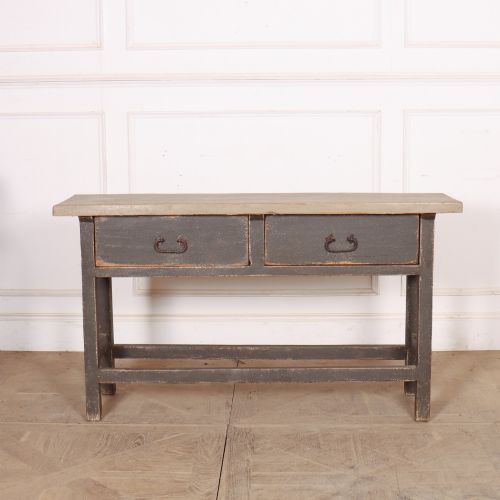
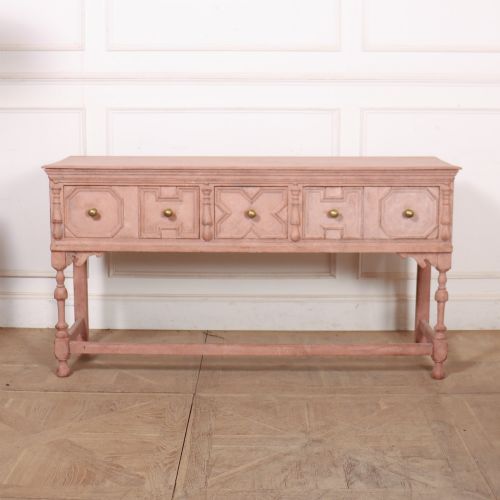
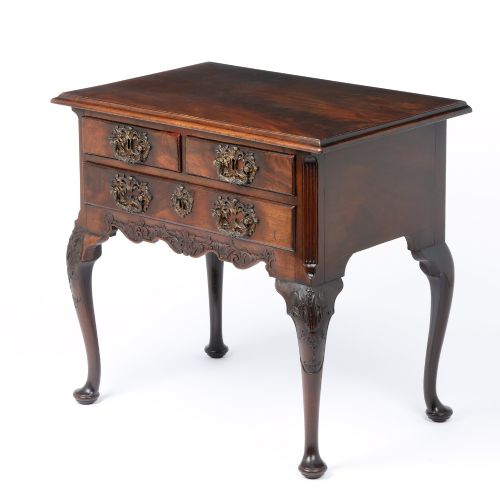
The pieces appearing on this page span several distinct centuries, including 17th Century, 18th Century, and 19th Century examples. Alongside dedicated serving tables, related forms like dresser bases, side tables, and potboard servers frequently represent the category.
Regional vernacular styles like English Country sit alongside formal Georgian and Jacobean designs. This variety allows collectors to match a piece to specific architectural interiors.
Materials and Construction
Timbers such as oak, mahogany, and elm form the structural backbone of these tables. Cabinetmakers utilised dense hardwoods to withstand heavy daily use in kitchens and dining halls.
Surface treatments range from natural waxed finishes to painted wood, often applied in later centuries. Brass hardware, including handles and finials, provides functional contrast against the timber bodies.
Early domestic spaces relied on sturdy timber tables that doubled as food preparation stations and dining surfaces, absorbing centuries of family meals.
Judging Quality and Character
The integrity of the timber and the depth of the original patina set superior examples apart. Tables retaining their early boards and honest surface wear demonstrate greater authenticity.
Proportion and execution of detail define the higher tiers of the range. Nicely turned legs, crisp mouldings, and integrated potboards indicate deliberate workshop design rather than basic utility.
Charles Fox II
The Antique English Server Table Glossary
- Potboard
- An open lower shelf fitted beneath a dresser base or serving table. It provided practical storage for heavy ceramic and metal kitchen vessels.
- Lowboy
- A small table with drawers, typically raised on four legs, serving various domestic functions. These compact pieces often overlap with side table categories.
- Dresser base
- The lower section of a kitchen or dining room dresser, featuring drawers and cupboards. They served as primary food preparation and serving surfaces.
- Cabriole leg
- A furniture leg that curves out and then in, mimicking animal limbs. This form became prominent during the Georgian period.
- Elm
- A tough, interlocking timber frequently utilised for furniture frames and table boards. Its grain resists splitting under heavy pressure.
Antique English Server Table: Frequently Asked Questions
What is an antique english server table used for?
These tables provide extended surface space for presenting food, holding tableware, or displaying decorative items in a dining room. Historically, they managed the heavy demands of meal service before fitted kitchens existed.
Today, they function as sideboards, console tables, or focal points in hallways and living spaces, offering practical storage through integrated drawers and lower shelves.
How do I identify a Georgian server table?
Georgian pieces typically display refined proportions, often constructed from mahogany or oak with specific stylistic markers like cabriole legs or bracket feet. The joinery reflects the formal cabinetmaking standards of the 18th century.
Examining the secondary timbers inside drawers and the hand-cut nature of the joints helps confirm the period of manufacture.
What is the difference between a server and a dresser base?
A server generally prioritises a clean top surface and straightforward under-tier storage for staging meals. Dresser bases historically included multiple rows of working drawers designed for cutlery and linens.
In modern usage, the terms often overlap because both furniture types fulfill similar functional roles in dining and living areas.
Are these tables suitable for everyday modern use?
Sturdy hardwood construction allows these tables to handle regular daily activities like holding lamps, books, or serving dishes. The durable timbers withstand normal household environments well.
Protecting the aged surfaces from excessive moisture and direct heat ensures the wood remains stable for continuous daily living.