





Antique English Pottery Animals
These antique English pottery animals bring tactile warmth and character to a room, ranging from playful poodles to stately lions.
Antique English Pottery Animals
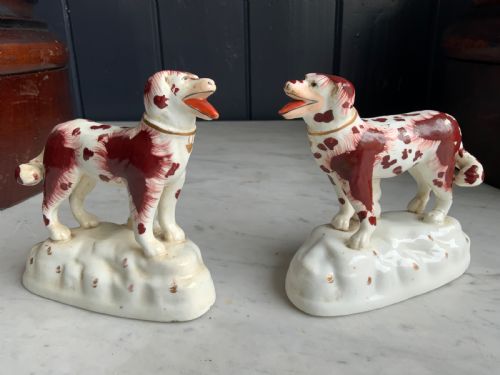
When you search for antique English pottery animals, you encounter a delightful menagerie of earthenware and pearlware figures that populated nineteenth-century mantelpieces. These charming ceramics depict dogs, lions, leopards, sheep, cows, and zebras modelled for display rather than utility. The figures most commonly met on this page originate from the Victorian era and earlier Regency periods, capturing domestic pets and exotic beasts alike.
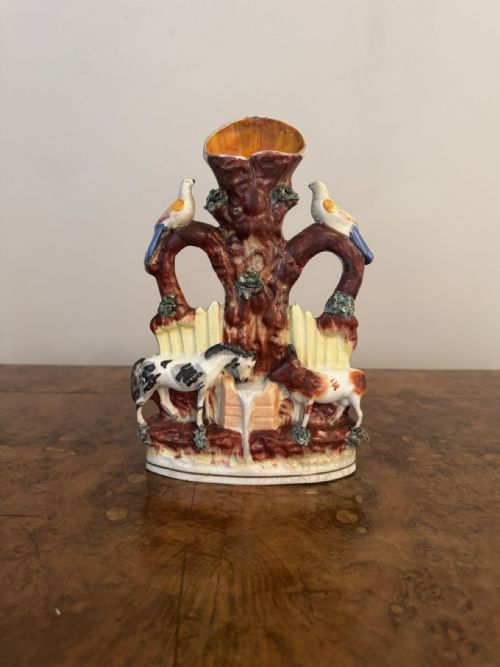
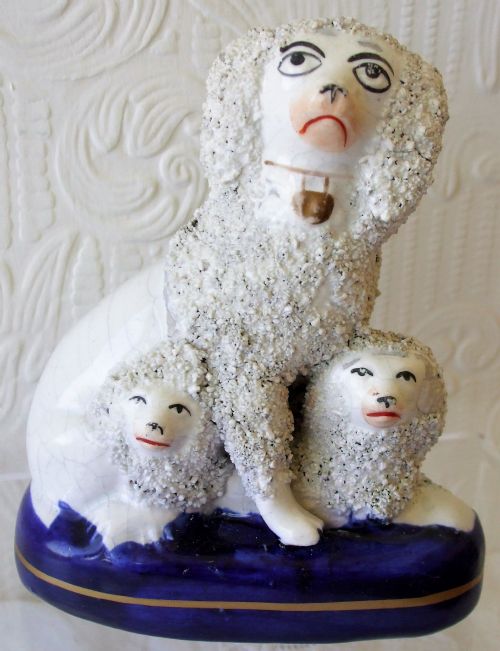
Makers shaped these decorative figurines and spill vases to sit symmetrically in pairs or stand alone as mantel ornaments. Staffordshire potteries dominate the selections, alongside pieces from Rockingham and Doulton Lambeth. Collectors find both single subjects and elaborate figure groups, such as poodles with pups or hunting dogs with hare.
How they were made
Potters shaped these earthenware, pearlware, and porcelain figures using moulds before applying lead glazes, enamels, and occasional gilt highlights. Many nineteenth-century examples receive rich treacle glazes that impart a deep, glossy brown finish to lions and cats.
Surface decoration relies on hand-painted enamel colours and underglaze details that bring expression to the eyes and coats of dogs, sheep, and zebras. Stoneware pieces utilise specialised firing techniques to achieve durable, vitrified bodies suitable for tygs and vessels.
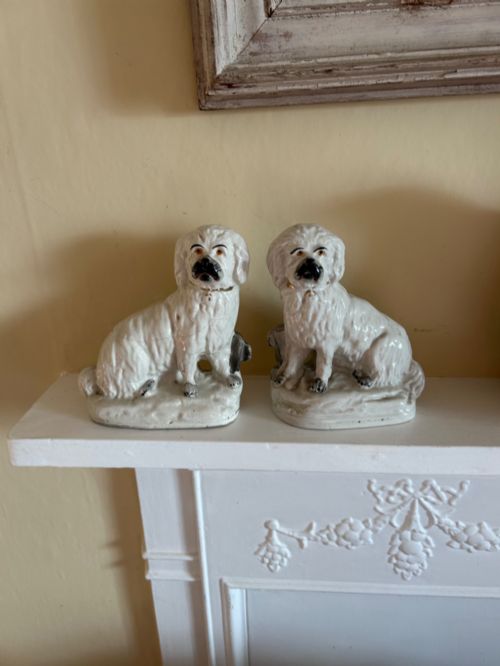
Nineteenth-century potters painted spaniels with soulful eyes and gilt chains, immortalising lapdogs as permanent mantelpiece sentinels.
What varies in quality
The depth and richness of the glaze further separate the ordinary from the exceptional, particularly in treacle glazed pieces where tone and gloss vary significantly. Better examples retain their original pairing and show minimal rubbing to surface gilt and enamel highlights.
Doulton Lambeth·Royal Worcester·Rockingham Pottery·Walton
The Antique English Pottery Animals Glossary
- Pearlware
- A refined earthenware developed in the late eighteenth century featuring a subtle blueish glaze pooled in crevices. This material preceded the widespread adoption of standard Victorian white earthenware.
- Treacle glaze
- A dense, dark brown lead glaze that yields a glossy, treacle-like appearance on nineteenth-century ceramic animals. Potters applied this heavily to lions and domestic dogs for a dramatic, reflective finish.
- Spill vase
- A hollow ceramic vessel incorporated into a figure group designed to hold wooden spills for lighting fires. These practical additions often accompany Staffordshire dogs and animals.
- Tyg
- A large drinking vessel fitted with multiple handles for communal passing around a table. Stoneware examples demonstrate specialised salt-glazing and decorative slip work.
- Earthenware
- A porous ceramic body fired at lower temperatures, requiring a vitreous glaze to achieve impermeability. Most nineteenth-century animal figures utilise this accessible and easily moulded clay body.
Antique English Pottery Animals: Frequently Asked Questions
Why were Staffordshire pottery dogs made in pairs?
Potters produced these ceramic dogs in mirror-image pairs to flank the fireplace on either end of a mantelpiece. This symmetrical arrangement suited Victorian interior domestic display.
Matching pairs also provided a balanced visual anchor for clocks and garniture sets placed centrally on the shelf.
How do I distinguish pearlware from later earthenware?
Pearlware exhibits a characteristic pale bluish tinge where the lead glaze pools in recesses or around the base. This refined body bridges the gap between earlier creamware and standard nineteenth-century white earthenware.
Later Victorian pieces utilise a brighter white glaze without the distinctive blue tint found on Regency examples.
What is the purpose of a spill vase figure?
Spill vases combined decorative animal sculpture with a functional holder for slender tapers used to transfer flames from hearth to candle. Households utilised these wooden spills before safety matches became common.
The hollow cylindrical section stands behind or beside the animal, blending utility with domestic ornament.
Are these ceramic animals glazed inside?
Many hollow figures receive a partial glaze or remain unglazed on the interior depending on whether they needed to hold water or liquid. Spill vases require internal glazing to contain moisture from damp spills.
Solidly modelled figures and decorative ornaments lack internal glaze entirely due to their closed construction.