





Antique English Joint Stool
An antique English joint stool provides sturdy timber seating and low side surfaces rooted in seventeenth-century domestic history.
Antique English Joint Stool
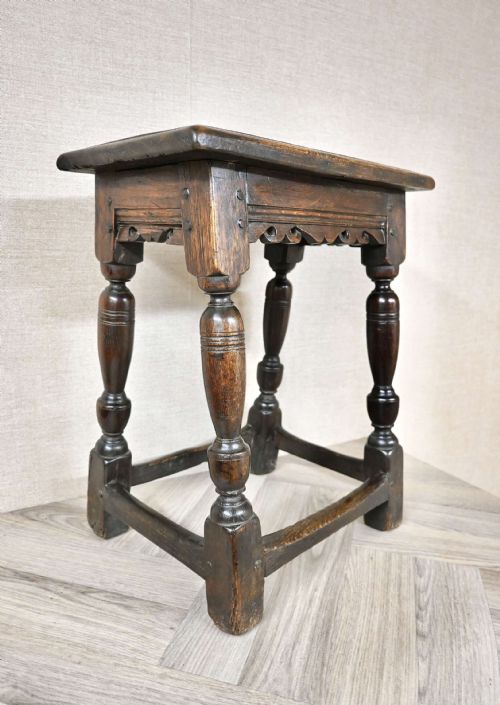
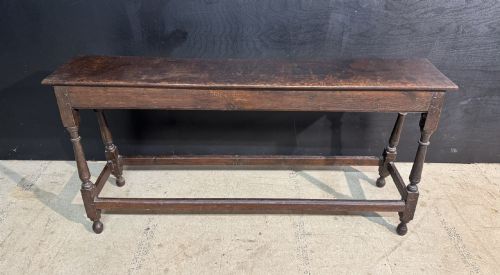
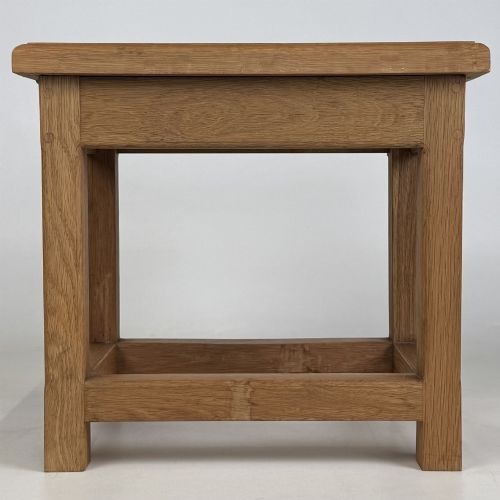
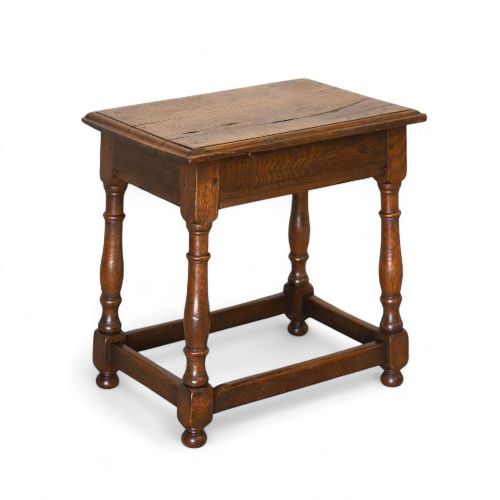
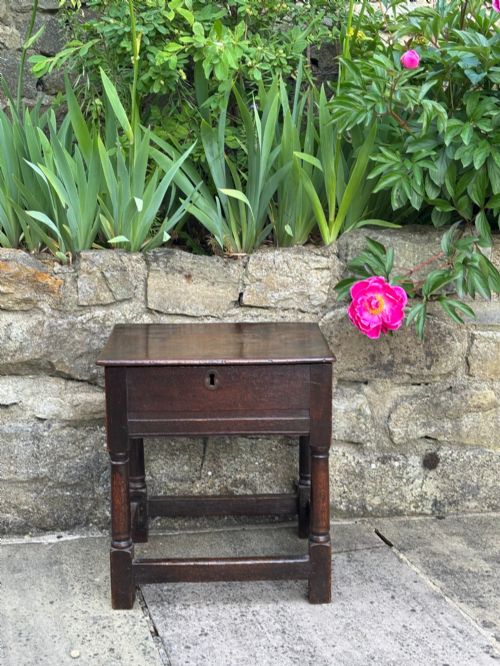
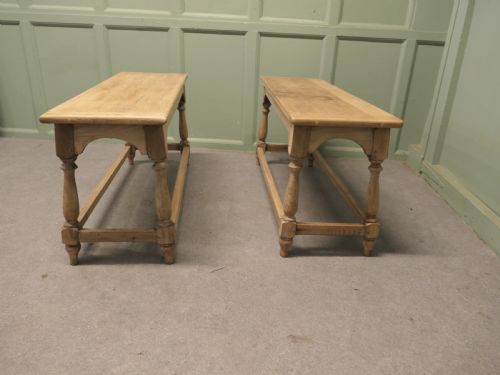
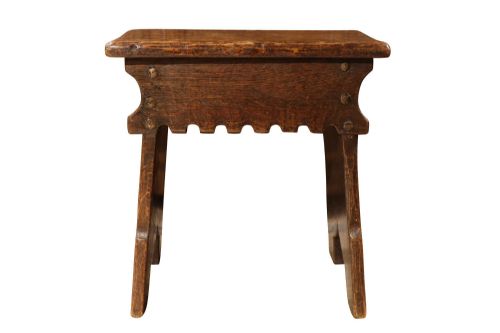
When you search for an antique English joint stool, you encounter pieces constructed from heavy native hardwoods designed for domestic utility. The form includes standard four-legged seats, box stools with storage compartments, long benches, and occasional low tables.
The material record spans authentic seventeenth-century examples alongside later nineteenth-century revivals and early twentieth-century copies. Oak dominates the selection, joined by yew wood, fruitwood, and bleached oak variations across Georgian, Victorian, and Edwardian periods.
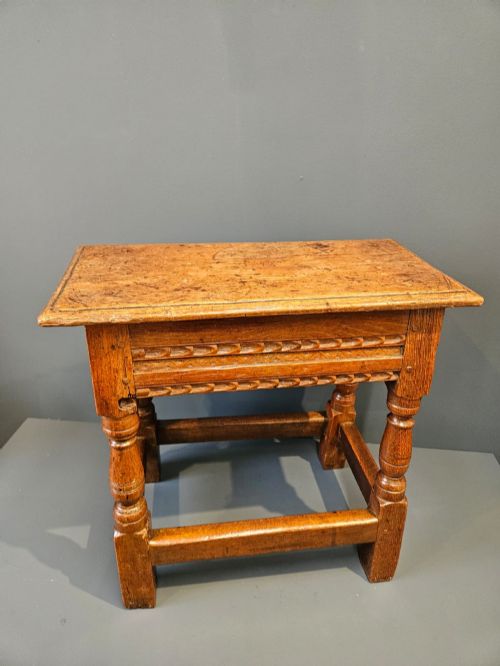
Provincial workshops produced these items alongside formal interpretations, resulting in simple plank tops and occasional carved friezes. Many function today as side tables, bedside surfaces, and occasional stands rather than primary seating.
Materials and Construction
Makers utilised solid English oak, yew wood, and fruitwood, often employing pegged construction to secure the joints without extensive metal fasteners. Iron brackets, brass accents, and metal studs appear occasionally, while leather provides upholstery on specific locker and box seats.
Carpenters formed the frames using mortise and tenon joints, creating the rigid structure that gives the joint stool its name. Surfaces show plain hand-finished timber, simple edge mouldings, and occasional low relief carving on the rails.
Smaller pieces occasionally emerge designed specifically as miniature doll and teddy bear joint stools.
Grading Quality
Quality rests in the proportion of the timbers, the integrity of the pegged joints, and the retention of original surface colour. Pieces retaining their early patination and untouched structural timber sit at the upper end of the scale.
Later revival pieces from the Victorian and Edwardian eras vary according to the density of the wood used and the fidelity of the joinery to seventeenth-century methods. Substantial timber thickness and minimal timber replacement separate better examples from routine workshop copies.
The Antique English Joint Stool Glossary
- Joint stool
- A wooden stool constructed with mortise and tenon joints rather than turned legs driven into a solid seat. This technique creates a rigid, four-legged frame capable of heavy domestic use.
- Box stool
- A variant form featuring an enclosed storage compartment beneath the seat lid. These pieces sometimes double as small tables or locker seats.
- Pegged construction
- A method of securing joints by driving wooden pins through the mortise and tenon connection. This traditional technique prevents the joint from pulling apart under weight.
- Jacobean Revival
- A style popular during the nineteenth and twentieth centuries that mimics seventeenth-century English furniture designs. These pieces often incorporate dark finishes and geometric carving.
- Provincial
- A term describing items made in regional workshops outside major metropolitan centres. Such pieces typically display simpler decoration and robust local materials.
Antique English Joint Stool: Frequently Asked Questions
What is a joint stool?
A joint stool is a heavy wooden seat built with joined framing rather than turned legs inserted into a solid plank. Carpenters constructed them using mortise and tenon joinery secured with wooden pegs.
Historically, households used them for seating at dining tables or as portable surfaces. Their sturdy build allowed them to double as small steps or occasional tables.
How old are these stools?
Authentic examples date from the seventeenth century onwards, with many surviving pieces originating in the Georgian, Victorian, and Edwardian eras. Revival pieces from the nineteenth century frequently copy earlier seventeenth-century styles.
Dates range from the 1600s through to the early twentieth century. Examining the timber shrinkage, joinery methods, and surface wear helps identify the manufacturing period.
How can I use one today?
These pieces function well as compact side tables, bedside stands, or low display surfaces. Their flat wooden tops accommodate lamps, books, and decorative objects.
They also serve as occasional seating in hallways or living spaces. Box stools provide hidden storage inside the compartment beneath the seat.
Are they made of solid oak?
The majority of pieces utilise solid English oak, though some examples feature yew wood, fruitwood, or bleached oak. Makers selected native hardwoods for their strength and availability.
Construction relies entirely on solid timber planks and frames rather than veneers. Iron and brass fittings appear occasionally on specific hardware elements.