
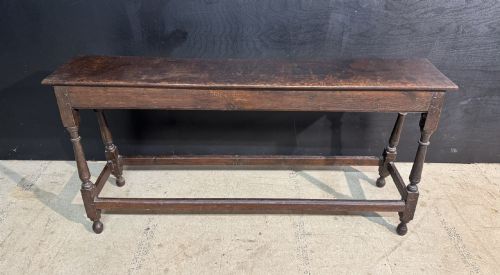
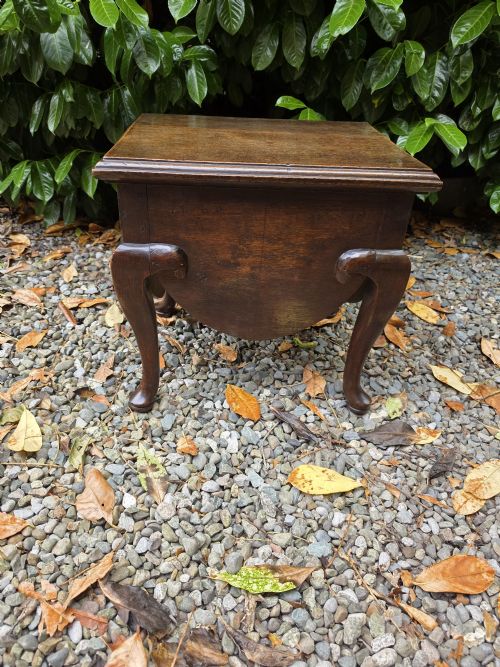

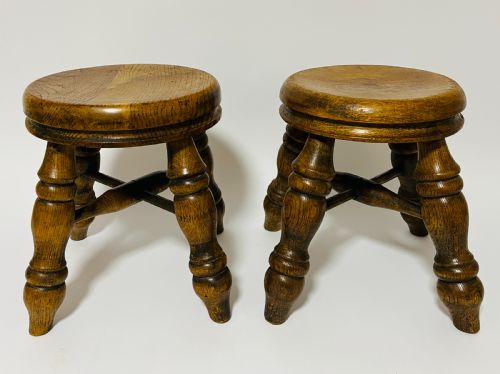


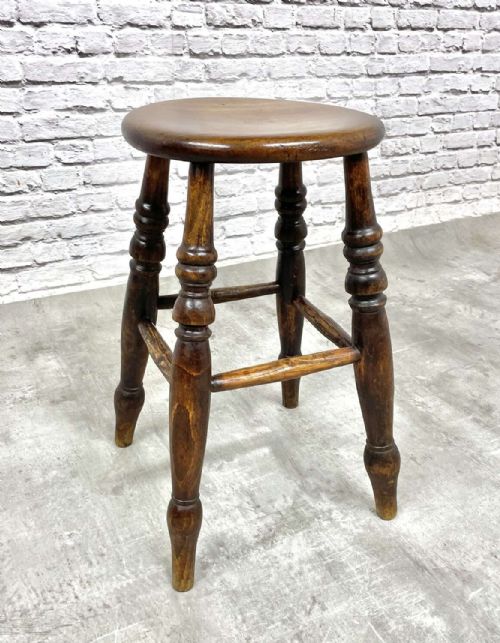


Solid Oak Country Stool
A solid oak country stool brings honest vernacular charm to a room, offering sturdy utility built to last generations.
Solid Oak Country Stool
Buyers browsing this selection encounter pieces spanning the eighteenth and nineteenth centuries, alongside revival interpretations from the early twentieth century. Forms include traditional joint stools and low side tables.
Regional makers utilised accessible local timbers, meaning that while oak predominates, related woods such as elm and ash often appear in similar domestic seating.
Construction and materials
Makers constructed these sturdy pieces using solid timbers like oak and walnut, joined with traditional pegged mortise and tenon joints. This robust framing method ensured the seating could withstand heavy household labour.
Working by hand, craftsmen shaped tops from thick planks of hardwood, sometimes supporting them on turned legs or simpler cabriole supports. Surfaces developed rich patination through decades of use and waxing.
Current listings feature pieces spanning the eighteenth century through to the early twentieth century, constructed from solid oak, elm, walnut, ash, and general hardwood.
Measures of quality
Quality rests in the integrity of the timber selection and the retention of original surface patination. Examples displaying honest wear from long domestic service command greater appreciation than heavily restored pieces.
Proportion and structural balance also dictate distinction, separating utilitarian workshop output from more considered vernacular design. The crispness of hand-cut joints and minimal timber replacement preserve historical authenticity.
The Solid Oak Country Stool Glossary
- Joint stool
- A traditional wooden stool constructed with mortise and tenon joints secured by wooden pegs rather than glue. These sturdy pieces served multiple domestic purposes in early homes.
- Vernacular
- Everyday objects made by local craftsmen for practical use rather than following high-style academic design. Such pieces reflect regional resource availability and traditional woodworking methods.
- Patina
- The deep surface sheen and colour developed by timber over centuries through handling, polishing and exposure to light. It serves as a visual indicator of age and genuine use.
- Cabriole leg
- A furniture leg featuring a double curve, bulging outward at the knee and tapering inward at the foot. This classic shape draws inspiration from animal limbs.
- Mortise and tenon
- A fundamental woodworking joint where a protruding tongue fits tightly into a matching cavity to lock two pieces of timber at a right angle.
Solid Oak Country Stool: Frequently Asked Questions
How do I tell an 18th-century stool from a revival piece?
Examination of the timber movement, tool marks, and peg construction reveals the age of a piece. Earlier examples show hand-riven surfaces and irregular peg placement created by traditional workshop tools.
Revival pieces from the twentieth century often display mechanical sawing marks and uniform assembly methods. Comparing the depth of the patina and the wear patterns helps confirm chronological authenticity.
Can I use an antique joint stool as a daily seat?
These robust items were built precisely for heavy everyday utility and remain remarkably sturdy. Their solid hardwood framing handles regular weight without structural compromise.
Placing felt pads beneath the feet protects fragile flooring and prevents unnecessary stress on the lower stretchers during movement.
What is the best way to clean solid oak furniture?
Maintenance requires only a soft, dry cloth to remove dust and airborne particles. Avoid modern silicone sprays or harsh chemical cleaners that penetrate the historic timber surface.
Applying a traditional beeswax polish occasionally helps nourish the dry grain and preserves the natural lustre of the oak.
Why do some stools feature woods other than oak?
Country makers utilised whatever strong timber grew locally in abundance, leading to the use of elm, ash, and walnut alongside oak. This practical approach meant regional availability dictated the final material choice.
Such timber variations add distinct character and help specialists identify the likely geographical origin of the workshop.