
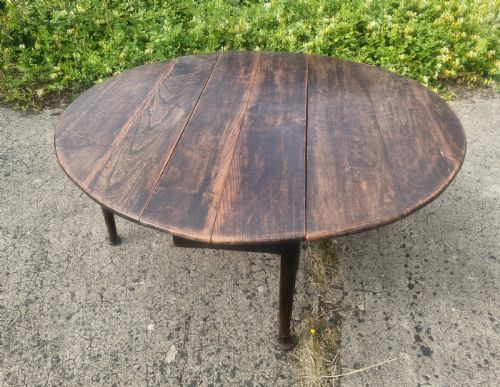


Antique Elm Top Table
An antique elm top table brings timber with a stubborn, interlocking grain and deep warmth straight into a room.
Antique Elm Top Table
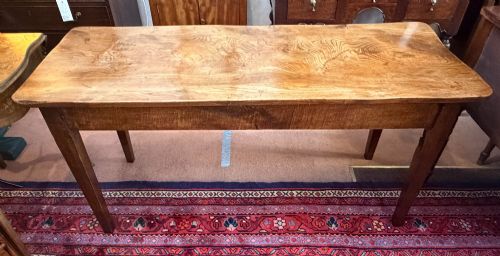
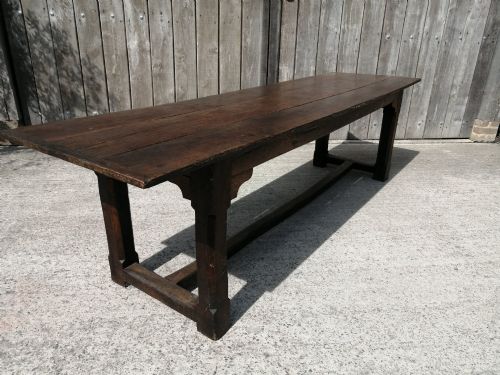
An antique elm top table is a utilitarian surface defined by the distinct grain and rich tone of its primary timber, often paired with oak or pine frames. These surfaces range from expansive refectory dining boards to compact side tables and tripod breakfast pieces.
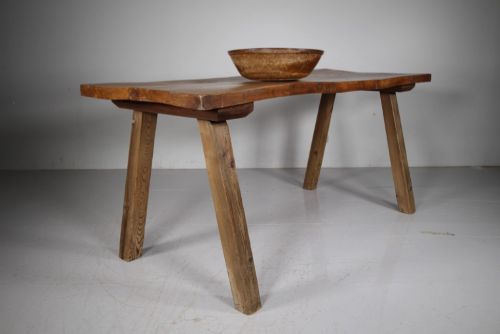
The pieces appearing here span centuries of domestic and provincial use, drawing from 17th-century vernacular traditions up through Georgian and Victorian workshops. English country pieces and French provincial formats dominate the selection, showing heavy two-board or single-plank construction.
Buyers look for these boards to anchor kitchens, dining rooms, and studies with a surface that bears the honest marks of daily labour. The timber resists splitting due to its twisted fibres, making these surviving boards remarkably resilient domestic relics.
Materials and construction
Elm was chosen for table surfaces because its interlocking grain structure makes it exceptionally difficult to split under heavy impact or daily toil. Carpenters frequently matched these tough elm tops with sturdy oak or pine frames, securing them with traditional pegged joints.
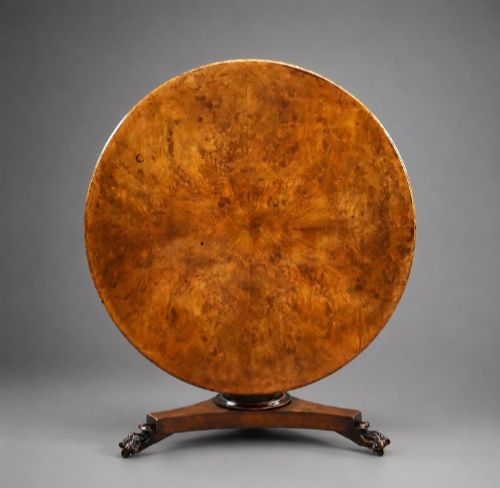
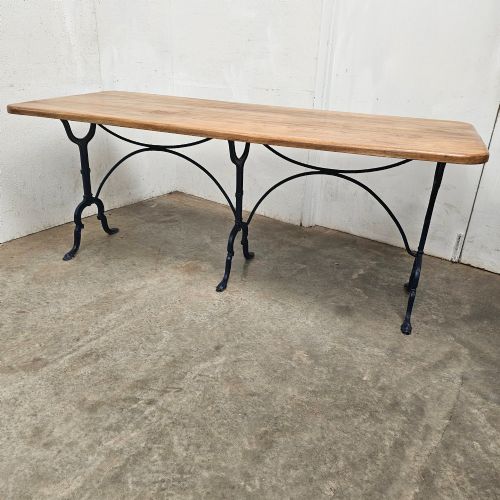
Makers utilised plain-sawn boards or burr elm veneers depending on the formality of the commission, ranging from rustic farmhouse trestles to polished Regency tilt-top tables. Iron brackets, brass catches, and occasional marble inserts appear alongside timber components in later console and bistro designs.
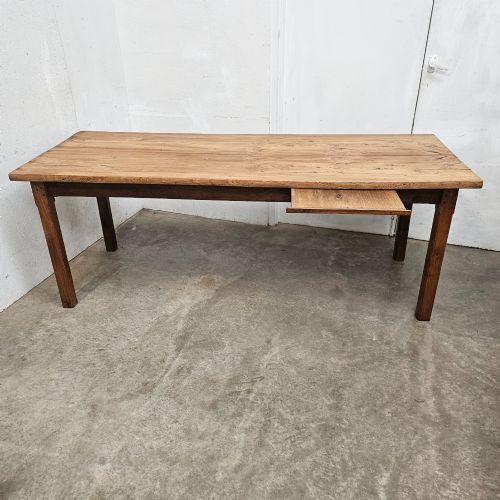
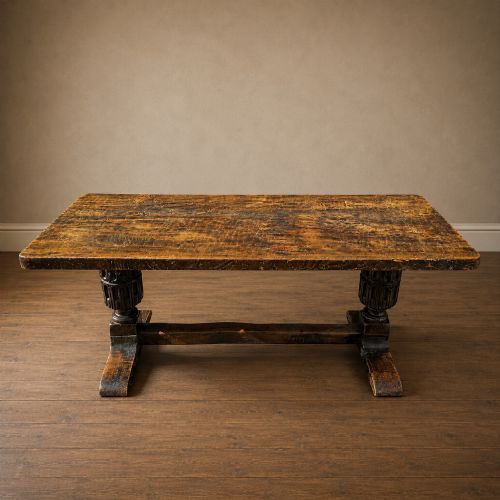
French provincial furniture dominates the vernacular selections here, frequently pairing thick scrubbed elm tops with sturdy trestle frames.
Assessing quality in antique elm
Quality rests in the selection of the timber board and the integrity of its structural framing. A superior top displays a rich, tactile depth of colour and stable grain pattern without excessive distortion from centuries of environmental change.
The relationship between the top and its base dictates the standing of the piece. Refined Georgian and Regency examples show meticulous joinery and balanced proportions, whereas vernacular farmhouse tables rely on honest, robust construction rather than delicate cabinetmaking.
The Antique Elm Top Table Glossary
- Elm
- A dense, tough hardwood noted for its interlaced grain and rich brown colour. It was traditionally favoured for cartwrights and table tops due to its resistance to splitting.
- Refectory table
- A long, narrow dining table originally used in monastic dining halls. These pieces often feature stretcher bases to stabilise the long timber top.
- Tilt-top table
- A small occasional or breakfast table with a mechanism allowing the surface to pivot vertically when not in use. This clever design saved valuable floor space in period rooms.
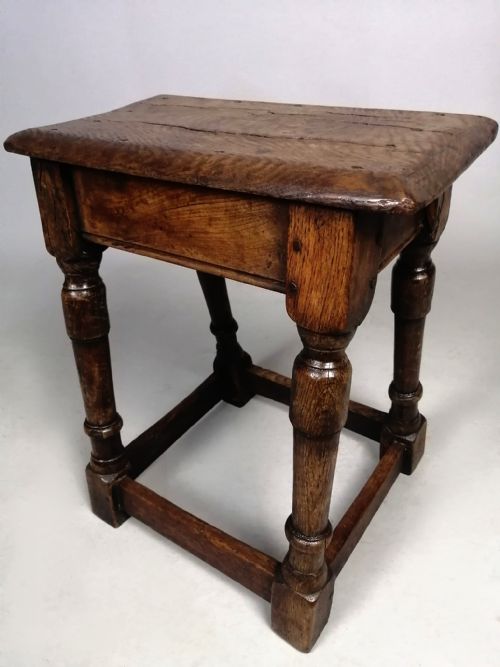
- Joint stool
- A sturdy, low wooden stool constructed with mortise and tenon joints pegged together. These functional items often doubled as small side surfaces in early domestic settings.
Antique Elm Top Table: Frequently Asked Questions
How do I clean an elm top table?
Clean the surface simply with a slightly damp cloth to remove everyday dust and debris. Avoid harsh chemical cleaners that strip the historic finish and dry out the timber.
Feed the wood periodically with a traditional beeswax polish to maintain its moisture and protect the grain. Rub the wax gently into the timber and buff it thoroughly with a soft cloth.
Can I use an antique elm table daily?
These tables were built for heavy domestic labour and handle everyday family life with ease. Their resilient grain stands up well to routine meals and gatherings.
Protect the historic timber from excessive heat and moisture by using coasters and mats. Sudden temperature shifts in modern homes can stress old wood, so keep tables away from direct heat sources.
How do I date an elm table?
Examine the underside and the construction methods used to attach the top to the base. Hand-cut peg joints, tool marks, and timber shrinkage point towards earlier 17th or 18th-century origins.
Consider the overall style, such as heavy trestle framing versus slender Regency legs or Victorian turned supports. Hardware like brass fittings and iron brackets also provides reliable clues to the period of manufacture.
Why does elm wood warp?
Elm contains a notoriously twisted and interlocking grain structure that moves continuously in response to humidity. This natural characteristic means older boards often develop gentle undulations over centuries.
Skilful period makers employed breadboard ends and sliding dovetails to allow the timber to expand and contract naturally. These clever construction details prevent the main board from splitting while accommodating the movement of the wood.