



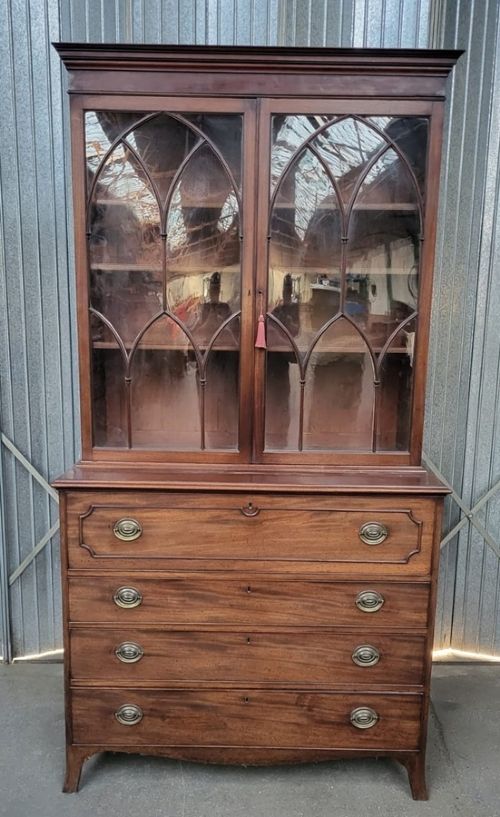
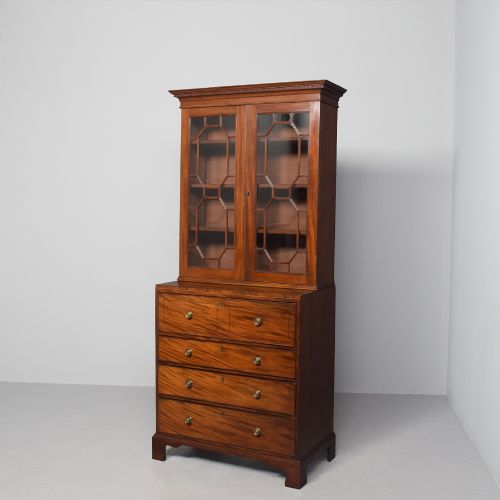
Antique Drop Front Secretary
An antique drop front secretary offers a clever writing surface that folds away when the letters are done, concealing fitted compartments behind solid timber.
Antique Drop Front Secretary
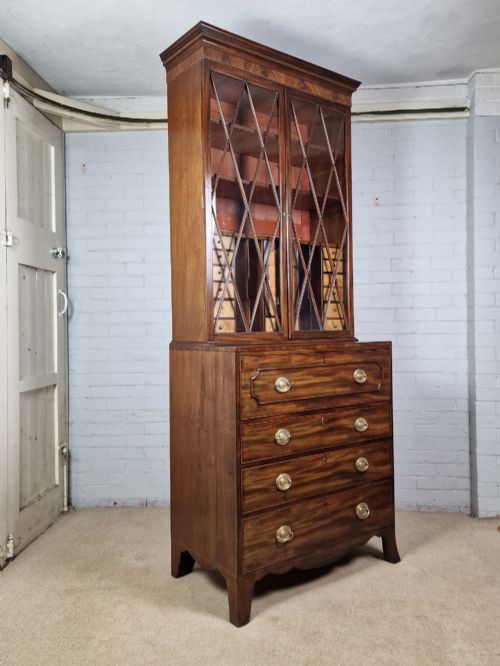
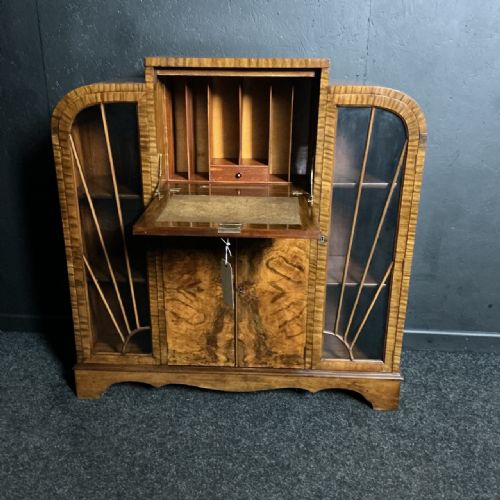
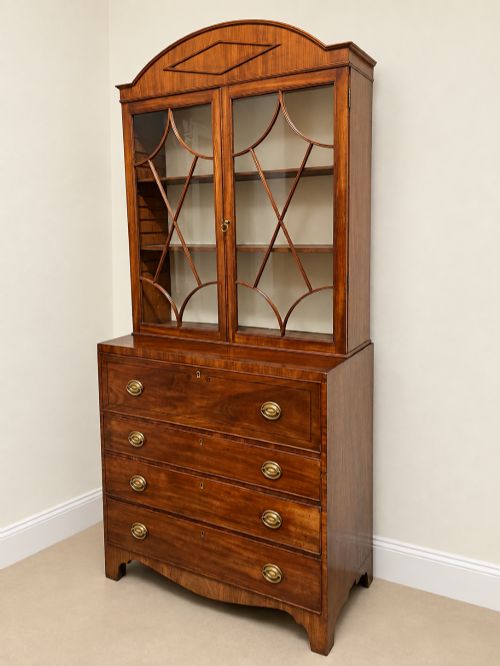
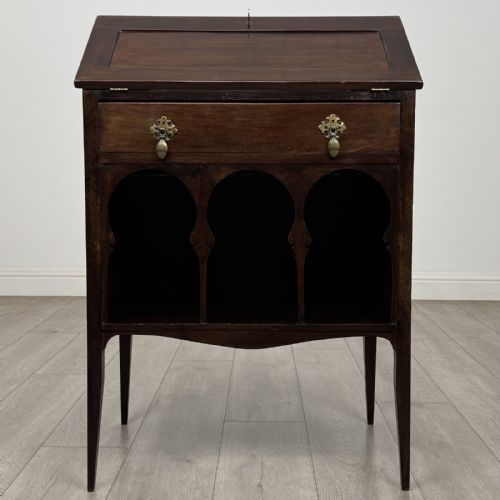
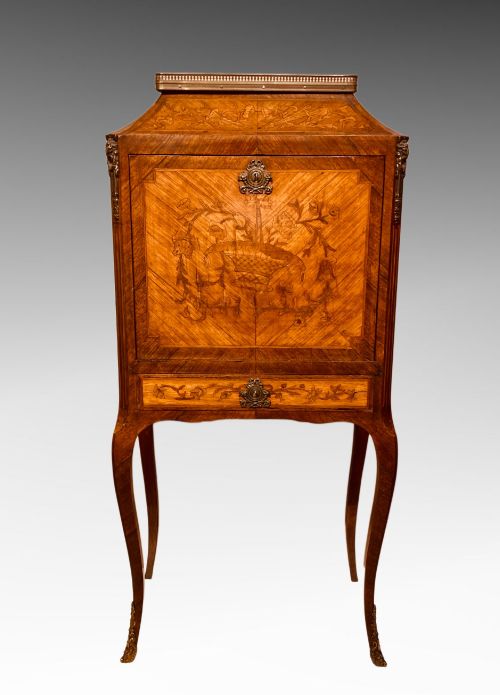
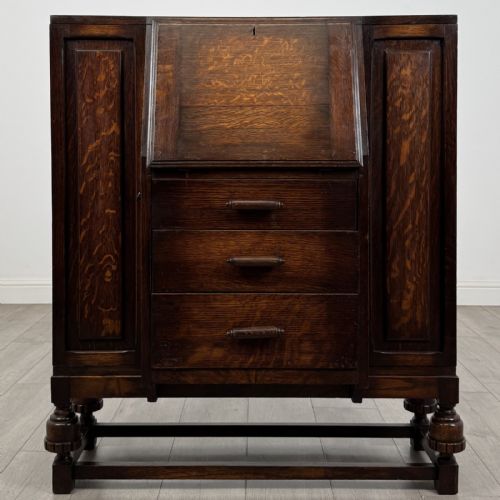
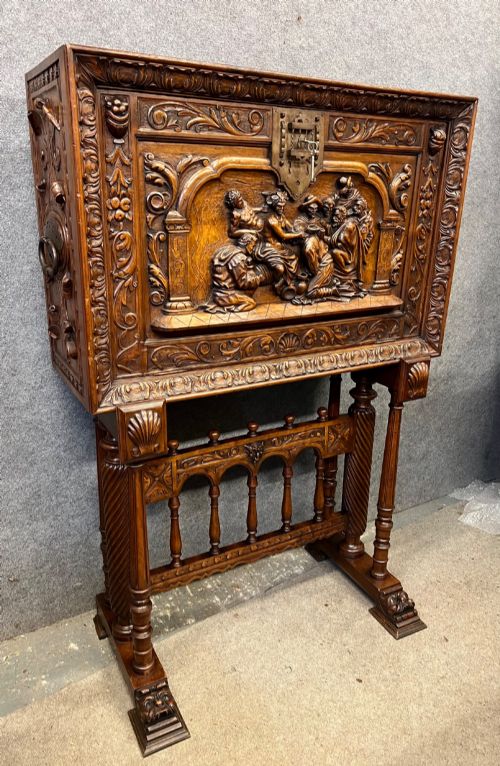
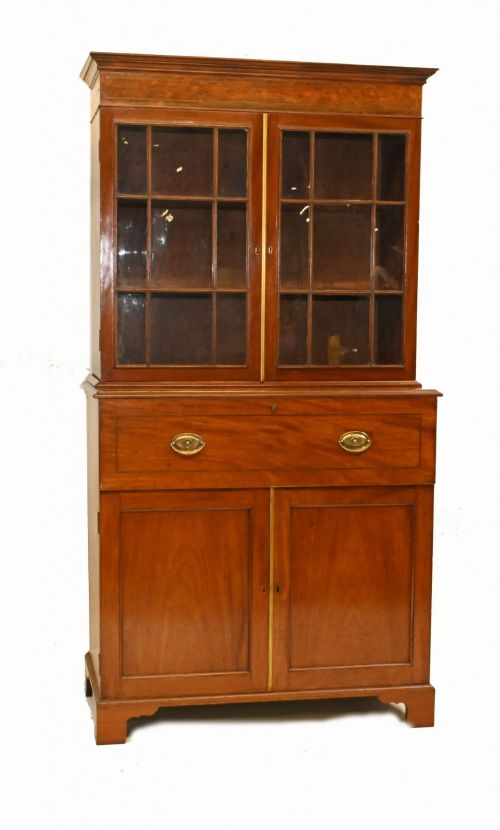
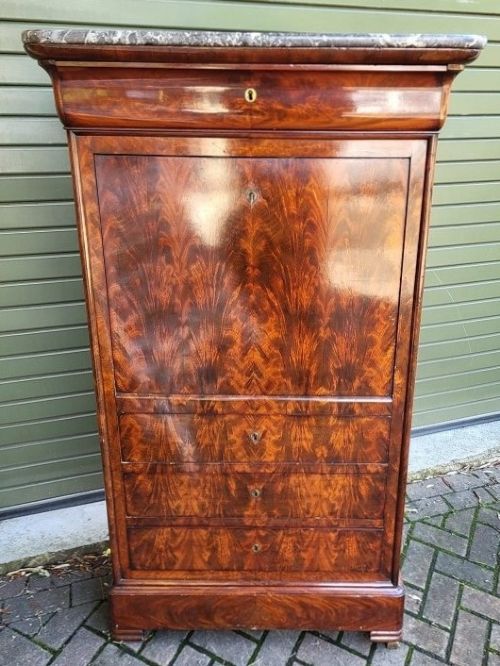
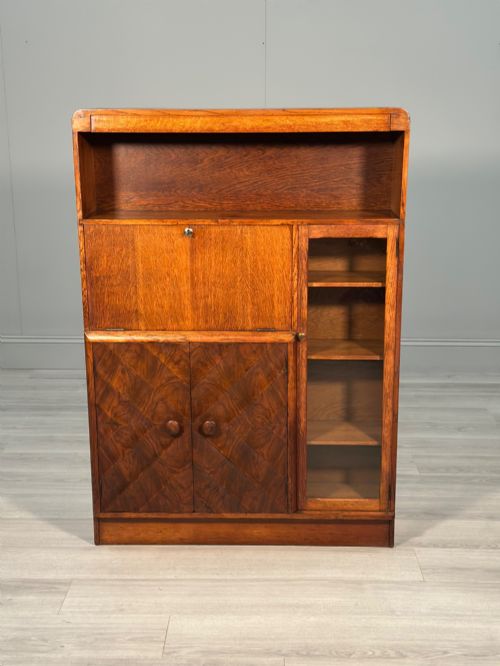
When you search for an antique drop front secretary, you encounter a lineage of writing furniture that spans the seventeenth century to the twentieth, encompassing desks, tall bookcases, and chests with fall-front panels. The pieces on this page appear in various guises, from eighteenth-century mahogany bureaux to Edwardian oak models and continental secretaire cabinets.
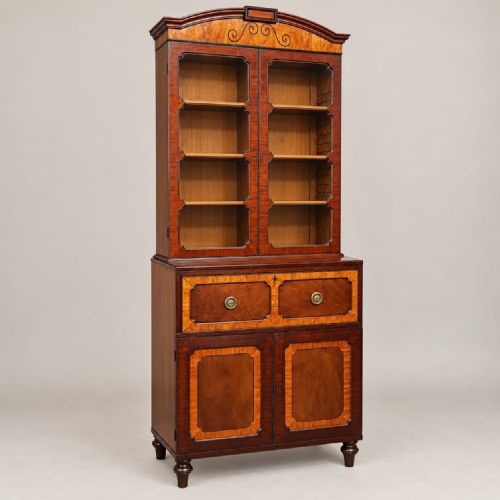
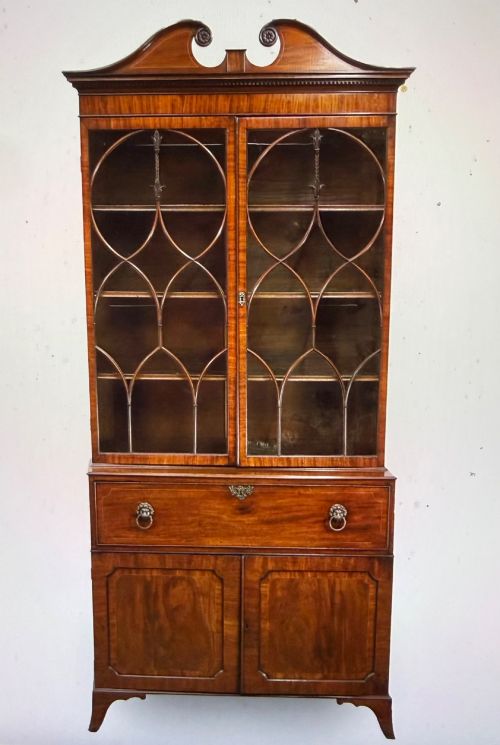
The most common forms on this page are compact writing desks with sloping or vertical fall fronts, alongside taller bookcase combinations that pair upper glass doors with lower storage compartments. Originating across Britain, continental Europe, and the Cotswolds, these items reflect diverse regional cabinetry traditions while retaining a primary focus on private correspondence and document storage.
Materials and Construction
Cabinetmakers constructed these pieces primarily using dense timbers such as mahogany, oak, and walnut, frequently applying burr veneers, satinwood, or rosewood to create striking grain patterns on the writing flaps and drawer fronts. Brass handles, escutcheons, and occasional gilt bronze mounts secure the structural elements while providing contrast against the dark wood.
Joinery techniques rely on dovetailed drawer construction and framed panels to support the heavy drop fronts, which pivot on iron hinges or wooden slides. Glazed upper sections utilise individual timber glazing bars to hold glass panes securely within the bookcase variations.
Antique Drop Front Secretary Retail Price Guide 2026
Typical asking prices for drop front secretary among the pieces listed under this phrase on Sellingantiques today, from the lower quarter to the upper quarter. They describe what is for sale here now, not the wider market.
The listings on this page span several centuries, featuring oak, mahogany, walnut, and rosewood across Georgian, Victorian, and Edwardian periods.
The Distinction of Quality
The distinction between standard examples and the finest works rests upon the selection of timber and the precision of internal cabinetry. Superior pieces display carefully matched flame mahogany or burr walnut veneers that flow seamlessly across the fall front and drawers.
Internal arrangement separates workshop tiers, as master cabinetmakers invested considerable labour into secret compartments, pigeonholes, and small drawers framed by delicate satinwood stringing. The smoothness of the fall-front action and the integration of internal locking mechanisms also mark the difference between competent production and exceptional craftsmanship.
Arthur Basil Reynolds·Gillows of Lancaster·George Oakley·F.H. Marshall & Co Glasgow
The Antique Drop Front Secretary Glossary
- Bureau
- A desk with a sloping hinged lid or fall front that covers a set of pigeonholes and small drawers. This term appears frequently in British furniture designations.
- Secretaire
- A cabinet or chest containing a drawer or drop-down compartment configured for writing. French variations often use the term secretaire a abattant.
- Fall front
- A hinged writing flap that drops from a vertical or sloping position to form a horizontal desk surface. It relies on internal stays or desk arms for support.
- Escritoire
- A writing cabinet, typically from the seventeenth or eighteenth century, featuring a drop front that conceals an interior fitted with numerous small drawers.
- Linenfold
- A style of wood carving that imitates folded linen, commonly found on panels of early twentieth-century oak pieces. This decoration reflects historic revival movements.
Antique Drop Front Secretary: Frequently Asked Questions
How do I use a drop front desk?
Lower the hinged flap gently so it rests upon pull-out wooden supports or stays, creating a stable platform for writing. The internal compartments remain accessible directly above this surface.
Close and lock the flap when finished to conceal correspondence and keep the room tidy. The internal fittings stay protected behind the closed wood panel.
Where should I place this cabinet?
Position the piece against a flat interior wall away from direct sunlight and heat sources to protect timber veneers from drying out. Ensure adequate floor space in front of the unit for the drop flap to open fully.
These cabinets suit studies, living rooms, and bedrooms where surface space is needed for reading or writing. Taller bookcase variants require sufficient ceiling height and steady wall clearance.
How do I distinguish eighteenth-century pieces?
Examine the timber construction inside the drawers for hand-cut dovetails, tool marks, and secondary woods like oak or pine. Eighteenth-century examples often display simpler internal configurations compared to later Victorian iterations.
Inspect the hardware fixings and the grain pattern on the fall front. Older pieces typically show subtle hand-finishing details and patination accumulated over centuries of use.