




Antique Drinks Box
An antique drinks box is a purpose-built home for spirits and wine, ranging from a Georgian mahogany cellarette to a Victorian tantalus.
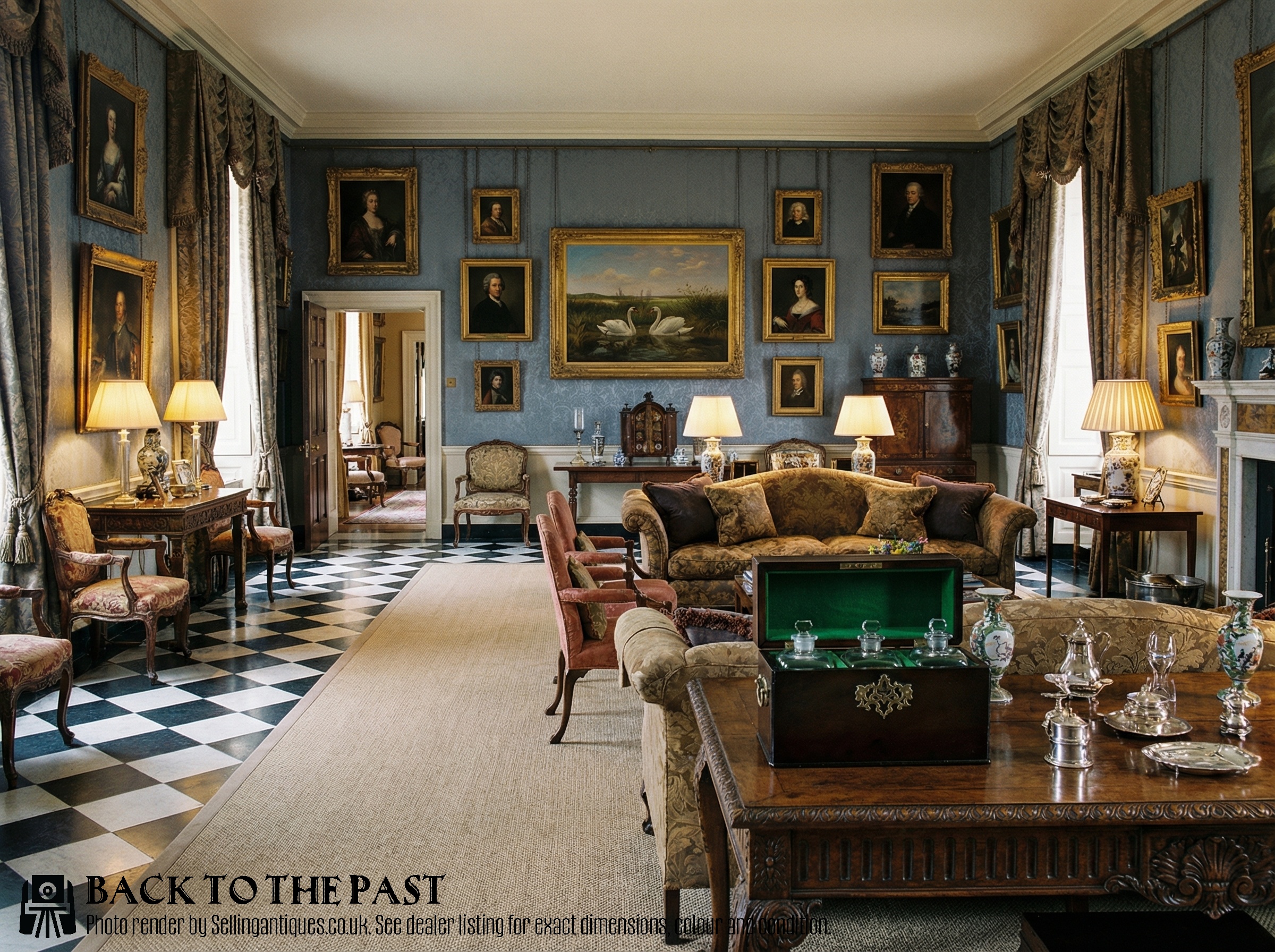
Antique Drinks Box
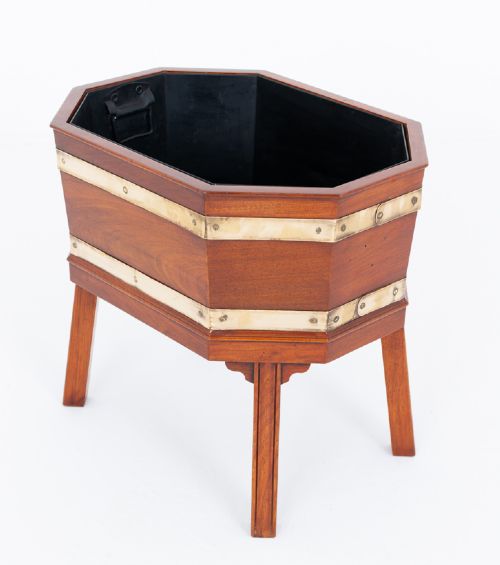
When you search for an antique drinks box, you encounter a specialised form designed to store bottles, decanters, and glassware securely. These pieces span from the eighteenth century through the Edwardian era, taking the form of wine coolers, cellarettes, decanter boxes, and tantalus sets.
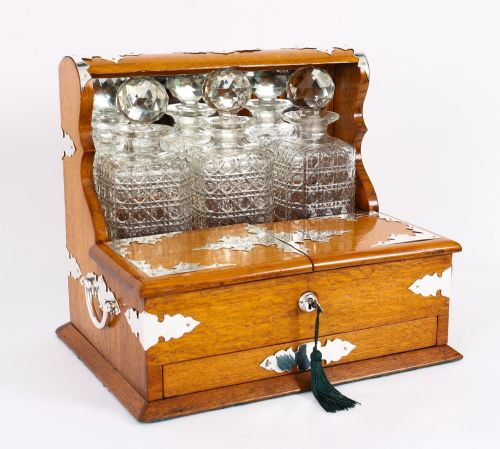
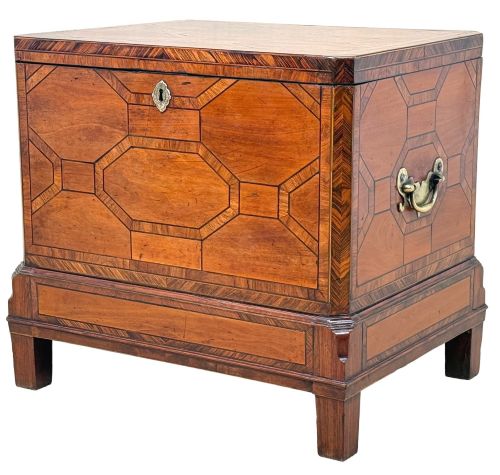
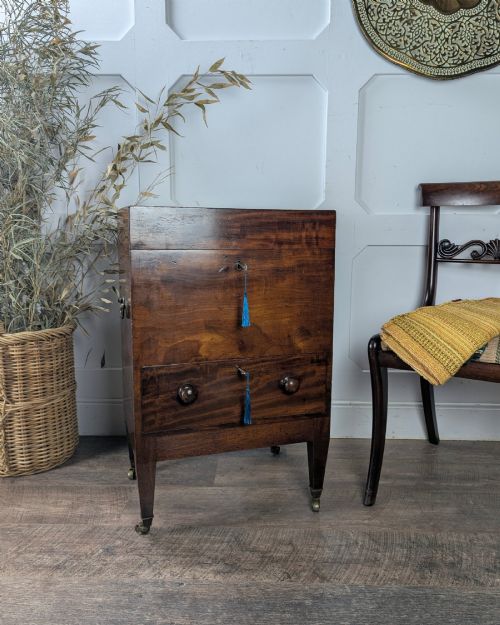
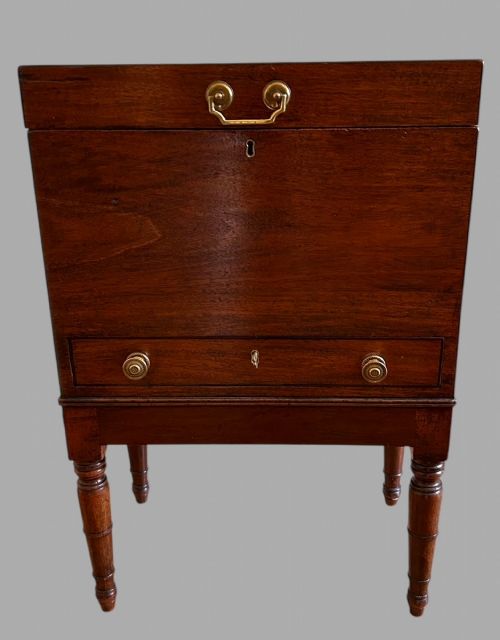
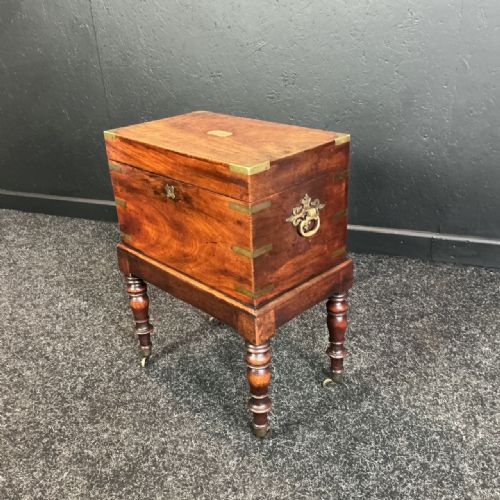
The most common examples on this page are mahogany cellarettes from the Georgian and Regency periods, alongside Victorian and Edwardian oak tantalus sets often combined with games compendiums. Makers utilised fine timbers and secure locking mechanisms to protect valuable cellar stock in domestic dining rooms and libraries.
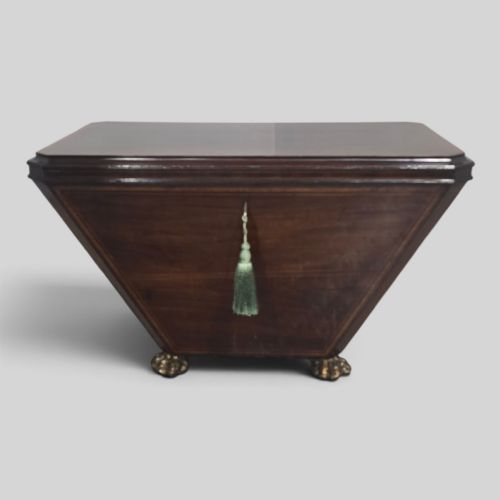
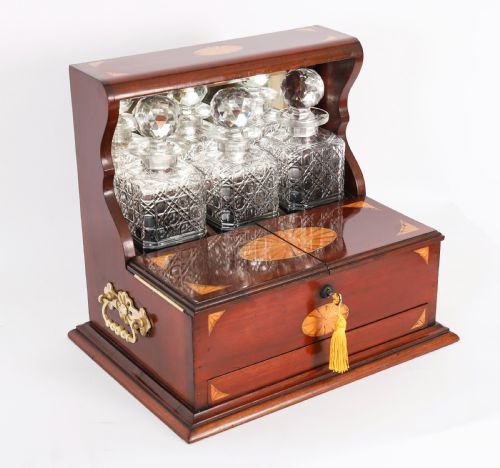
Forms vary from sarcophagus-shaped floor coolers to tabletop caddies fitted with cut crystal decanters and silver-plated hardware. Each variation reflects the evolving social rituals of entertaining across the eighteenth and nineteenth centuries.
Materials and construction
Cabinetmakers constructed these pieces primarily in solid mahogany, oak, and satinwood, frequently employing fine veneers, boxwood stringing, and marquetry inlay. Brass bands, ormolu mounts, and drop handles reinforced the structural integrity of heavy wine coolers and provided functional security.
Interiors required intricate fitted compartments lined to cushion glass decanters and prevent breakage during use. Locksmiths integrated complex brass locks into the wooden carcases, often securing entire locking bars across crystal bottles in later tantalus designs.
The archive includes French ebonised cave a liqueur sets alongside English decanter boxes.
Quality and execution
The distinction between standard workshop production and exhibition quality lies in the selection of timber and the precision of the joinery. Figured mahogany, kingwood, and dense pollard oak indicate a higher initial commission, matched by crisp hand-carving and well-executed brass mounts.
Fitted interiors demonstrate the maker's attention to detail, where original cut crystal decanters, intact games boards, and working brass locks elevate the piece. The depth of the timber's patina and the integrity of the original lining further separate exceptional examples from standard specimens.
Edwards and Roberts·Gillows of Lancaster and London·Whytock and Reid
The Antique Drinks Box Glossary
- Cellarette
- A lockable container used for holding wine and spirits near the dining table. They frequently stood on short legs or floor plinths during the Georgian and Regency periods.
- Tantalus
- A locking drink container that holds decanters upright in a metal framework while displaying the contents. The mechanism prevents the removal of bottles until the locking bar is unlocked with a key.
- Cave a liqueur
- A French compartmentalised box designed to hold liqueur decanters and small glasses, often veneered in exotic woods. These portable caddies frequently feature gilt bronze or brass mounts.
- Compendium
- A multi-functional box containing equipment for various indoor pastimes alongside a drinks cabinet. They combine compartments for cards, games boards, and crystal decanters under one lid.
- Sarcophagus
- A monumental cabinet shape characterised by a rounded or domed lid tapering toward a rectangular base. Cabinetmakers applied this neoclassical form to large wine coolers and cellarettes.
Antique Drinks Box: Frequently Asked Questions
What is the difference between a cellarette and a tantalus?
A cellarette is a fully enclosed cabinet or box designed to store wine bottles and decanters out of sight, often featuring fitted interior dividers. These pieces date predominantly from the Georgian and Regency eras.
A tantalus exposes the decanters within a locking metal frame that prevents lifting the bottles without a key. This invention became popular during the Victorian and Edwardian periods for secure entertaining.
How were these boxes used in period homes?
Servants filled the cellarettes and decanter boxes in the cellar before bringing them up to the dining room for evening meals. They kept expensive wines and spirits close to hand while preventing unauthorised access by domestic staff.
By the late nineteenth century, tabletop tantalus sets and games compendiums moved from dining rooms into smoking rooms and libraries. Guests could pour their own drinks and select cards from the integrated storage compartments.
How do I date a mahogany drinks box?
Georgian and Regency examples rely on architectural proportions, solid mahogany construction, and brass paw feet or recessed ring handles. The presence of sarcophagus shapes and lead-lined interiors typically points to the early nineteenth century.
Victorian and Edwardian pieces often incorporate oak, bevelled glass, and mechanical locking bars across cut crystal decanters. Marquetry stringing and manufacturer plaques inside the lid help narrow the production decade.
Are the decanters usually original?
Many surviving boxes retain their matched sets of cut crystal or glass decanters, particularly in late nineteenth-century tantalus formats where the metal frame requires specific bottle dimensions. Cut glass patterns often mirror the period of the outer cabinet.
Because decanters endured heavy daily use, replacement glassware occurs frequently within antique drinking boxes. Inspecting the base wear and glass tint helps determine whether the bottles originated with the fitted interior.