

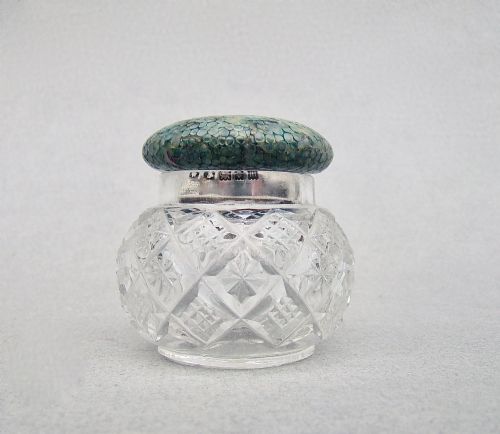


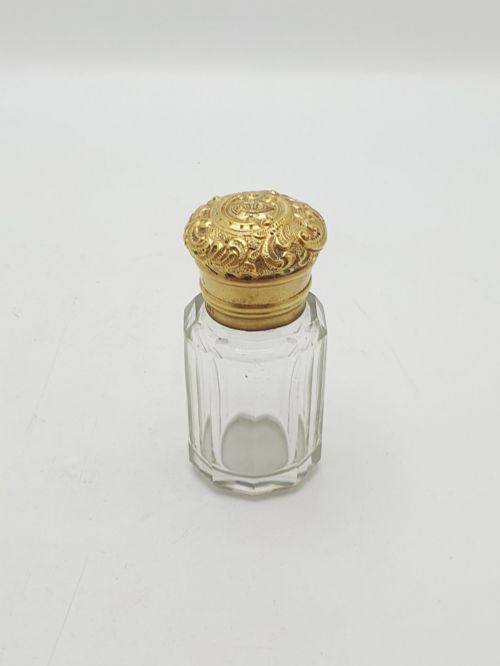
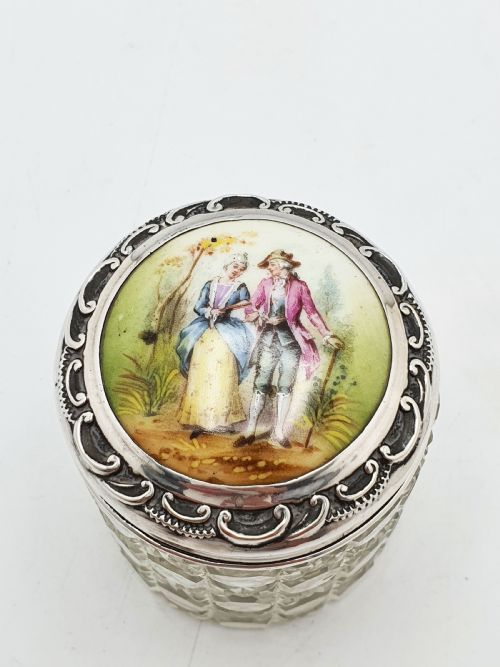
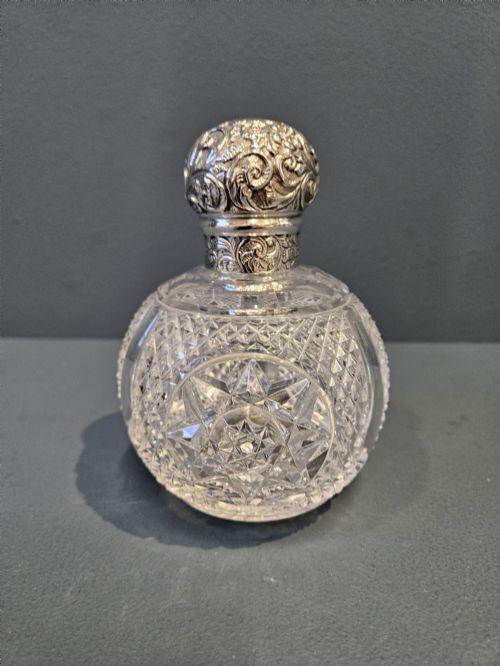


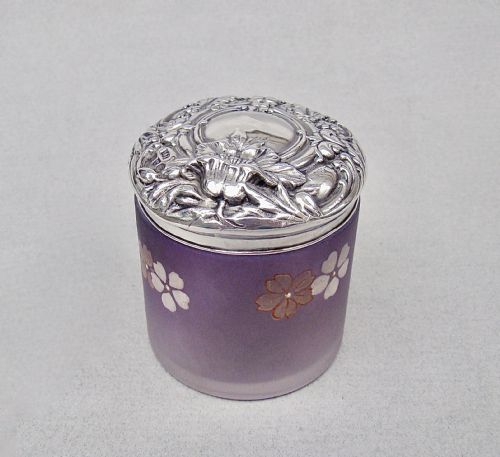

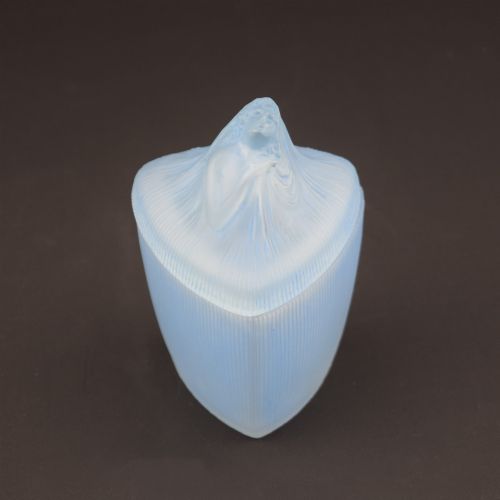
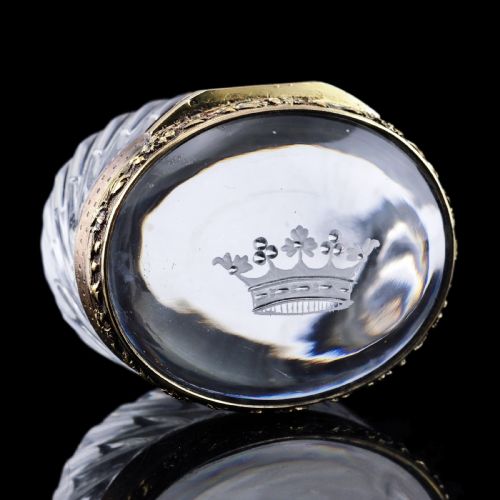
Antique Dressing Table Jar
An antique dressing table jar organises powders, scents and trinkets with the refined weight of silver, glass and enamel.
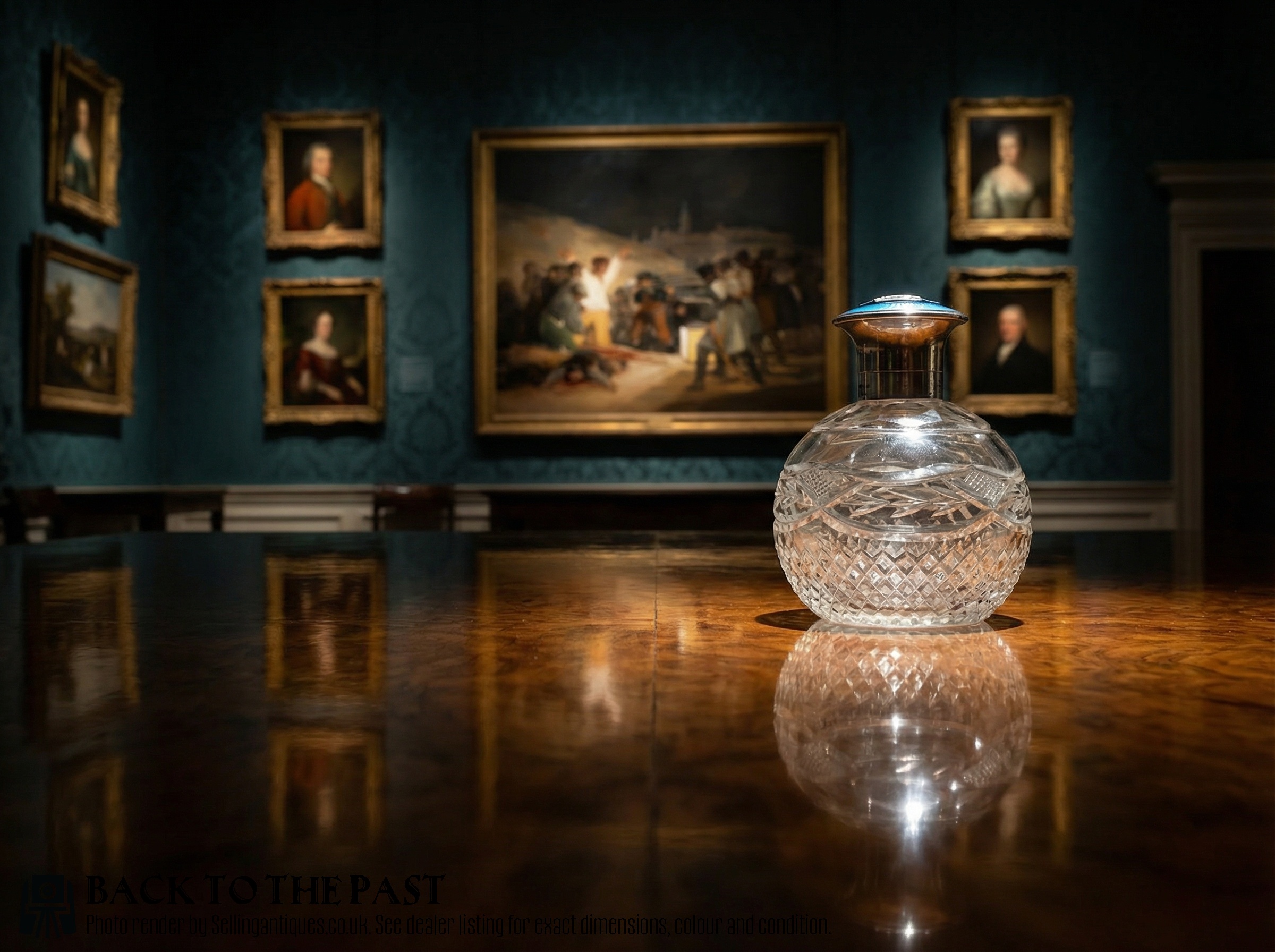
Antique Dressing Table Jar
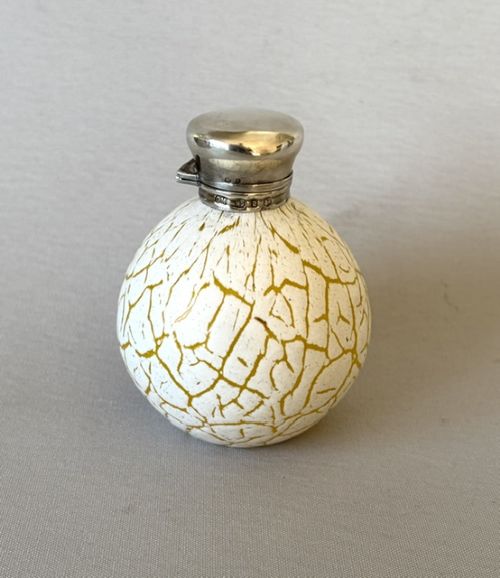
An antique dressing table jar combines functional vanity storage with decorative craftsmanship, evolving across the Victorian, Edwardian and Art Deco periods. These pieces range from heavy cut glass powder containers to small trinket boxes and scent bottles mounted with precious metals.
The most common examples on this page date from the late nineteenth century through to the 1930s, reflecting changing dressing room habits. Buyers frequently encounter silver-lidded glass jars alongside ceramic and enamel boxes designed to sit upon a mahogany or walnut vanity.
Originating largely from British assay offices like Birmingham and Chester, as well as continental workshops, these items served daily grooming needs. Today, collectors value them for their diverse glass colours - including cranberry, satin and Bristol blue - and their surviving metalwork.
Materials and construction
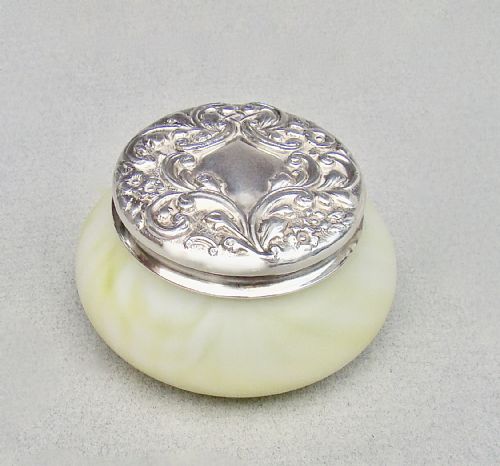
Makers combined blown, moulded or cut crystal and glass bodies with fitted sterling silver or silver gilt lids, often secured by integrated hinges or collars. Coloured glass varieties utilised layered overlays, while enamel work introduced guilloché patterns beneath translucent coloured glazes.
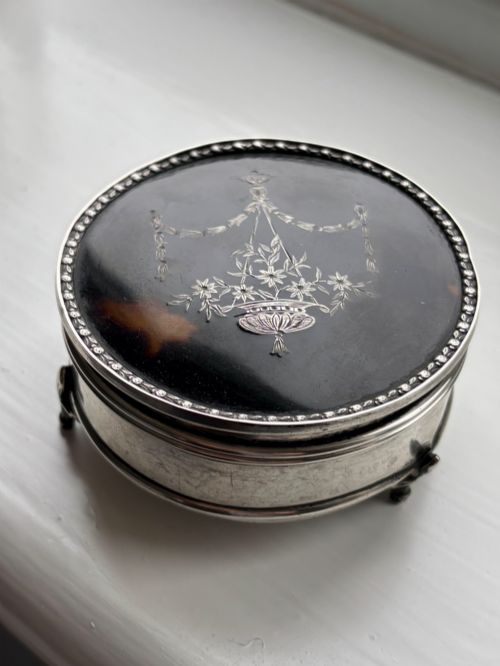
The metal components typically received hallmarks indicating the year of production, maker's mark and assay town, while tortoise shell and pique work provided additional decorative surfaces. Etched, frosted and Kralik glass bodies demonstrated advanced nineteenth and early twentieth-century glassblowing techniques.
Antique Dressing Table Jar Retail Price Guide 2026
Typical asking prices for dressing table jar among the pieces listed under this phrase on Sellingantiques today, from the lower quarter to the upper quarter. They describe what is for sale here now, not the wider market.
Some Victorian ladies relied on secret double-lidded scent bottles to carry competing perfumes for morning and evening wear.
Assessing quality and craftsmanship
Quality rests upon the crispness of the glass cutting, the depth and clarity of the coloured enamel, and the substantial gauge of the silver lid. Thicker glass bases and heavier metal mounts indicate finer production standards.
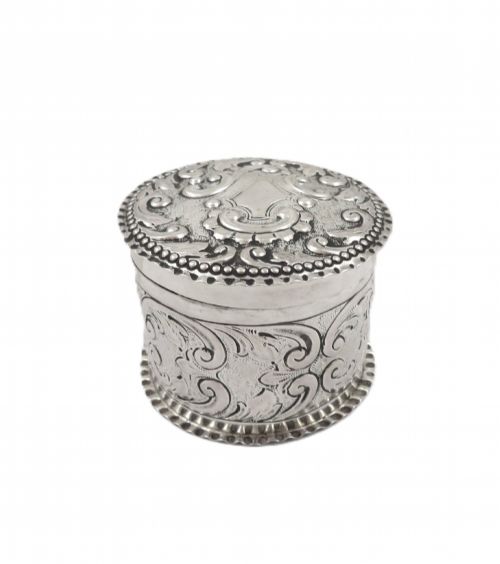
The precision of the fit between lid and body demonstrates superior manufacturing, alongside intricate detailing such as spot-hammered silver surfaces or hand-painted porcelain panels.
A. J. Pepper & Co·Ollivant & Botsford·Henry Clifford Davis·A. Bromet & Co·Rene Lalique·Henry Perkins·Posen of Frankfurt·Nathan & Hayes·Jonathan Douglas·Barnsley & Co·Adie Brothers Ltd·Asprey & Co
The Antique Dressing Table Jar Glossary
- Guilloché
- A decorative mechanical engraving technique that produces precise, intricate geometric patterns beneath a translucent enamel layer.
- Sterling silver
- An alloy of silver containing 92.5% pure silver and 7.5% other metals, commonly stamped with assay office hallmarks on jar lids.
- Cranberry glass
- A rich red-pink glass created by adding gold chloride to the molten batch, frequently seen in Victorian and Edwardian vanity items.
- Pique work
- The delicate insertion of tiny gold or silver pins into tortoise shell or ivory to create decorative motifs.
- Assay mark
- Official stamps indicating the purity of precious metals, the town of testing, and the date of manufacture.
Antique Dressing Table Jar: Frequently Asked Questions
What were dressing table jars used for?
These vessels held powders, creams, perfumes and small personal accessories required for daily grooming. They kept dressing tables tidy while displaying the wealth and taste of the owner.
Lined with glass or porcelain, they protected delicate cosmetics from drying out or spilling. Their presence turned a functional morning routine into a refined ritual.
How do I date a silver lidded jar?
British pieces carry assay office hallmarks that include a date letter indicating the exact year of manufacture. Stamped lion passant and anchor or leopard symbols confirm the metal purity and testing town.
Stylistic cues such as Art Deco geometric lines or Victorian floral chasing also help narrow down the production decade when hallmarks are worn.
What is the difference between a trinket box and a vanity jar?
Trinket boxes generally feature hinged lids designed to store small jewellery, hairpins or rings safely. Their interiors are often unlined or fitted with velvet.
Vanity jars and powder pots usually have lift-off lids and glass interiors intended to hold loose cosmetics or liquids. Their construction prioritizes easy access during active grooming.