
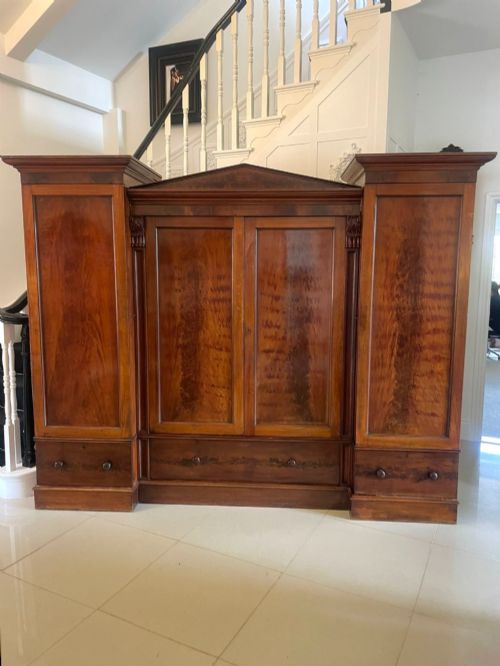
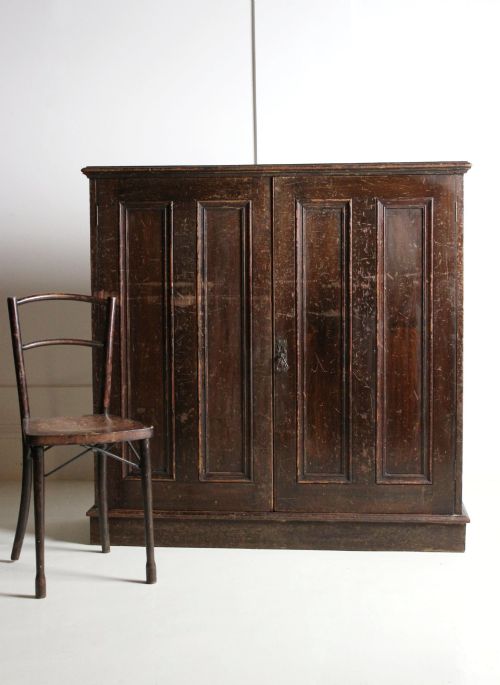
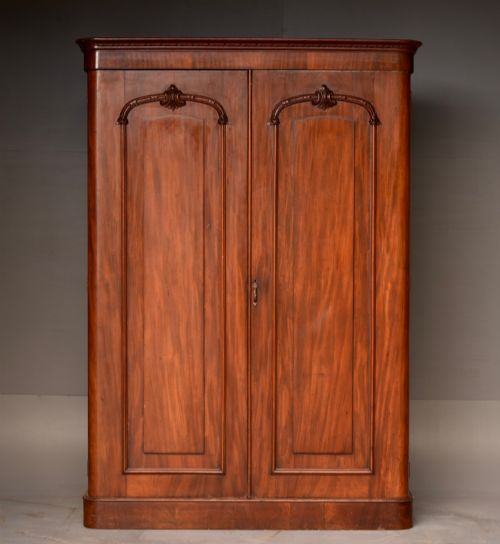
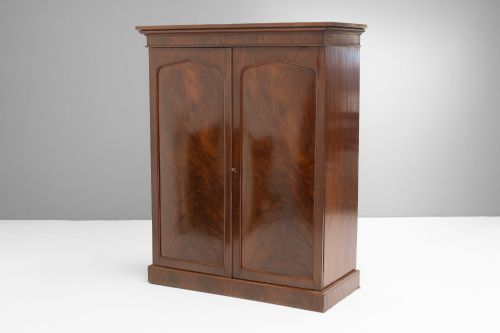
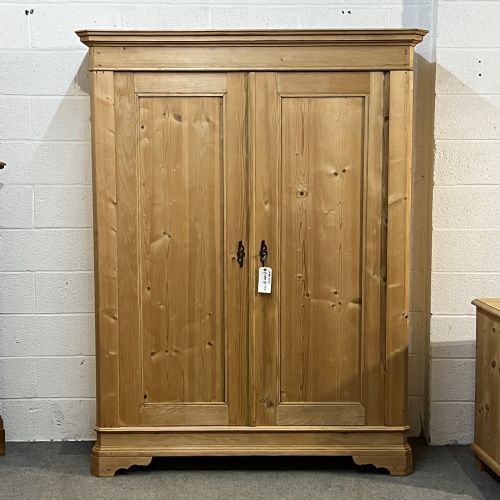
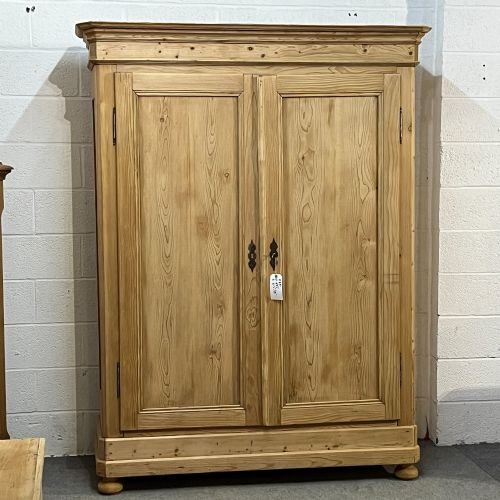
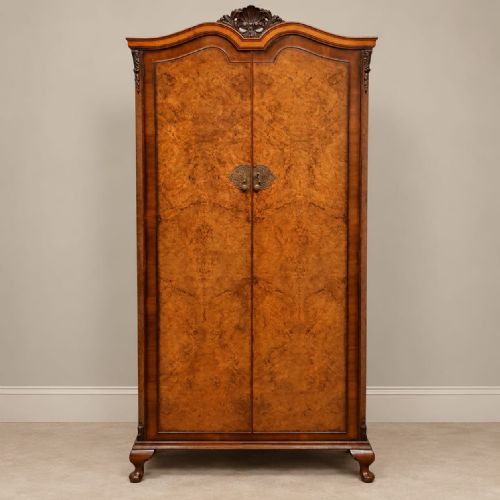
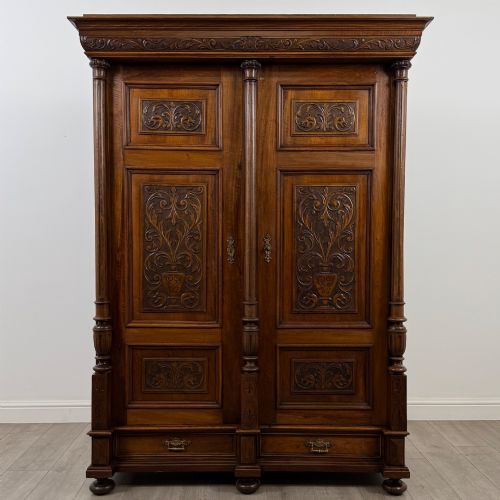
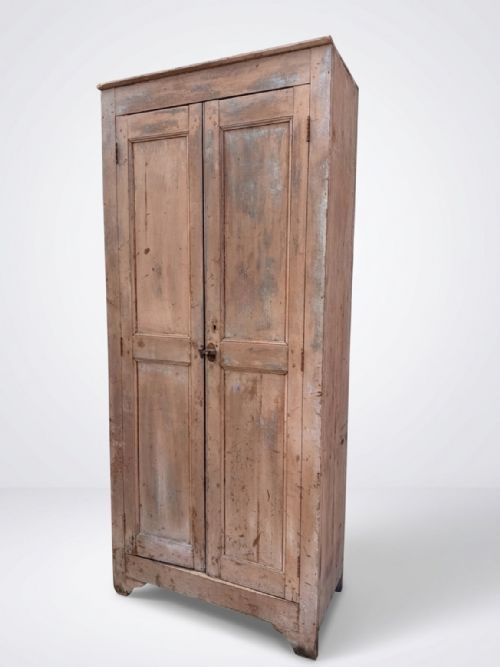
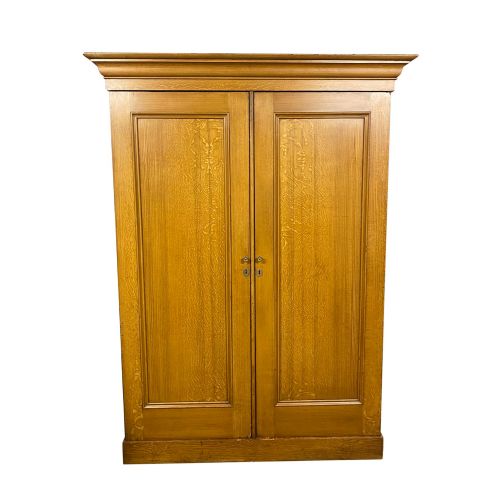
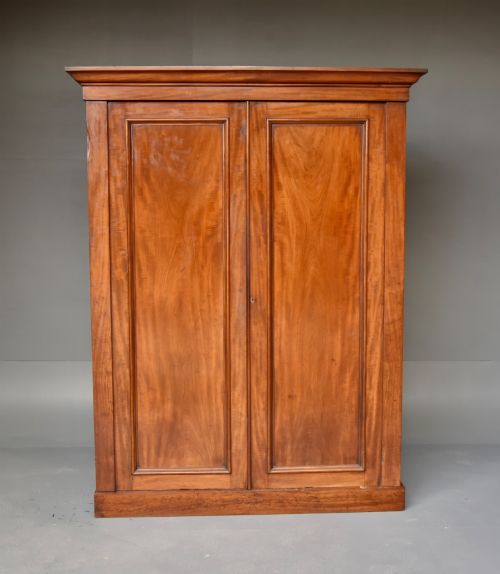
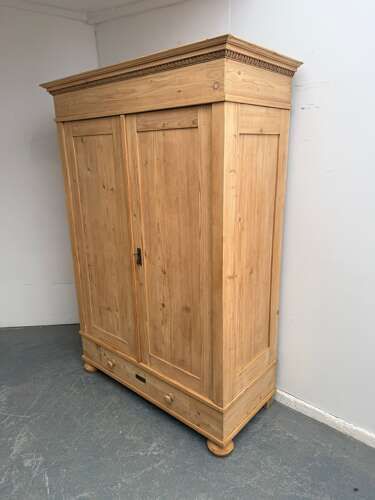
Antique Double Door Wardrobe
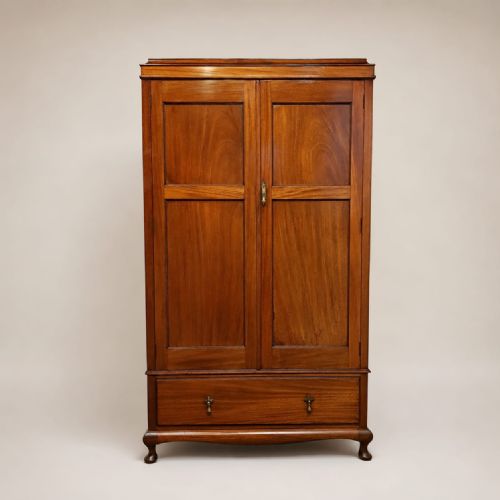
An antique double door wardrobe is a capacious timber hanging piece offering proper scale and rich grain to anchor a traditional bedroom.
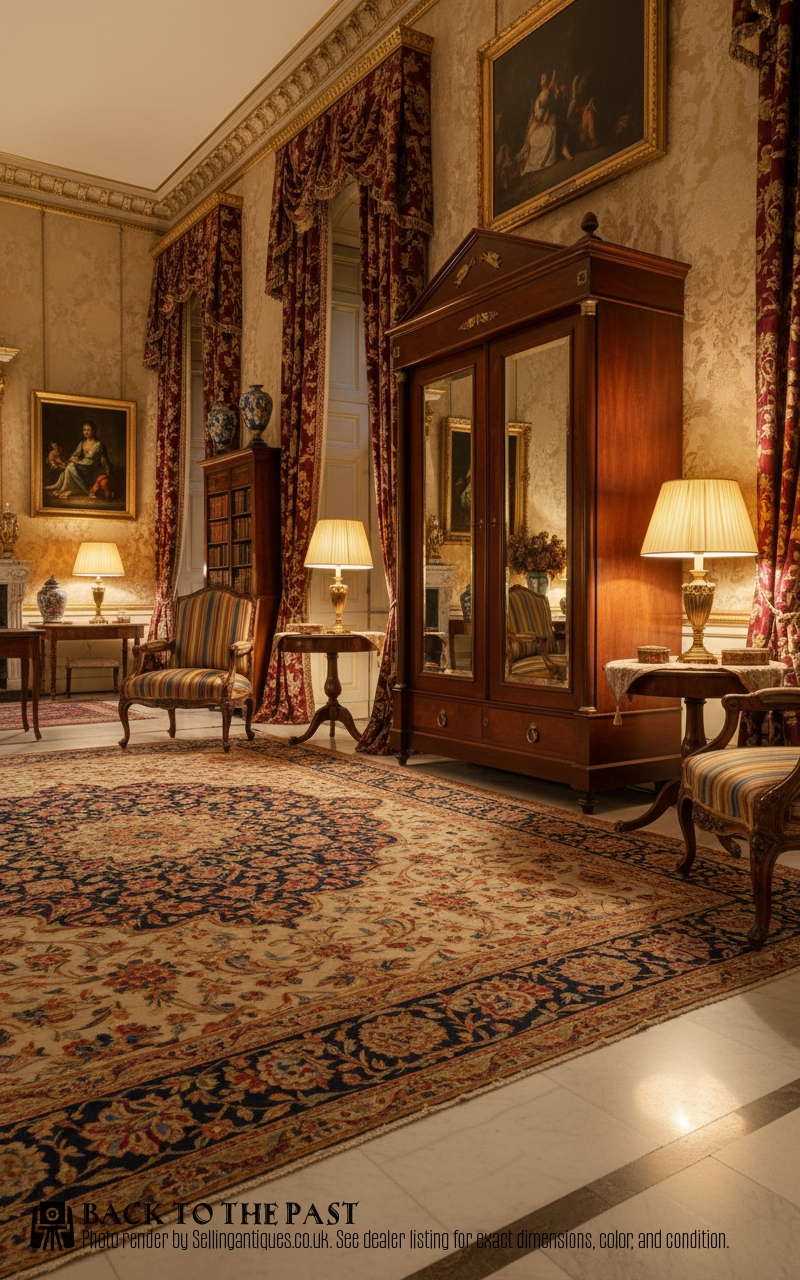
What these pieces are
When you search for an antique double door wardrobe, you encounter substantial storage furniture designed to hold garments across several periods. The selection spans the eighteenth century through to the 1930s, taking in regional British pieces alongside continental formats.
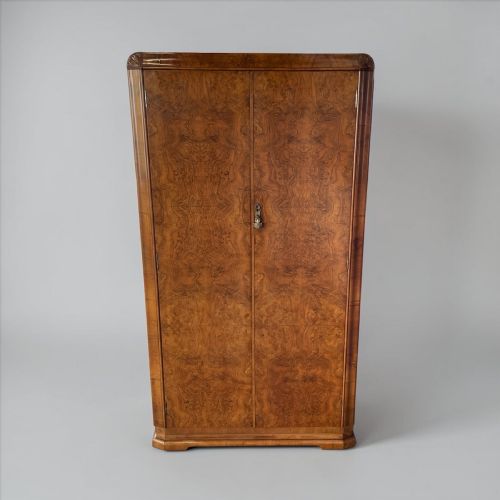
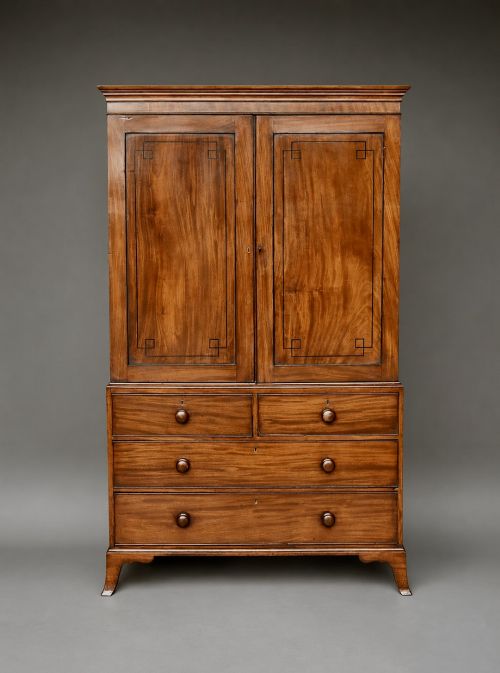
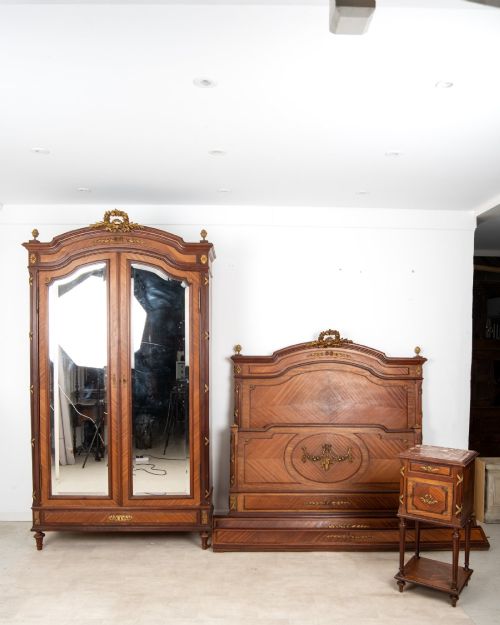
You are most likely to meet mahogany, walnut, and pine examples across this page. Forms range from Georgian linen presses and French armoires to Victorian knockdown pine carcasses and Art Deco designs.
The styles recorded here stretch from Georgian and Victorian to Arts and Crafts, Grunderzeit, and French Empire. Each period brings distinct proportions and timber treatments to the twin-door format.
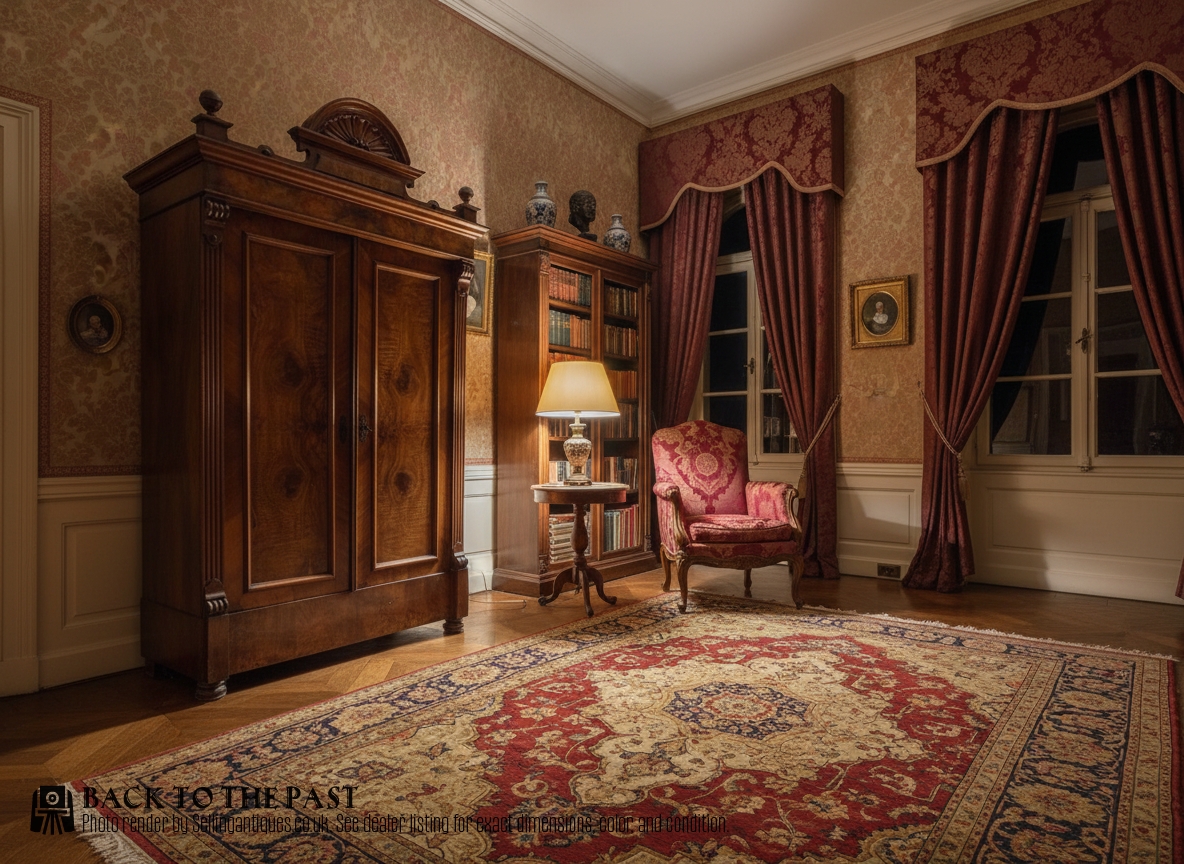
How they were made
Carpenters built these wardrobes using solid hardwoods and softwoods such as mahogany, walnut, oak, and pine, frequently applying veneers to achieve striking figured surfaces. Construction methods often involved knockdown capability or modular dismantling to allow passage through domestic doorways.
Decoration relied on carved details, architectural columns, and contrasting walnut veneers rather than applied plastics or modern laminates. Metalwork in brass and gilt bronze provided functional hinges, lock escutcheons, and hanging fittings.
Surfaces received wax, French polish, or traditional finishes that highlighted the natural grain of the timber. Glass panels and mirrors occasionally appeared inset into the door panels of later nineteenth- and twentieth-century pieces.
Retail Price Guide 2026
Typical UK retail prices for double door wardrobe, calculated from the Sellingantiques database of over a million retail prices indexed since 2003. This retail price guide relies exclusively on Sellingantiques data; no external sources or auction records are used, so the figures do not describe the wider market.
Pine wardrobes built with clever knockdown joints let Victorians pack an entire wardrobe flat for a house move.
What varies in quality
The distinction between standard and superior pieces rests on timber selection and architectural presence. Heavy cornices, well-figured mahogany or burr walnut veneers, and crisp hand-carving elevate certain wardrobes well above utilitarian workshop output.
Engineering integrity also divides the range, particularly in how well knockdown mechanisms and heavy panelled doors operate over time. Pieces retaining original brass hardware, sound glass, and integrated internal shelving demonstrate superior original craftsmanship.
The Antique Double Door Wardrobe Glossary
- Armoire
- A large cupboard or wardrobe, typically of continental European origin, featuring two doors enclosing hanging space or shelves. These pieces often display pronounced regional stylistic details.
- Linen Press
- A tall case furniture piece combining upper clothes storage with lower drawers, originating in the eighteenth century. They frequently house sliding trays behind the primary doors.
- Knockdown Wardrobe
- A piece engineered to dismantle entirely into manageable sections using wooden pegs, screws, or wedges. This clever construction allowed large furniture to travel easily between rooms and properties.
- Veneer
- A thin slice of decorative timber applied to a stable secondary wood foundation. Burr walnut and figured mahogany veneers created rich patterned surfaces on prominent door panels.
- Grunderzeit
- A nineteenth-century central European architectural and decorative style characterised by revivalism and solid proportions. Pieces from this movement often utilise rich walnut veneers.
Frequently Asked Questions
How do I fit clothes inside an old wardrobe?
Many older wardrobes lack modern hanging depth because historic garments were shallower than today's attire. Buyers often add brass hanging rails or utilise the internal shelves and hooks provided in the original layout.
For pieces with shallow depths, hanging clothes on front-facing pull-out rails or storing folded garments on shelves solves the practical storage challenge without altering the antique carcass.
How do I tell the difference between Victorian and Georgian pieces?
Georgian wardrobes and linen presses tend to exhibit restrained classical proportions, straight cornices, and dense timbers like mahogany. Their construction reflects eighteenth-century cabinet-making priorities.
Victorian examples frequently introduce heavier mouldings, larger dimensions, arched double doors, and occasionally mirrored glass or pine construction intended for broader domestic markets.
How do I care for polished wood surfaces?
Maintaining antique timber requires keeping wardrobes away from direct heat sources and dramatic humidity fluctuations that cause wood to split. Regular dusting with a soft, dry cloth preserves the finish.
Occasional application of traditional beeswax feeds the polish and protects the grain without building up synthetic residues that dull the historic surface.