
Antique Display Tiers
Antique display tiers gather books, ceramics and decorative objects across graduating levels, bringing height and structured organisation to a room.
Antique Display Tiers
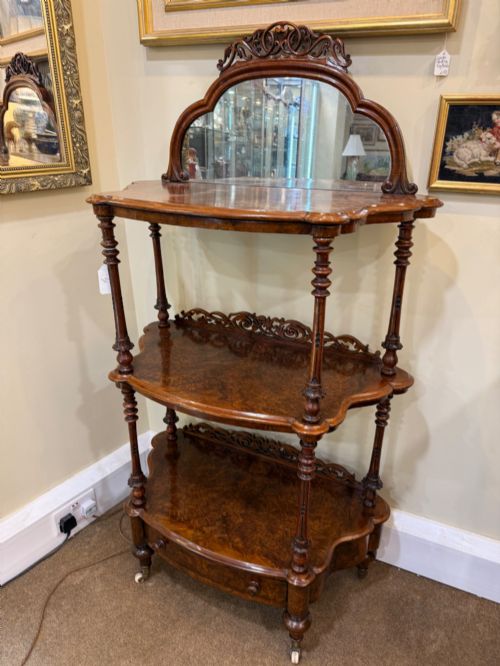
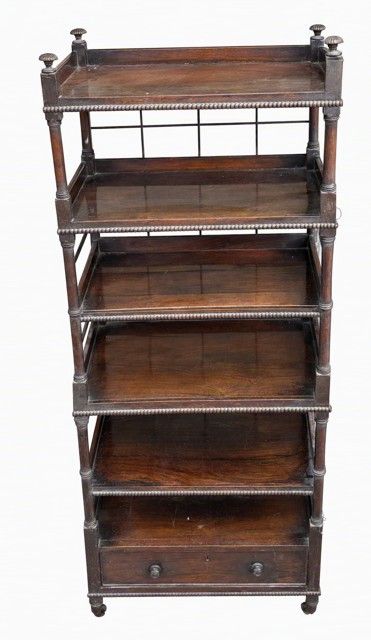
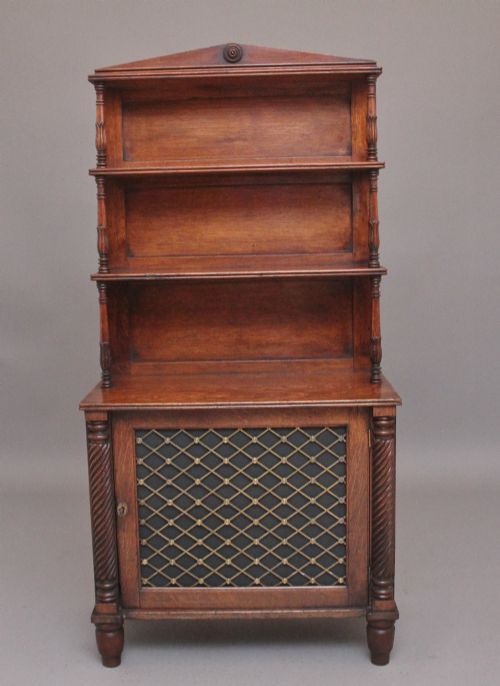
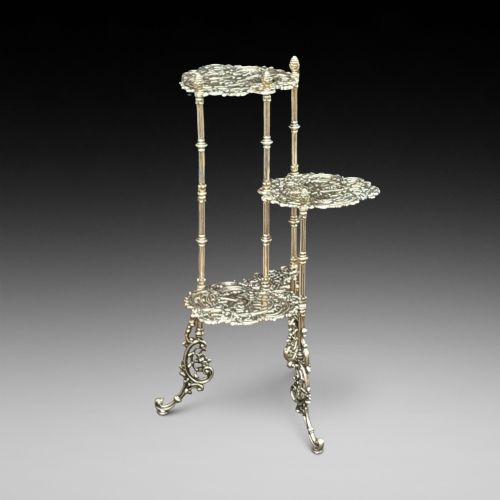
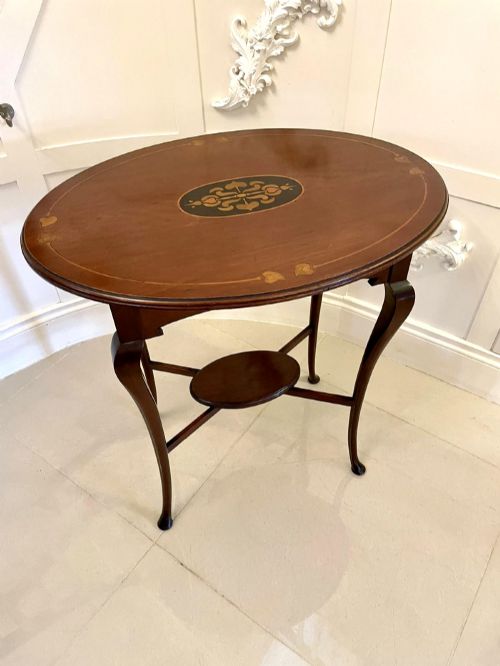
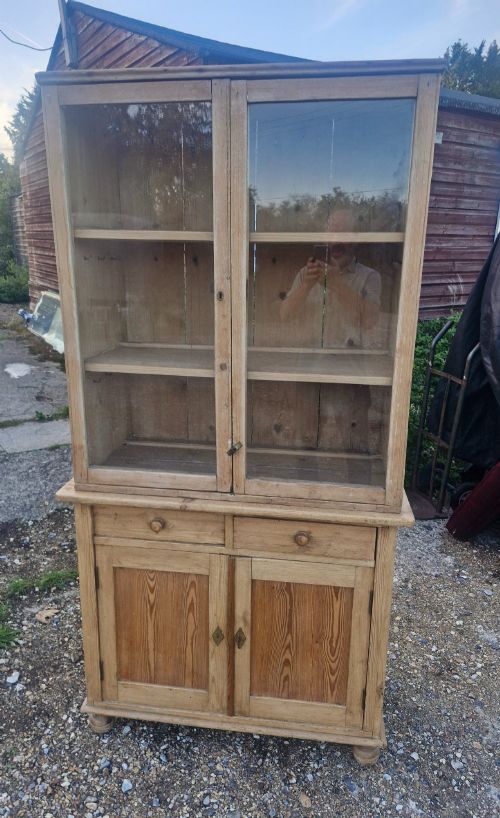
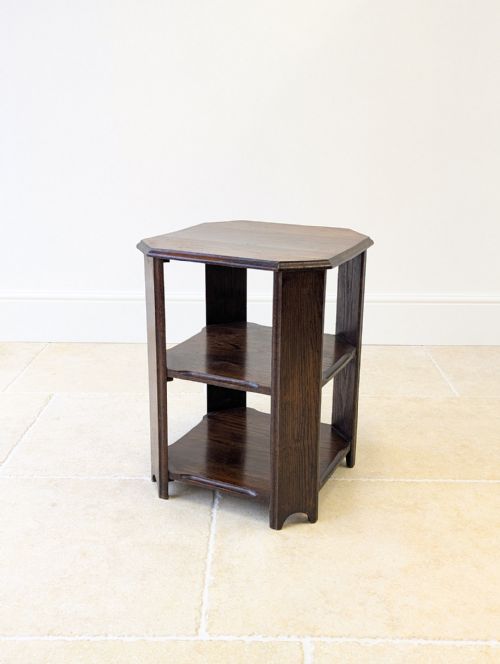
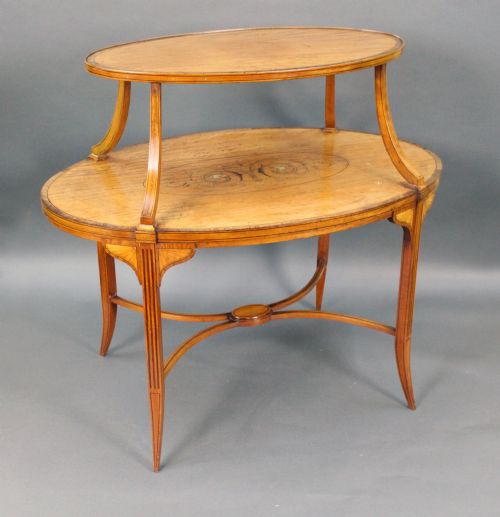
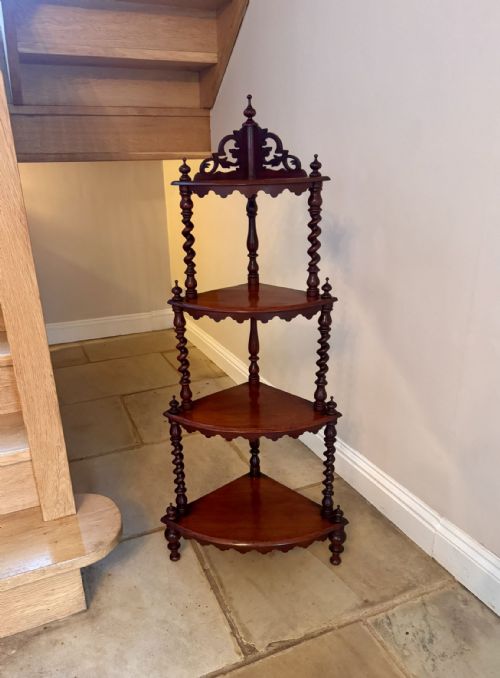
When searching for antique display tiers, buyers encounter pieces designed to elevate and exhibit possessions on multiple horizontal surfaces. The selection spans distinct forms originating from the nineteenth and early twentieth centuries, including whatnots, étagères, sectional bookcases, wall shelves and tiered side tables.
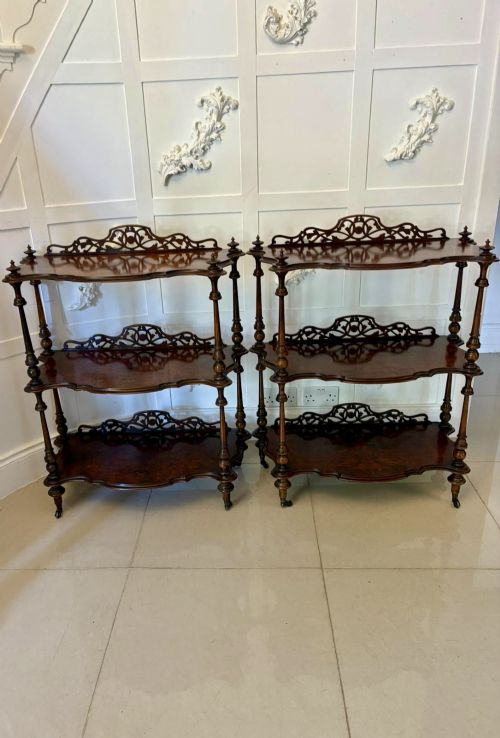
Victorian burr walnut, mahogany and satinwood examples appear frequently, alongside Edwardian designs and pieces reflecting earlier Regency and Georgian stylistic revivals. These tiered structures serve both practical storage needs and decorative display purposes within domestic interiors.
How they were made
Cabinet makers utilised dense hardwoods such as mahogany, oak and walnut, often applying burr walnut veneers or delicate marquetry inlay to prominent surfaces. Brass mounts, ormolu details and turned supports provide structural definition and decorative contrast.
Joinery methods range from traditional mortise and tenon construction in earlier pieces to modular sectional engineering found in later stacking bookcases. Pierced fretwork panels and turned barley twist columns demonstrate the detailed manual work involved in their construction.
The listings combine sturdy oak library furniture with delicate satinwood étagères spanning the nineteenth and twentieth centuries.
What varies in quality
The standard of materials and the ambition of the design dictate the distinction between ordinary and superior tiers. Highly figured timbers, such as burr walnut and satinwood, combined with intricate marquetry and gilt-bronze mounts, signal a more sophisticated commission.
Structural integrity relies upon the precision of the joinery connecting the ascending shelves to their upright supports. Pieces featuring refined turned members, carved detailing or specialised exhibition quality finish stand apart from simpler utilitarian items.
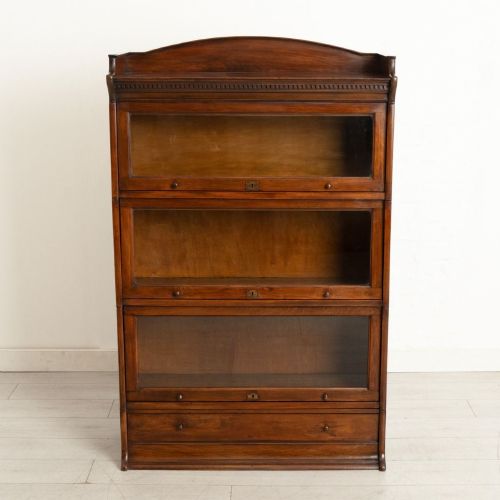
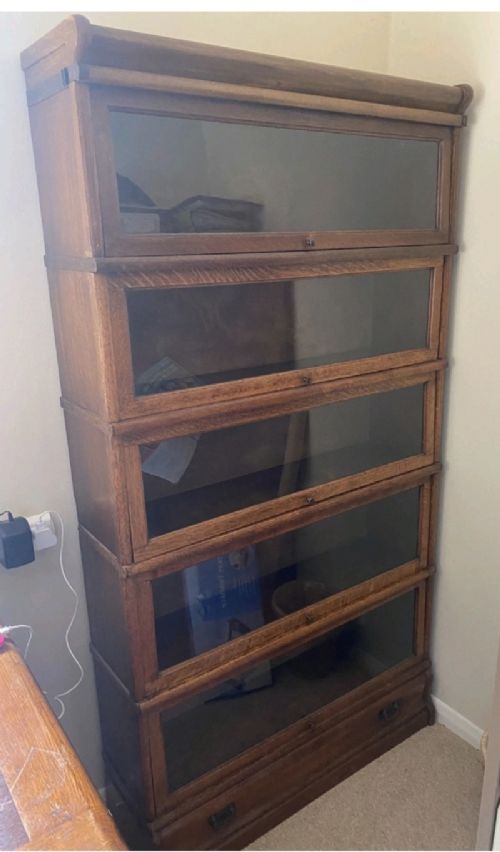
Lebus·Globe Wernicke
The Antique Display Tiers Glossary
- Whatnot
- A piece of furniture consisting of graduating open shelves used for displaying ornaments or books. Originating in the eighteenth century, these tiers became popular throughout the Victorian period.
- Étagère
- A small ornamental stand with multiple tiers for holding small objects. These French-influenced pieces frequently incorporate marquetry and delicate veneered surfaces.
- Globe Wernicke
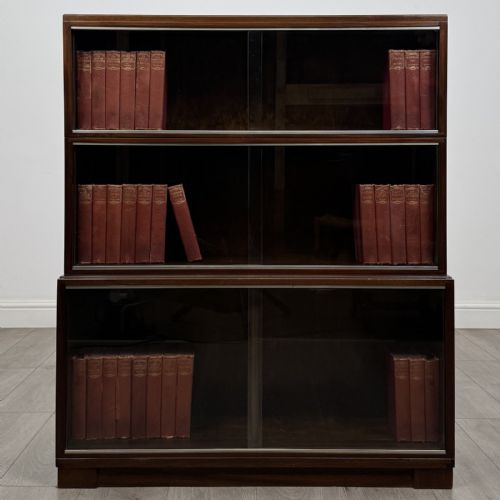
- A brand name widely used to describe sectional barrister bookcases with glazed lifting doors. These modular oak and mahogany units stack together vertically.
- Marquetry
- Decorative veneer work forming pictures or geometric patterns using various tinted woods. Craftsmen applied this technique to tabletops and cabinet doors.
- Ormolu
- Gilded bronze mounts applied to furniture edges and corners for decorative effect. This treatment appears on high-status nineteenth-century pieces.
Antique Display Tiers: Frequently Asked Questions
What is the difference between a whatnot and an étagère?
A whatnot traditionally refers to a British multi-tiered shelving unit used for general display and storage in a drawing room or parlor. An étagère often denotes a lighter, more decorative French-style stand built for ornaments.
Both forms offer graduating horizontal surfaces, but whatnot designs lean toward sturdy mahogany or walnut frames, while étagères frequently feature marquetry and refined inlays.
How do sectional bookcases function?
Sectional bookcases consist of individual stacking tiers with glass-fronted doors that lift and slide inside the unit. Each shelf module operates as a separate box resting upon a base with a drawer.
This modular engineering allows the bookcase to grow or separate as needed while keeping books protected behind glazed panels.
Where were tiered display pieces placed in period homes?
Corner whatnots fit neatly into unused angles of Victorian reception rooms, making efficient use of interior space. Freestanding étagères and side tables stood against walls or beside seating to hold small lamps, books and decorative ceramics.
Wall hanging shelves provided elevated display space without occupying floor area in smaller rooms.
How can I distinguish Victorian from Edwardian tiers?
Victorian display tiers typically employ darker, heavier timbers like solid mahogany and richly figured burr walnut, often featuring turned columns or pierced fretwork. Edwardian examples frequently lighten the palette with satinwood, painted details and Sheraton Revival influences.
Construction details and timber choice offer clear indicators of the era in which a piece was built.