

Antique Display Chiffonier
An antique display chiffonier combines the enclosed storage of a sideboard with upper shelving or glass display, bringing practical elegance to living spaces.
Antique Display Chiffonier
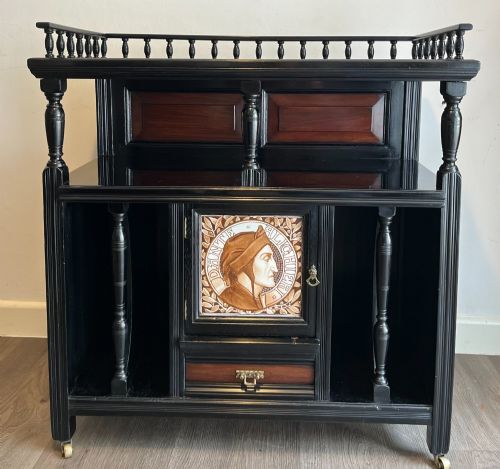
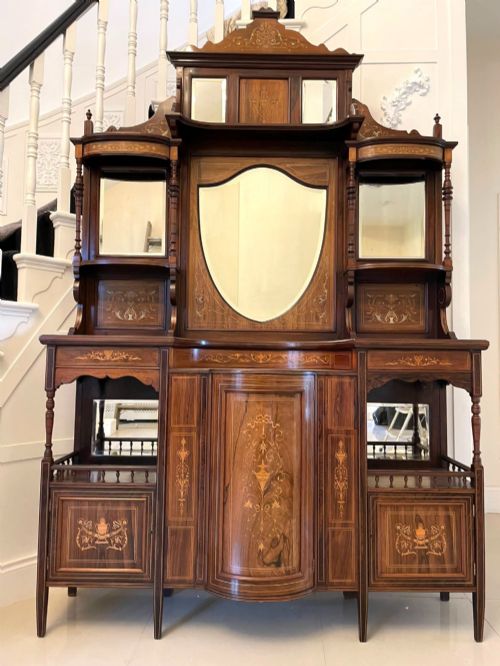
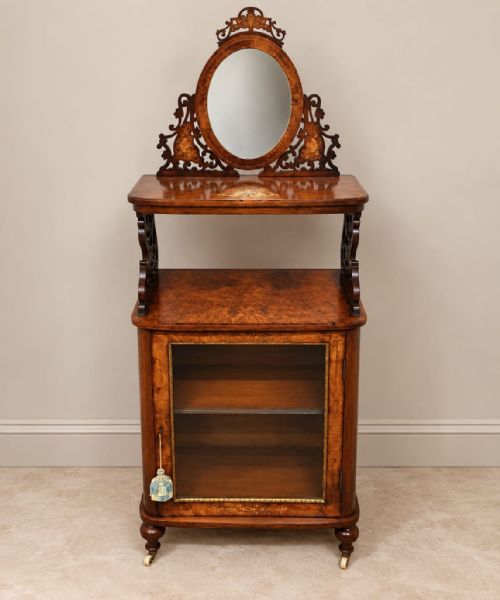
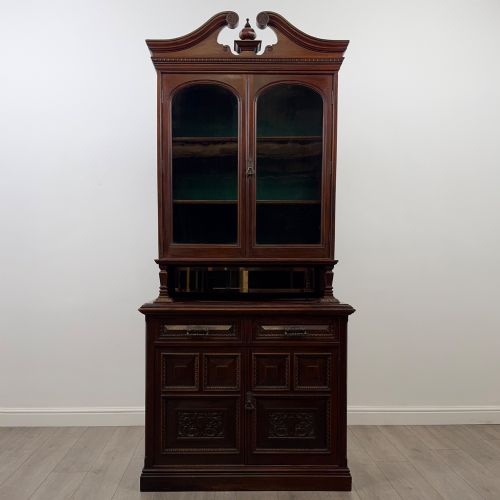
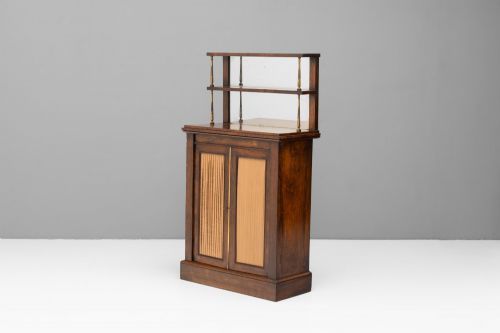
When searching for an antique display chiffonier, buyers encounter low cabinets and sideboards that evolved from Georgian and Regency forms into elaborate Victorian and Aesthetic Movement variations. These pieces serve as functional storage below and display space above, often integrating mirrors or glass doors.
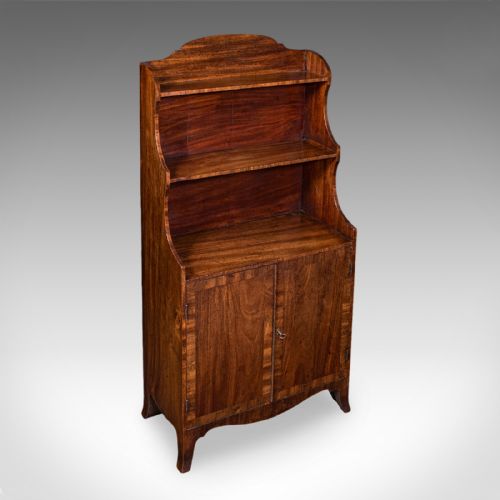
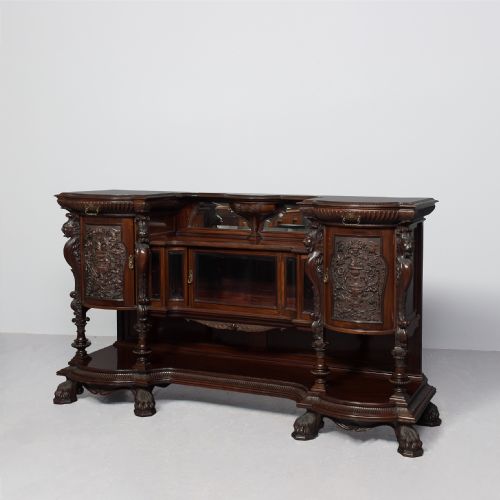
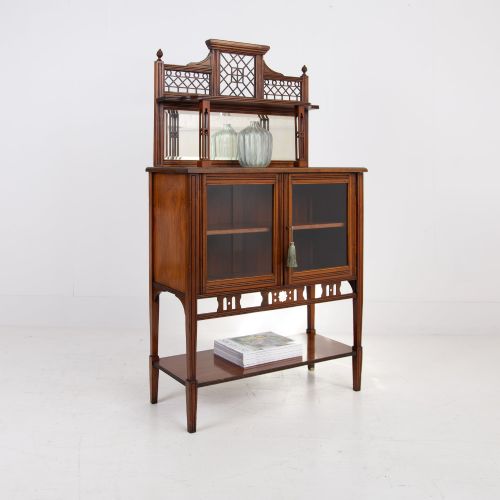
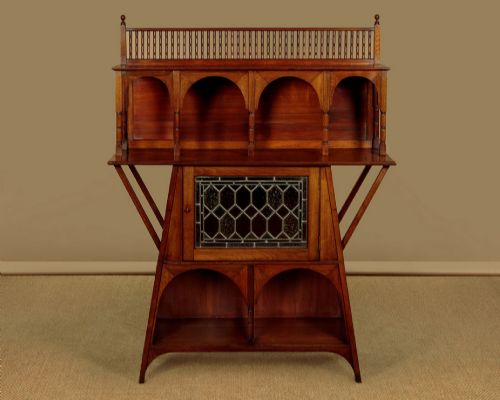
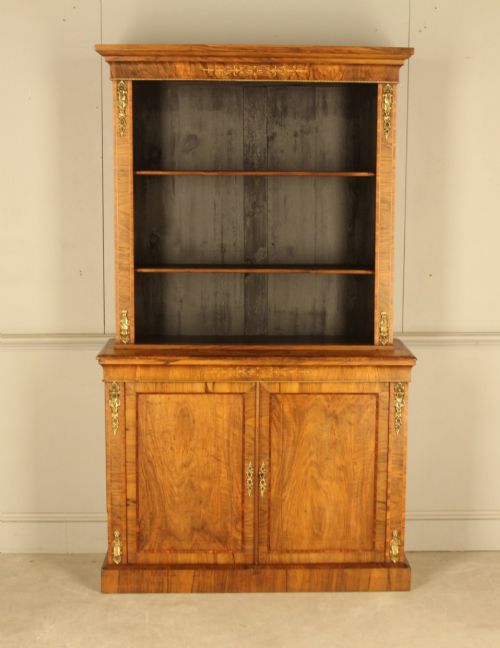
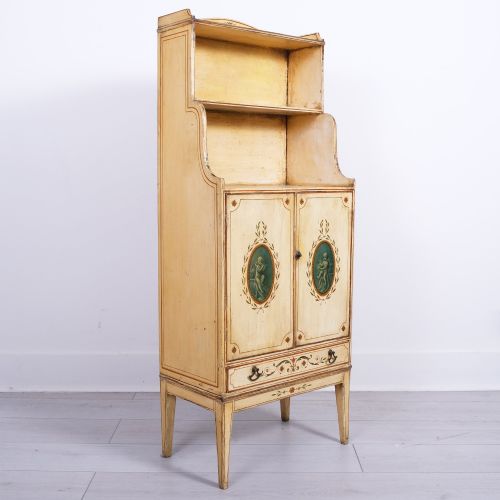
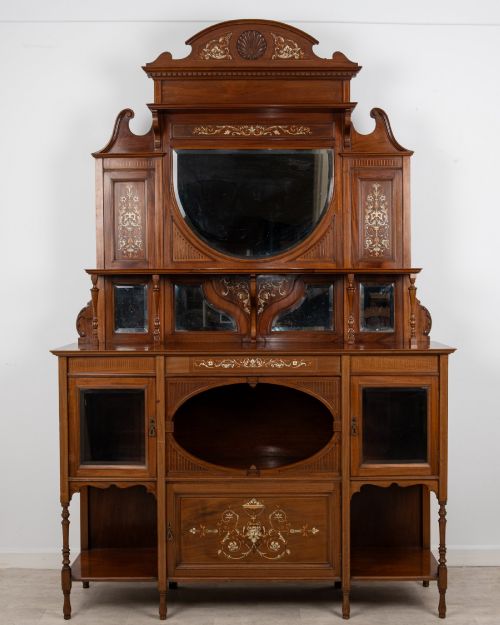
The pieces appearing on this page span the 18th, 19th, and early 20th centuries, with Victorian and Regency examples dominating the selection. Forms range from compact waterfall bookcases and narrow side cabinets to substantial mirror-back credenzas.
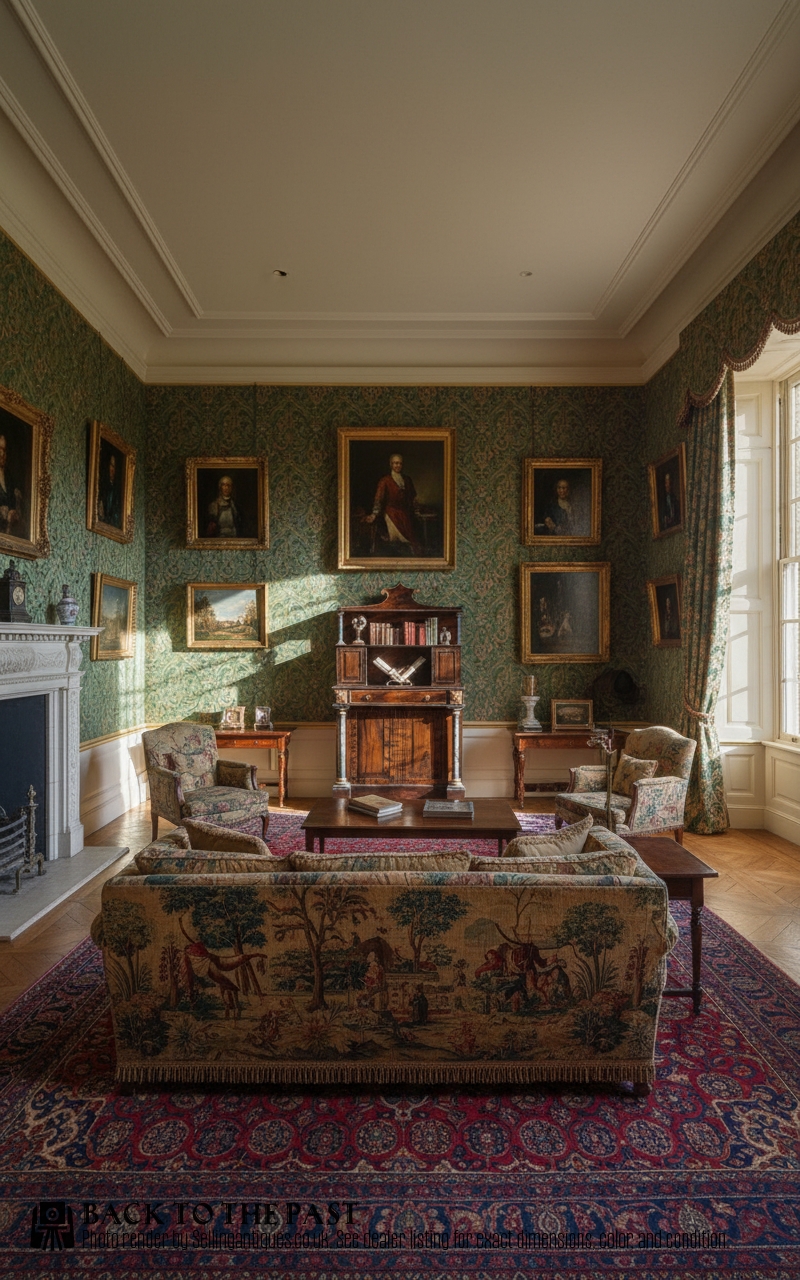
Originating primarily as serving pieces or repositories for books and precious objects, these items adapt readily to modern interiors as statement storage units or display surfaces in reception rooms.
Materials and Construction
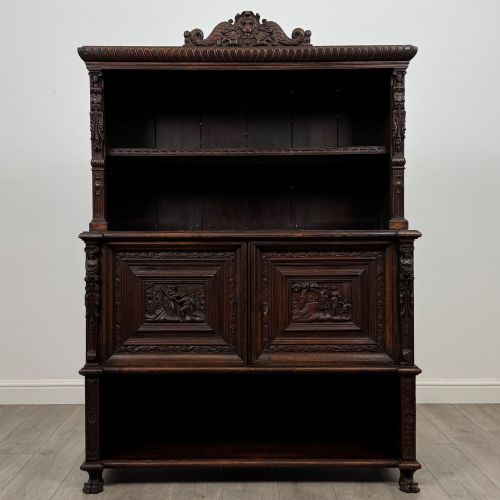
Cabinet makers utilised dense, richly figured hardwoods such as mahogany, rosewood, burr walnut, and pollard oak, often enhanced by intricate marquetry and satinwood inlay.
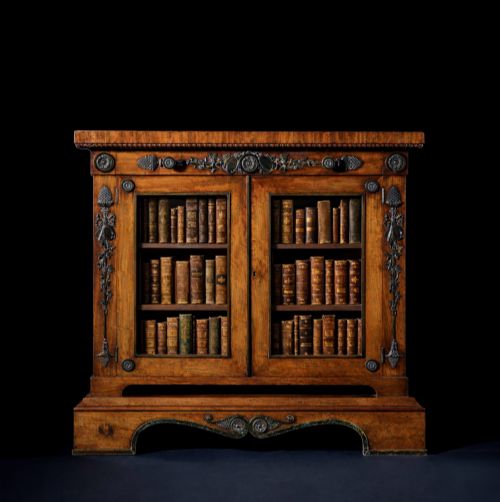
Metalwork played a structural and decorative role, with brass inlays, ormolu mounts, and bronze fixtures applied to doors and cornices, while finer examples rested upon brass castors.
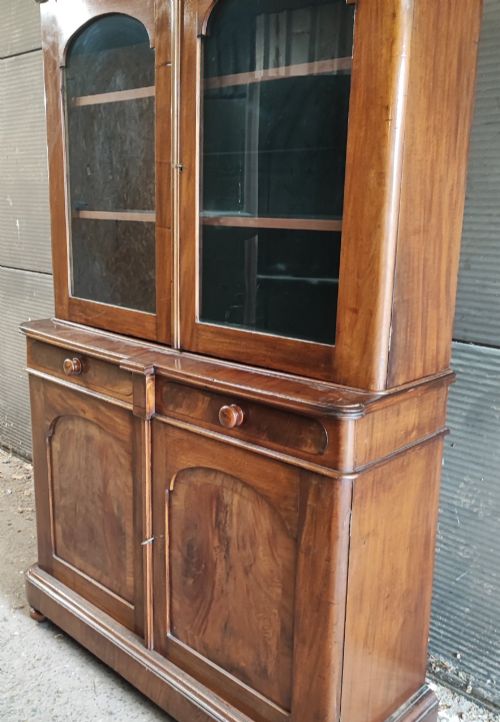
Glass panels framed in timber formed the upper display compartments, sometimes paired with mirrored backs designed to reflect light and amplify the perceived depth of a room.
Listings incorporate extensive use of rosewood, mahogany, and burr walnut, alongside decorative applications of brass, mirror glass, and marquetry.
Distinctions in Quality
Quality rests upon the selection of timber veneers and the precision of the cabinet work, where symmetrical grain matching and tight joinery separate standard production from superior pieces.
The refinement of decorative elements such as hand-carved mahogany foliage, delicate brass stringing, and marquetry details dictates the overall status of a piece within its period.
Proportion and scale define the more successful designs, where compact dimensions or grand mirror-backed proportions remain balanced without feeling heavy.
Liberty & Co.·Garnett & Sons
The Antique Display Chiffonier Glossary
- Chiffonier
- A low cabinet, typically fitted with drawers and doors, evolving from a sideboard into a multipurpose piece for storage and display.
- Marquetry
- The art of forming decorative patterns using fitted pieces of wood veneer, often incorporating contrasting timbers and exotic materials.
- Ormolu
- Gilded bronze used for decorative mounts and furniture trim, common in Regency and Victorian cabinet design.
- Credenza
- A sideboard or buffet cabinet, frequently featuring mirrored backs and glass-fronted compartments for display.
- Waterfall bookcase
- A set of open shelves arranged in a stepped, descending fashion, often integrated into the upper section of a compact cabinet.
Antique Display Chiffonier: Frequently Asked Questions
What is an antique display chiffonier used for?
These cabinets provide enclosed storage behind wooden doors paired with open shelving or glass-fronted compartments above for displaying ceramics, books, or decorative objects.
In modern rooms, they function effectively as sideboards in dining spaces or as focal display units in sitting rooms.
How do I identify a Regency period piece?
Regency items often feature classical proportions, rosewood or mahogany timbers, and restrained brass inlay or bronze mounts rather than heavy carving.
They frequently display clean architectural lines influenced by ancient Greek and Roman design.
What distinguishes Victorian chiffoniers?
Victorian examples frequently incorporate burr walnut veneers, arched mirror backs, and richer carved details reflecting the industrial confidence and stylistic revivals of the era.
They tend to offer larger proportions and more ornate hardware compared to earlier Georgian designs.
How should I care for polished hardwood surfaces?
Maintain timber surfaces by dusting with a dry lint-free cloth and applying traditional beeswax sparingly to nourish the grain without building up a sticky residue.
Keep pieces away from direct sunlight and radiators to prevent timber splitting and veneer lifting.