



Dark Wood Parlour Chiffonier
A dark wood parlour chiffonier brings low cabinet storage and display space to Victorian and Edwardian rooms.
Dark Wood Parlour Chiffonier
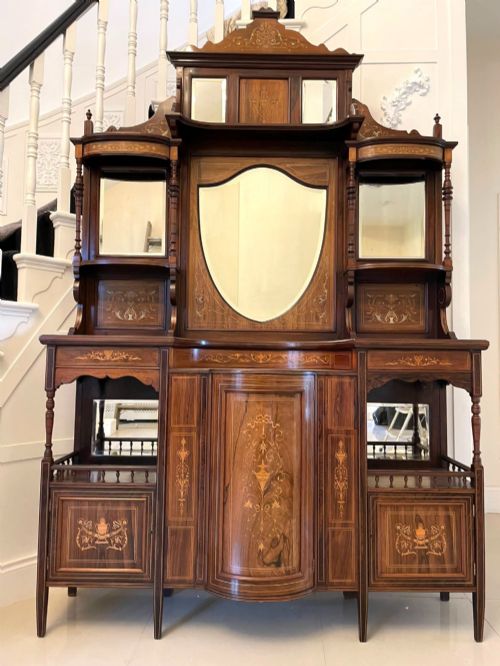
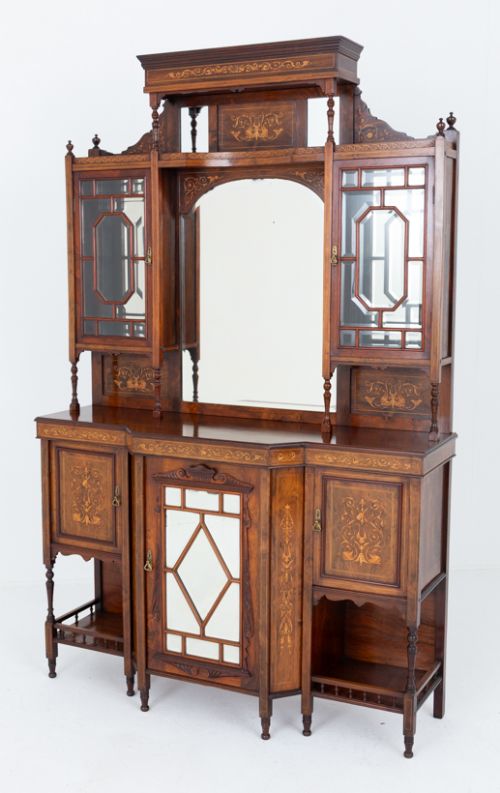
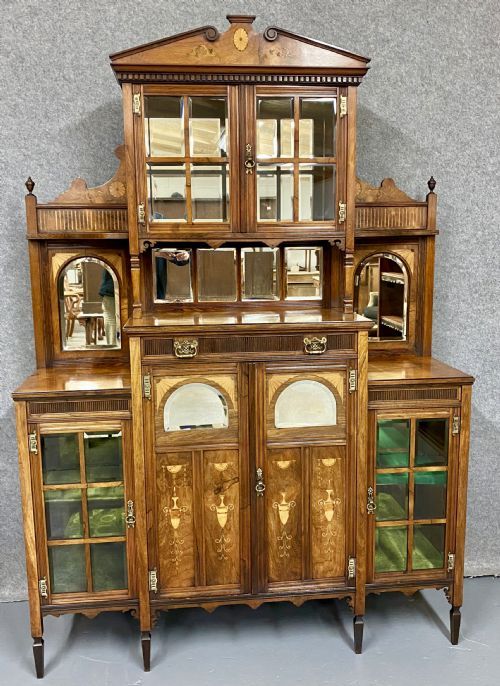
A dark wood parlour chiffonier appears on this page as a side cabinet, display cabinet, or credenza, dating chiefly from the Victorian and Edwardian periods. These low storage pieces sit against a wall, combining enclosed cupboard space below with surface display or mirror backs above.
The versions met most often on this page are fashioned from rosewood or mahogany, frequently enriched with marquetry, inlay, and mirror glass. Pieces span the nineteenth century, including Regency examples and late Victorian aesthetic movement interpretations.
How they were made
Cabinet makers utilised dense hardwoods such as rosewood and mahogany as the structural foundation, often incorporating satinwood and ebony for contrasting detail. Timber surfaces received precise marquetry and fine inlay work, creating intricate floral or geometric patterns across doors and friezes.
Many cabinets integrate bevelled mirror glass within wooden framework backs, whilst brass fittings secure doors and shelves. Some Regency examples employ painted finishes and simulated rosewood graining to mimic costlier timbers.
Listings feature rosewood, mahogany, satinwood, and walnut cabinets spanning the Victorian, Edwardian, and Regency eras.
What varies in quality
The standard of timber selection and the crispness of the marquetry inlay determine the standing of a piece. Finer examples display meticulous botanical or classical motifs cut with precision into the primary wood, using contrasting species like satinwood.
Structural harmony also separates ordinary output from superior cabinet work, seen in the integration of mirror glass backs and the refinement of brass hardware. Maker attribution, such as work bearing the stamp of Gillows, elevates a piece further.
Gillows
The Dark Wood Parlour Chiffonier Glossary
- Chiffonier
- A low sideboard or cabinet, typically featuring a combination of shelving and enclosed cupboard space below.
- Marquetry
- Decorative veneer work forming pictures or patterns by assembling small pieces of various coloured woods and other materials.
- Ebonised
- Timber treated with a dark stain or finish to imitate the dense, black appearance of ebony wood.
- Credenza
- A sideboard or display cabinet lacking legs, designed to stand directly on the floor.
- Satinwood
- A pale, lustrous timber utilised for contrasting inlay and stringing on darker cabinet furniture.
Dark Wood Parlour Chiffonier: Frequently Asked Questions
What is a parlour chiffonier?
A parlour chiffonier is a low cabinet designed for the reception rooms of Victorian and Edwardian homes. It provided surface display and enclosed storage for household items.
These pieces typically combined wooden shelving, cupboards, and sometimes mirror backs to enhance light and space in a drawing room.
How do I date a dark wood cabinet?
Dating relies upon observing timber choices, decorative styles, and construction techniques characteristic of periods like Regency, Victorian, or Edwardian. Rosewood and heavy marquetry often point to the mid-to-late nineteenth century.
Later Edwardian versions frequently utilise mahogany with lighter stringing and simpler overall proportions compared to dense Victorian aesthetic designs.
Were these cabinets used for display?
Many variants incorporate glass doors or open shelving specifically intended for displaying porcelain, ornaments, or books. Mirror backs further amplified the visual impact of displayed items.
Enclosed lower cupboards simultaneously stored items out of sight when not required for daily use.
What is the difference between a chiffonier and a credenza?
A chiffonier traditionally combines a low sideboard base with a small superstructure or mirror back. A credenza sits flat upon the floor as a sideboard or display unit without raised upper tiers.
Both terms describe low-profile storage furniture common in nineteenth-century parlours.