
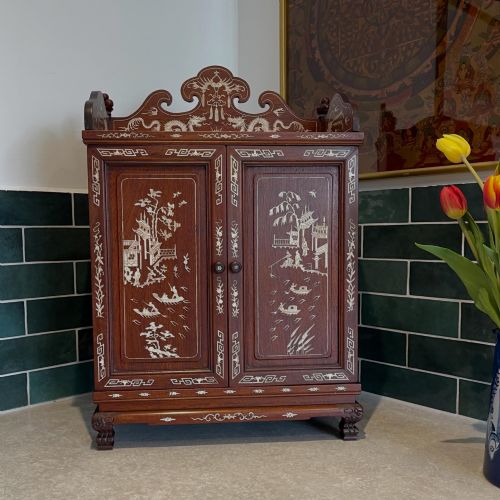


Antique Desktop Jewellery Box
An antique desktop jewellery box organises precious keepsakes in miniature timber and leather cabinets spanning Georgian, Victorian, and later periods.
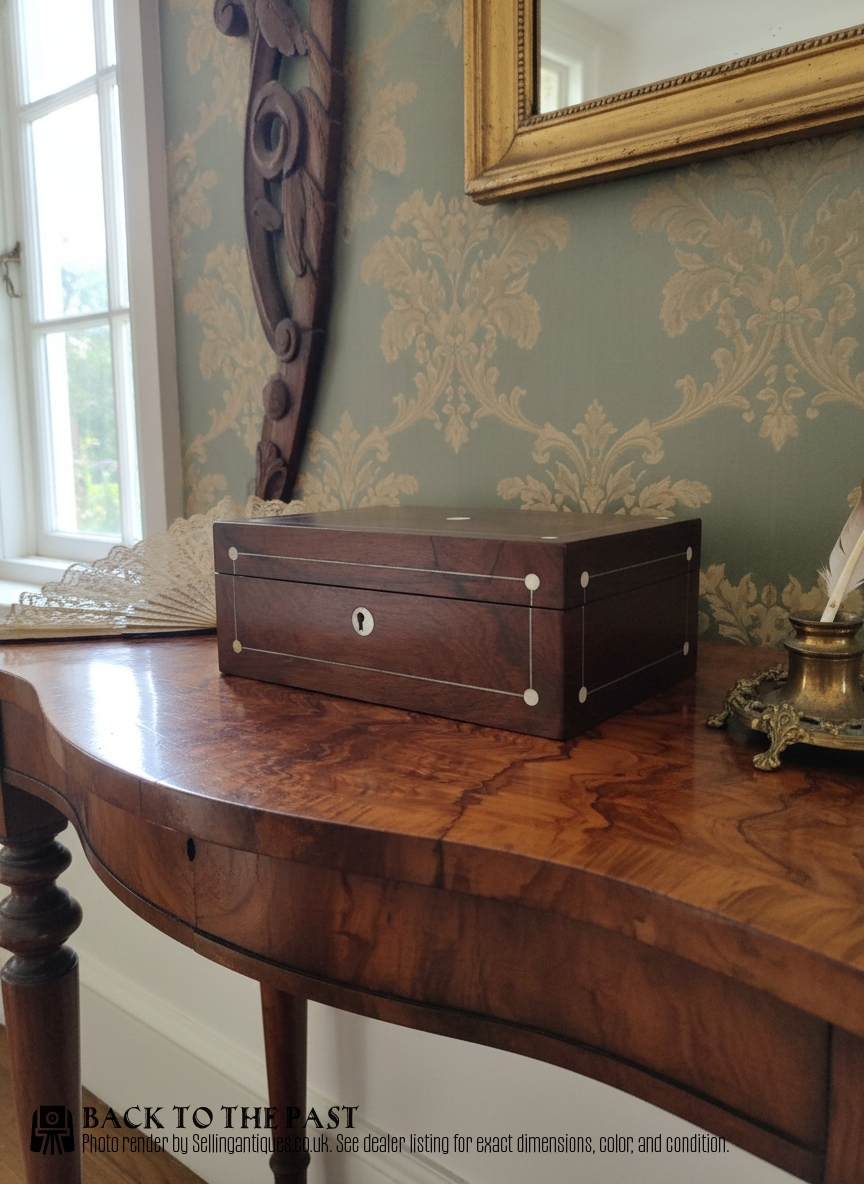
Antique Desktop Jewellery Box
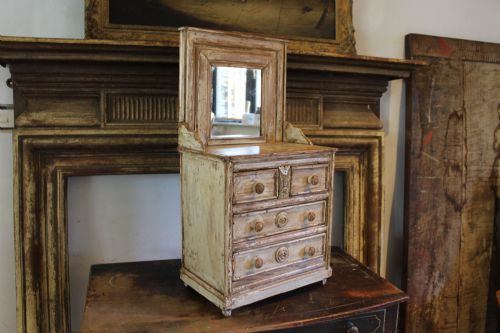
An antique desktop jewellery box encompasses miniature chests of drawers, table cabinets, and lidded caskets designed for tabletop placement. The pieces range from Georgian and Regency forms to Victorian and Edwardian examples, alongside various international origins.
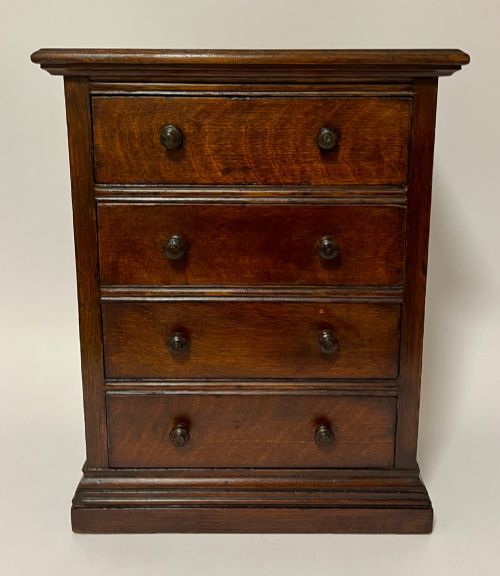
Miniature chests of drawers and apprentice pieces dominate the available selection, often configured with multiple small drawers or drop fronts. These compact case pieces serve equally as desktop tidies, collector cabinets, and dedicated jewellery storage.
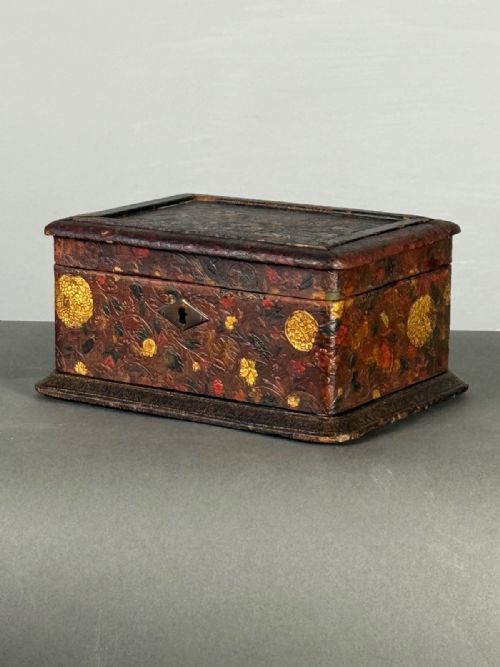
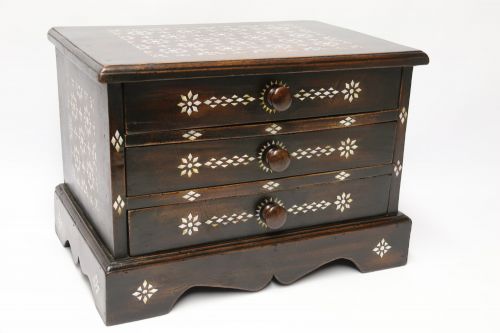
Regional variations appear in diverse styles, including Anglo-Indian hardwood chests, Chinese lacquered cabinets, and French leather-covered boxes. These diverse origins bring distinctive local materials and decorative traditions to the tabletop format.
Materials and construction
Cabinet makers utilised dense hardwoods such as mahogany, walnut, oak, and rosewood for structural durability and rich grain patterns. Secondary woods and specialised veneers like burr walnut or satinwood provided decorative exterior surfaces.
Surface decoration incorporated brass fittings, mother of pearl inlay, marquetry, pokerwork, and hand-painted finishes on papier-mâché or leather. Glass panels frequently appear in drop-front doors, while specialised interior linings accommodate delicate items.
Some miniature drawers are so convincing you might try to file your taxes in them, provided your tax forms measure roughly two inches square.
Craftsmanship and condition
The standard of timber selection and veneer matching defines the initial visual impact of the piece. Fine examples demonstrate careful grain alignment across multiple drawers and harmonious inlay work.
Joinery execution in small-scale furniture dictates structural longevity, with precise dovetailing securing the miniature drawer boxes. The integration of original hardware, working locks, and keys further distinguishes superior examples.
Susse Freres Paris
The Antique Desktop Jewellery Box Glossary
- Apprentice piece
- A small-scale item demonstrating advanced woodworking skills, traditionally created by a learner striving for master status. These items replicate full-size furniture forms in miniature.
- Marquetry
- Decorative veneer work forming pictorial or geometric patterns using diverse wood tints. Artisans carefully cut and fit thin pieces of wood into a prepared ground.
- Pokerwork
- Surface decoration created by burning designs into wood using heated metal tools. This technique produces dark, tonal linear patterns popular in Arts and Crafts pieces.
- Table cabinet
- A portable case piece designed to sit on a desk or table rather than the floor. They typically contain small drawers, shelves, or compartments for valuables.
- Papier-mâché
- A composite material made from paper pulp or layers of paper bound with glue, then moulded and lacquered. It provides a smooth surface for painting and inlay.
Antique Desktop Jewellery Box: Frequently Asked Questions
What is an apprentice piece?
An apprentice piece is a miniature furniture model created by a trainee artisan to demonstrate mastery of woodworking joints and proportions. These items mirror full-scale chests of drawers and cabinets.
Craftsmen built these small models with the same joinery techniques used in large furniture. Their survival provides insight into historical workshop practices.
How were tabletop cabinets used?
Tabletop cabinets served as secure desktop storage for letters, documents, and personal valuables. Their internal compartments kept small items organised in domestic and professional settings.
Wealthy owners utilised them for jewellery, stationery, and collections of small specimens. The locked doors and drawers protected private possessions from dust and casual view.
How do I identify a Victorian jewellery box?
Victorian jewellery boxes often feature burr walnut, rosewood, or coromandel veneers combined with brass banding and velvet or silk interiors. Drop-front doors and compartmentalised lift lids are common configurations.
Manufacturing dates can sometimes be verified through registry marks or lock stamps. The incorporation of bevelled glass and papier-mâché also points toward nineteenth-century production.
Are antique desktop boxes fragile?
While constructed from durable hardwoods, these boxes require careful handling due to their age and delicate surface decorations. Inlays, veneers, and original glass panels are susceptible to damage from extreme humidity or physical impact.
Routine maintenance involves gentle cleaning and avoiding placement in direct sunlight. Proper care preserves the historical integrity of the wood and internal linings.