




Rosewood Workbox Inlay
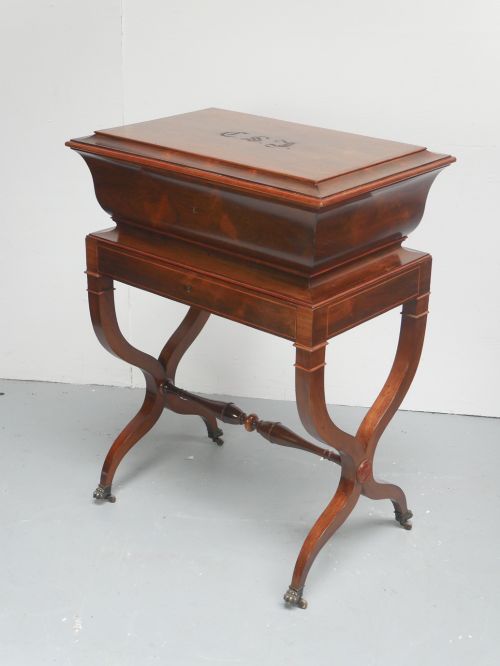
These rosewood workbox inlay pieces are fitted sewing and jewellery chests, offering neat compartments for needlework and small treasures.
Rosewood Workbox Inlay
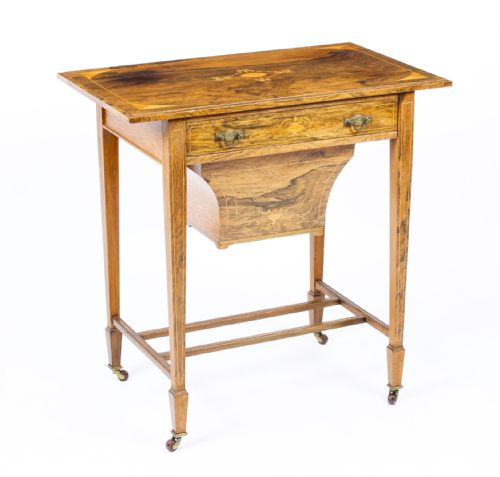
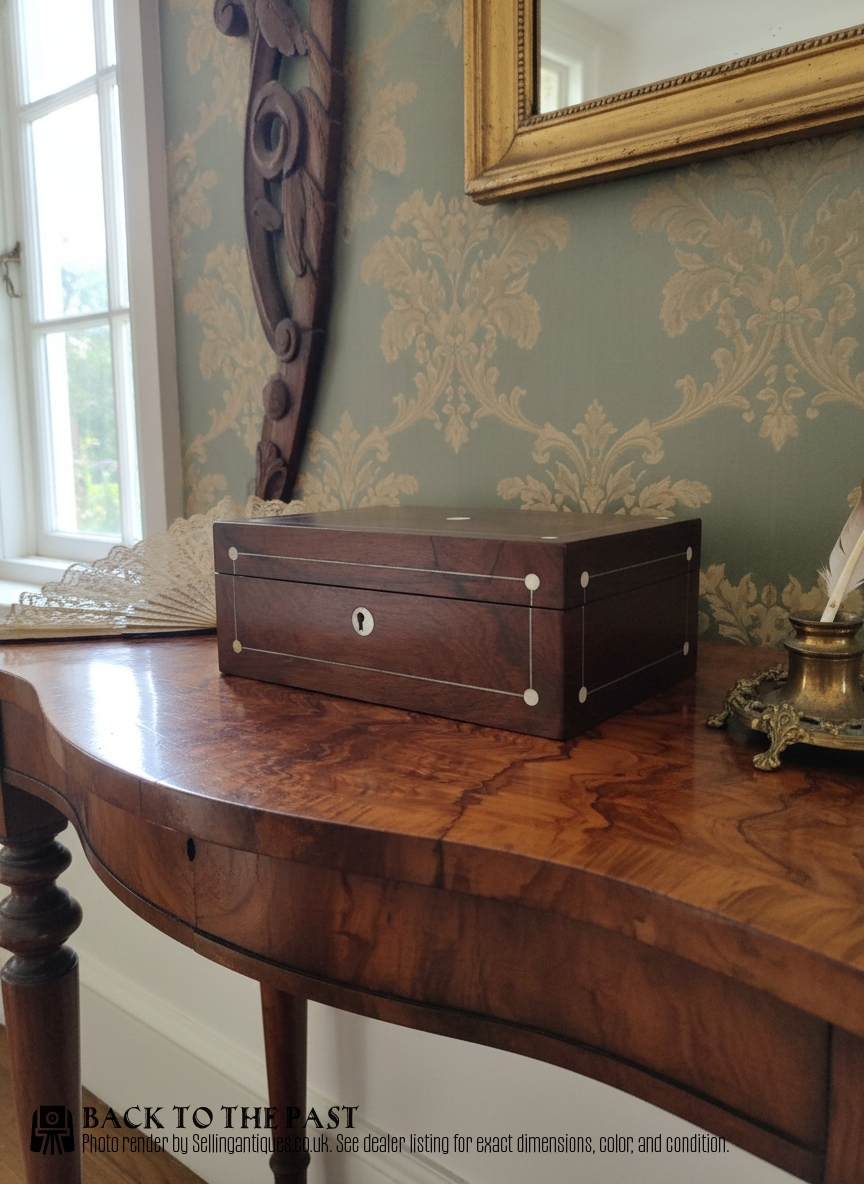
A rosewood workbox inlay typically takes the form of a sewing box, jewellery chest, or occasional work table designed for domestic needlework and storage. These pieces emerge from the Georgian, Regency, and Victorian periods, alongside later Victorian Tunbridge Ware and Anglo-Indian examples.
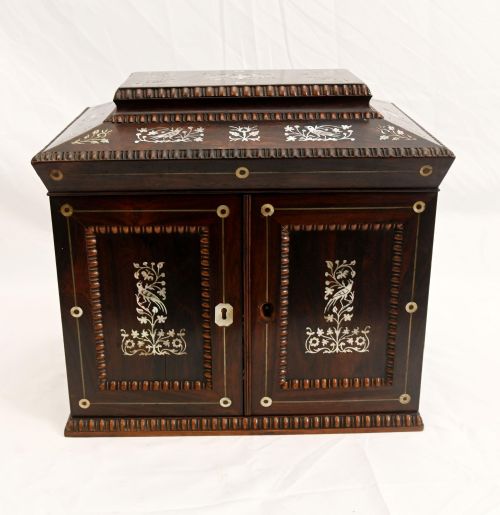
The primary forms on this page include sarcophagus shapes, small pincushion boxes, and fitted sewing chests with interior compartments for cottons and tools. Makers constructed these containers from dark tropical timbers and detailed them with contrasting decorative elements.
How they were made
Cabinet makers utilised dense rosewood timber as the primary carcase material, often pairing it with walnut or incorporating brass inlay and mother of pearl. Tunbridge Ware examples introduce intricate wood mosaic techniques to create geometric pictorial panels on the lid.
Interiors feature fitted compartments lined with silk, velvet, or bone accessories to organise sewing implements and small jewellery items. Metal stringing and brass banding accent the exterior edges and lids of Regency and Victorian boxes.
Materials recorded across these decorative boxes include rosewood, brass, mother of pearl, velvet, silk, bone, walnut, and metal.
What varies in quality
Quality rests in the precision of the brass and mother of pearl inlay work, where tight joints and complete decorative motifs elevate a piece. Finer examples retain their original internal silk or velvet linings and fitted compartments rather than later replacements.
The complexity of the exterior woodwork, particularly in Tunbridge Ware mosaics or Anglo-Indian carved details, marks the distinction between standard domestic boxes and superior workshop production.
Lesage
The Rosewood Workbox Inlay Glossary
- Tunbridge Ware
- A type of woodwork featuring mosaic patterns made from many small pieces of naturally coloured wood. This technique creates detailed geometric or floral pictures on box lids.
- Mother of pearl
- An iridescent inner shell layer used for flat inlay decoration on box surfaces. Craftsmen cut this material into thin shapes to form floral or geometric motifs.
- Sarcophagus
- A box shape with a domed or sloping lid resting on a rectangular base, popular during the Regency and Victorian eras. This form gives a substantial architectural presence to small sewing chests.
- Workbox
- A portable container fitted with trays, compartments, and pin cushions for holding needlework tools and threads. These boxes sat on tables or stands in nineteenth-century sitting rooms.
- Stringing
- Thin lines of contrasting wood or metal inlaid into the surface of a furniture piece or box. This technique frames panels and highlights edges.
Rosewood Workbox Inlay: Frequently Asked Questions
What is a rosewood workbox?
A rosewood workbox is a portable nineteenth-century chest designed to hold sewing equipment, threads, and small needles. These boxes feature hinged lids and internal compartment trays.
Many examples include velvet or silk linings and dedicated spaces for bone or ivory tools. They served as functional items for ladies practicing needlework in the home.
How do I date a rosewood box?
Dating relies on the overall shape, interior fittings, and the style of inlay decoration present on the exterior. Regency pieces often show precise brass inlay, while Victorian examples frequently incorporate mother of pearl.
Construction methods and secondary timbers inside the box also provide clues to the decade of manufacture. Tunbridge Ware and sarcophagus forms generally point towards the middle decades of the nineteenth century.
What was mother of pearl used for?
Craftsmen used mother of pearl to create inlaid decorative motifs, escutcheons, and floral patterns on box lids. The iridescent material provided a bright contrast against the dark brown grain of rosewood.
Pieces of shell were carefully shaped and pressed into the wood surface before being sanded flush. This technique was especially popular on Victorian sewing boxes and jewellery chests.
How do I care for rosewood?
Rosewood benefits from a stable environment away from direct sunlight and sudden changes in room humidity. Keeping the timber away from heat sources prevents the wood from drying and warping.
Applying occasional conservative wax polishes helps maintain the natural lustre of the dark grain. Care should also be taken to protect delicate internal silk and velvet linings from moisture.