



Mother of Pearl Jewellery Box
A mother of pearl jewellery box brings lustrous shell inlay and dark timber together to safely store small treasures.
Mother of Pearl Jewellery Box
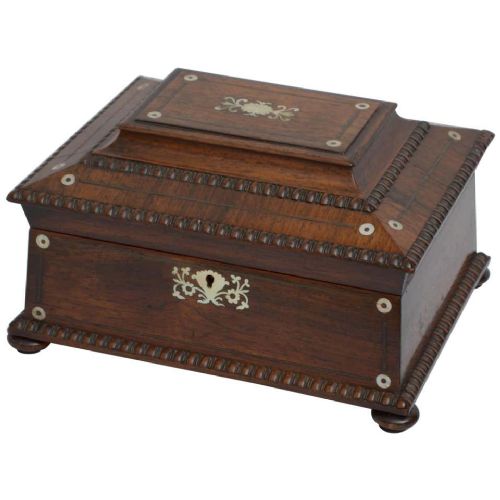
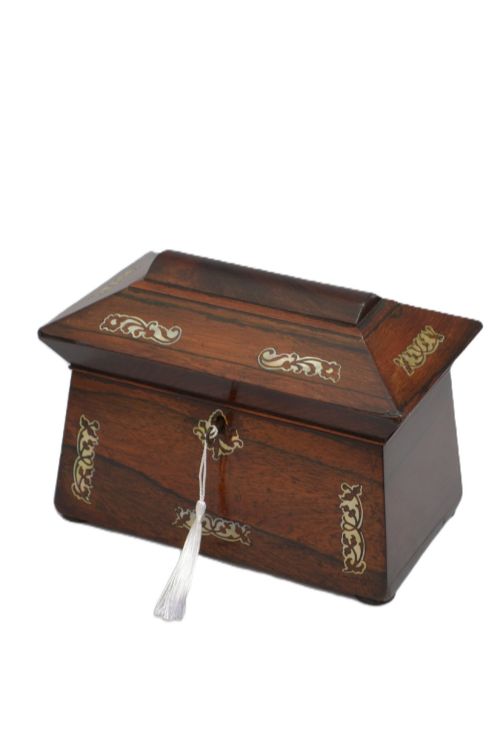
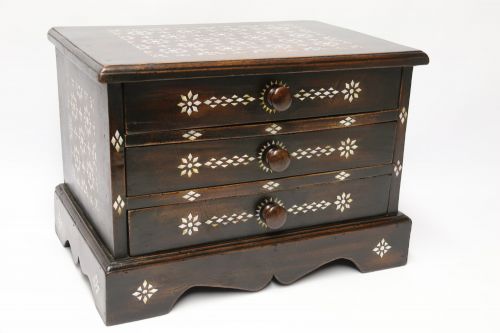
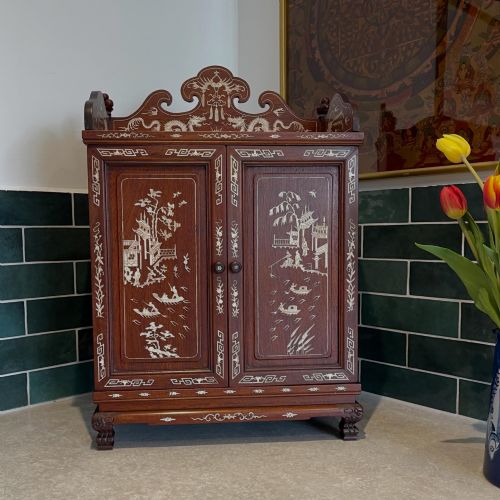
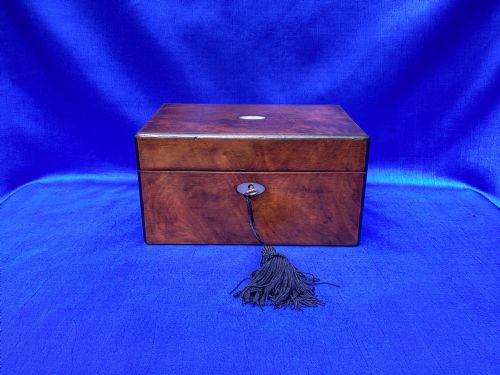
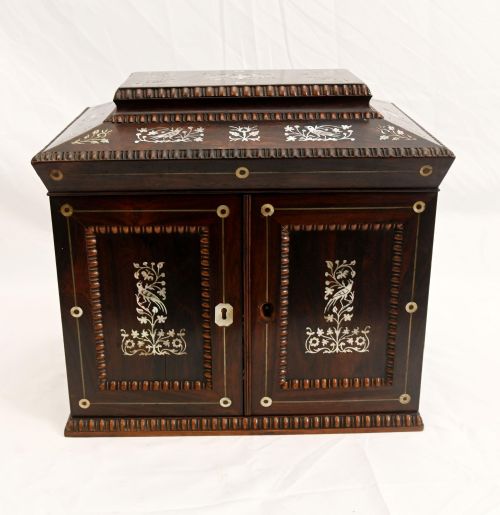
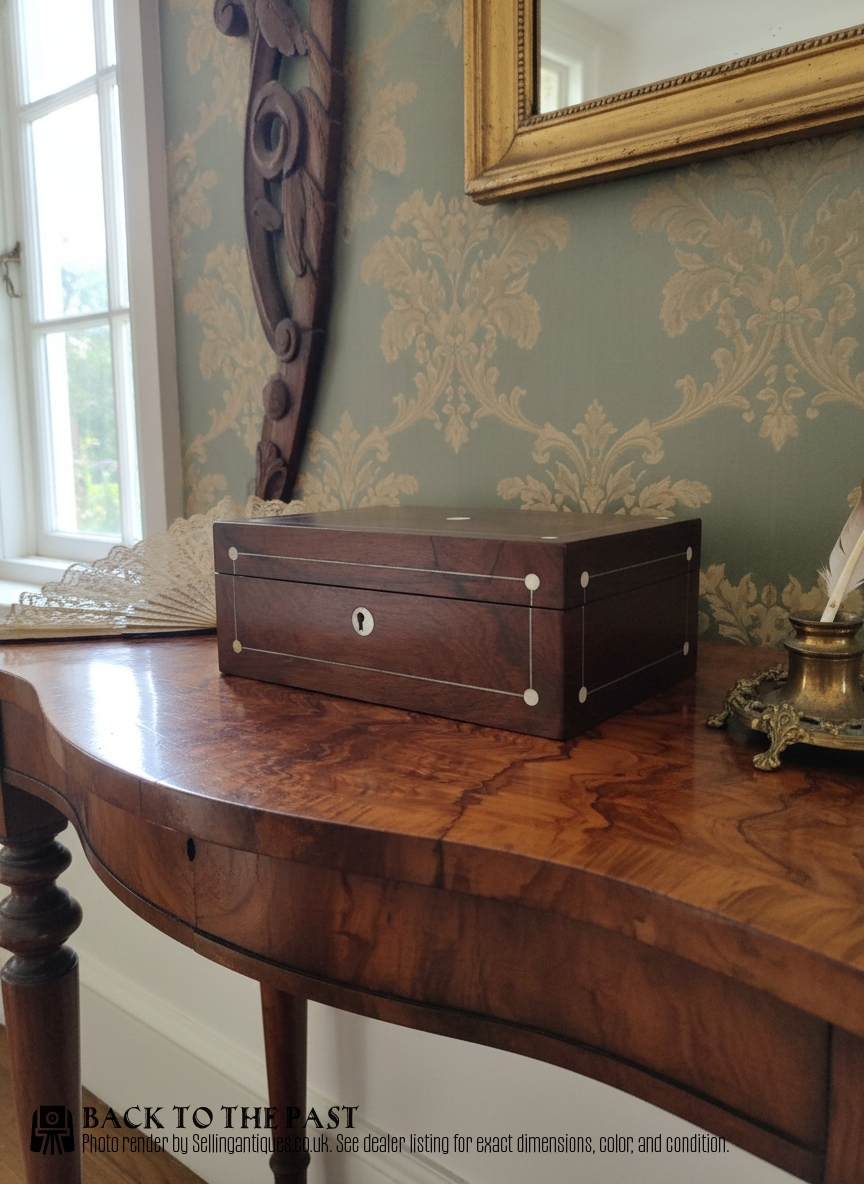
A mother of pearl jewellery box is a lidded container designed to hold rings, brooches, and keepsakes, drawing the eye through shimmering shell sections set into timber or papier-mâché. Buyers seeking this phrase encounter small caskets, table cabinets, and fitted workboxes created to sit upon dressing tables.
The pieces listed here stem predominantly from the nineteenth century, including Victorian, Regency, and William IV periods, alongside oriental and continental examples. Rosewood, walnut, and coromandel frequently form the primary structure, accented by geometric or floral shell tessellation.
How they were made
Craftsmen built the carcasses from dense hardwoods like rosewood and mahogany, or shaped them from pressed papier-mâché, applying lacquer finishes where appropriate. They channeled the timber surfaces to receive thin plates of iridescent mother of pearl, securing them flush with the surrounding material.
Engravers then inscribed delicate scrollwork and borders directly onto the shell sections using fine steel points. Interiors were lined with silk, velvet, or leather, incorporating fitted compartments, mirrors, and lift-out trays for sewing implements and rings.
Several Victorian boxes retain secret hidden drawers that slide out only when you press a concealed internal wooden spring.
What varies in quality
The distinction between ordinary and superior items rests on the precision of the inlay work and the density of the primary timber. Skillful makers matched shell segments for consistent iridescence and fitted brass stringing or silver details tightly around the pearl motifs.
Completeness of the interior fittings also dictates standard, with original velvet linings, working locks with keys, and fitted trays commanding greater appreciation. Retaining the integrity of the delicate shell panels without replacement pieces elevates a box within its class.
The Mother of Pearl Jewellery Box Glossary
- Mother-of-pearl
- The hard, iridescent internal layer of certain mollusc shells, utilised for decorative inlay. It reflects shifting tones of pink, green, and silver when caught by the light.
- Workbox
- A container equipped for sewing and needlework items, often featuring multiple lidded compartments and lift-out trays. Many Victorian examples double as secure jewellery storage.
- Papier-mâché
- A composite material made from paper pulp mixed with glue and dark resin, pressed into moulds and dried. It provides a smooth dark ground for inlaid shell decoration.
- Sarcophagus
- A box style featuring a sloping, pedestal-mounted body reminiscent of ancient monumental tombs. Regency and Victorian makers frequently adopted this architectural form for larger caskets.
- Stringing
- Thin lines of contrasting wood, brass, or metal inlaid into timber surfaces to frame panels. This technique outlines the geometry of the box lid and body.
Mother of Pearl Jewellery Box: Frequently Asked Questions
How were these boxes used?
Owners kept them upon dressing tables to store rings, brooches, and daily trinkets within velvet-lined compartments. Many double as sewing cases containing fitted trays for threads and needles.
They also served as secure repositories for personal letters and keepsakes, locked with small brass keys to protect private items.
What woods were used?
Rosewood, walnut, and mahogany form the primary structure of most English pieces, providing a dark, rich contrast to the pale shell inlay. Coromandel and amboyna appear on decorative examples, offering distinct grain patterns.
Some Asian and papier-mâché pieces utilise lacquered surfaces or dense hardwoods instead of traditional European timbers.
How do I care for my box?
Keep the piece away from direct sunlight and excessive heat to prevent the wood from warping and the shell inlay from loosening. Dust gently with a dry, soft cloth without applying modern liquid polishes.
Maintain a stable room humidity to protect both the delicate interior silk linings and the animal glues holding the pearl pieces in place.
How do I tell periods apart?
Regency and William IV pieces often display architectural sarcophagus shapes with bold brass feet and geometric shell patterns. Victorian examples frequently feature rosewood or walnut boxes with elaborate floral mother of pearl engraving and fitted mirror lids.
Late nineteenth and early twentieth century items encompass Chinese hardwood table cabinets and papier-mâché caskets with distinct oriental motifs.