






Antique Desktop Chest
An antique desktop chest organises papers, specimens and small treasures in miniature, bringing compact craftsmanship to any surface.
Antique Desktop Chest
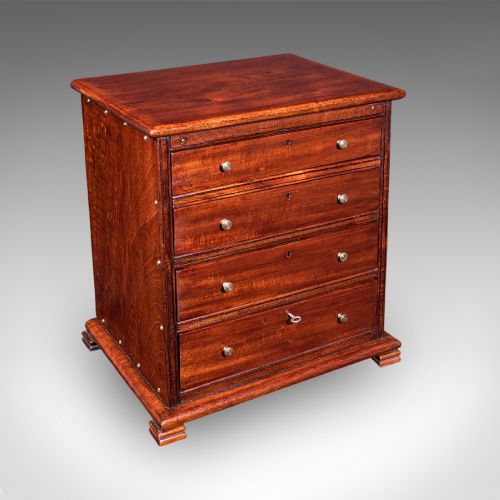
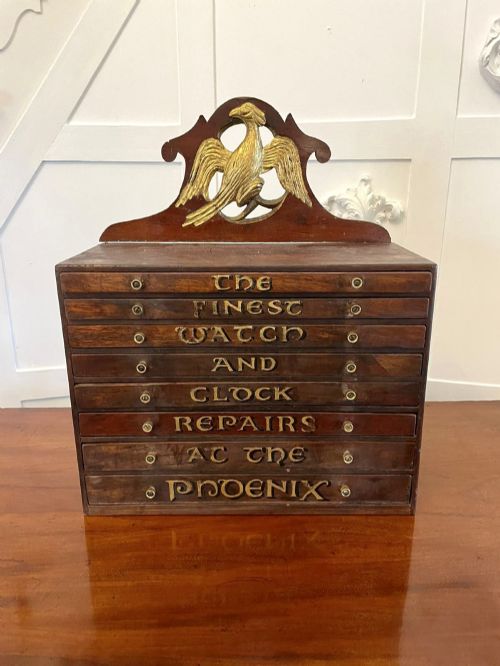
An antique desktop chest provides compact storage in miniature form, ranging from small drawer units and collector cabinets to cigar humidors and table-top stationery cases. These pieces sit comfortably upon tables and desks, offering partitioned space for specimens, letters or valuables without demanding floor space.
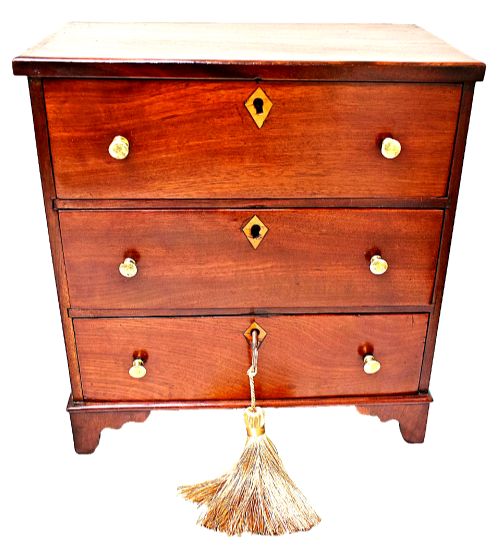
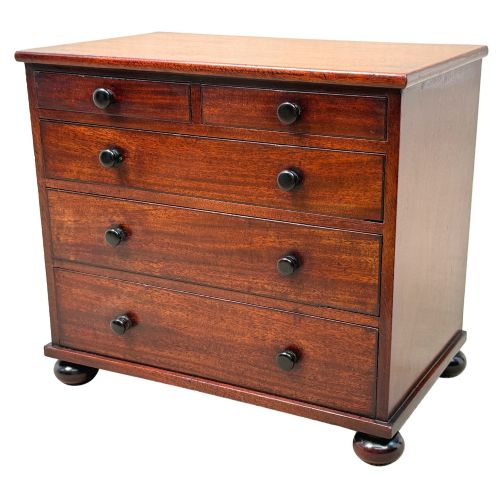
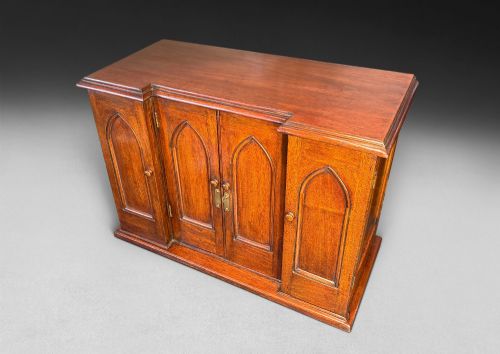
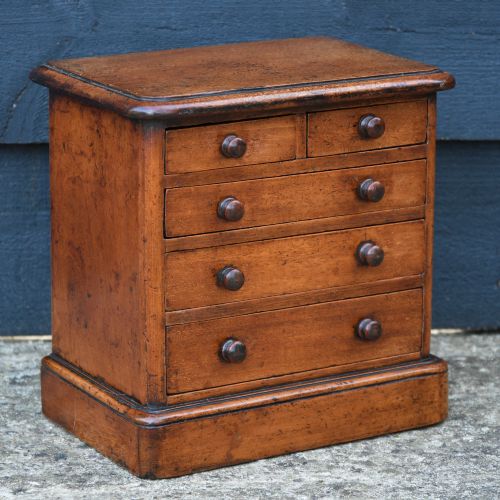
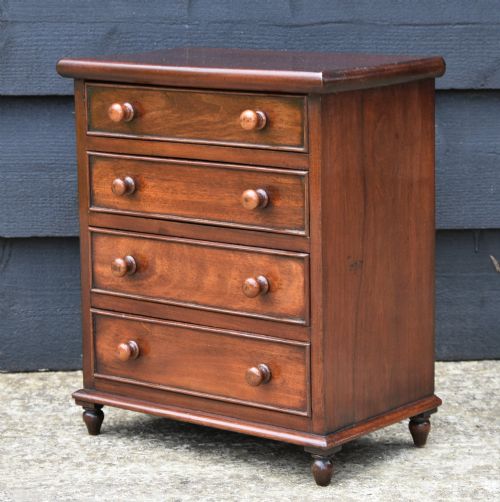
The version most commonly met on this page is the Victorian mahogany miniature chest of drawers or apprentice piece, frequently constructed with multiple small drawers and turned feet. Alongside these, collector cabinets in oak, walnut and pine appear regularly, designed to house specific items like coins, insects or cigars.
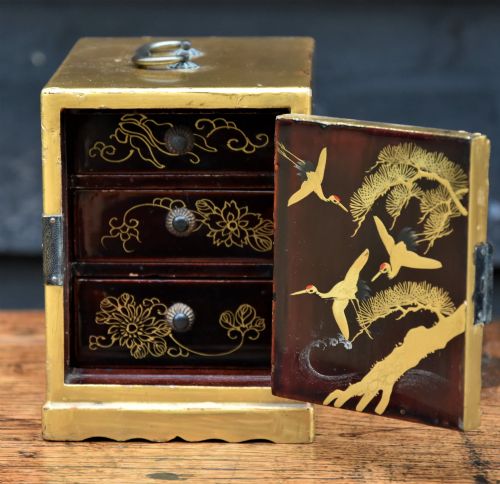
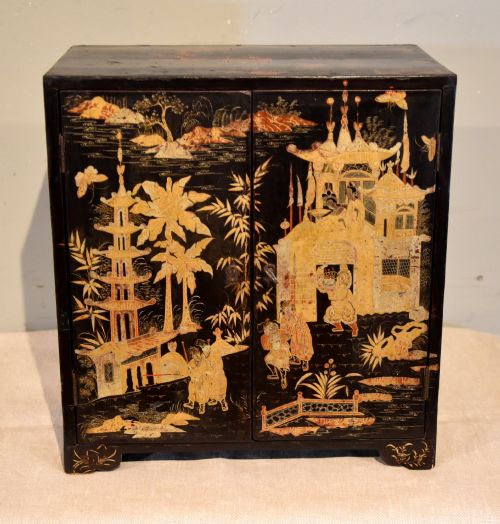
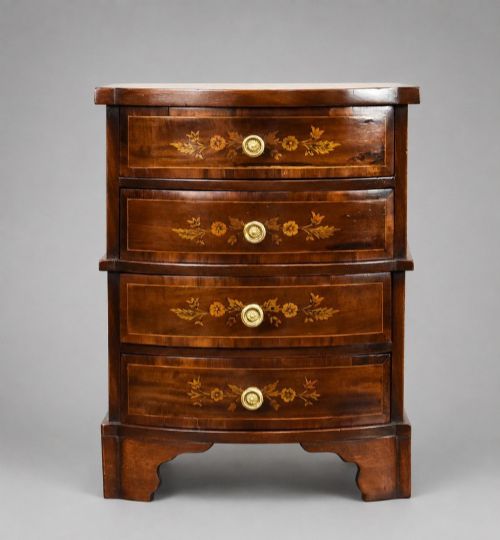
Origins stretch across the eighteenth, nineteenth and early twentieth centuries, encompassing English, French, Scottish and Anglo-Indian workshops. Forms vary widely from campaign chests and apothecary spice drawers to table-top Wellington chests and smoking cabinets fitted with brass handles and locks.
How they were made
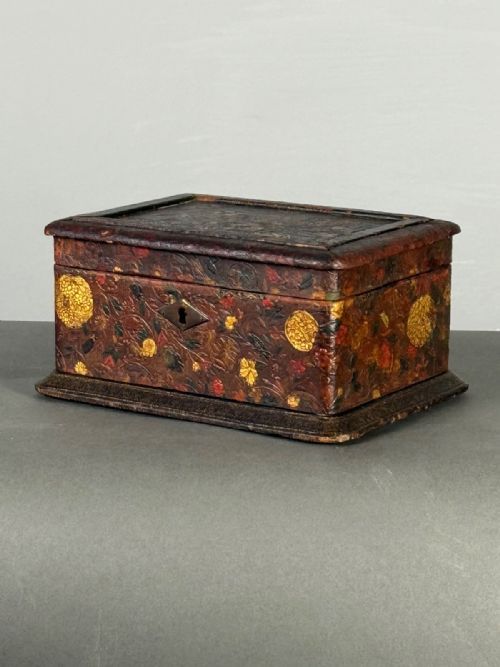
Cabinetmakers constructed these small chests using dense hardwoods such as mahogany, walnut and rosewood, alongside domestic timbers like oak, pine and elm. Surfaces frequently display figured veneers including burr elm and burr walnut, sometimes enhanced with inlaid banding or tooled leather coverings.
Joinery relied on traditional techniques suited to miniature proportions, incorporating dovetailed drawer construction and turned wooden feet. Brass escutcheons, drop handles, hinges and working locks provide functional security while defining the visual character of each piece.
Antique Desktop Chest Retail Price Guide 2026
Typical asking prices for desktop chest among the pieces listed under this phrase on Sellingantiques today, from the lower quarter to the upper quarter. They describe what is for sale here now, not the wider market.
Periods represented span the eighteenth century, the Regency era, the Victorian period and the Edwardian decades.
What varies in quality
Quality rests upon the selection of timber and the precision of the miniature joinery, particularly where delicate drawer linings and tight mitres are concerned. Pieces utilising heavily figured burr veneers or exotic hardwoods demonstrate greater ambition in the workshop than standard stained pine variants.
Original hardware, including matching brass locks, working keys and period handles, elevates a piece above those altered or repaired with later replacements. The crispness of carved details, such as turned feet and inlaid stringing, distinguishes standard utility items from finer cabinetwork.
Susse Freres Paris·D Napier and Sons
The Antique Desktop Chest Glossary
- Apprentice piece
- A small item of furniture created by a craftsman to demonstrate skill and secure admission to a trade guild. These often take the form of miniature chests of drawers.
- Collector's cabinet
- A specialised wooden case containing multiple shallow drawers designed for organising natural history specimens, coins or medals. They frequently feature locking doors to protect fragile contents.
- Humidor
- A lined storage box intended to maintain humidity for cigars and tobacco. Examples in walnut and mahogany often include internal partitions and secure locks.
- Wellington chest
- A tall, narrow chest of drawers secured by a locking vertical side-bar that fastens over the drawer edges. This form appears in miniature desktop formats.
- Campaign chest
- Portable furniture made in sections with recessed brass fittings for transport during military travel. Desktop versions provide compact compartmentalised storage.
Antique Desktop Chest: Frequently Asked Questions
What is an apprentice chest?
An apprentice chest is a small-scale model of a full-sized chest of drawers, built by woodworkers to prove their proficiency in joinery.
These pieces replicate standard furniture proportions precisely, featuring dovetailed drawers and miniature brass handles designed for tabletop use.
How were collector cabinets used?
Collector cabinets served to store and protect delicate items like insect specimens, fossils, coins and geological samples.
The shallow drawers kept objects separated and organised, while enclosed doors protected fragile contents from dust and light.
Are keys usually included?
Some desktop chests retain their original working keys, particularly those designed to secure documents, tobacco or valuable collectibles.
Many surviving pieces lack keys due to age, though the brass locks themselves remain intact on the drawer frames or outer doors.
Where should I place one?
These compact chests sit securely upon dressing tables, sideboards, writing desks and bookshelves.
Their shallow depth allows them to occupy minimal surface area while providing practical storage for modern trinkets, stationery and small accessories.