

Antique Desk Table
When choosing an antique desk table, collectors find functional workspace combined with period cabinet-making, from Georgian mahogany to Victorian burr walnut.
Antique Desk Table
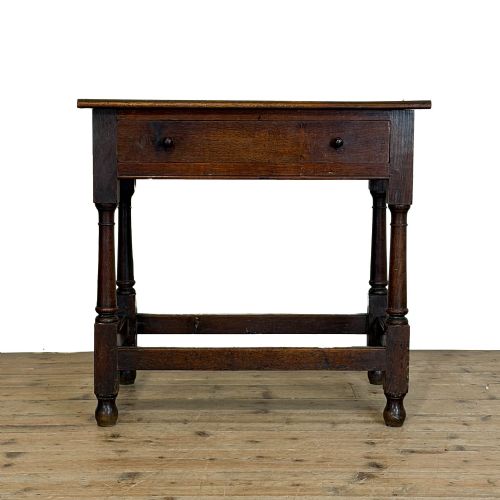
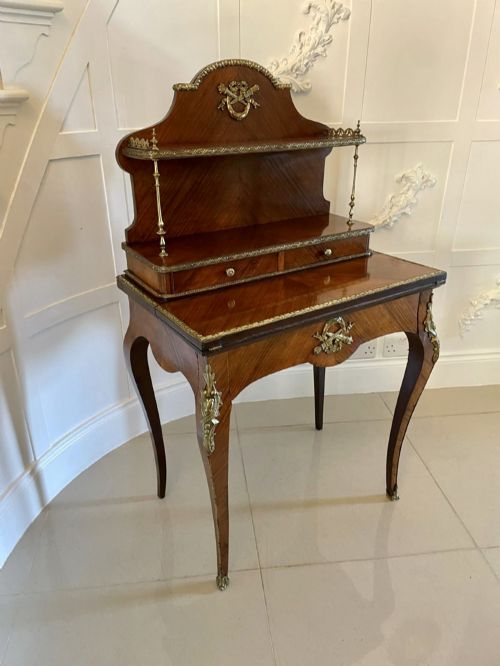
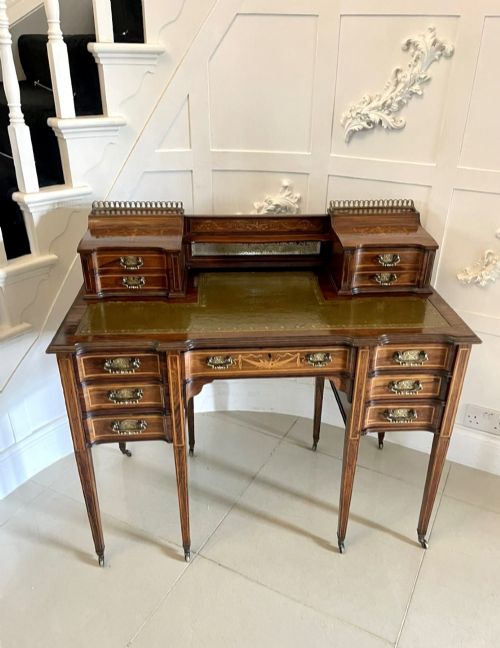
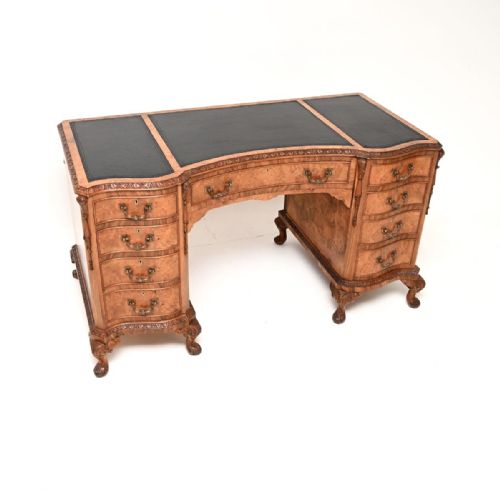
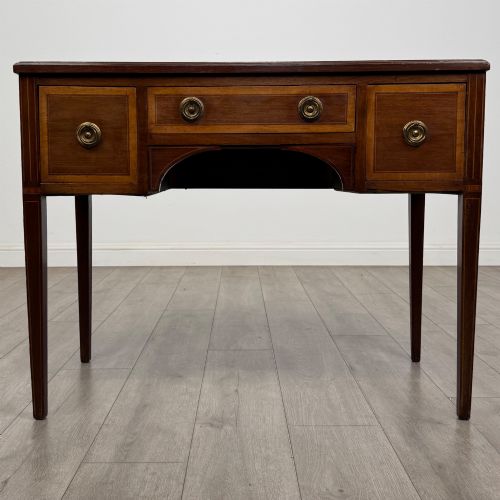
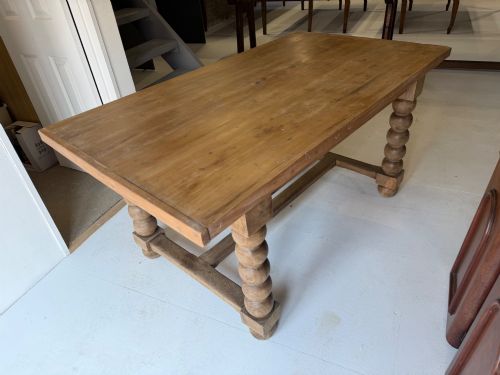
An antique desk table serves as a functional writing surface and a statement piece of period furniture. Buyers searching this category frequently encounter freestanding writing tables, pedestal desks, and library tables dating from the Georgian, Victorian, and Edwardian eras.
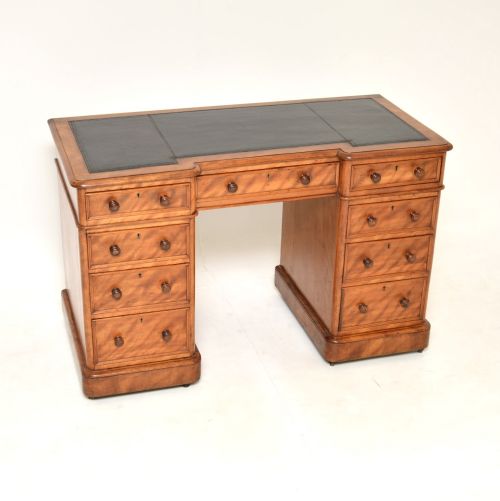
The common versions met on this page include mahogany and walnut writing tables fitted with inset leather tops and multiple drawers. These pieces reflect the domestic and professional interior requirements of the nineteenth and early twentieth centuries.
Materials and Construction
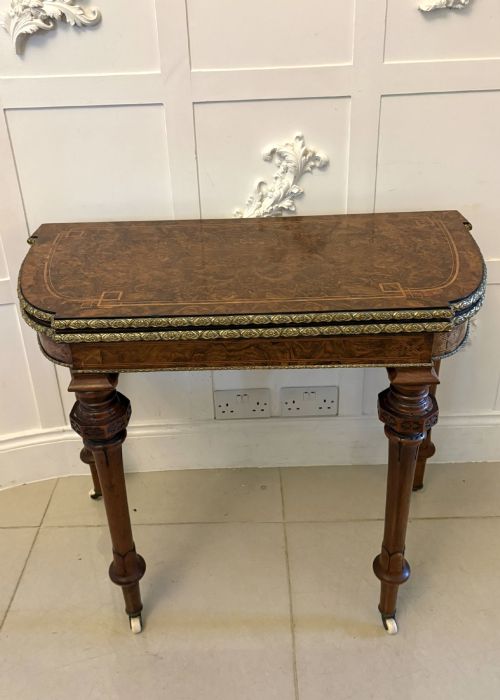
Cabinet makers utilised dense hardwoods such as mahogany, oak, walnut, and rosewood, often applying burr veneers or marquetry inlay for visual depth. Structural integrity relied on traditional joinery techniques, dovetailed drawer construction, and hand-turned or carved supports.
Writing surfaces commonly integrated panels of tooled leather, whilst secondary woods like pine or oak lined the interior components. Metal fittings, including brass handles, escutcheons, and casters, completed the construction of these functional tables.
Some nineteenth-century desks feature hidden compartments designed to keep private correspondence safe from curious household staff.
Evaluating Quality
The standard of a piece depends on the selection of timber veneers, the precision of the cabinet work, and the integrity of the secondary woods. Master workshops applied finer hand-carved details and superior marquetry that outlast simpler commercial production.
Proportion and originality dictate value within the market, where untouched surfaces and period hardware distinguish superior items from heavily altered examples. Pieces bearing workshop attributions or maker stamps command particular attention for their documented provenance.
Gillows Oxford Street Workshop·Heal and Son·JAS Shoolbred·Spillman and Co
The Antique Desk Table Glossary
- Pedestal desk
- A heavy freestanding desk comprising two supporting banks of drawers beneath a main writing surface. These are often finished on all sides to allow placement in the centre of a room.
- Marquetry
- The art of applying pieces of veneer to a structural structure to form decorative patterns. Cabinet makers utilised various exotic and native woods to achieve contrasting pictorial designs.
- Library table
- A large freestanding table utilised for reading and writing, typically finished with a leather insert. Victorian examples often feature spacious frieze drawers and heavy turned legs.
- Dovetail
- A traditional interlocking joint utilised in drawer construction to ensure tensile strength. Hand-cut variations indicate older periods of craftsmanship.
- Frieze
- The horizontal band situated directly beneath the top surface of a table or desk. This section frequently houses one or more operational storage drawers.
Antique Desk Table: Frequently Asked Questions
How do I date an antique desk?
Dating a desk involves examining the construction methods, timber selection, and stylistic details present in the piece. Georgian and Regency pieces display clean proportions and subtle inlay, whereas Victorian examples often feature heavier timbers and carved decoration.
Interior components, such as drawer linings and handmade dovetail joints, provide further clues regarding age. Secondary woods and hardware fasteners also help confirm the manufacturing period.
Where should I place a freestanding desk?
A freestanding desk is designed to be viewed from all sides, making it suitable for placement in the centre of a study or library. Finished backs and panelled modesty boards allow these pieces to sit away from walls without losing aesthetic appeal.
Ensure adequate clearance around the table for seating and drawer access. Lighting placement should complement the writing surface without causing glare on the leather top.
How do I care for a leather writing top?
Leather writing inserts require gentle cleaning with a damp cloth and occasional treatment with specialist leather balms to prevent drying. Avoid placing hot cups or liquids directly onto the surface to protect the delicate gold tooling.
Proper humidity levels in the room will preserve both the leather top and the surrounding wooden frame. Regular maintenance ensures the material retains its suppleness and colour over time.