


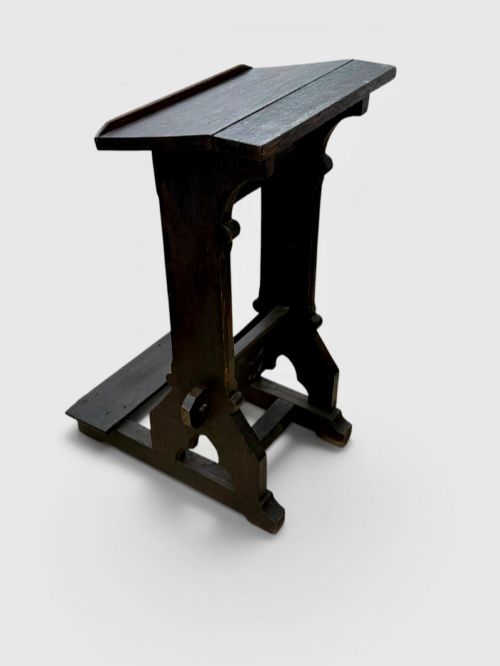
Antique Desk on Stand
An antique desk on stand combines a writing surface with a raised support structure, offering distinct period character and practical storage for correspondence.
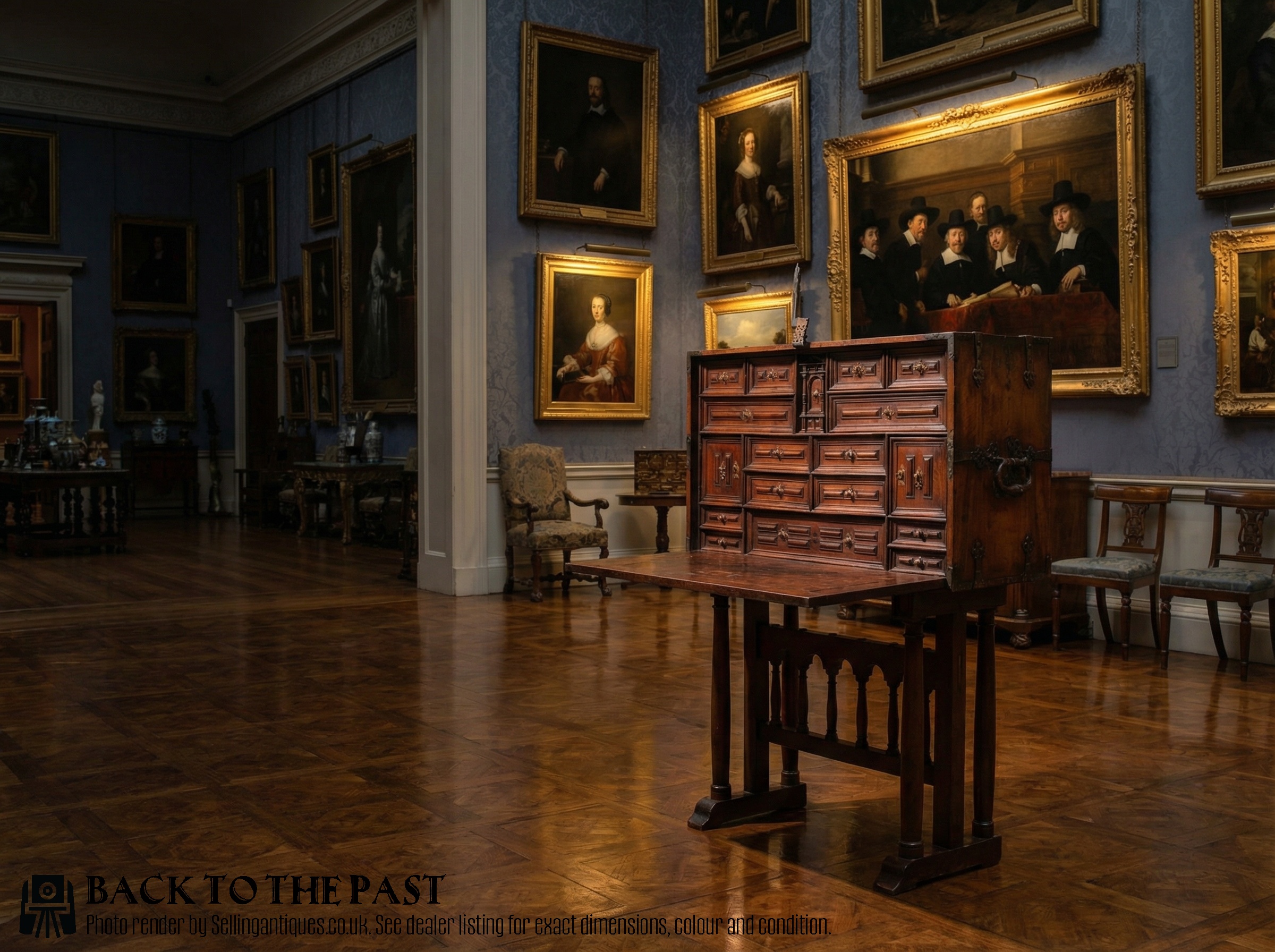
Understanding the antique desk on stand
An antique desk on stand brings together a dedicated writing compartment, slope or cabinet mounted upon a separate base or frame. The pieces seen span from the seventeenth century through to the nineteenth century, encompassing forms such as early oak bureaux, writing slope boxes, varguenos and cabinet formats.
The styles range across seventeenth century provincial, Jacobean, Spanish Renaissance, William and Mary, and George I style. These pieces provide elevated writing surfaces designed to keep correspondence tidy while serving as prominent furniture items in a room.
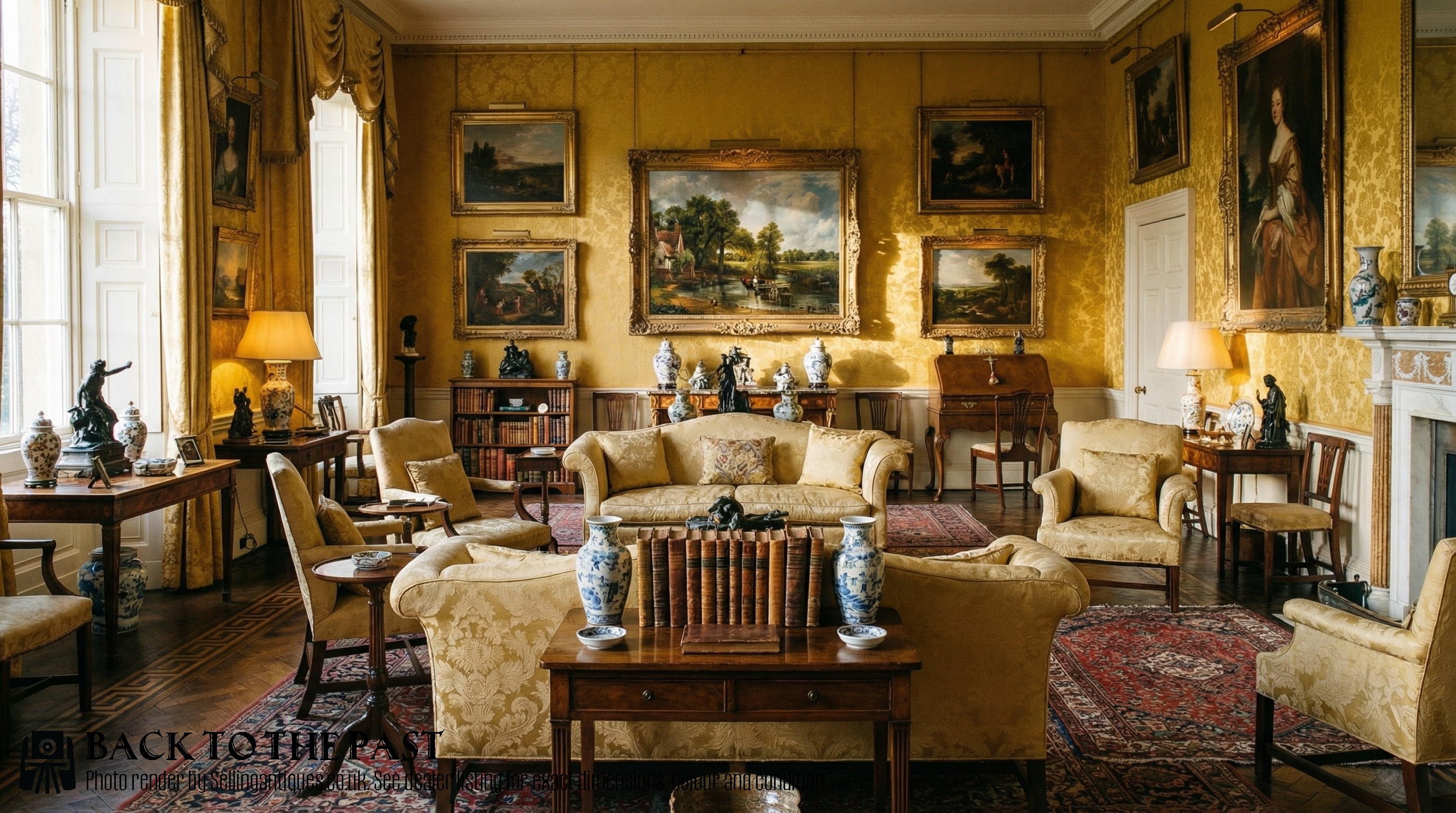
Materials and construction methods
Cabinetmakers utilised timber varieties including oak, walnut, burr walnut, mahogany and satinwood, alongside brass and wrought iron hardware. Surfaces often display figured grain patterns and fitted internal compartments designed for letters and ink.
The construction relies on traditional joinery techniques appropriate to each period, mounting upper writing boxes or cabinets onto stable four-legged or trestle stands.
Retail Price Guide 2026
Typical UK retail prices for desk on stand, calculated from the Sellingantiques database of over a million retail prices indexed since 2003. This retail price guide relies exclusively on Sellingantiques data; no external sources or auction records are used, so the figures do not describe the wider market.
The object forms on this page include writing slope boxes, varguenos on stands, and bureau cabinets from provincial and metropolitan workshops.
Distinctions in quality and execution
Quality separates through the choice of timber veneers, such as burr walnut or figured mahogany, and the precision of the internal drawer layout. Superior examples exhibit refined proportions between the upper writing enclosure and the supporting stand.
The sophistication of the hardware, including brass hinges, escutcheons and locks, distinguishes higher grade pieces from simpler provincial work.
Maple & Co London·Asprey Bond Street
The Antique Desk on Stand Glossary
- Bureau
- A sloping lidded desk designed for writing and storing papers. It typically opens to reveal a tiered interior of small drawers and pigeonholes.
- Vargueno
- A traditional Spanish cabinet form featuring a drop-front writing surface concealing numerous drawers. It sits upon a dedicated stand.
- Writing slope
- A portable or desk-mounted box with an angled lid designed for writing letters. Inside, it holds compartments for inkwells and pens.
- Escutcheon
- A protective plate surrounding a keyhole on a cabinet door or drawer front. It is usually formed from brass.
Frequently Asked Questions
What is an antique desk on stand?
An antique desk on stand is a piece of furniture that pairs an enclosed writing compartment or cabinet with a raised supporting base. These forms evolved to provide a comfortable writing height and integrated storage.
Examples range from early oak formats to elaborate walnut and marquetry pieces from the seventeenth and eighteenth centuries.
How do I date an antique desk on stand?
Dating relies upon examining the timber species, construction joinery, hardware style and overall decorative vocabulary. Seventeenth-century examples often utilise oak or walnut with heavy framework.
Later Victorian and revival pieces, such as those in the George I style, employ distinct finishing techniques and secondary timbers that reveal their period of manufacture.
Where should I place this desk?
These desks suit studies, libraries or living spaces where their compact footprint and elevated profile can be appreciated. Because many are finished on multiple sides, they can often stand away from walls.
Ensure placement avoids direct sunlight and significant temperature fluctuations to protect historical timber surfaces.
What woods were used for these desks?
Cabinetmakers worked with native and imported timbers suited to the prevailing fashion of each era. Oak and walnut predominate in seventeenth-century pieces.
Later periods introduced mahogany, satinwood and burr walnut veneers, often enhanced with brass fittings and iron structural supports.