
Antique Desk Inkwell Stand
An antique desk inkwell stand gathers the scattered tools of a writing table into a single, deliberate arrangement.
Antique Desk Inkwell Stand
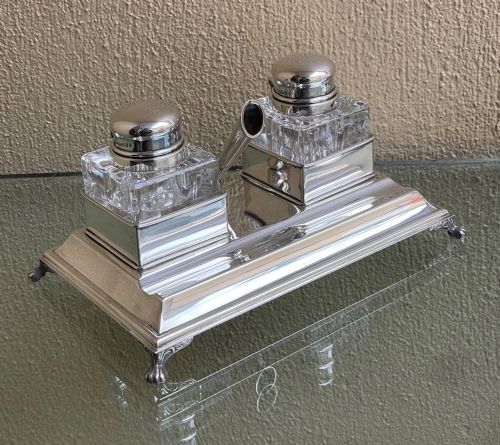
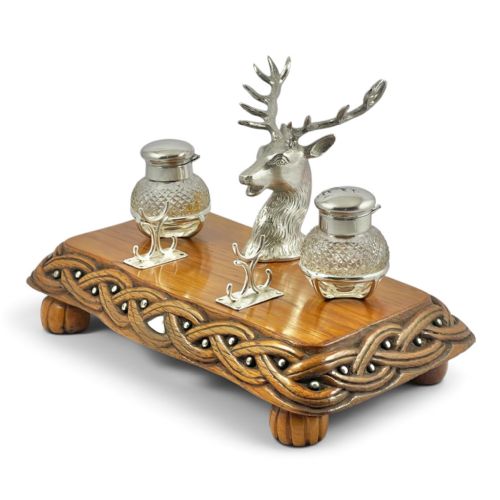
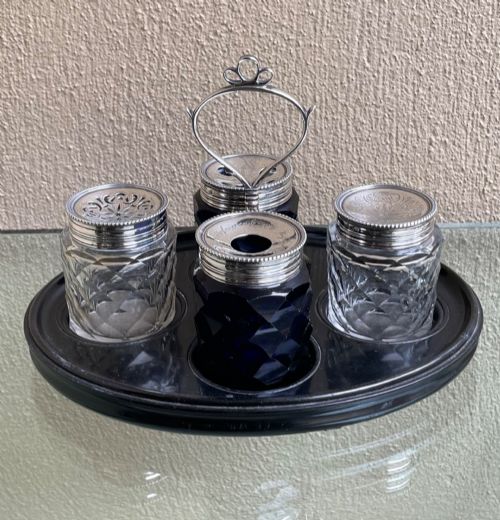
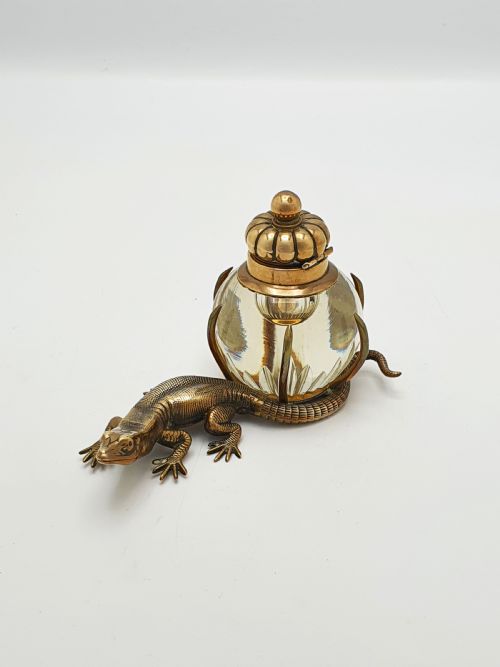
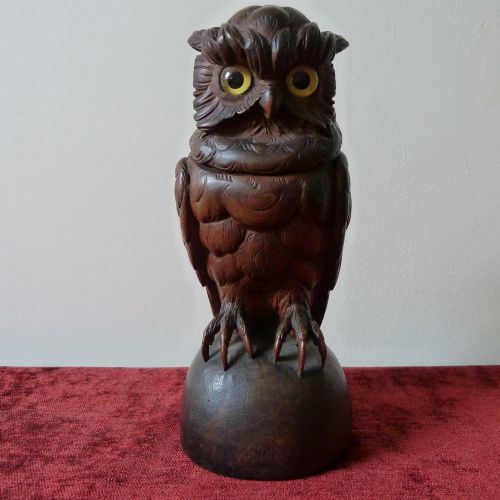
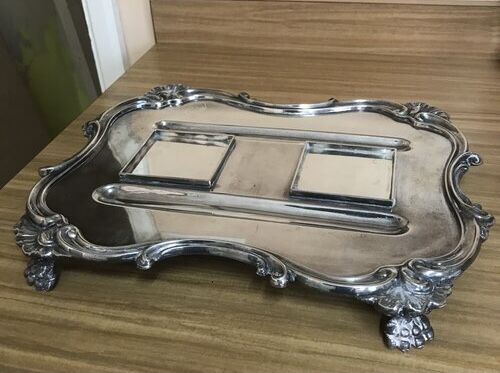
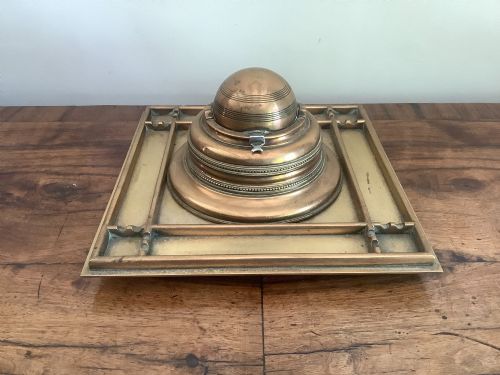
An antique desk inkwell stand provides a dedicated platform for writing implements, typically uniting glass or ceramic ink pots with fitted trays, pen rests, and sometimes matching candlesticks or letter racks. These accessories served as the administrative centre of the nineteenth and early twentieth century study.
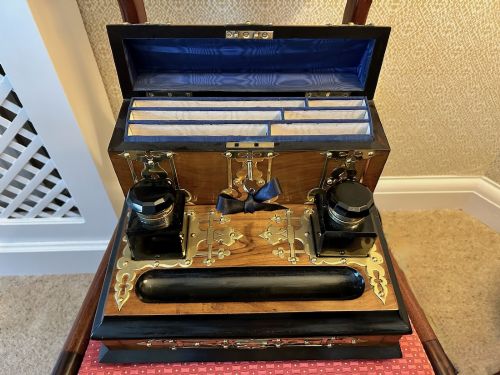
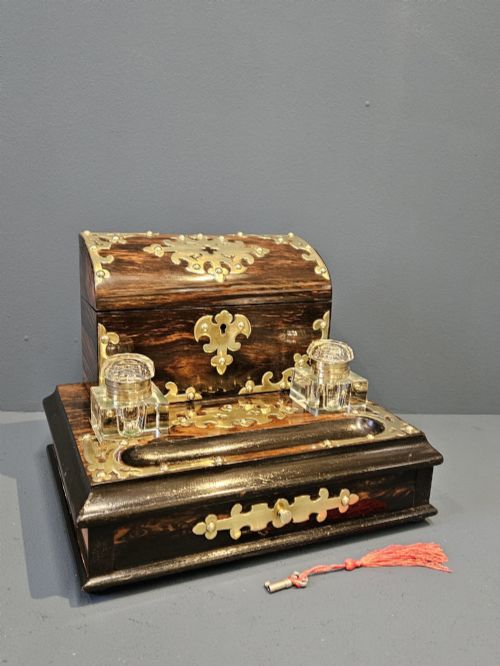
The versions most commonly met on this page date from the Victorian and Edwardian eras, spanning walnut and brass configurations alongside heavier silver-plated and solid sterling pieces. They range from simple desk tidies to elaborate double inkstands designed for large partners' desks.
Materials and construction
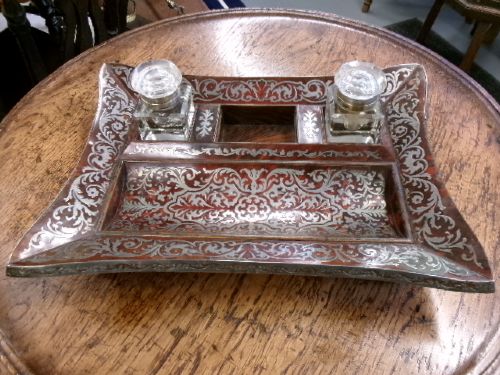
Cabinet makers utilised exotic timbers such as coromandel, burr walnut, and rosewood, frequently incorporating Boulle work, mother of pearl inlay, or tortoiseshell panels into the wooden bases. These carcases were then fitted with cast brass mounts, gallery rails, and hinged lids.
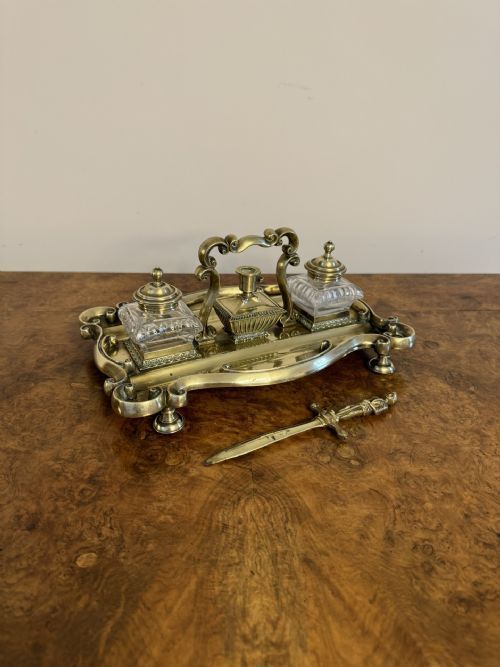
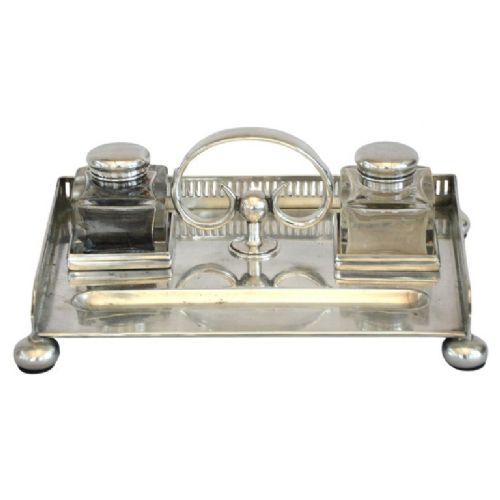
Metalwork involved heavy brass castings, ormolu, and silver plating over base metals, alongside solid sterling silver components bearing Birmingham or other regional hallmarks. Glass reservoirs relied on heavy cut glass or moulded crystal, often paired with ceramic bodies in porcelain, Dutch Delft faience, or Ashford marble.
Listings feature desk stands spanning the seventeenth century through to the mid-twentieth century, utilising materials from tortoiseshell to green onyx.
Distinctions in quality
The calibre of an antique desk inkwell stand rests upon the crispness of its metal cast work and the precision of its timber joinery. Superior examples display deeply chiselled ormolu, neatly fitted interior collars, and robust hinges that hold their weight.
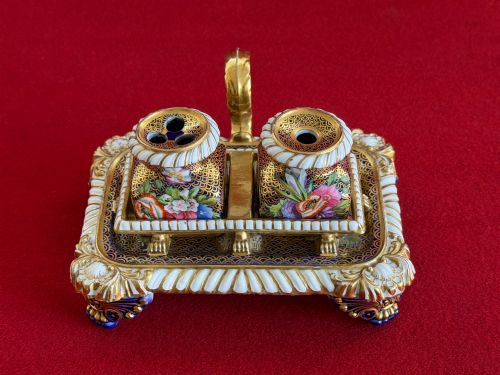
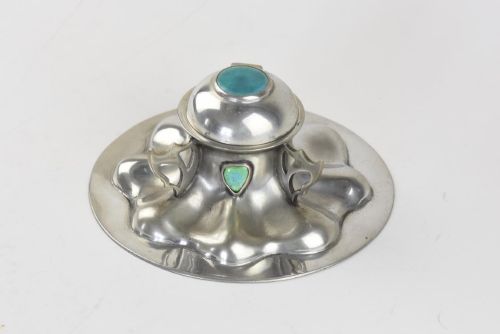
Material selection dictates the upper tier of the range, where precious stones like lapis lazuli and malachite, or detailed decorative elements such as Ruskin cabochons and hand-painted porcelain panels, distinguish bespoke commissions from standard production pieces.
William Hutton·Walker And Hall
The Antique Desk Inkwell Stand Glossary
- Inkstand
- A comprehensive desk accessory comprising one or more inkwells, pen rests, and a secure base tray. It often includes supplementary items like stamp boxes or taper sticks.
- Capstan
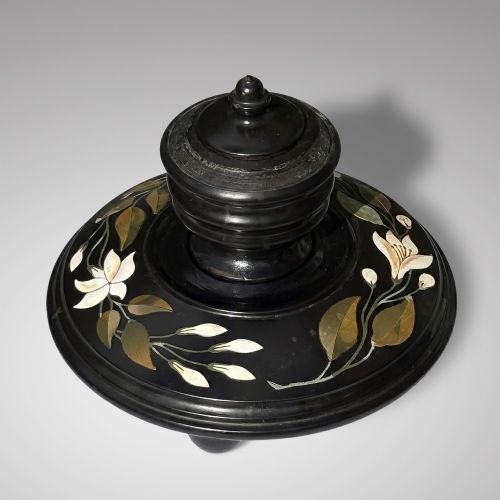
- An inkwell shaped in the tapered form of a nautical capstan, featuring a wide circular base rising to a narrower top with a hinged lid. This profile provides exceptional stability on a moving surface.
- Boulle
- A decorative technique of marquetry utilising tortoiseshell and brass inlaid in contrasting patterns. Developed in seventeenth-century France, it reappeared on nineteenth-century luxury desk furniture.
- Ormolu
- Gilded bronze produced by applying a mercury-gilding process to cast bronze. It provides a warm, durable golden finish found on French and English desk stands.
- Faience
- Tin-glazed earthenware, notably produced in centres like Delft. It forms the ceramic body of certain continental desk stands.
Antique Desk Inkwell Stand: Frequently Asked Questions
How were antique inkstands used?
These stands sat permanently on writing tables, providing a stable reservoir of liquid ink alongside a designated groove or rest for dip pens. The attached wells kept the ink accessible while preventing spillage across valuable correspondence.
Larger versions incorporated supplementary compartments for blotting paper, sealing wax, and stamps, forming a complete portable or stationary writing station for daily administrative duties.
How do I date a desk inkstand?
Dating relies heavily on material fashions, manufacturing techniques, and any metal hallmarks present on the silver mounts or collars. For instance, heavy ormolu and boulle work typically point to mid-nineteenth-century French or Napoleon III production.
Conversely, clean geometric lines and green onyx mark the later Art Deco period of the 1930s, while sterling silver components will often bear clear assay office date letters to confirm the exact year.
Can I still use an antique inkwell?
While these pieces were built for functional daily writing using traditional steel-nib dip pens and liquid ink, modern users generally treat them as decorative desk ornaments. Using vintage glass wells requires careful cleaning to prevent dried residue from sticking to the fragile hinged lids.
If you do choose to write with them, ensure the glass liner is free from hairline fractures before pouring fresh ink inside.
What is a desk tidy?
A desk tidy is a practical variant of the inkstand that prioritises general stationery organisation over heavy ink reservoirs. These pieces usually feature built-in letter racks, small drawers, and shallow trays for paperclips and visiting cards.
They represent the Victorian and Edwardian response to the growing volume of personal correspondence and paper ephemera in the household.