



19th Century Writing Companion
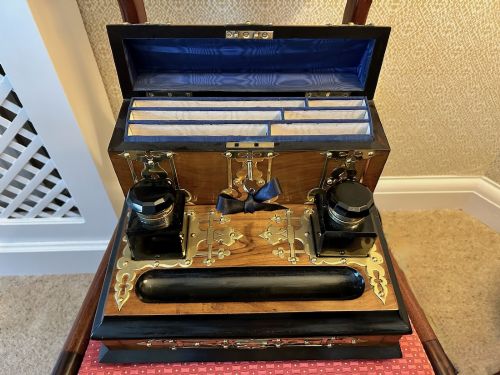
These 19th century writing companions bring order to correspondence through fitted woods, brass mounts and glass inkwells.
19th Century Writing Companion
A 19th century writing companion encompasses portable writing boxes, stationary cabinets, inkstands and larger writing tables designed for correspondence. These items organise pens, ink and paper within fitted compartments for the Victorian or Regency desk.
The pieces appearing here span the Regency, William IV, Victorian and Napoleon III styles, utilising dense hardwoods and decorative inlays. Walnut, rosewood and coromandel predominate, often ornamented with brass or ormolu mounts.
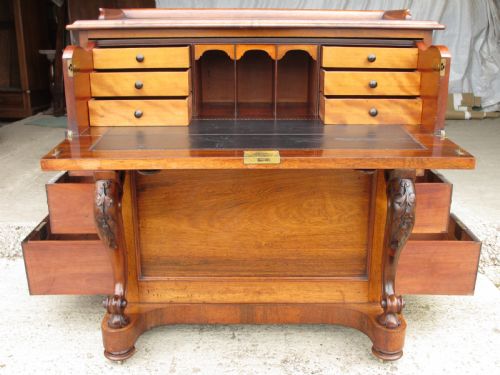
Buyers encounter smaller portable desk stands and inkstands alongside larger davenport style secretaire desks and writing tables. Each form reflects the domestic writing habits of the nineteenth century.
How they were made
Cabinet makers constructed these companions from hardwoods such as walnut, rosewood, coromandel, oak and ebony, frequently applying intricate brass inlay or tortoiseshell veneers. Papier-mâché also appears as a moulded body material for desk sets.
Fittings incorporate cast ormolu and brass mounts alongside carved wooden elements, glass inkwells and silk interior details. Metalwork components secure the corners and hinges of portable boxes and desk stands.
Periods represented include the Regency, William IV, Napoleon III and Victorian eras.
What varies in quality
The sophistication of the timber grain and the precision of the brass inlay determine the visual impact of a piece. Finer examples display meticulous attention to the matching of veneers across opening surfaces and internal compartments.
The integration of secondary materials such as ormolu mounts, carved ebony and intact glass inkwells separates standard utilitarian items from exceptional decorative companions.
The 19th Century Writing Companion Glossary
- Inkstand
- A tray or stand holding one or more inkwells, pen rests and sometimes a sander or wafer box. These desk accessories kept writing liquids contained and accessible.
- Coromandel Wood
- A dense, heavily figured cabinet wood imported from Asia, prized for its dark brown colour and striking black stripes. It was frequently used for luxury Victorian desk stands and boxes.
- Ormolu
- Gilded bronze used for decorative mounts, handles and feet on nineteenth-century furniture and desk accessories. The technique involves applying a gold amalgam to bronze.
- Napoleon III Style
- A nineteenth-century French revival style popular during the Second Empire, known for rich inlays, tortoiseshell, brass work and eclectic ornamentation.
- Secretaire
- A desk or cabinet featuring a pull-down writing flap that conceals small drawers and pigeonholes for correspondence.
19th Century Writing Companion: Frequently Asked Questions
What is a 19th century writing companion?
A 19th century writing companion is an umbrella term for portable or stationary desk accessories, inkstands and writing boxes used for letter writing. These objects kept ink, pens and paper organised in domestic settings.
They range from compact desk stands with glass inkwells to larger rosewood and walnut writing boxes with fitted compartments.
How were inkstands used?
Inkstands sat on a desk or table to provide a stable reservoir of ink alongside places to rest pens. They kept writing materials tidy and protected furniture from ink spills.
Many examples include covered glass wells and small troughs for steel or quill nibs.
How do I identify a Regency writing box?
Regency pieces typically date from the early nineteenth century and feature restrained classical lines, often executed in rosewood with fine brass stringing or inlay. The proportions reflect classical architectural principles.
Later Victorian pieces often incorporate heavier ornamentation, bolder woods like coromandel, or alternative materials such as papier-mâché.
Where should I place an inkstand?
An inkstand works well on top of a period desk, side table or console where its timber and metal details can be appreciated. It functions as a decorative object that connects modern spaces with nineteenth-century writing customs.
Ensure wooden surfaces are kept away from direct heat sources to protect the finishes and veneers.