



Victorian Desktop Stationery Accessory
A victorian desktop stationery accessory brings order to the writing desk with genuine period craftsmanship.
Victorian Desktop Stationery Accessory
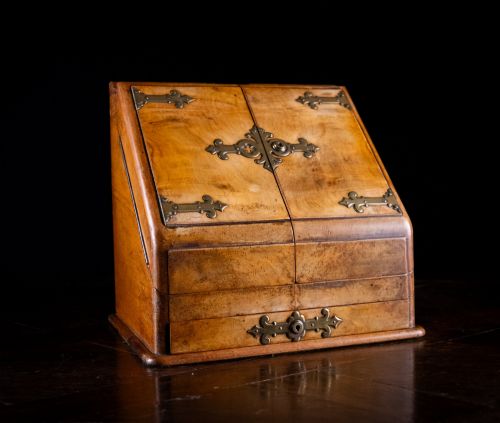
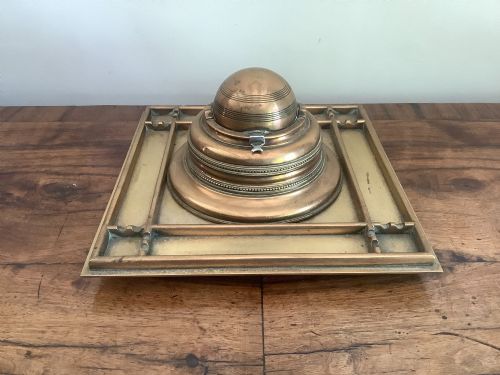
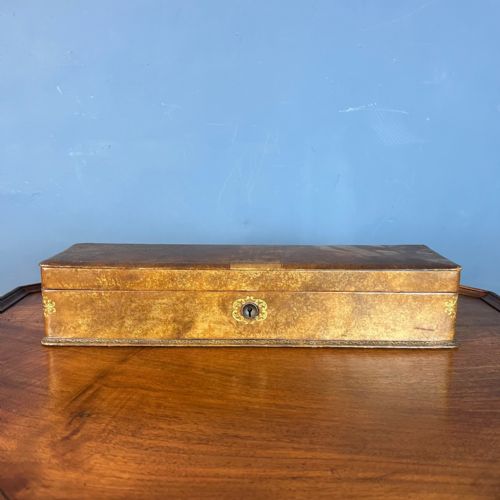
A victorian desktop stationery accessory comprises practical items designed to organise letters, pens, and ink on the writing table. Buyers searching for a victorian desktop stationery accessory will most frequently encounter stationery boxes, letter racks, inkstands, and desk tidies spanning the nineteenth century.
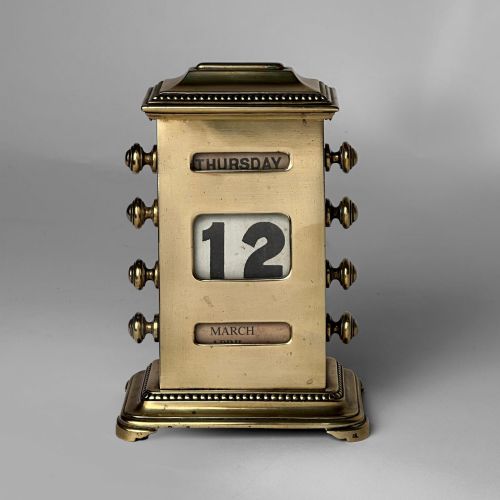
The selection ranges from simple oak letter racks to elaborate walnut and brass stationery cabinets, alongside specialised items like perpetual calendars and pen boxes. Papier-mâché and pollard oak examples also appear, reflecting the diverse material tastes of the Victorian period and the subsequent Edwardian era.
Materials and construction
Wood forms the foundation of most pieces, utilising timbers such as walnut, oak, mahogany, and pollard oak, frequently constructed as domed or cabinet stationery boxes. Brass mounts, hinges, and cast brass details provide structural reinforcement and decorative contrast.
Some Victorian writers apparently required a domed box and cast brass calendar merely to remember what day they were ignoring correspondence.
Assessing quality
Quality reveals itself through the selection of timber veneers and the precision of brass hardware fitted to cabinets and boxes. Superior examples display refined surface decoration, such as detailed pokerwork or fine Tunbridge ware, rather than basic construction.
The integration of functional elements, like well-fitted internal dividers in stationery boxes and substantial cast brass frames, separates standard desk accessories from finer productions.
William Tonks of Birmingham
The Victorian Desktop Stationery Accessory Glossary
- Stationery box
- A desktop container designed to hold writing paper and envelopes upright in internal compartments. These boxes often feature sloping lids or domed tops with brass locks.
- Inkstand
- A tray or stand holding one or more inkwells, often accompanied by pen recesses. They form an essential part of the nineteenth century writing desk.
- Tunbridge ware
- A type of decorative woodwork characterised by mosaic patterns formed from tiny pieces of naturally coloured woods. This technique creates geometric or pictorial designs on boxes and desk accessories.
- Pokerwork
- A method of decorating wood by burning designs into the surface with a heated tool. It appears on Arts and Crafts desk pieces from the period.
- Perpetual calendar
- A desk device with adjustable panels or rollers to display the date for any year. Cast brass versions were produced by firms such as William Tonks of Birmingham.
Victorian Desktop Stationery Accessory: Frequently Asked Questions
What is a stationery box?
A stationery box is a desk storage piece designed to hold writing paper, envelopes, and correspondence upright. These boxes feature hinged lids, drop fronts, or domed tops.
Internal dividers separate different paper sizes and note cards. They protect writing materials while keeping the desktop tidy.
How were desk accessories used?
Victorian desk accessories organised the workspace for daily correspondence, letter writing, and record keeping. Inkstands held ink for dip pens, while letter racks sorted incoming and outgoing mail.
Stationery boxes and pen boxes kept loose items contained. Together, they maintained an orderly and functional writing desk.
How do I date these pieces?
Dating relies on stylistic markers, materials, and construction methods associated with the nineteenth century and Edwardian periods. Gothic Revival, Arts and Crafts, and Tunbridge ware styles correspond to specific decades within the Victorian era.
Hardware styles, timber choices, and maker signatures also help establish the approximate period of manufacture.
Where should I place a desk tidy?
Desk tidies and stationery boxes sit naturally on writing desks, bureaus, or tables in a study or library. They function just as they did originally, holding modern letters, notepads, and small accessories.
Placing them out of direct sunlight preserves the timber finishes, brass mountings, and leather surfaces.