



Victorian Inkstand Desk Set
A Victorian inkstand desk set brings order and weight to a writing table, combining fitted inkwells with trays for pens and letters.
Victorian Inkstand Desk Set
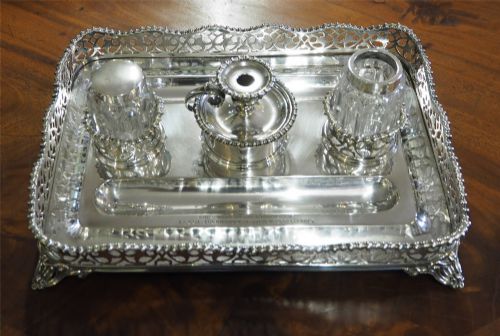
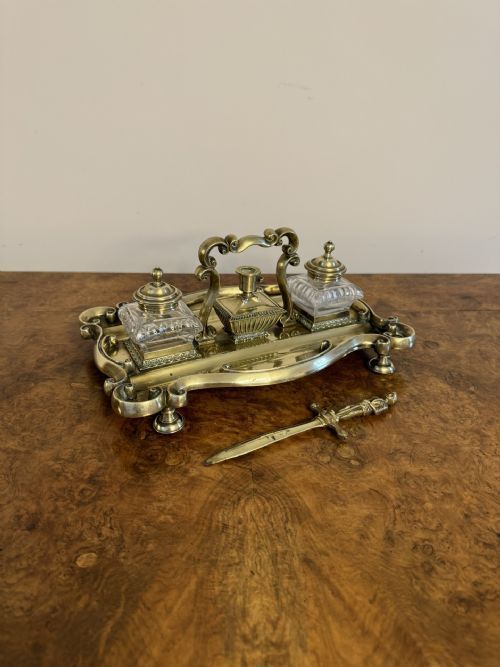
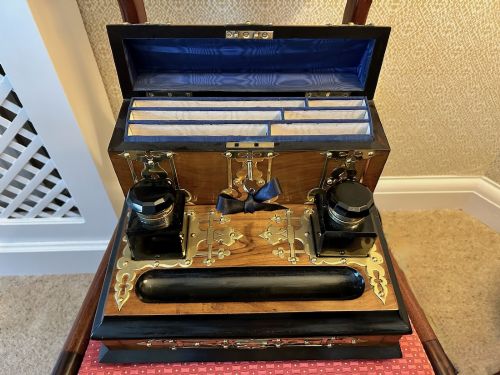
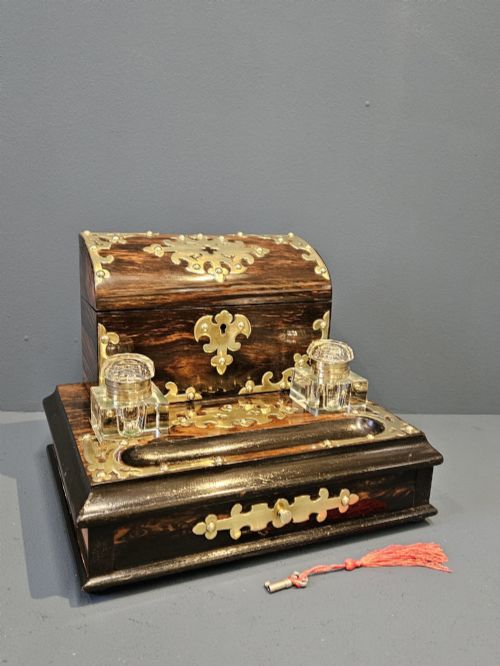
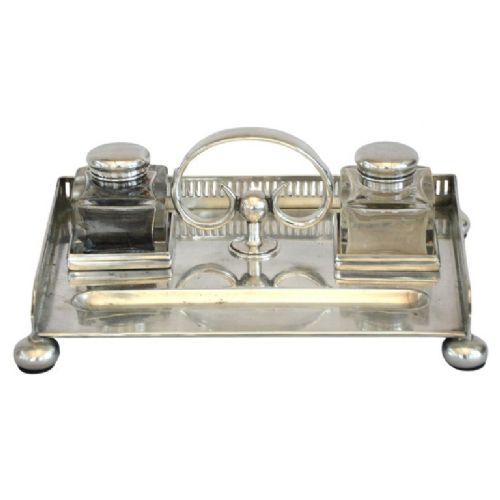
A victorian inkstand desk set serves as a central writing accessory, designed to hold inkwells, pen trays, and sometimes stationary or chambersticks. Pieces on this page span the nineteenth century, including Edwardian examples, appearing in woods like walnut, coromandel, and oak alongside metals such as brass, bronze, and silver plate.
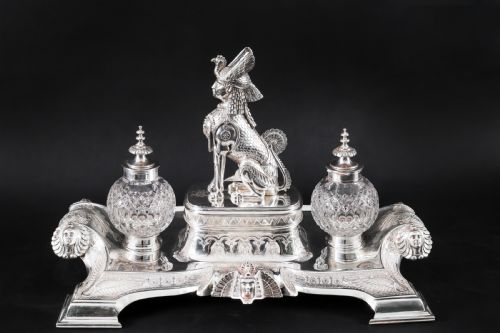
The layout typically incorporates one or two lidded inkwells fitted with glass inserts, accompanied by specific channels for dipping pens. Formats range from simple wooden stands to elaborate dual-sided writing bureaus and ornate decorative styles like Art Nouveau, Chinoiserie, and Egyptian Revival.
Materials and construction
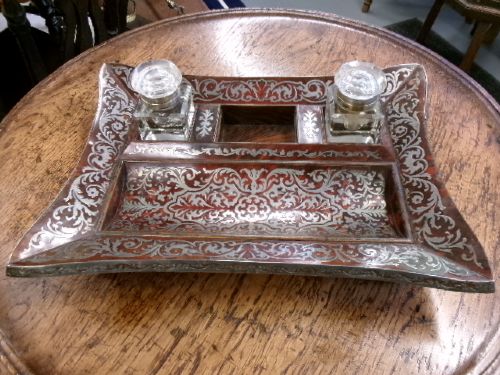
Construction relies heavily on dense hardwoods like walnut and coromandel, often enhanced with brass mounts, tortoiseshell, mother of pearl inlay, or boulle work. Metalwork examples utilise cast bronze, ormolu, silver plate, and sterling silver, frequently paired with cut glass or porcelain ink inserts.
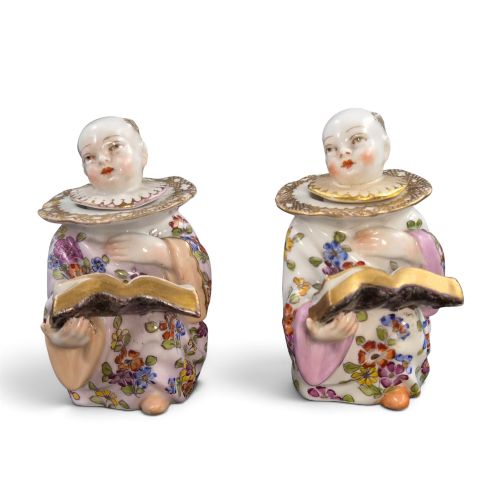
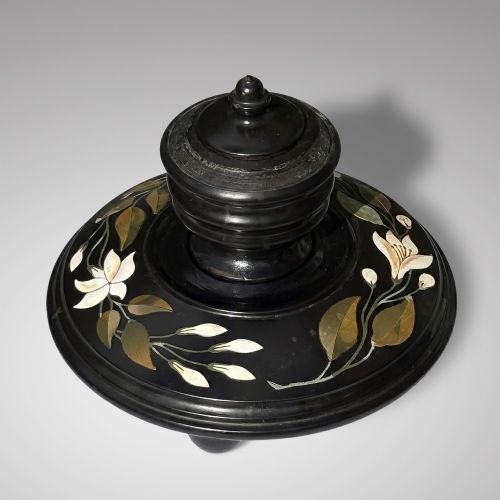
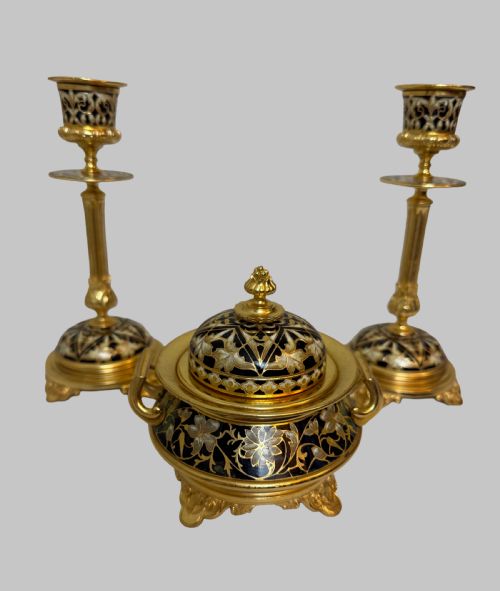
Specialist techniques define the decorative surfaces, from hand-carved Black Forest wood and Kashmiri papier-mâché to Ashford marble and champlevé enamel. Stoneware, Dutch Delft faience, and agate cabochons also appear, demonstrating the varied craftsmanship applied to nineteenth-century desk accessories.
Design styles span the Victorian and Edwardian periods, including Art Nouveau, Chinoiserie, and the Napoleon III style.
Judging quality and execution
Quality rests on the crispness of the casting in metalwork and the precision of the joinery and inlay in wooden stands. Superior items integrate materials cleanly, retaining original glass liners, matching inkwell lids, and intact hardware without loose mounts.
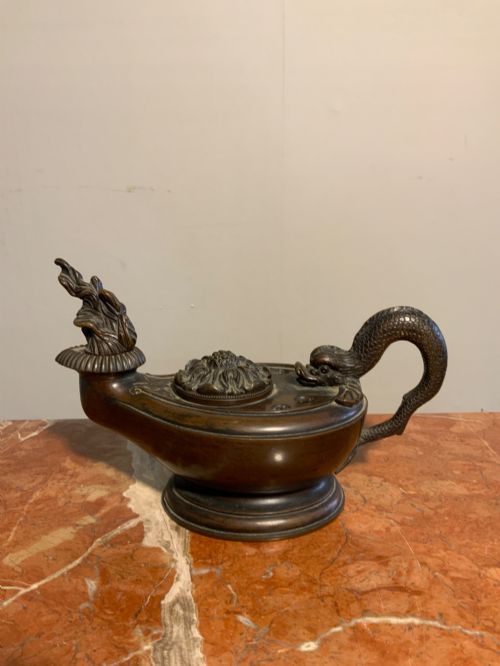
The artistic ambition of the design dictates distinction, separating standard brass trays from finely modelled figural bronzes, carved owls, or complex Boulle work. Maker attribution and the preservation of original hand-painted or carved details further elevate a desk set.
Edmé Samson·Elkington·Wilkinson and Co·Walker And Hall·Robert Garrard
The Victorian Inkstand Desk Set Glossary
- Inkstand
- A portable tray or stand holding one or more inkwells and pen rests for a desk. It keeps writing implements organised and accessible.
- Boulle work
- Marquetry technique using tortoiseshell and brass inlay, popular in French-influenced nineteenth-century furniture and desk sets. It creates a striking contrast of dark shell and polished metal.
- Ormolu
- Gilded bronze used for decorative mounts and accents on nineteenth-century objects. The technique gives a rich gold appearance to cast metal elements.
- Standish
- An alternative traditional term for an inkstand or desk set. It often includes compartments for sand, wafers, and pens alongside the ink.
- Champlevé
- Enamelling technique where troughs are dug into a metal surface and filled with vitreous enamel before firing. This produces colourful patterned designs on bronze and brass desk accessories.
Victorian Inkstand Desk Set: Frequently Asked Questions
What is the difference between an inkstand and an inkwell?
An inkwell is the small lidded container that holds the liquid ink, whereas an inkstand is the complete base or tray that holds the inkwell alongside pen rests and other accessories.
Many listings on this page include both, featuring stands equipped with one or two removable glass inkwells.
How do I care for a wooden and brass desk set?
Wood components require gentle dusting and occasional waxing to preserve the grain and finish of walnut, coromandel, or oak.
Metal mounts and brass elements should be cleaned carefully without harsh chemical polishes to maintain their patination and secure fixings.
What materials are most common in these pieces?
The listings show a frequent combination of dense decorative hardwoods, cast brass, bronze, and silver plate.
Glass inserts are standard for the inkwells, while luxury examples incorporate tortoiseshell, mother of pearl, marble, or porcelain.