



19th Century Ormolu Inkstand
A 19th century ormolu inkstand brings gilded weight and carved stone to a desk.
19th Century Ormolu Inkstand
When you examine a 19th century ormolu inkstand, you are looking at a desk accessory designed to hold writing materials in domestic or formal settings. The pieces listed here span the 19th century into the early 20th century, drawing on French Empire, Neoclassical, Victorian, and Napoleon III styles.
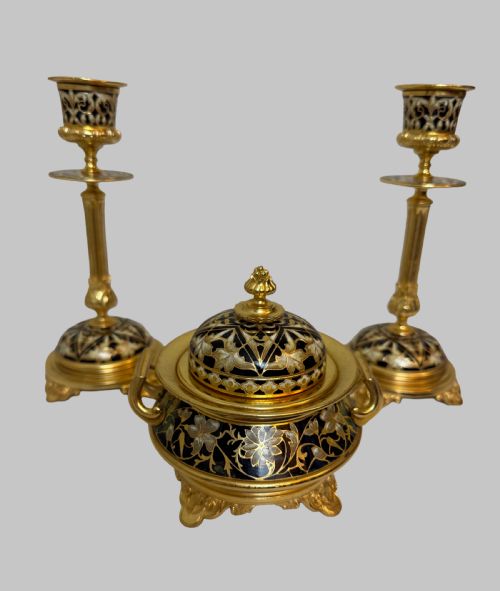
The most common forms on this page pair gilded metal with stone bases, often incorporating inkwells, glass inserts, or companion candlestands. You will find items described as encriers, standishes, and desk sets alongside single inkwells and decorative boxes.
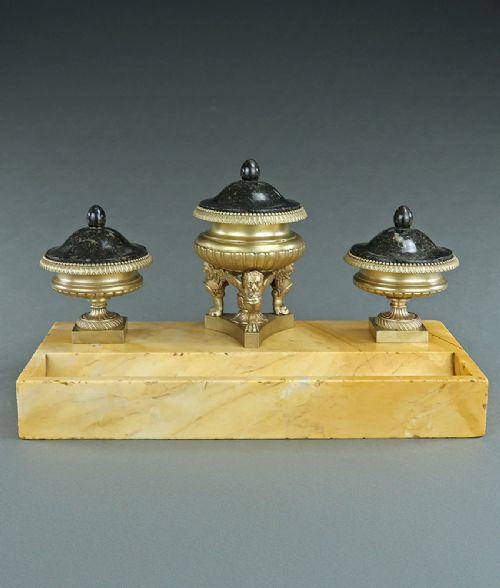
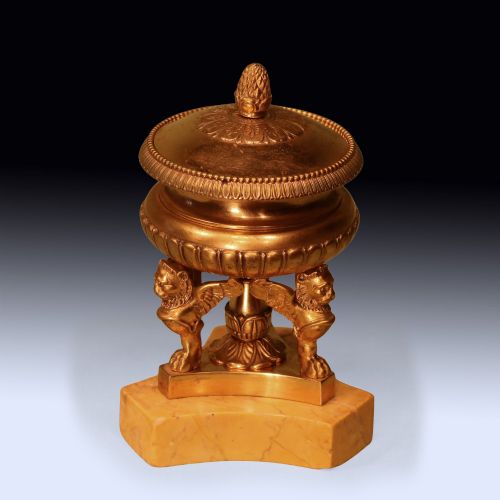
Originating predominantly from French workshops, these desk accessories utilise rich materials such as Sienna marble, onyx marble, and coromandel-wood to create substantial desk centrepieces. Animalier subjects, including lions, emus, and playing cats, appear frequently among the bronze and gilded components.
How they were made
Maker's hands combined cast ormolu and gilt bronze with polished stone bases, uniting metalwork with mineral substance. Ormolu mounts and figures were secured to marble, onyx, or mahogany foundations using threaded pins and screws.
Glass inserts and porcelain plaques, such as Sevres panels, were integrated into bronze frames to hold ink and decorate the receptacle. Wood carcasses in coromandel and mahogany provided structured compartment bases for larger desk sets.
Listings feature items from the 19th century incorporating ormolu, Sienna marble, coromandel-wood, and bronze.
What varies in quality
The distinction between tiers rests upon the crispness of the bronze chasing and the selection of the stone base. Heavier, more deeply carved ormolu mounts and finely figured marble or onyx elevate a piece.
Completeness dictates the standing of a desk set, particularly whether original glass ink inserts, matching candlestands, and multi-piece components remain together. The ambition of the design, from simple rectangular encriers to sculptural animalier compositions, sets individual examples apart.
The 19th Century Ormolu Inkstand Glossary
- Ormolu
- Gilded bronze produced by applying a mercury-gilding amalgam to cast bronze. This technique creates a rich golden surface found across many French desk accessories.
- Encrier
- A French term for an inkstand or inkwell. These portable desk fittings hold writing fluid and accessories.
- Standish
- An English desk stand or tray holding inkwells, sanders, and penholders. It represents the traditional writing accessory of the period.
- Animalier
- A nineteenth-century artistic style focusing on realistic depictions of animals. Sculptural lions, emus, and cats appear on several desk stands.
- Champleve
- An enamelling technique where troughs are dug into metal and filled with vitreous enamel before firing. It appears on bronze desk sets and candlesticks.
19th Century Ormolu Inkstand: Frequently Asked Questions
What is an ormolu inkstand?
An ormolu inkstand is a desk accessory made from gilded bronze, often mounted on a marble or stone base, designed to hold ink for writing.
These pieces typically date from the nineteenth century and incorporate glass inkwells, pen trays, and sometimes matching candlestands.
How do I use a vintage inkstand?
These pieces function as decorative desk centrepieces or practical holders for modern pens and small stationery items.
Original glass liners hold ink, though many collectors choose to display them as historical desk furnishings rather than for daily writing.
How do I tell French and English pieces apart?
French pieces frequently utilise terms like encrier and employ Napoleon III, Empire, or Neoclassical styles with extensive ormolu mounts on marble.
English examples in the listings tend to use coromandel-wood and mahogany bases, often forming larger matched desk sets.
What materials are used in these inkstands?
The primary materials include ormolu, gilt bronze, patinated bronze, and brass combined with stones such as Sienna marble and onyx.
Some examples also feature porcelain panels, glass ink inserts, and exotic woods like coromandel and mahogany.