




Antique Desk Bookstand
An antique desk bookstand holds volumes upright and close at hand, bringing fine cabinet woods and disciplined mechanics to the writing surface.
Antique Desk Bookstand
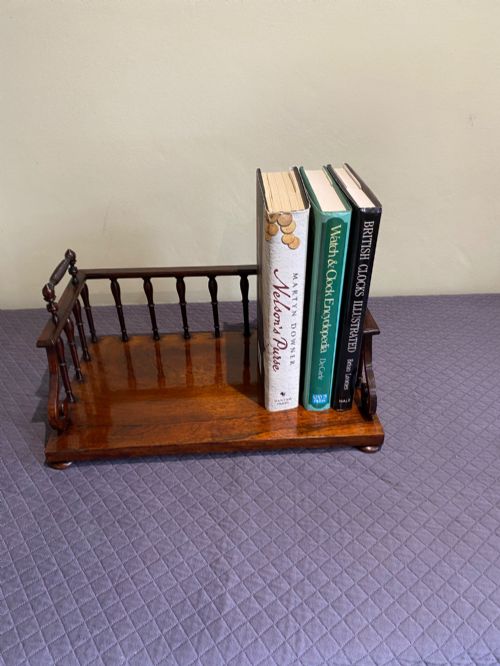
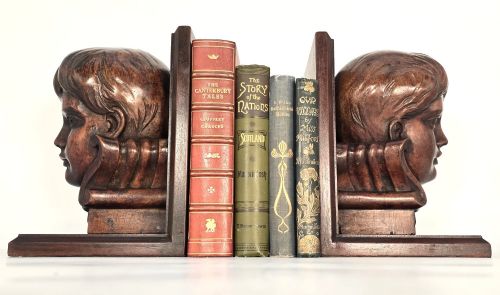
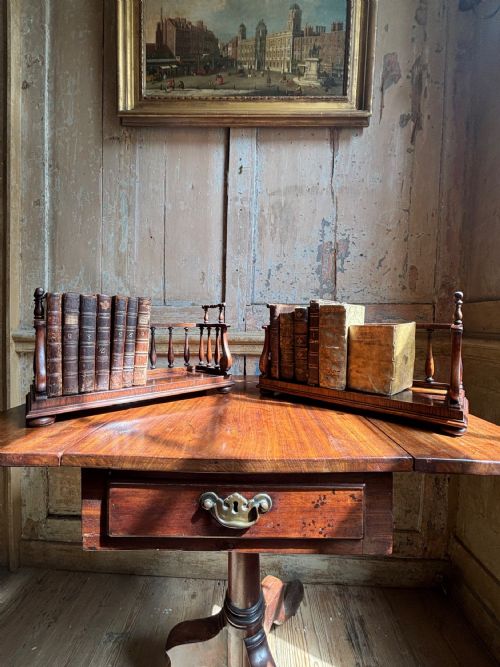
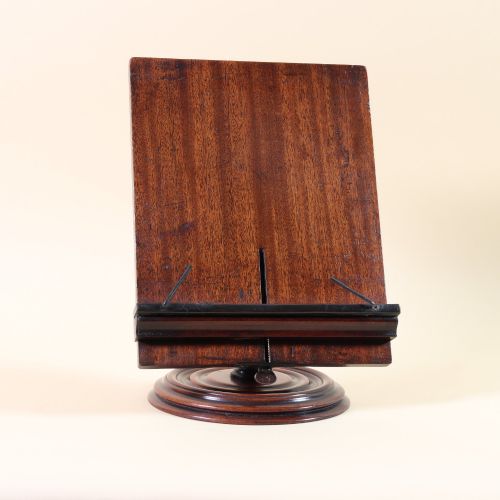
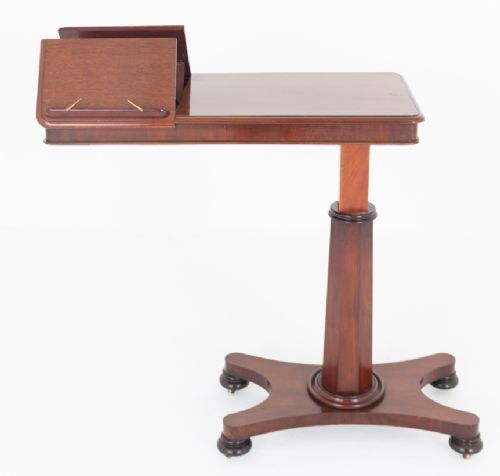
When you search for an antique desk bookstand, you encounter a variety of tabletop pieces designed to keep working volumes organised. These range from simple extending book slides and folding racks to revolving cases and reading stands.
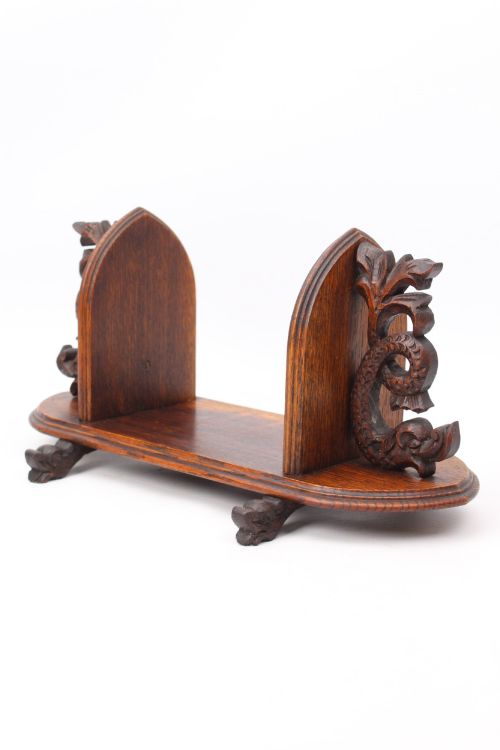
The material record spans the nineteenth century up to the Edwardian era, taking in Victorian walnut, Regency rosewood, and sturdy oak. Forms such as the Gothic Revival lectern stand and the Tunbridge Ware book-slide reflect the diverse decorative tastes of these periods.
Makers utilised rich hardwoods like mahogany and burr walnut, often mounting them with brass hinges, brackets, or painted porcelain plaques. Smaller examples such as Kashmiri slides and brass stands provide portable alternatives to heavy library furniture.
Materials and construction
Cabinetmakers constructed these pieces primarily from dense timbers such as mahogany, walnut, rosewood, and oak, occasionally selecting maple or coromandel for distinct visual grain. Boxwood stringing and Tunbridge Ware mosaic decoration add intricate surface detail to otherwise functional forms.
Metal components play a structural and decorative role, with brass mounts, hinges, and extending actions supporting the weight of heavy volumes. Carved woodwork defines specific stylistic expressions, particularly in Gothic Revival and ecclesiastical designs.
A Kashmiri slide brings hand-painted distant charm directly to the Victorian writing desk.
Distinctions in craftsmanship
Quality rests in the smoothness of the mechanism and the precision of the joinery, whether an extending slide glides without binding or a revolving case turns on a well-balanced pivot. Finer examples integrate durable brass hardware that secures folding arms and ratchets firmly.
The choice of timber and decorative embellishment separates standard pieces from exceptional ones. Finely figured burr walnut, inlaid Tunbridge Ware mosaics, and hand-painted porcelain plaques elevate a functional desk accessory into a sophisticated piece of cabinetwork.
The Antique Desk Bookstand Glossary
- Book slide
- A device with extending or folding sections designed to hold a variable number of books upright on a desk. This format prevents volumes from slipping while occupying minimal workspace.
- Revolving bookcase
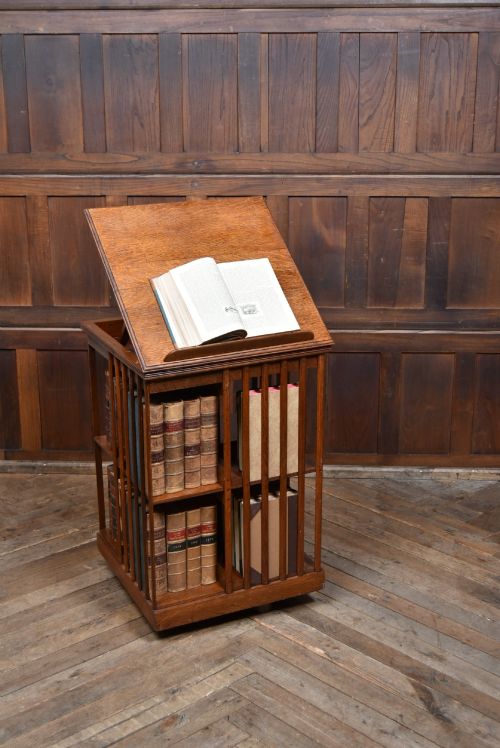
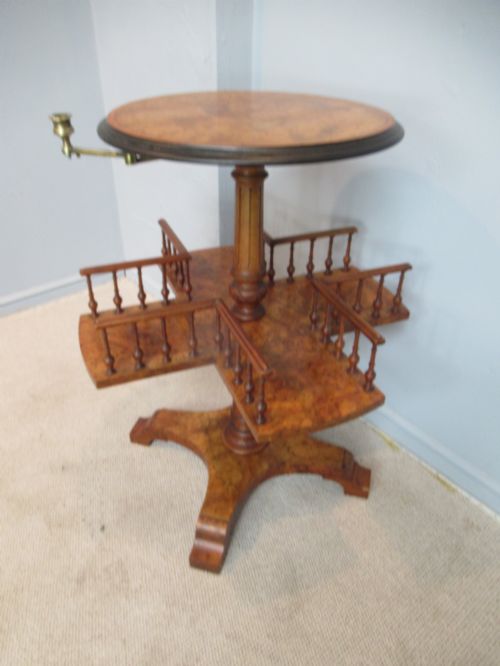
- A compact, rotating stand that holds books on multiple sides for easy access from a seated position. These items often feature slatted sides and a stable cruciform base.
- Tunbridge Ware
- Small wooden objects decorated with mosaic patterns created from thousands of tiny tinted wood blocks. This meticulous technique produces geometric or pictorial surface designs.
- Gothic Revival
- A nineteenth-century design style drawing on medieval architectural motifs such as pointed arches, tracery, and heavy carved oak. Pieces in this manner project a solemn, ecclesiastical character.
- Campaign
- Portable furniture designed for travel, typically fitted with flush brass handles, reinforced corners, and folding elements. These items combine robust construction with practical adaptability.
Antique Desk Bookstand: Frequently Asked Questions
How do extending book slides work?
Extending book slides utilise a sliding mechanism, often with concertina or sliding wooden arms, to adjust the length of the trough holding the volumes. This allows the user to expand or contract the rack depending on the number of books placed inside.
Fittings made from brass frequently guide the movement to ensure the two ends remain parallel and stable during adjustment.
What is a revolving bookstand used for?
A revolving bookstand allows a reader to store several reference volumes within arm's reach on a desktop or floor pivot. The rotating action makes it simple to select different titles without rearranging the entire stack.
These pieces suit studies and offices where space is limited but quick access to multiple books is necessary.
How can I identify a Gothic Revival piece?
Gothic Revival items typically feature architectural motifs inspired by medieval churches, including pointed arches, quatrefoils, and heavy carved oak. You will often notice dark finishes and sturdy construction designed to evoke a serious tone.
These characteristics appear frequently on nineteenth-century lecterns and ecclesiastical book stands.
What woods were commonly used?
Cabinetmakers relied on dense, attractive hardwoods such as mahogany, walnut, rosewood, and oak for durability and rich grain patterns. Burr walnut and coromandel appear on finer items to provide striking visual contrast.
Inlaid boxwood and maple also feature on specific decorative variants like Tunbridge Ware slides.