




Antique Decorative Sculpture Pair
An antique decorative sculpture pair brings symmetry and balanced weight to a room, offering matching subjects from bronze animals to carved wood.
Antique Decorative Sculpture Pair
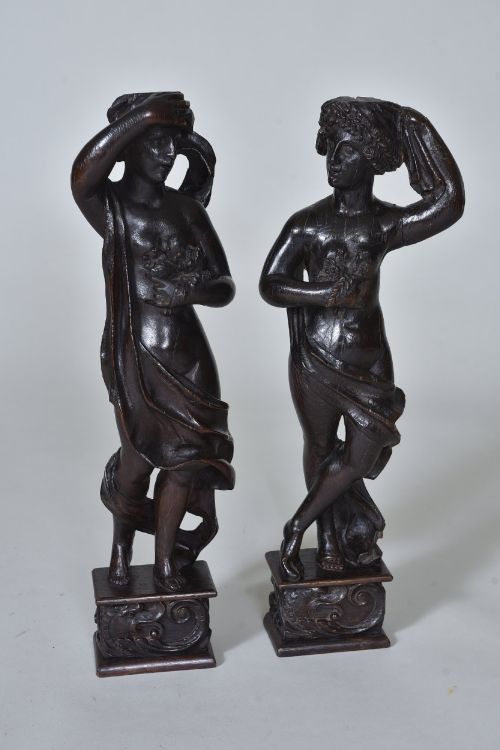
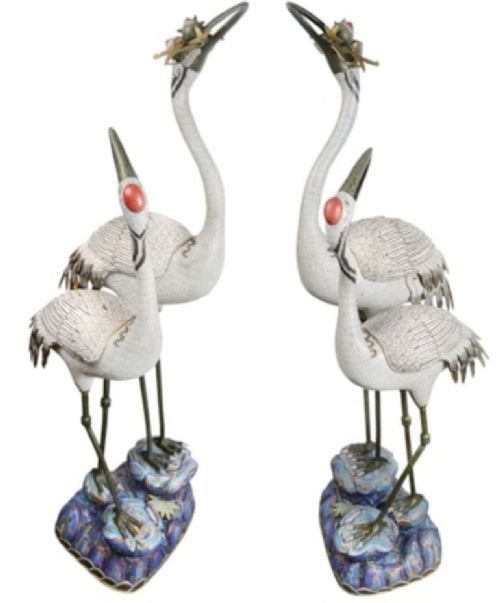
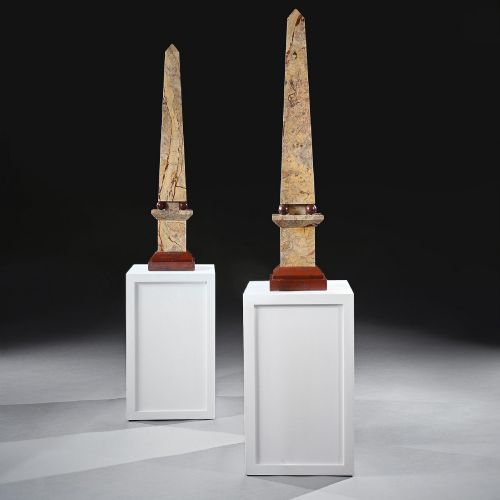
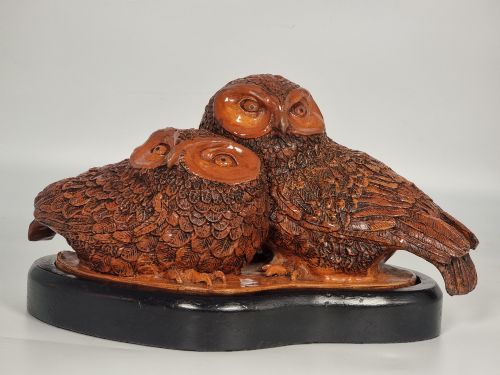
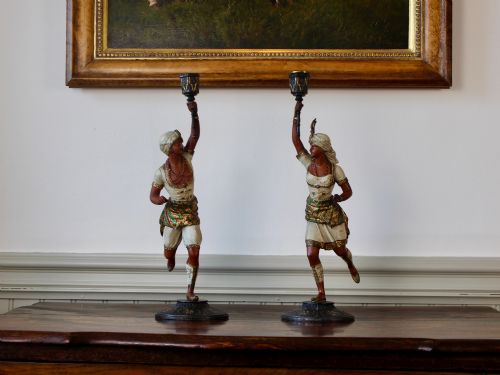
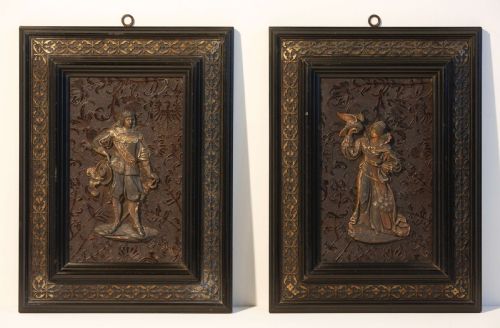
When you search for an antique decorative sculpture pair, you encounter matched figures designed to display together as a balanced ornament. The selections span centuries, incorporating subjects from mythical beasts and birds to human portraits and architectural obelisks.
The versions met most frequently on this page originate in the nineteenth and early twentieth centuries. They reflect popular domestic tastes of their respective periods, ranging from classical revival themes to orientalist and folk art interpretations.
Forms vary from freestanding figures and bookends to wall reliefs and mantel ornaments. Many incorporate practical elements, functioning as candlesticks, doorstops, or pedestals while maintaining their sculptural character.
Materials and construction methods
Metals form a significant portion of these works, utilising cast bronze, brass, spelter, and silver often enhanced with cold painting, gilding, or patination. Metalworkers employed casting and chasing techniques to achieve fine surface detail and relief work.
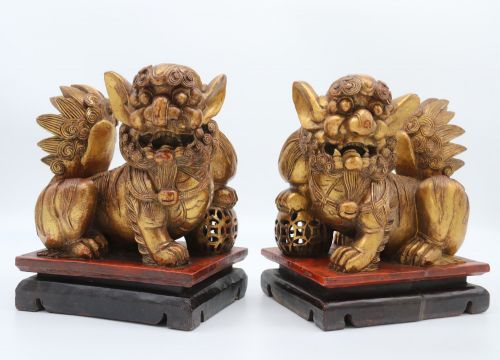
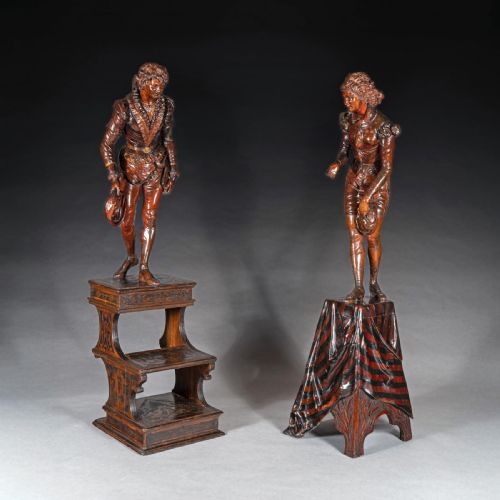
Carved pieces rely on hardwoods, bamboo, and exotic timbers such as ebony, amboyna, and ebonised wood. Sculptors also carved stone and marble, including portasanta, rosso antico, and Egyptian onyx, alongside terracotta and plaster.
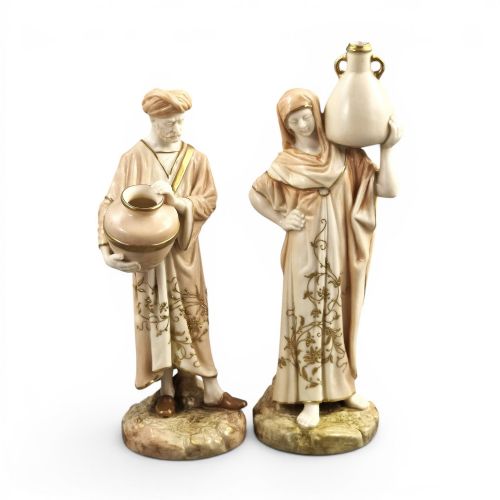
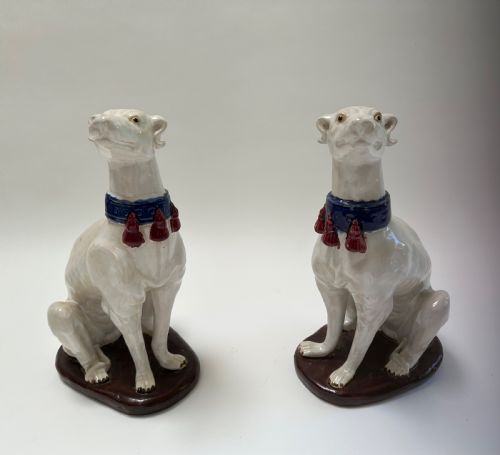
Ceramic examples employ hard-paste porcelain, earthenware, and enamel, decorated with hand-painted glazes such as blush ivory. Makers combined these diverse mediums with wooden or stone bases to support heavier figures.
The listings feature works spanning from the sixteenth century through to the 1930s, executed in bronze, wood, marble, and porcelain.
Distinctions in quality and execution
The standard of modeling and surface chasing separates superior works from simpler production pieces. Skilled hands achieve naturalistic anatomy, crisp drapery folds, and nuanced facial expressions that hold the eye across a room.
Material selection and foundation work indicate the tier of a pair. Heavy casting in bronze, fine-grained marble, or properly seasoned hardwoods outlasts softer alloys and brittle plaster, retaining sharper definition over time.
Cohesion between the two objects determines visual success. A strong pair demonstrates uniform casting, matching patination, and balanced proportions that confirm the figures were conceived and executed together.
James Hadley·Valentino Besarel·Fabergé·C Omin·C. G. Schierholz·Compton Potters Art Guild·Royal Dux
The Antique Decorative Sculpture Pair Glossary
- Spelter
- A zinc alloy commonly utilised as a substitute for bronze in nineteenth-century decorative figures. It is softer than bronze and typically bears a painted or bronzed finish.
- Obelisk
- A tall, four-sided, narrow tapering monument which ends in a pyramid-like shape at the top. In decorative pairs, these are frequently rendered in marble, onyx, or brass.
- Cold-painted
- A technique where paint is applied to metal, usually bronze or spelter, without being fired in a kiln. Over time, this surface finish is prone to gentle chipping and wear.
- Hard-paste porcelain
- A durable ceramic composition containing kaolin and petuntse, fired at high temperatures. It allows for sharp moulded details and vibrant enamel decoration.
- Cloisonné
- An ancient technique for decorating metalwork objects with coloured material held in place by thin metal strips. Artisans solder these wires to the metal base before filling the compartments with enamel.
Antique Decorative Sculpture Pair: Frequently Asked Questions
How do I display a sculpture pair?
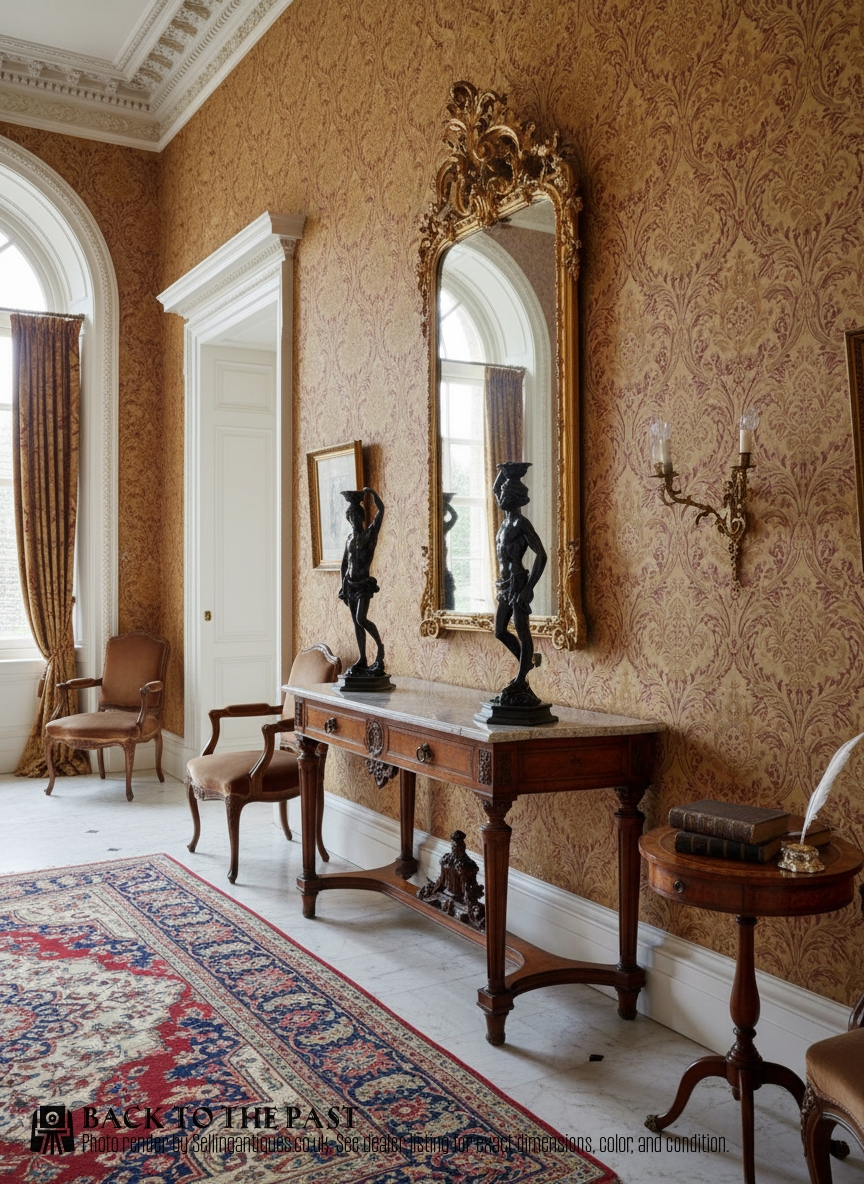
Place matching figures symmetrically on mantelpieces, sideboards, or flanking a doorway to create visual balance. Matching pedestals and columns elevate larger works to eye level within a room.
Ensure the surrounding surface provides adequate depth and support, particularly for heavy cast bronze or marble pieces. Keep them out of direct sunlight to preserve painted and gilded surfaces.
Are these figures purely decorative?
Many serve functional roles alongside their sculptural form, acting as bookends, doorstops, candlesticks, or desk ornaments. Others function as architectural models or scholarly representations of historical subjects.
Their dual purpose reflects period tastes for objects that combined utility with artistic display in domestic interiors.
How do I care for bronze sculptures?
Dust the surface regularly with a soft, dry cloth to prevent particulate buildup in recessed details. Avoid using liquid cleaners or polishes that can strip original patination.
Maintain stable indoor humidity levels to protect any wooden or stone bases associated with the metal figures.
How are nineteenth-century materials identified?
Examine the weight, surface temperature, and underside of the pieces for casting marks or tool signatures. Bronze feels cold and heavy, whereas spelter is lighter and softer under subtle inspection.
Look for signs of age such as oxidation in metal crevices or natural shrinkage in old wood and ivory.