
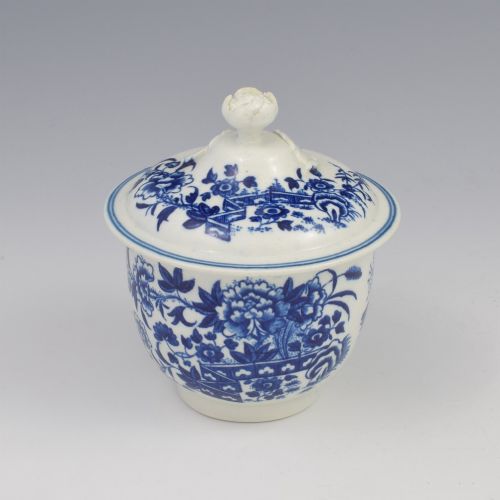
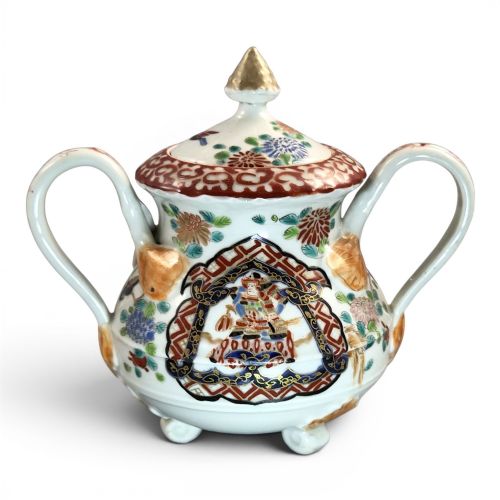


Antique Covered Sugar Bowl
An antique covered sugar bowl brings the refined ritual of Georgian and Victorian tea service directly to the table.
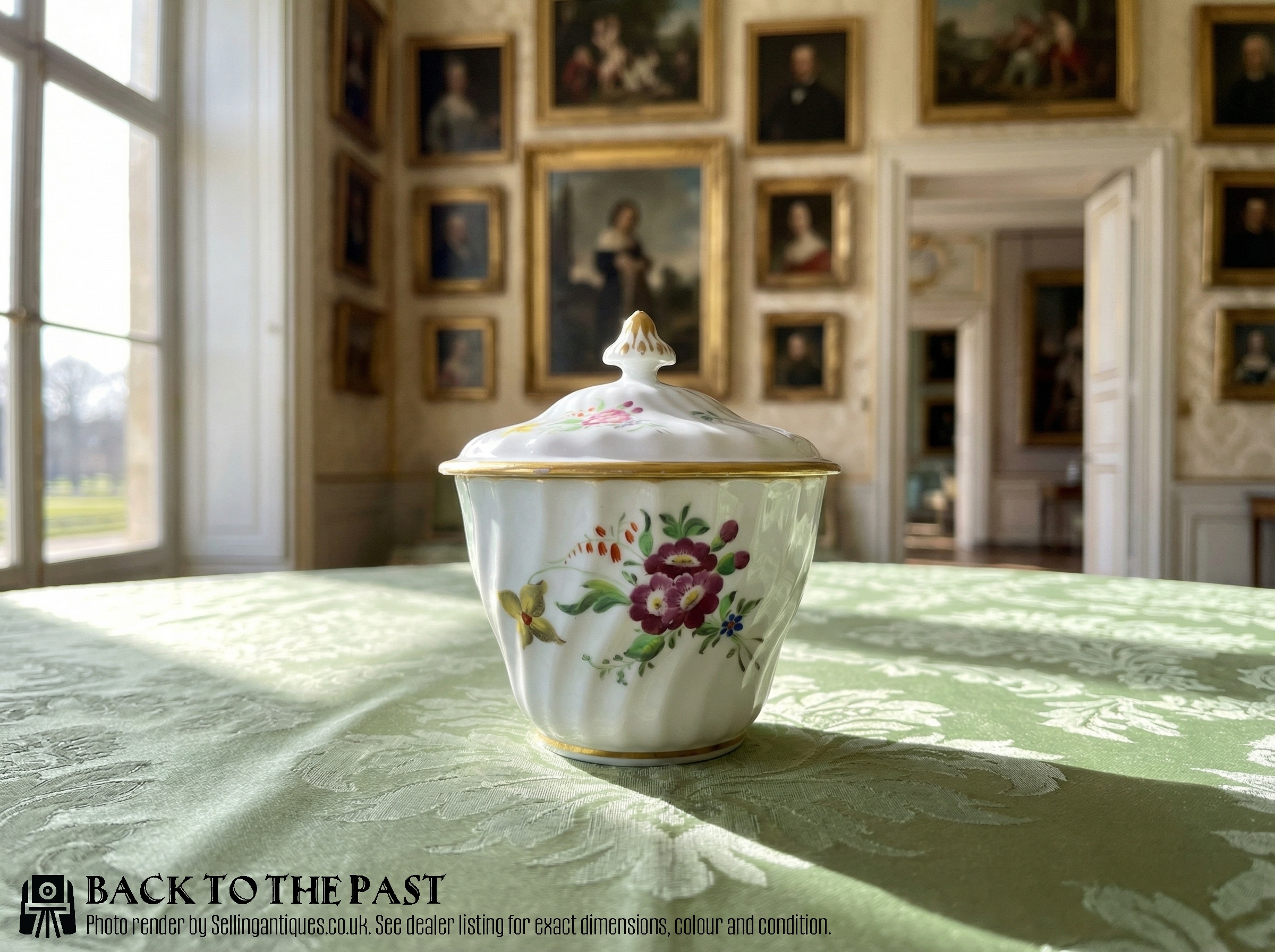
Antique Covered Sugar Bowl
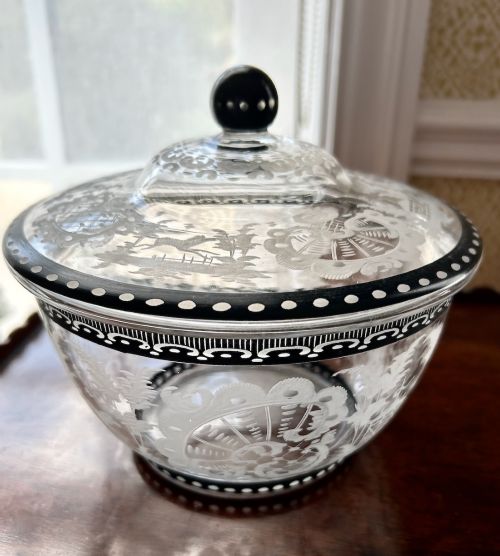
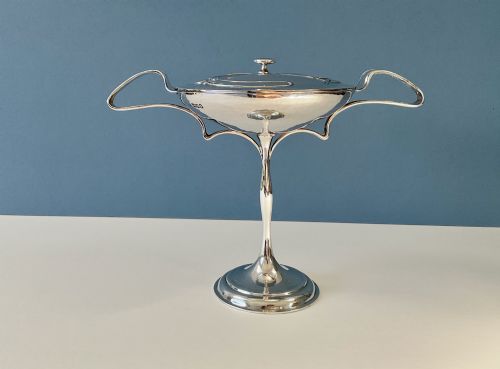
The antique covered sugar bowl appears in various forms across the eighteenth and nineteenth centuries, including traditional sugar boxes, sucriers, and pedestal bowls with matching lids. These vessels served to hold and protect precious sugar during formal tea services, often accompanied by matching cream jugs and teapots within larger table settings.
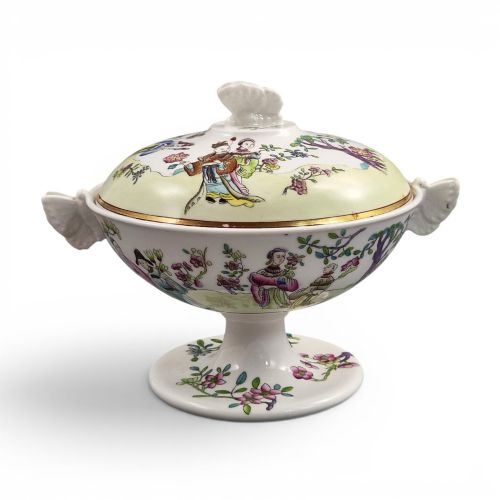
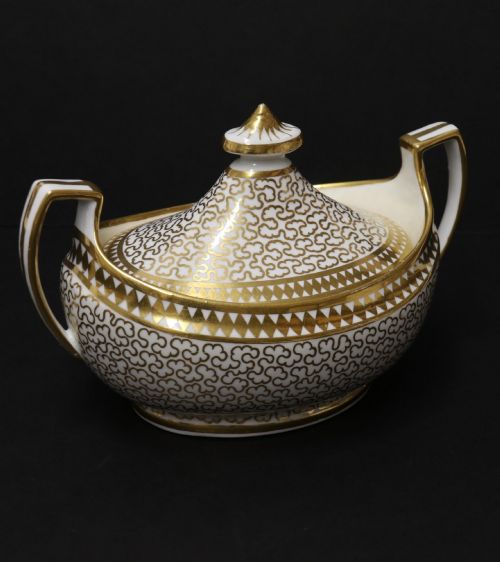
Makers utilised soft-paste porcelain, felspar porcelain, and crystal glass to fashion these vessels, applying hand-painted patterns such as blue and white transfer prints, Imari designs, and delicate gilding. Pieces range from early Worcester and Spode productions to Baccarat glass and Meiji period Japanese porcelain.
The selection includes distinct regional styles spanning English Georgian factories, French Baccarat glassworks, German Meissen workshops, and Italian Richard Ginori porcelain productions. Collectors encounter forms decorated with butterfly handles, lion masks, or intricate samurai motifs alongside simpler engraved glass designs.
Factors determining quality
The precision of hand-painted enamel work and the crispness of underglaze blue transfers distinguish superior porcelain bodies from standard production pieces. Finer specimens display unblemished gilding with minimal rubbing, sharp moulding around handles and lion masks, and clear factory marks.
Glass quality rests on the clarity of the metal, the symmetry of cut or engraved patterns, and the exact alignment of coloured canes within latticinio vessels. Well-preserved covers fit securely onto their respective bowls without excessive wobble or mismatching from later replacements.
Some nineteenth-century sugar bowls feature tiny butterfly handles that require an extremely delicate touch to lift the lid.
Spode·Chamberlains Worcester·Baccarat·Ridgway·Royal Crown Derby·Richard Ginori·Meissen·Coalport
The Antique Covered Sugar Bowl Glossary
- Sucrier
- A French term for a sugar basin or bowl, frequently used interchangeably with sugar box in British ceramics catalogues. It denotes a lidded vessel specifically designed to hold sugar for tea service.
- Felspar porcelain
- An innovative ceramic body developed in the nineteenth century using felspar as a primary flux, creating a remarkably white and translucent material. Manufacturers like Spode utilised this body to produce durable luxury tableware.
- Latticinio
- A decorative glass technique featuring intricate arrangements of opaque white or coloured glass threads embedded within clear metal. Baccarat and other nineteenth-century glassworks employed this method to create striped and banded vessel walls.
- Imari
- A style of ceramic decoration originating in Japan and later imitated by European factories, characterised by a palette of underglaze blue, iron red, and abundant gold. Pieces often feature complex floral or figural panels.
- Flight Period
- The era of Worcester porcelain production dating from the late eighteenth century when Thomas Flight acquired the factory. Items from this period typically bear specific script or crescent marks associated with the firm.
Antique Covered Sugar Bowl: Frequently Asked Questions
What is the difference between a sucrier and a sugar bowl?
A sucrier is simply the French term for a covered sugar basin, a form widely adopted by English and continental porcelain factories during the Georgian and Victorian eras.
While everyday kitchen sugar containers were open, these lidded vessels were designed to sit prominently on the tea table alongside matching teapots and cream jugs.
How were covered sugar bowls used in the past?
These vessels held loose sugar lumps or granules during formal tea services, protecting the contents from moisture and insects in the dining room.
The matching lid allowed the host to keep the sugar clean between servings while adding an ornamental centrepiece to the tea table arrangement.
How can I tell eighteenth-century Worcester from later pieces?
Eighteenth-century Worcester porcelain often displays characteristic underglaze blue transfer prints, such as the fence or immortelle patterns, paired with soft paste bodies that show subtle imperfections under magnification.
Later nineteenth-century productions frequently utilise whiter felspar porcelain bodies and feature more vibrant polychrome enamelling or extensive gilding.