



Antique Country Elm Chest
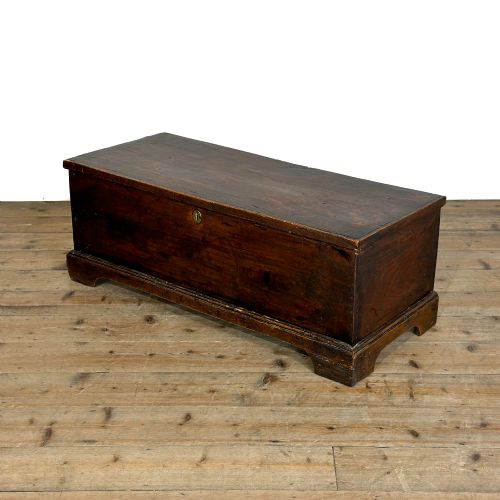
An antique country elm chest brings warmth and unpretentious vernacular character to a room through rich timber figure.
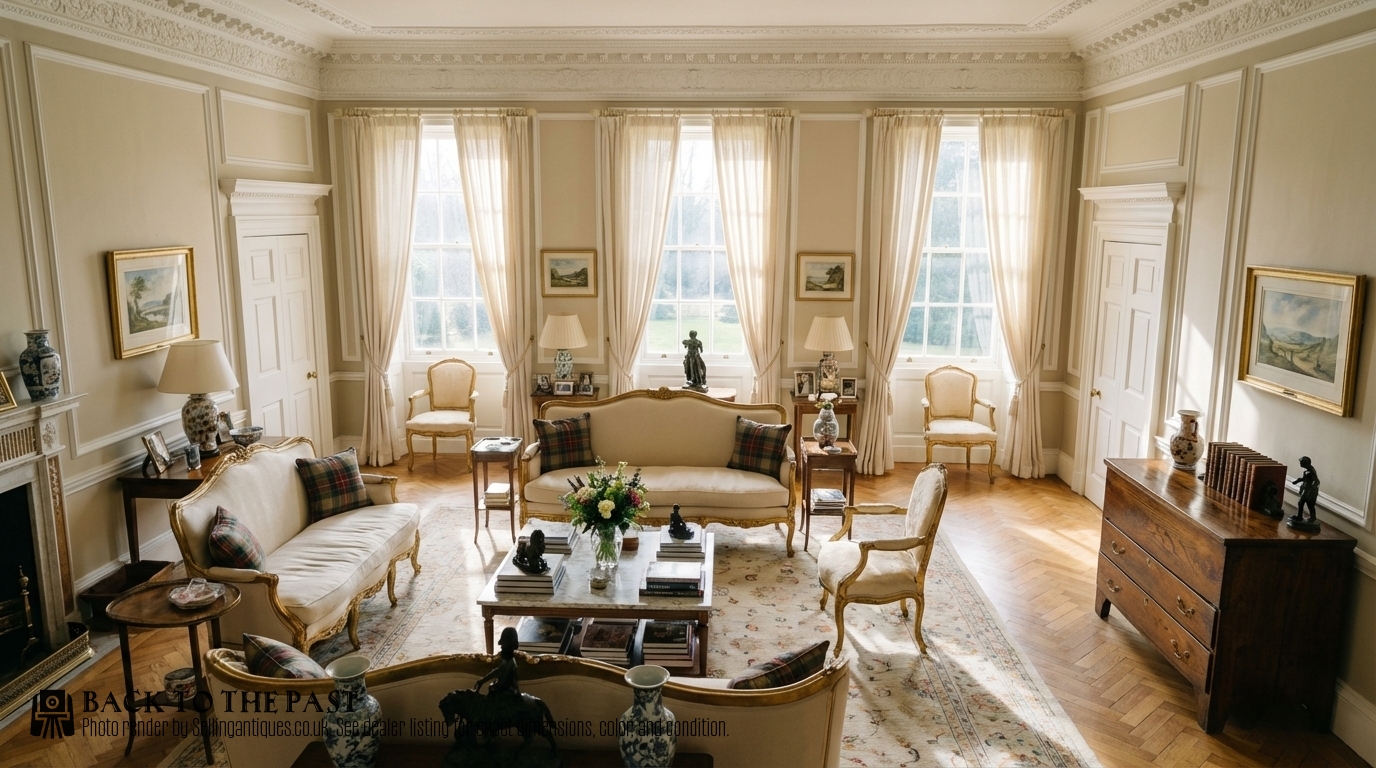
Antique Country Elm Chest
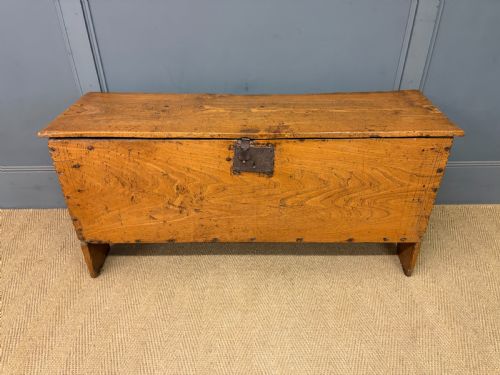
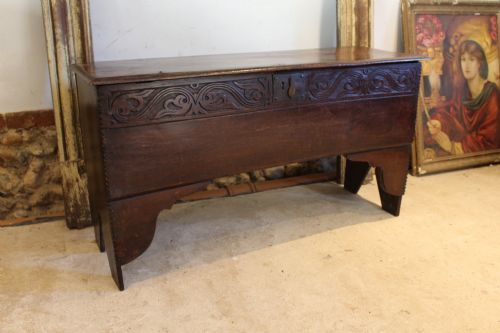
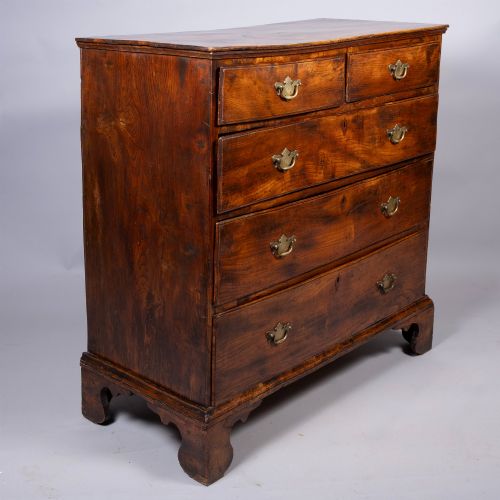
An antique country elm chest encompasses functional storage forms created from timber favoured for its toughness and distinctive grain pattern. Buyers searching for an antique country elm chest encounter utilitarian blanket chests, six-plank coffers, and chests of drawers rooted in regional traditions.
The pieces on this page span the seventeenth, eighteenth, and nineteenth centuries, reflecting domestic and agricultural storage needs across Britain and continental Europe. Examples range from simple boarded boxes to refined Georgian bureaux and mule chests fitted with lower drawers.
Makers working within vernacular styles prioritised utility, utilising local plank timber rather than imported fancy veneers. The resulting forms show direct responses to daily storage requirements, including dough bins and bible boxes alongside standard trunks.
How they were made
Constructed primarily from solid elm, these pieces often incorporate burr elm sections to highlight natural grain movement and knot clusters. Carpenters joined heavy planks using dovetails, pegged mortise and tenon joints, or simple butt joints secured by iron or wrought iron nails.
Hardware played a functional role in the construction, featuring exposed iron hasps, brass handles, and carrying hoops designed for heavy use. Surfaces were left largely unpolished or finished with simple wax to protect the wood while retaining its tactile texture.
Some elm containers retain heavy iron carrying hoops designed for moving heavy loads across damp agricultural floors.
What varies in quality
Quality rests upon the selection of the timber, particularly where figured burr elm or deep honey-coloured boards display strong visual depth. The integrity of original construction details, such as hand-cut dovetailing and untouched board thicknesses, separates superior items from heavily restored examples.
Proportion and form dictate the standing of a piece within its type, distinguishing simple utilitarian boxes from more sophisticated bureau cabinets or secretaire chests. Retaining original ironwork, brass fittings, and structural hardware without modern replacement enhances the integrity of the object.
The Antique Country Elm Chest Glossary
- Six-plank coffer
- A simple chest constructed from six individual boards joined directly at the edges, representing an early and fundamental form of domestic storage. These pieces rely entirely on straightforward carpentry without complex internal framing.
- Mule chest
- A storage chest featuring one or more drawers built beneath the main compartment, bridging the transition between a traditional trunk and a chest of drawers. This form became popular during the Georgian period for storing linen and clothing.
- Dough bin
- A specialised domestic container with a sloped or removable lid designed for kneading and rising bread dough in rural households. They are typically elevated on legs and constructed from robust elm to withstand heavy kitchen use.
- Burr elm
- A growth deformity in the elm tree that produces highly twisted, knotty grain patterns prized for decorative veneer and surface panels. It provides a striking contrast to straight-grained timber.
- Vernacular country
- A design tradition arising from local building customs and domestic needs rather than metropolitan high styles. These objects reflect regional resource availability and practical craftsmanship.
Antique Country Elm Chest: Frequently Asked Questions
How do I date an elm chest?
Dating relies on observing construction methods, such as hand-cut dovetails, tool marks, and the type of iron or brass hardware fitted to the piece. Early examples from the seventeenth and eighteenth centuries often feature simple boarded joins or pegged framing.
Changes in form and regional styles also provide chronological clues, distinguishing utilitarian six-plank boards from later Georgian drawers and bureau compartments.
Where were these chests used?
These chests served practical storage roles in farmhouses, cottages, and provincial homes across Britain and Europe. They held textiles, blankets, documents, and provisions in daily domestic life.
Specialised forms like dough bins and bible boxes fulfilled specific kitchen and household duties within rural communities.
How do I care for antique elm?
Protect antique elm by keeping pieces away from direct heat sources and sudden humidity shifts that cause the dense timber to warp or split. Feeding the wood occasionally with a traditional beeswax polish maintains the surface sheen.
Avoid harsh modern chemical cleaners that strip the historic finish and dry out the grain structure.
What is a mule chest?
A mule chest combines a traditional blanket box compartment with one or more functional drawers positioned underneath. This addition allowed access to stored items without needing to lift the heavy lid of the upper trunk.
They emerged during the seventeenth century and remained popular throughout the Georgian period in rural homes.