
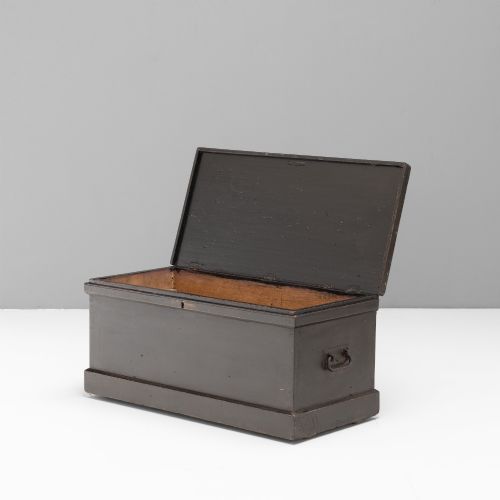
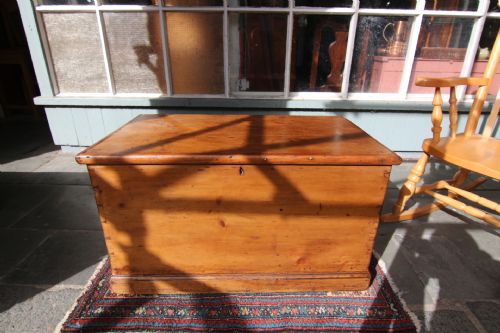
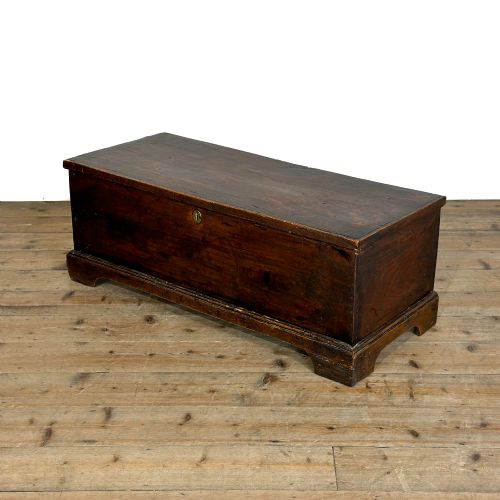
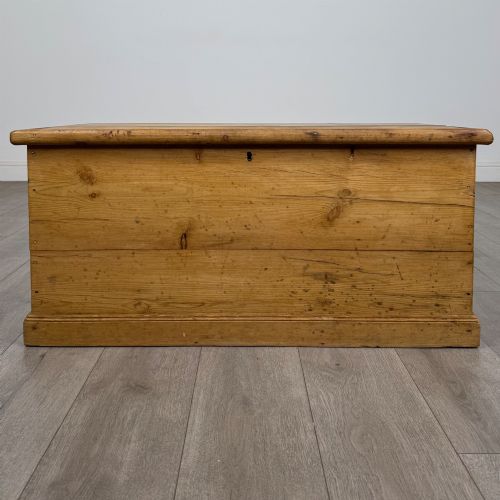

Antique Country Coffer Chest
An antique country coffer chest is a sturdy domestic storage piece built to hold household textiles and valuables, offering rustic character to modern spaces.
Antique Country Coffer Chest
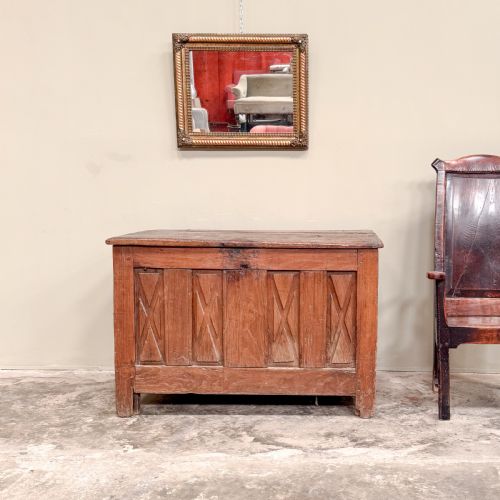
When seeking an antique country coffer chest, buyers encounter robust storage vessels historically utilised for domestic belongings, blankets, and dry goods. The selection spans straightforward utility boxes to panelled forms originating across British and continental rural workshops.
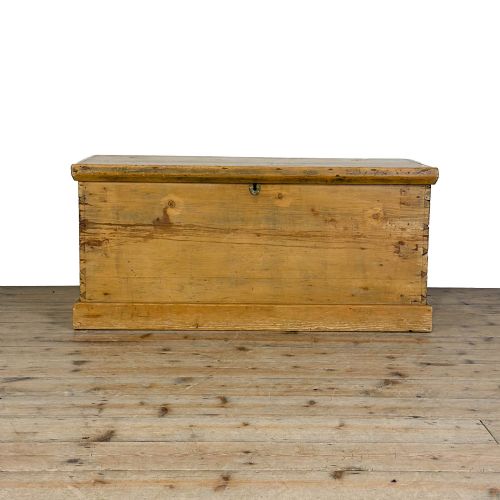
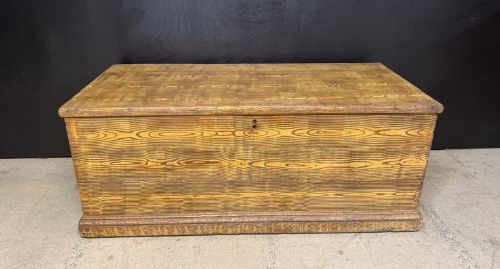
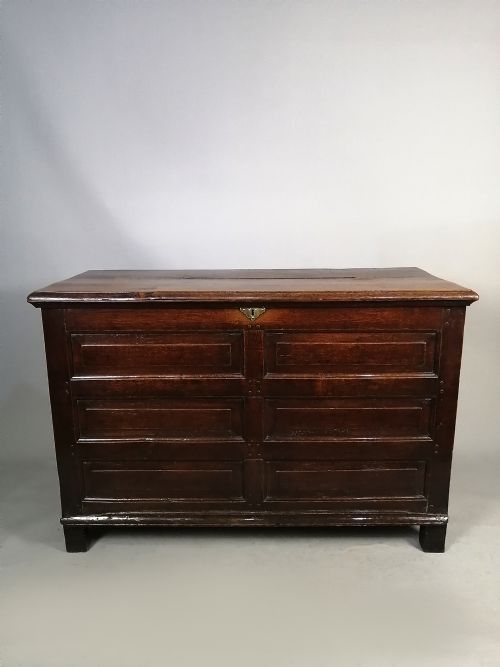
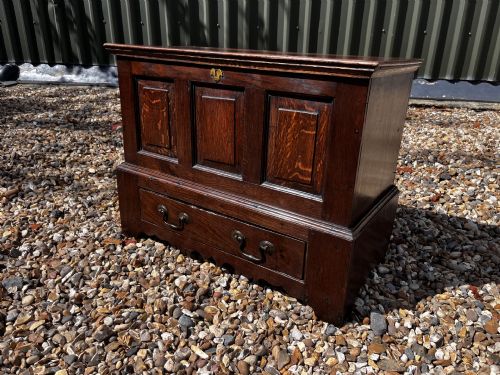
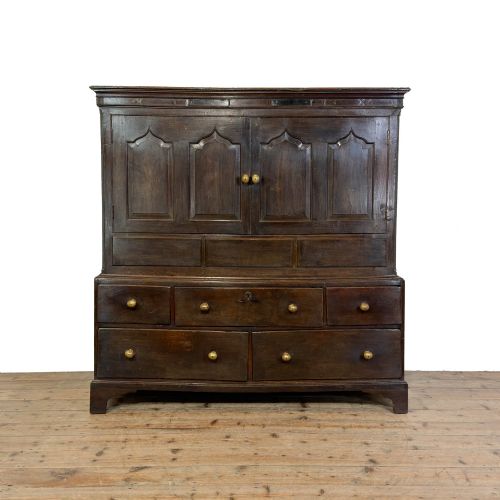
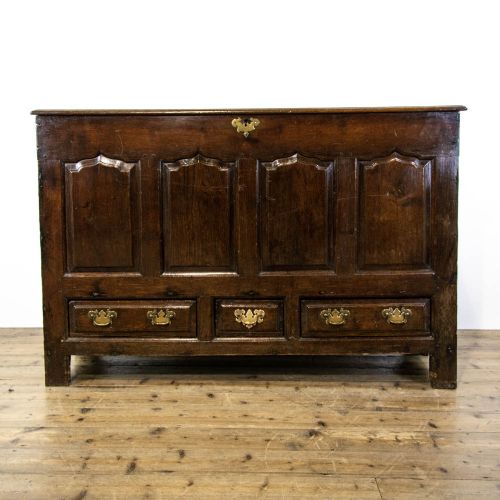
The variant most frequently met on this page is the oak or pine box from the seventeenth, eighteenth, or nineteenth centuries. These utilitarian pieces range from simple boarded constructions to sophisticated regional variants like the Welsh coffer bach or mule chest fitted with lower drawers.
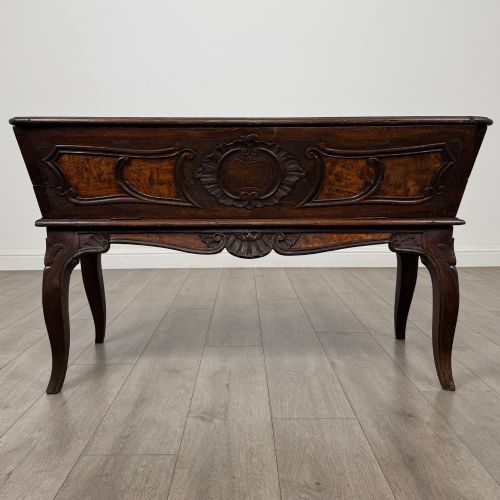
Regional vernacular expressions dominate the category, showing distinct joinery techniques particular to localities such as Wales or the English West Country. Alongside these sit French provincial pieces and painted pine marriage boxes from Scandinavian traditions.
Materials and Construction
Solid timber forms the foundation of every piece, with native woods like oak, elm, and pine selected for local availability and structural resilience. Carpenters utilised pegged joints, hand-planed boards, and robust iron hinges to assemble lids and bodies designed to endure generations of heavy use.
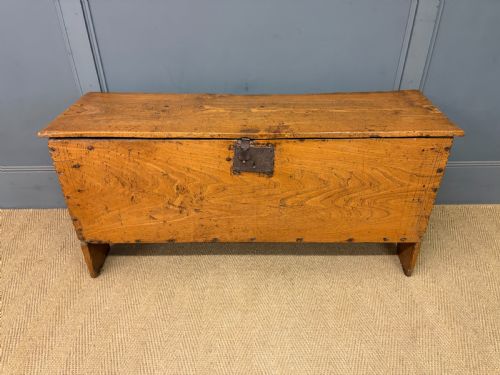
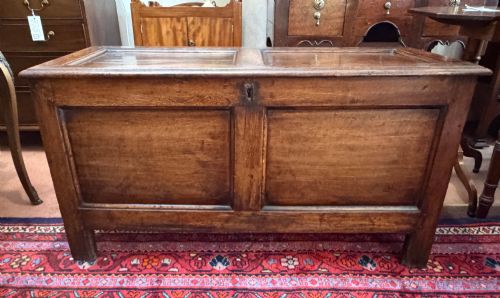
Surface treatments vary from untreated scrubbed timber and traditional wax finishes to historical layers of paint. Regional makers applied panelled framing or simplified six-plank board construction depending on the intended function and the status of the household.
Storage forms span simple boarded trunks, six-plank boxes, mule chests with drawers, and multi-panelled coffers.
Assessing Quality and Integrity
Quality in these utilitarian chests rests upon the survival of original timber surfaces, unaltered hardware, and sound structural joinery. Pieces retaining their initial pegged joints, uncompromised lids, and deep historic patination command greater appreciation than those heavily restored or stripped of their finish.
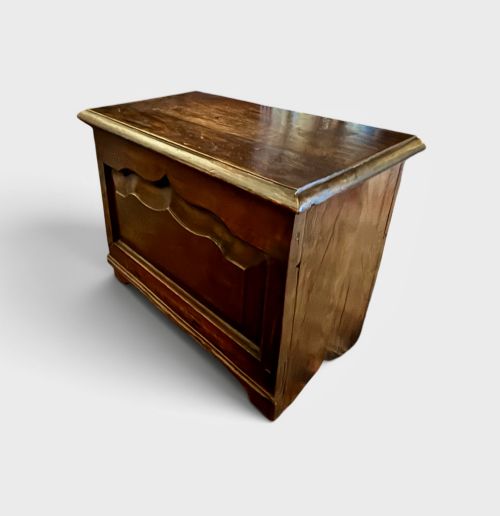
Proportion and regional distinctiveness also dictate desirability, particularly where specialised forms like small coffer bach boxes or early boarded sword chests display untruncated boards and authentic maker geometry. The harmony between the original function and the current state of preservation defines the standing of each individual box.
The Antique Country Coffer Chest Glossary
- Coffer
- A large wooden chest traditionally used for storing valuables or household goods. Most examples feature a hinged lid and heavy timber construction.
- Mule chest
- A storage chest with one or more drawers built into the base beneath the main compartment. This form bridges the traditional coffer and the modern chest of drawers.
- Six-plank
- A primitive box construction method utilising six individual boards joined directly at the edges. This technique is typical of early country furniture.
- Coffer bach
- A small tabletop or miniature Welsh coffer traditionally used for linen or precious items. These regional pieces are exceptionally compact.
- Linenfold
- A style of wood carving that imitates folded parchment or linen cloth. This decorative motif frequently appears on fifteenth and sixteenth-century panels.
Antique Country Coffer Chest: Frequently Asked Questions
What is a coffer chest used for?
Historically, these chests served as secure storage for blankets, clothing, documents, and valuables in domestic settings.
Today, they function well in modern interiors as coffee tables, blanket boxes at the foot of a bed, or hallway storage.
How do I date an old coffer?
Dating relies on examining the construction methods, tool marks left by hand planes, and the type of hinges utilised on the lid. Pegged joints and hand-riven boards typically point to seventeenth or eighteenth-century origins.
Secondary indicators include the style of panel mouldings, regional timber choices such as native oak or elm, and the evolution of hardware.
What is a mule chest?
A mule chest is a regional variation that combines the traditional lift-top storage compartment of a coffer with one or more drawers fitted beneath.
This hybrid form emerged when makers realised adding external drawers improved daily access to stored garments without requiring items on top to be moved.
How do I care for antique pine or oak?
Maintain timber surfaces by applying natural beeswax periodically to nourish the dry wood and preserve the historic patina. Avoid placing antique chests near direct heat sources or in fluctuating humidity to prevent warping.
Dust regularly with a soft, dry cloth rather than using modern liquid polishes that can degrade older wax finishes.