



Antique Cornish Wall Art
Antique cornish wall art captures the rugged light and maritime life of the western peninsula through enduring watercolours and oils.
Antique Cornish Wall Art
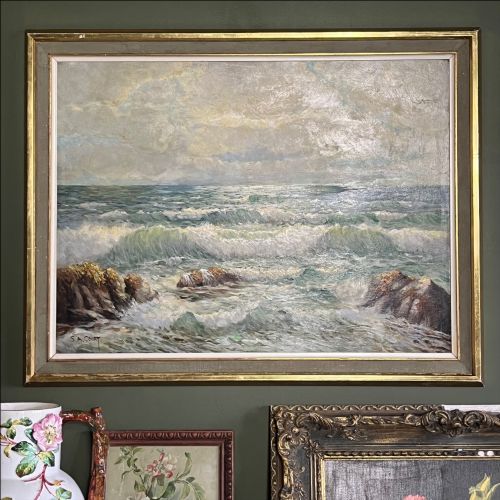
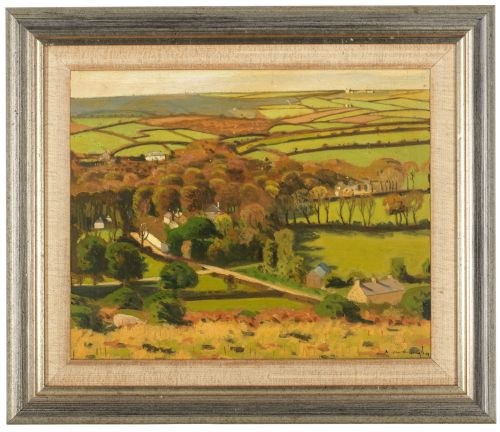
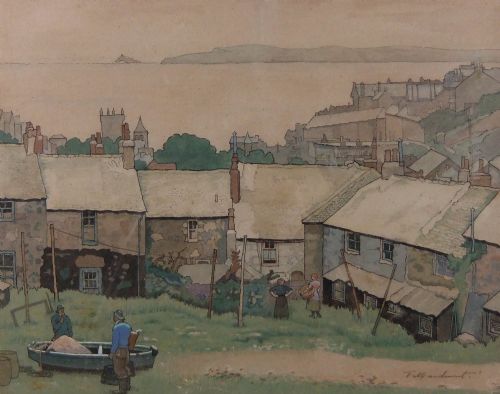
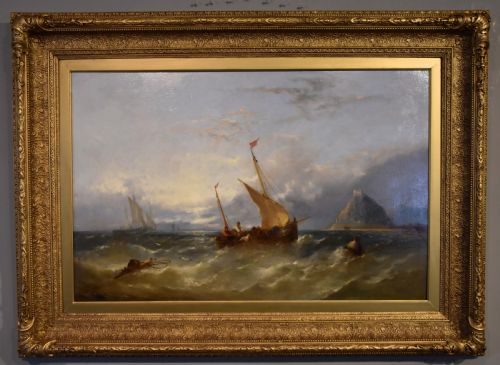
Antique cornish wall art encompasses paintings, watercolours, and framed artworks depicting harbours, coastal scenes, and rural landscapes across the nineteenth and twentieth centuries. The selection here leans heavily towards maritime subjects, capturing local fishing fleets, dramatic tides, and rocky shores around St Ives, Newlyn, and Polperro. Buyers will encounter both intimate works on paper and substantial oil paintings executed during the Victorian, Edwardian, and mid-century periods.
The regional schools dominate these offerings, most notably the Newlyn and St Ives artists who recorded the daily routines of fisherfolk and the distinct coastal atmosphere. Works range from early nineteenth-century topographical views to later impressionistic interpretations of Cornish harbours. Framed in wood or gilt surrounds, these pieces bring the specific topography and maritime heritage of the south-west directly onto domestic walls.
How they were made
Painters worked primarily in oil on canvas or watercolour on paper, capturing the shifting light of the Atlantic coast with fluid brushwork or layered pigments. Canvases are frequently secured within traditional wood and gilt wood frames, sometimes retaining their original glass protection. These materials responded directly to the damp maritime climate, employing robust grounds and stable pigments suited to outdoor sketching.
The application of paint varies from the meticulous detail of Victorian fine art to the broader, atmospheric strokes characteristic of the Newlyn School. Watercolours often employ delicate washes alongside bodycolour to render the bright sea spray and overcast skies of the West Country. Woodblock prints and pastel drawings also appear, showing a diversity of graphic techniques applied to local scenes.
Materials recorded across the archive include paper, canvas, glass, and gilt wood frames.
What varies in quality
Quality rests upon the artist's ability to command atmosphere and light, distinguishing masterly depictions of sea and stone from routine topographical recording. The handling of water, rigging, and human figures reveals the draughtsmanship behind each composition, particularly in complex maritime scenes involving trawling luggers or breaking surf. Works that capture the specific tonal qualities of the Cornish coast with conviction stand apart from generic coastal illustrations.
Condition and originality also dictate the standing of a piece, from the preservation of the paper or canvas to the integrity of the period frame. Intact artist signatures, well-documented exhibition histories, and untouched surfaces enhance the historical weight of the painting. Pieces that retain their original framing provide a more complete historical artefact for the collector.
William Banks Fortescue·Thomas Maidment·William Henry Williamson·George F Pennington·Edward Matthew Elliott·Charles Napier Hemy·Richard Harry Carter·Charles Sim Mottram·William Pitt·Joseph Farquharson·Ernest F Hill·Ralph Todd·William Lee Hankey·Hendrik Yan Wolter·S J Lamorna Birch·Jack R Mould·Herbert James·Cuthbert Crossley·John Baragwanath King
The Antique Cornish Wall Art Glossary
- Newlyn School
- An art colony based in the Cornish fishing village from the late nineteenth century onwards. Artists painted en plein air, focusing on realist depictions of local fisherfolk and coastal life.
- St Ives School
- A designation for artists working in and around the Cornish port, evolving from early traditional marine painting into mid-century modernism. It encompasses generations of painters drawn to the distinct peninsular light.
- Watercolour
- A painting method in which the paints are made of pigments suspended in a water-based solution. It was widely used by Cornish artists for rapid coastal sketches and finished gallery pieces alike.
- Gilt Wood
- Wood that has been coated with a thin layer of gold leaf or gilt gesso. It is commonly found on the traditional frames housing nineteenth-century oil paintings.
- Marine Art
- Artwork that depicts or draws its main inspiration from the sea, ships, and coastal views. This genre forms the backbone of historical Cornish painting.
Antique Cornish Wall Art: Frequently Asked Questions
What subjects appear most often?
The works focus heavily on fishing boats, harbour walls, and coastal villages across the Cornish peninsula. Scenes featuring St Ives, Polperro, and Newlyn recur frequently throughout the selection.
Artists also recorded rural farmyards and inland landscapes, though maritime activity remains the dominant theme across both watercolours and oil paintings.
How do I date a painting?
Dating relies on recorded artist lifespans, stylistic shifts from Victorian realism to Edwardian impressionism, and framing materials. Signatures and exhibition labels on the reverse often provide precise chronological clues.
Catalogue entries supply specific period brackets, from the nineteenth century through to the mid-twentieth century.
Are these works framed?
Most pieces arrive within period frames, frequently constructed from wood or gilt wood that suits the age of the artwork. These surrounds help protect the paper or canvas and complete the historical presentation.
Buyers should check individual listings to confirm whether a piece retains its original period housing.
Who were the Newlyn artists?
The Newlyn artists formed an influential colony of painters who settled in the Cornish fishing village to work directly from observation. They specialised in naturalistic portrayals of local residents and maritime labour.
Their output defined much of the region's artistic identity during the late Victorian and Edwardian eras.