



Beige Paper Watercolour Artwork
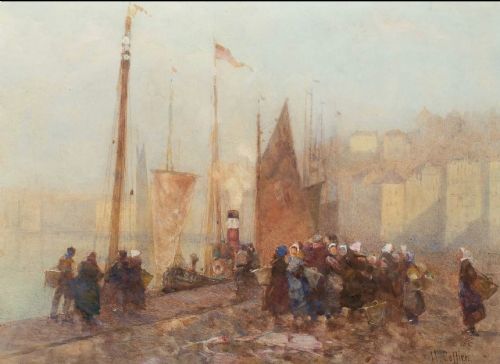
These beige paper watercolour artwork pieces capture subtle tones and delicate washes, offering collectors historic scenes on genuine toned supports.
Beige Paper Watercolour Artwork
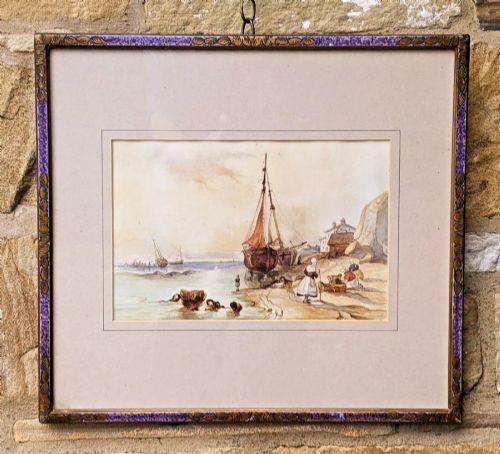
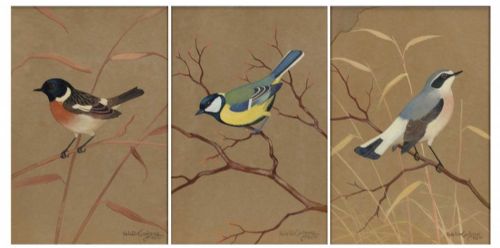
A beige paper watercolour artwork brings together historic paintings and drawings executed on tinted or toned supports rather than stark white sheets. These works span from the nineteenth century through the Victorian era and into the mid-twentieth century, capturing subjects ranging from coastal harbours to garden birds.
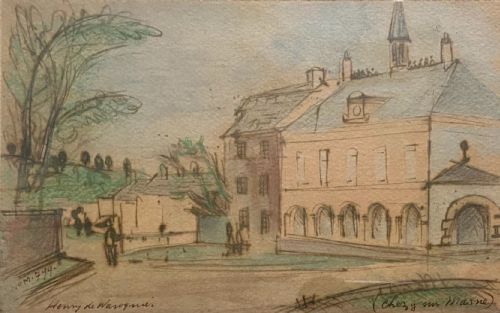
Buyers most frequently encounter maritime scenes, architectural views, and rural landscapes produced by British and international artists working across various decades. The selection includes individual framed pieces as well as signed albums, all sharing a distinct preference for toned grounds that naturally integrate with the pigment.
The underlying support grounds provide a warm, neutral base that influences the overall palette and depth of each composition. This specific grouping demonstrates how artists utilised the natural tone of the sheet to unify highlights and shadows without relying solely on opaque white bodycolour.
Materials and techniques
Artists deployed watercolour pigment alongside ink, gouache, and crayon upon paper supports, allowing the natural beige ground to act as an active middle tone. This method reduced the need to build up heavy washes for shadow areas, letting the paper itself define the mid-values of the composition.
Framed works often incorporate wood and glass to protect the delicate water-soluble pigments and the toned paper from environmental degradation. The physical construction frequently relies on traditional mounting techniques that keep the fragile paper stable within its period frame.
One unexpected Victorian entry records an architectural study of Norwich Cathedral alongside bustling coastal nets.
Distinctions in quality
Quality rests upon the surety of the brushwork and the harmony between the pigment application and the visible paper ground. Superior examples demonstrate confident handling where ink and watercolour work in concert with the toned support to create spatial depth.
The preservation of the paper surface and the integrity of the pigments significantly influence the standing of a piece. Works that retain their original tonal balance without excessive fading or discoloration represent the higher tiers of these historic productions.
Hector Caffieri·William Frederick Settle·Cuthbert Crossley·Fred Lawson·Leslie Rackham·Kate E Booth·Ya Ming·Dame Laura Knight·George De Paris·Jessie Hall·Sir William Charles Ross
The Beige Paper Watercolour Artwork Glossary
- Gouache
- An opaque watercolour paint that includes a binding agent such as gum, allowing for lighter highlights to be laid over darker washes. It provides solid coverage and a matte finish.
- Mixed media
- An artwork created using more than one medium, such as ink and watercolour combined on the same paper support. This approach allows artists to mix fine graphic lines with fluid washes.
- Support
- The physical material, such as paper, upon which the paint or drawing medium is applied. Toned supports provide a pre-coloured background that alters the visual dynamics of the pigments.
- Wash
- A thin, fluid layer of transparent watercolour pigment spread evenly across the paper. Skilled application creates smooth gradients for skies and water.
Beige Paper Watercolour Artwork: Frequently Asked Questions
What periods do these artworks cover?
The pieces span from the nineteenth century through the Victorian period and into the mid-twentieth century, encompassing decades such as the 1920s, 1930s, and 1940s.
This broad chronological range records changing artistic approaches to landscape, marine art, and portraiture on toned paper supports.
How should I display these works safely?
Display these watercolours away from direct sunlight to prevent the pigments and the beige paper grounds from fading over time.
Ensure they remain behind protective glass within stable framing environments that prevent moisture accumulation.
What subjects appear most frequently?
The selections heavily feature maritime scenes, coastal fishing harbours, architectural studies of cathedrals, and rural British landscapes.
Artists also recorded garden birds, portraits, and town scenes using ink and watercolour combinations.
Are these works signed by the artists?
Many of the listed pieces include visible signatures, artist seals, or attributed inscriptions that help establish their authorship.
Signatures often appear alongside period dates or titles written directly on the paper support or the original mount.