


Vintage Architectural Watercolour
Vintage architectural watercolour pieces capture historic facades and street scenes through pigment and paper, offering a tangible connection to past urban landscapes.
Vintage Architectural Watercolour
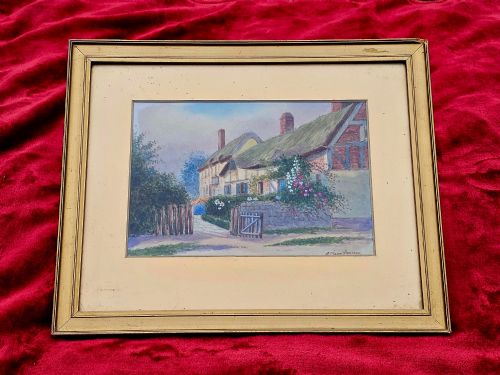
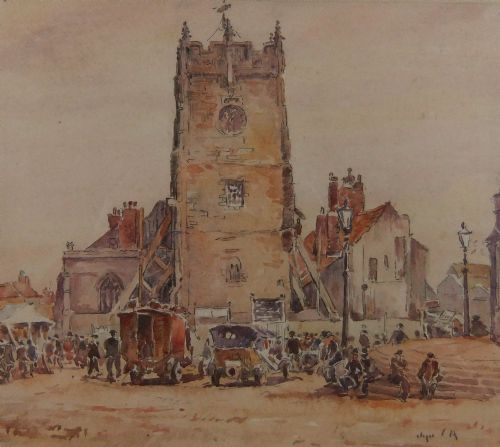
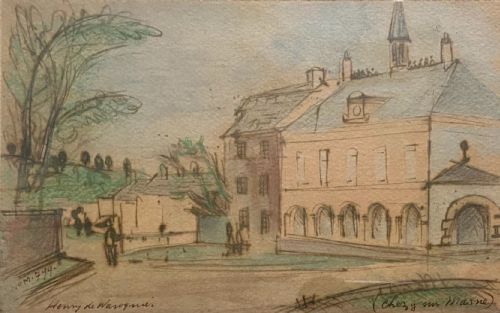
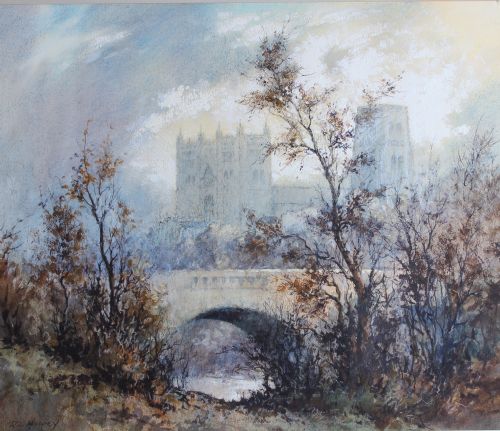
A vintage architectural watercolour presents buildings, monuments, and streetscapes rendered by hand across the nineteenth and twentieth centuries. These works range from precise topographical studies of European landmarks to looser impressions of British town halls and country seats.
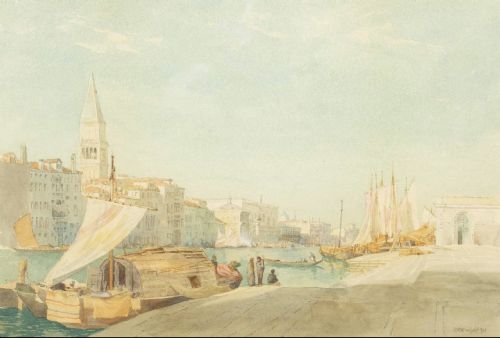
The selections span periods from Victorian Grand Tour records to mid-century British and continental compositions. Buyers frequently encounter framed paintings and ink-and-wash drawings depicting specific sites such as Venetian canals, Roman ruins, and cathedral facades.
Materials and Technique
Artists built these compositions primarily using watercolour pigment, ink, and pencil upon absorbent paper sheets. Linear elements often rely on careful graphite or pen work to establish perspective before fluid washes of colour define shadow and stonework.
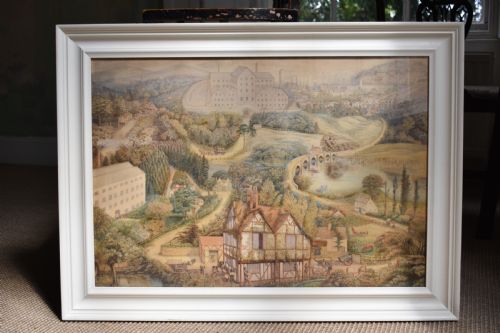
Framed presentation typically involves protective glass over paper, frequently housed within period wood frames that complement the scale of the artwork. Mixed media applications combine opaque bodycolour with translucent washes to highlight architectural details.
Represented subjects include British townscapes alongside continental European landmarks recorded during travels.
Distinction in Execution
Superior examples demonstrate confident draughtsmanship where perspective and structural proportions remain accurate without relying heavily on ink outlines. The handling of light and transparent wash across complex stonework separates highly accomplished paintings from simpler decorative sketches.
Condition of the paper and pigment stability heavily influence overall merit. Works retaining vibrant tone without excessive fading or damp staining reflect superior historical preservation and pigment quality.
A. Marie Parsons·John Smith Atherton·Richard Henry Wright·Henry de Waroquier·Robert Leslie Howey·Alfred George Morgan·Fred Lawson·Anne Dorrien Smith·Charles James Lauder·J W Hogley·Louie Stanley Maurice Prince·George Whyatt·Vittore Zanetti Zilla·Joseph W. Milliken·Edith E Caswall·David Small·David Law·Noel Harry Leaver·Wilfred Knox·GH Thompson·Sonia Lawson R.A.·Ettore Ascenzi·Peter Toft·Rowland Henry Hill
The Vintage Architectural Watercolour Glossary
- Watercolour paint
- A water-soluble medium composed of pigment and binder that creates translucent washes on paper.
- Grand Tour
- A traditional journey through Europe undertaken by upper-class travellers to study classical art and architecture.
- Bodycolour
- Watercolour paint mixed with white pigment to make it opaque, adding solid highlights to a transparent wash.
- Provenance
- The documented history and ownership lineage of an artwork from its creation to the present day.
Vintage Architectural Watercolour: Frequently Asked Questions
What is a vintage architectural watercolour?
It is an original painting on paper that records buildings, street scenes, or monuments using water-based pigments. These pieces serve as historical records of urban development and travel.
Created primarily between the Victorian era and the mid-twentieth century, they capture structures through the distinct perspective of individual artists.
How were these watercolours originally displayed?
Historic watercolours were typically framed behind glass within wooden mouldings to protect the delicate paper surface from dust and atmospheric moisture. Many retain their original framing materials which help indicate their period.
Collectors often maintain these historic presentations or re-frame them using conservation-grade materials to prevent further degradation from light exposure.
How do I identify the date of a piece?
Dating relies on visible artist signatures, inscribed location titles, stylistic markers of the period, and occasionally framing construction or gallery labels on the reverse. Victorian and early twentieth-century works frequently feature period handwriting detailing the depicted subject.
Comparing architectural elements in the painting with historical photographs of the site provides further chronological context for unsigned works.
How should I care for a watercolour painting?
Protect the artwork by hanging it away from direct sunlight and high humidity, which can fade pigments and damage paper fibres. Utilising UV-filtering glass during framing helps preserve the integrity of the original colours.
Avoid placing these pieces in damp environments such as unheated rooms to prevent foxing spots and paper deterioration over time.