


Yorkshire Landscape Watercolour
Yorkshire landscape watercolour paintings capture rural scenes, historic abbeys, and rugged coastal views through the delicate application of pigment on paper.
Defining Yorkshire Landscape Watercolour
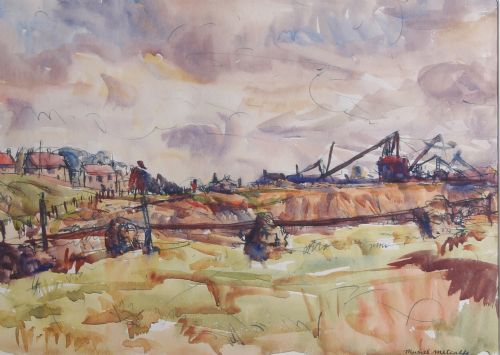
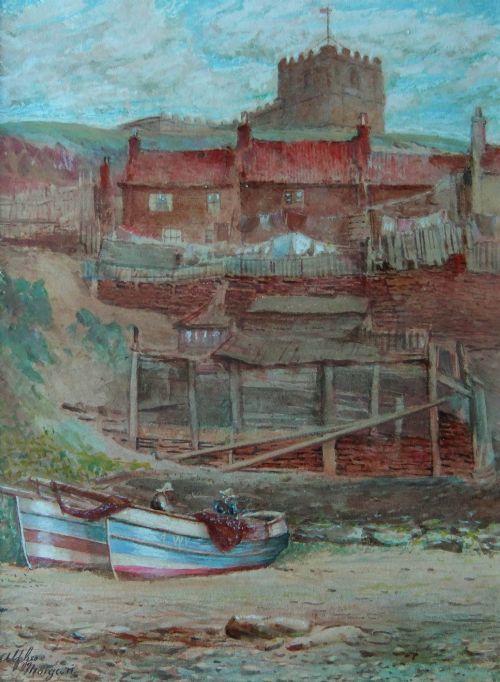
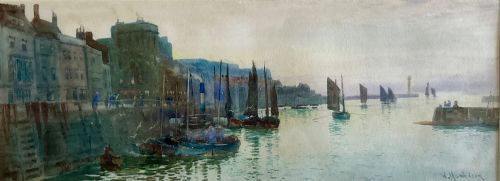
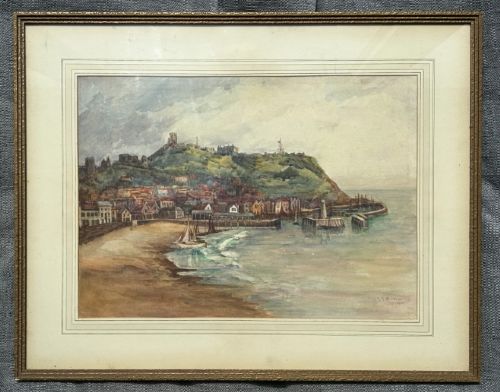
A yorkshire landscape watercolour records regional topography, villages, and landmarks across the county on paper supports. These artworks document specific locations such as Bolton Castle, Whitby, and the Yorkshire Dales from the Victorian era onward.
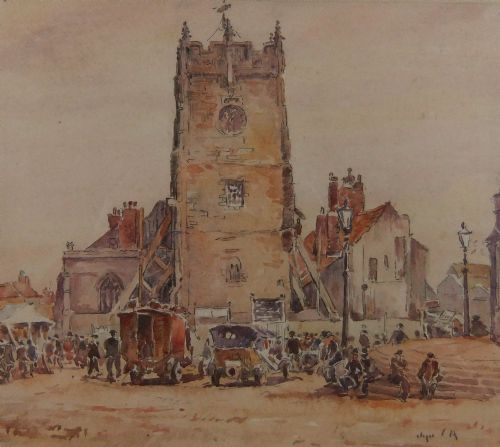
Most examples encountered on this page date from the early to mid twentieth century, reflecting regional British art movements. Painters apply transparent pigment and ink to depict stone monoliths, valleys, and coastal harbours.
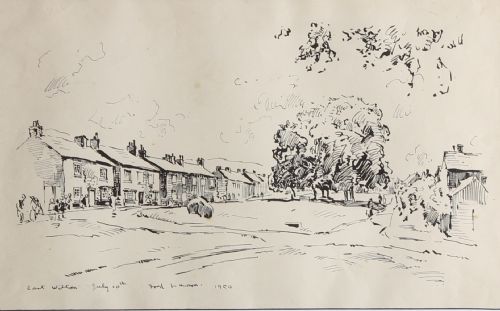
Subjects range from architectural studies of abbeys to rural street views and coastal bays. Artists working within English regional art traditions document these northern scenes with direct observation.
Materials and Technique
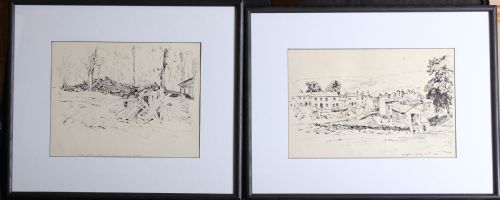
Artists utilise watercolour pigment and ink applied directly onto paper supports, occasionally mounted in wood frames beneath glass. These traditional water-based media allow for fluid washes and fine linear detail.
Makers build compositions through layered transparent washes to capture atmospheric light over northern topography. Ink lines often define architectural elements and structural forms within the painted surface.
Retail Price Guide 2026
Typical UK retail prices for yorkshire landscape watercolour, calculated from the Sellingantiques database of over a million retail prices indexed since 2003. This retail price guide relies exclusively on Sellingantiques data; no external sources or auction records are used, so the figures do not describe the wider market.
Peacocks occasionally wander past stone walls at Castle Howard in these painted Yorkshire vistas.
Distinctions in Quality
Mastery of medium handling separates accomplished works from standard regional production. Superior paintings display confident brushwork and tonal control that effectively capture atmospheric light over northern terrain.
Compositional strength and the specificity of location define the upper range of these artworks. Stronger examples avoid formulaic scenery in favour of direct, observant studies of local light and architecture.
Joseph R R McCulloch RBA·Alfred George Morgan·George Graham·Fred Lawson·JOHN SOWDEN·Edwin Bagshaw·Fred Stead·Fred Cecil Jones·George F Pennington·Albert Pile·Rowland Henry Hill·JOHN SYER·Lt Col Thomas Ditmas·H P Ditmas·Harold Wharfe·Walter Horsnell·George Edward Alexander·Joseph Pighills·Kershaw Schofield·Tom Whitehead·EJW Jack Prior·John Smith Atherton·Peace Sykes·Thomas Miles Richardson·Ethel May Mallinson
The Yorkshire Landscape Watercolour Glossary
- Watercolour pigment
- Finely ground colour particles suspended in a water-soluble binder, applied to paper to create transparent washes. This medium allows artists to build delicate luminous effects.
- British School
- A broad designation for art produced in Britain by native or resident painters over several centuries. This term encompasses regional landscape traditions.
- Wash
- A thin, fluid layer of diluted watercolour pigment spread evenly across paper. Painters utilise washes to create skies, water, and atmospheric distance.
- Archival archive
- Historical records of previously sold pieces that demonstrate the breadth of regional subjects and periods available to collectors.
Frequently Asked Questions
What subjects appear in these watercolours?
Paintings depict northern rural scenery, coastal harbours, and historic Yorkshire architecture such as abbeys and castles.
Artists record specific locations ranging from Whitby and Scarborough to inland dales and village street views.
How do I date an early twentieth century painting?
Dates rely upon artist signatures, period framing materials, and stylistic markers associated with British Impressionism and regional art.
Inscribed titles and gallery labels on the reverse of the paper support often provide exact creation years.
How should I frame and display a watercolour?
Watercolours require conservation framing with acid-free mounts to separate the paper surface from protective glass. Direct sunlight causes pigment fading, so pieces hang best on interior walls away from windows.
How do regional British art movements influence these works?
Regional painters working across northern England responded to shifting European modernism while maintaining traditional topographical accuracy.
Local art societies and exhibitions provided venues for artists to present Yorkshire views to contemporary audiences.