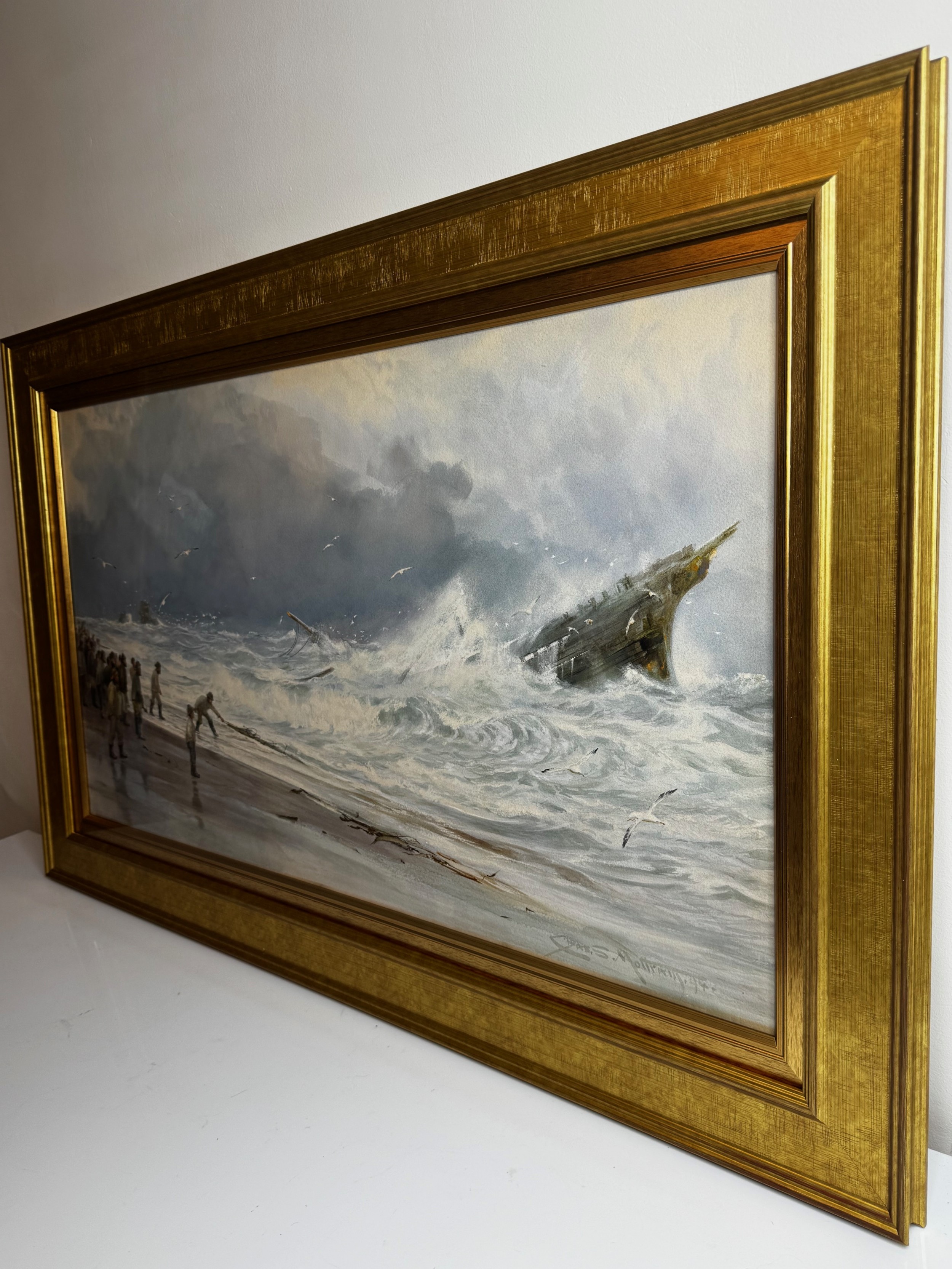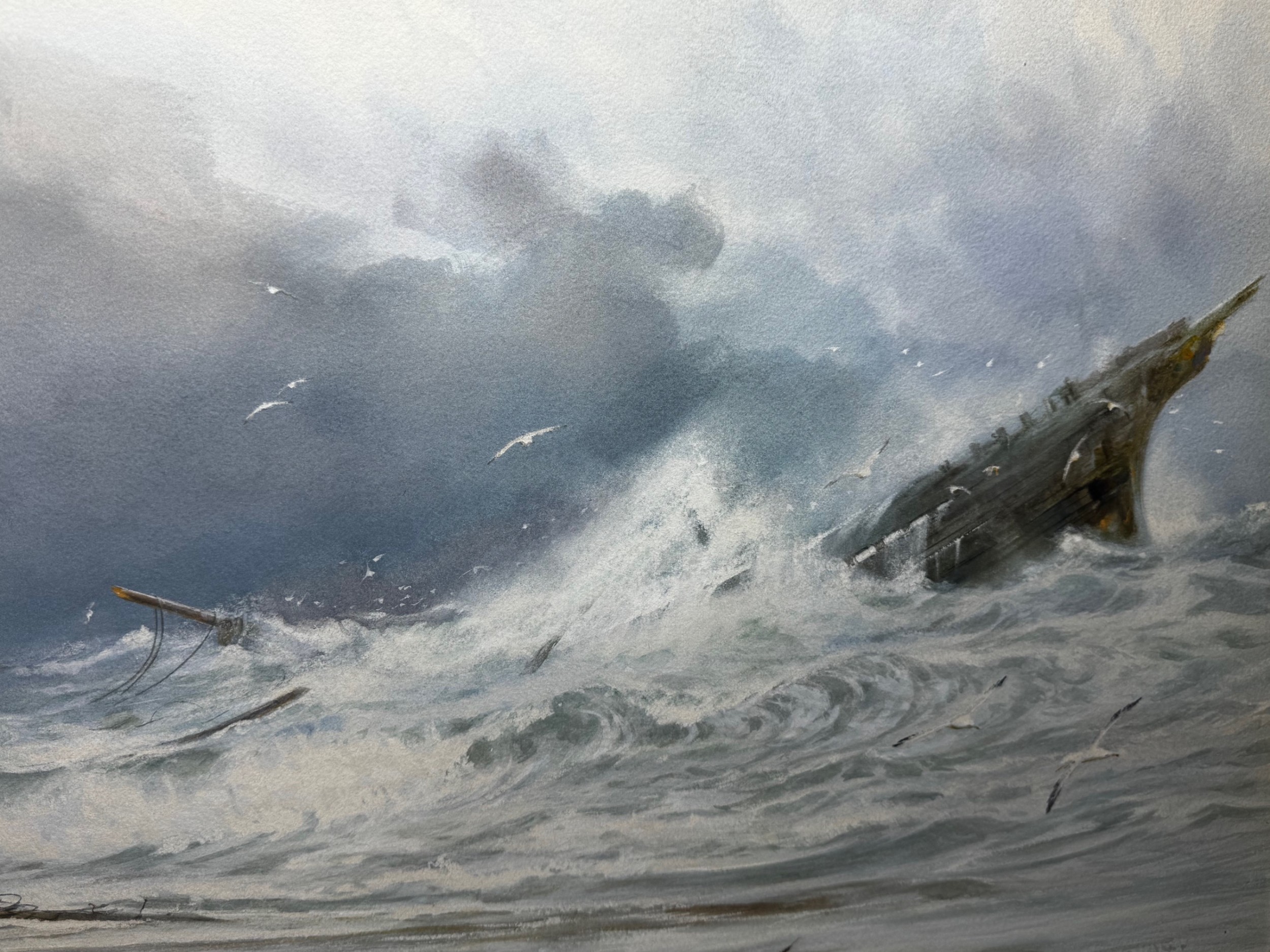
Cheshire Antiques Consultant Ltd has dated this Maritime Shipwreck Oil Painting to the Victorian era.
Subject & Medium
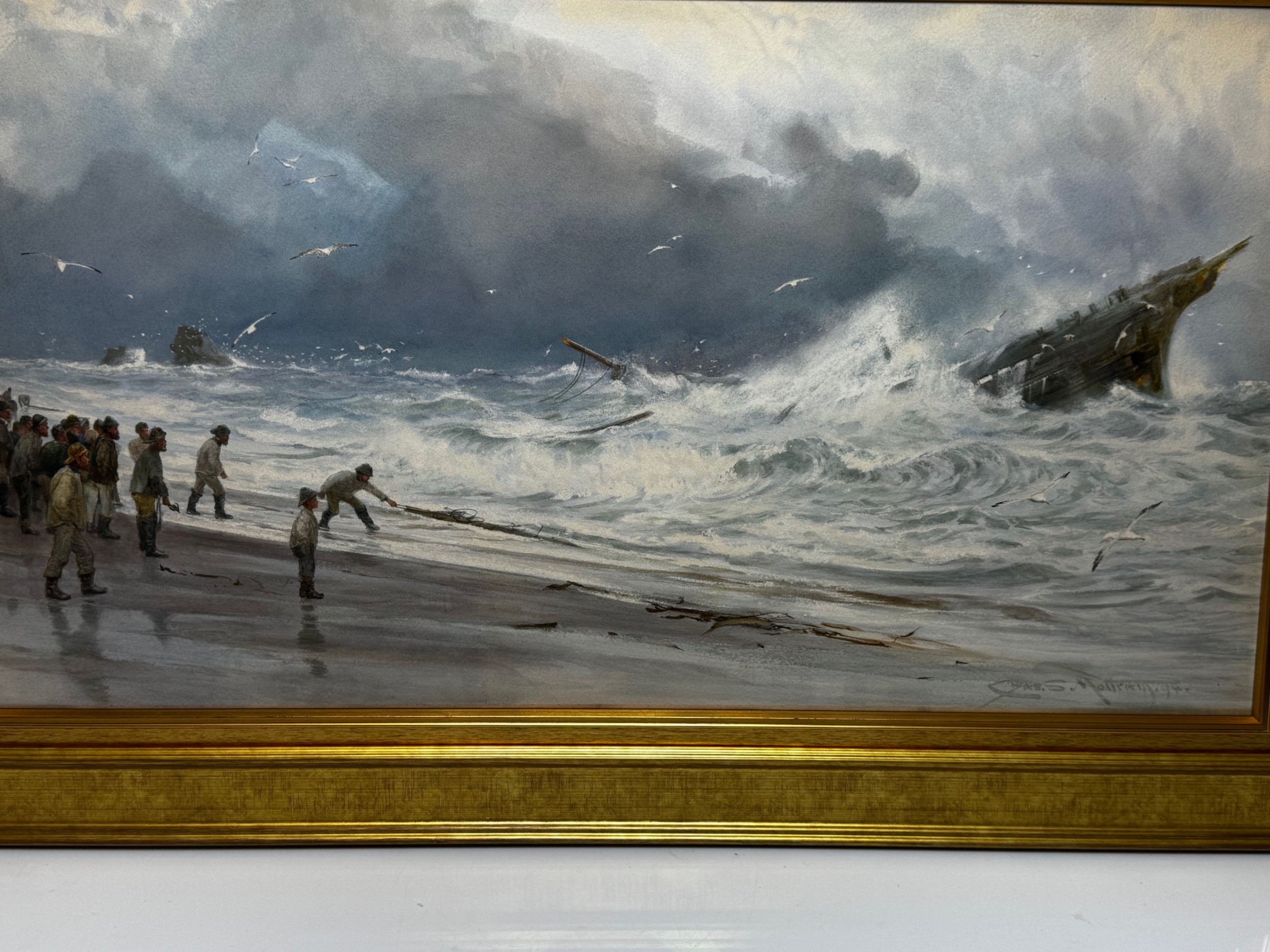
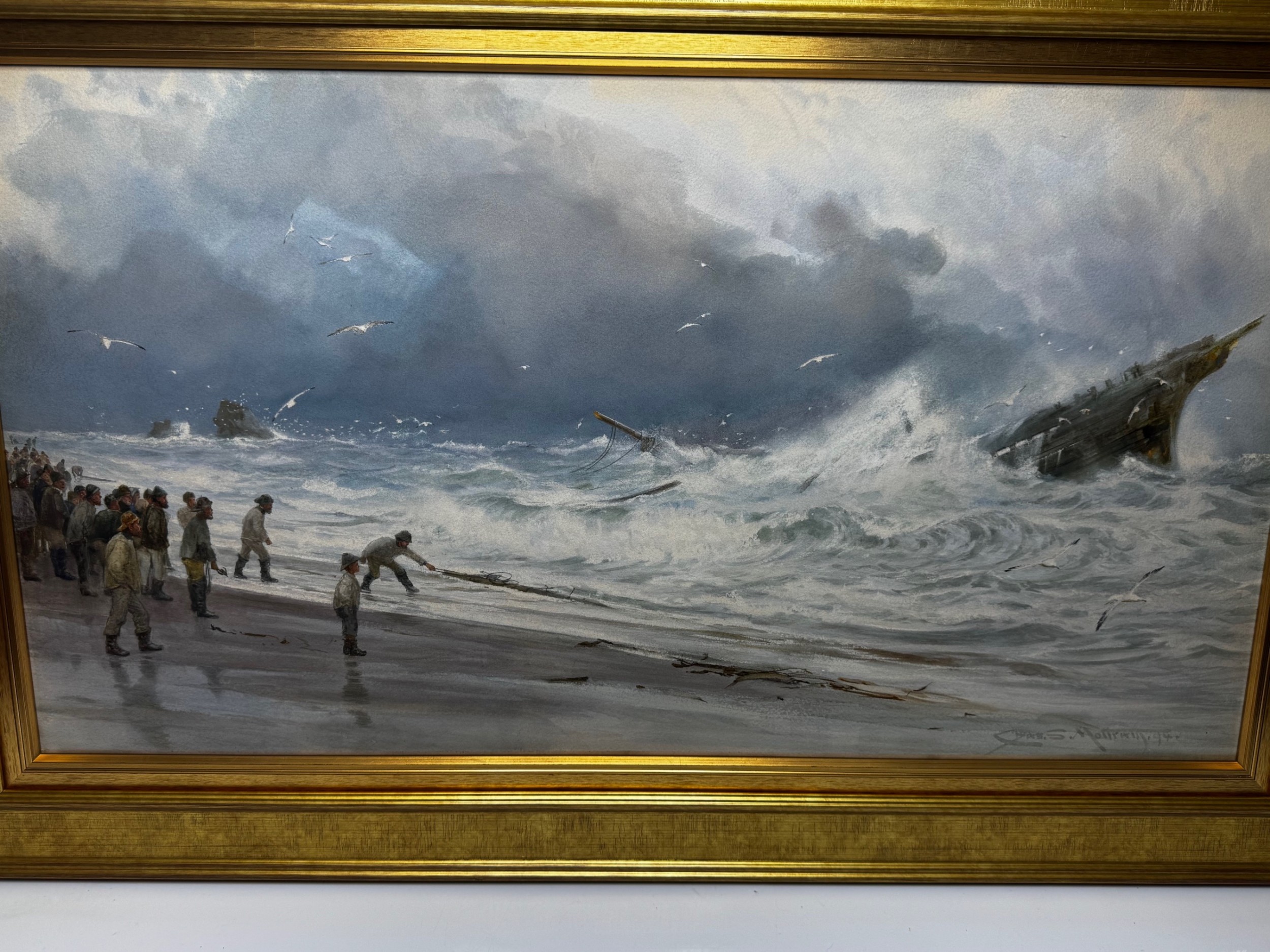
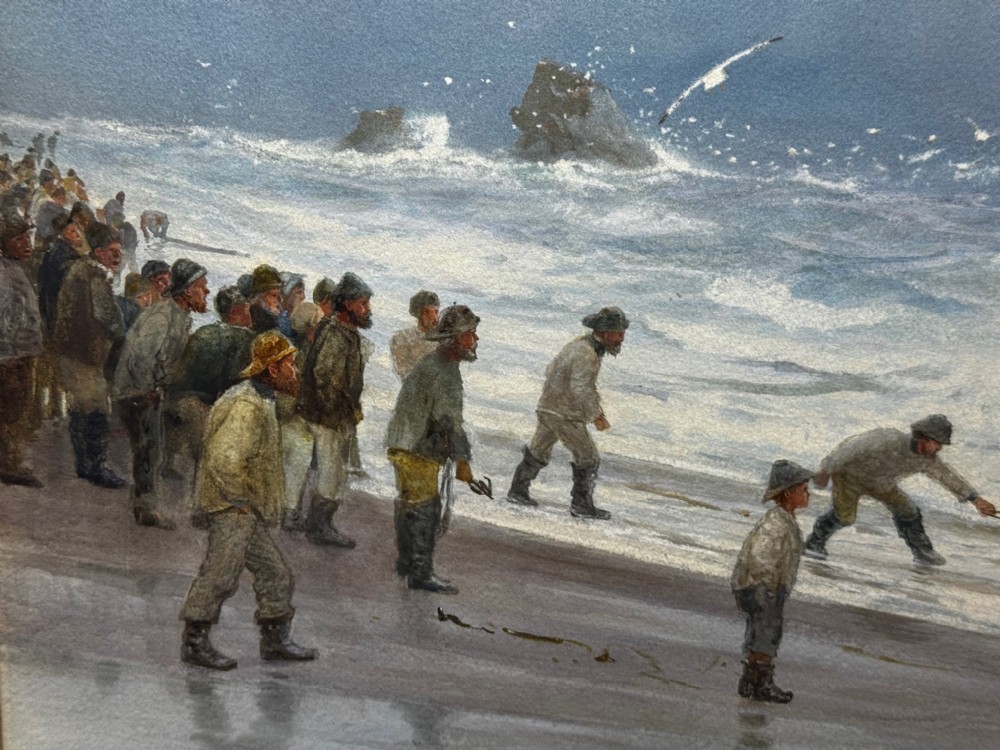
The subject is the wild north Cornish coast at Trebarwith Strand, near Tintagel – a steep, cliff-backed beach facing directly onto the Atlantic.
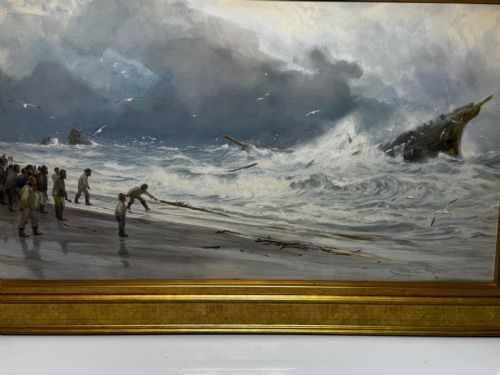
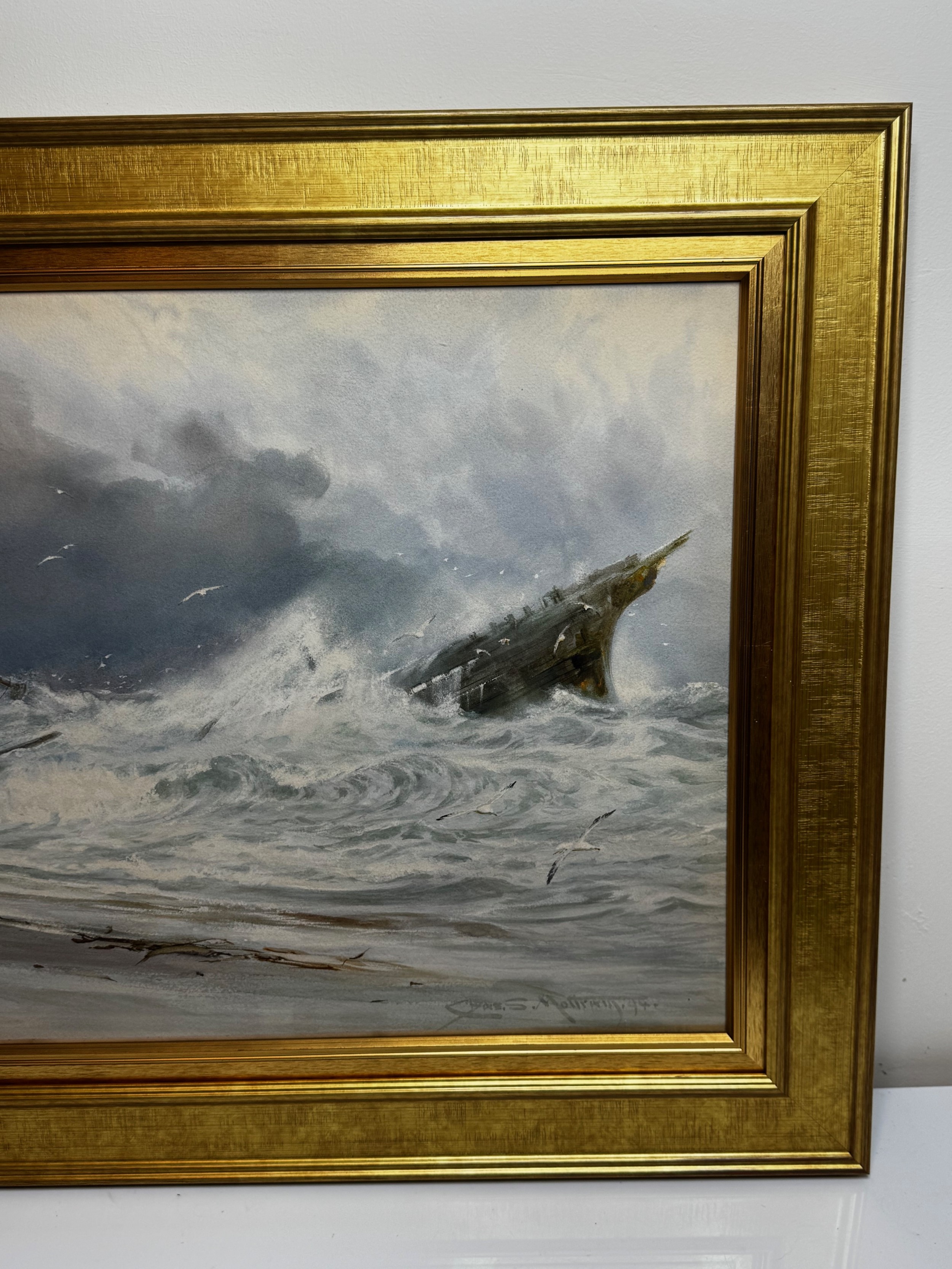
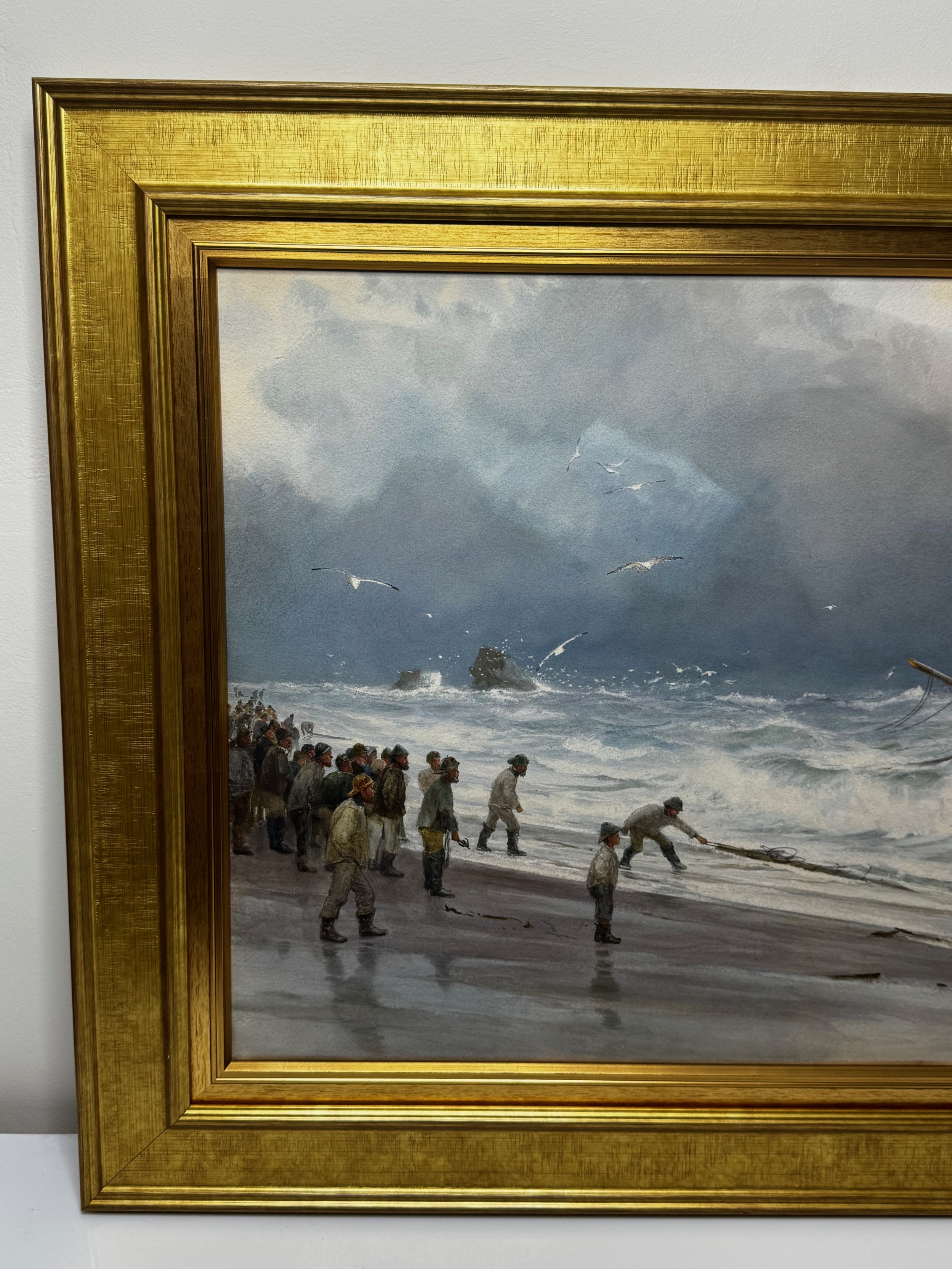
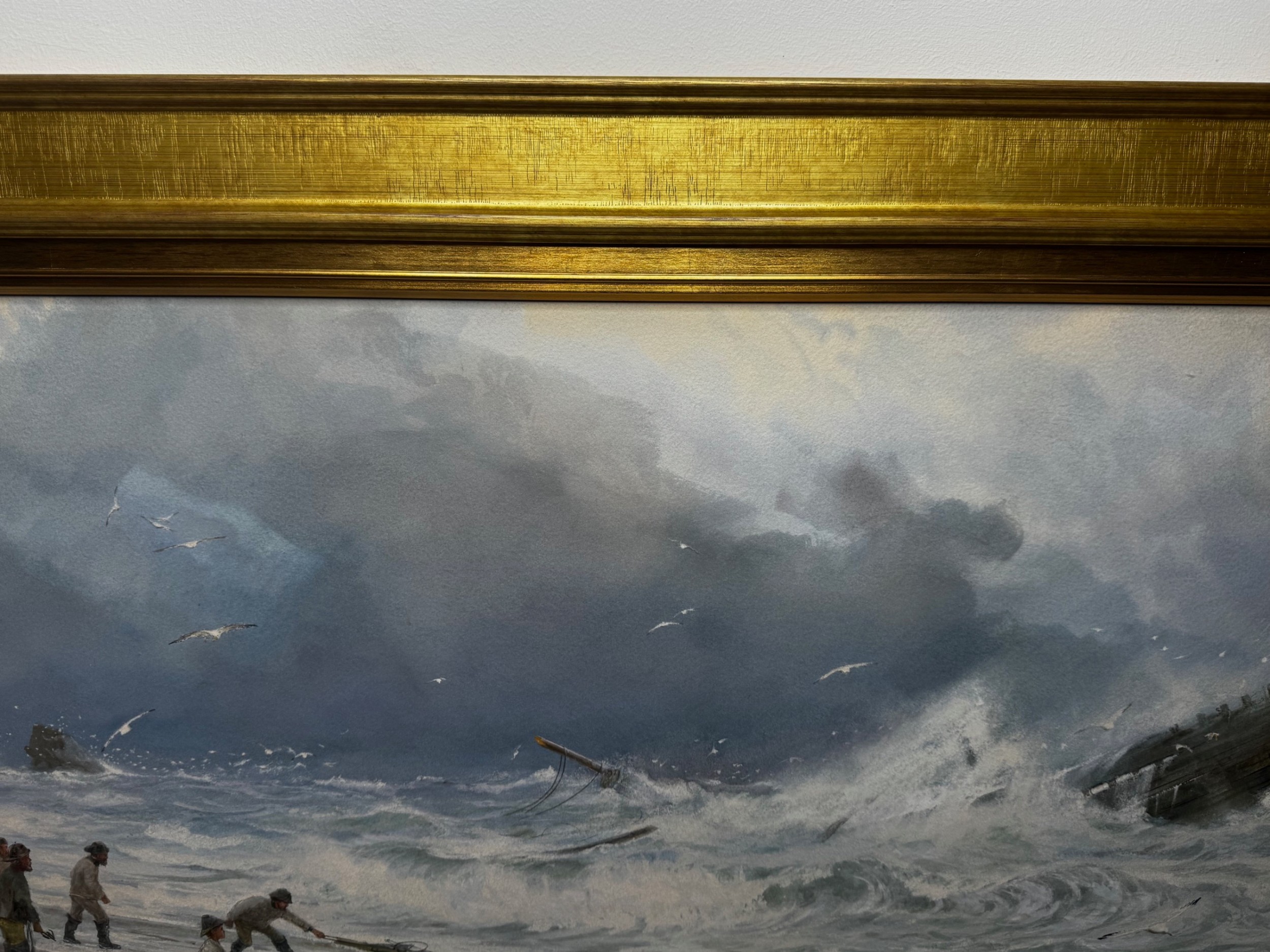
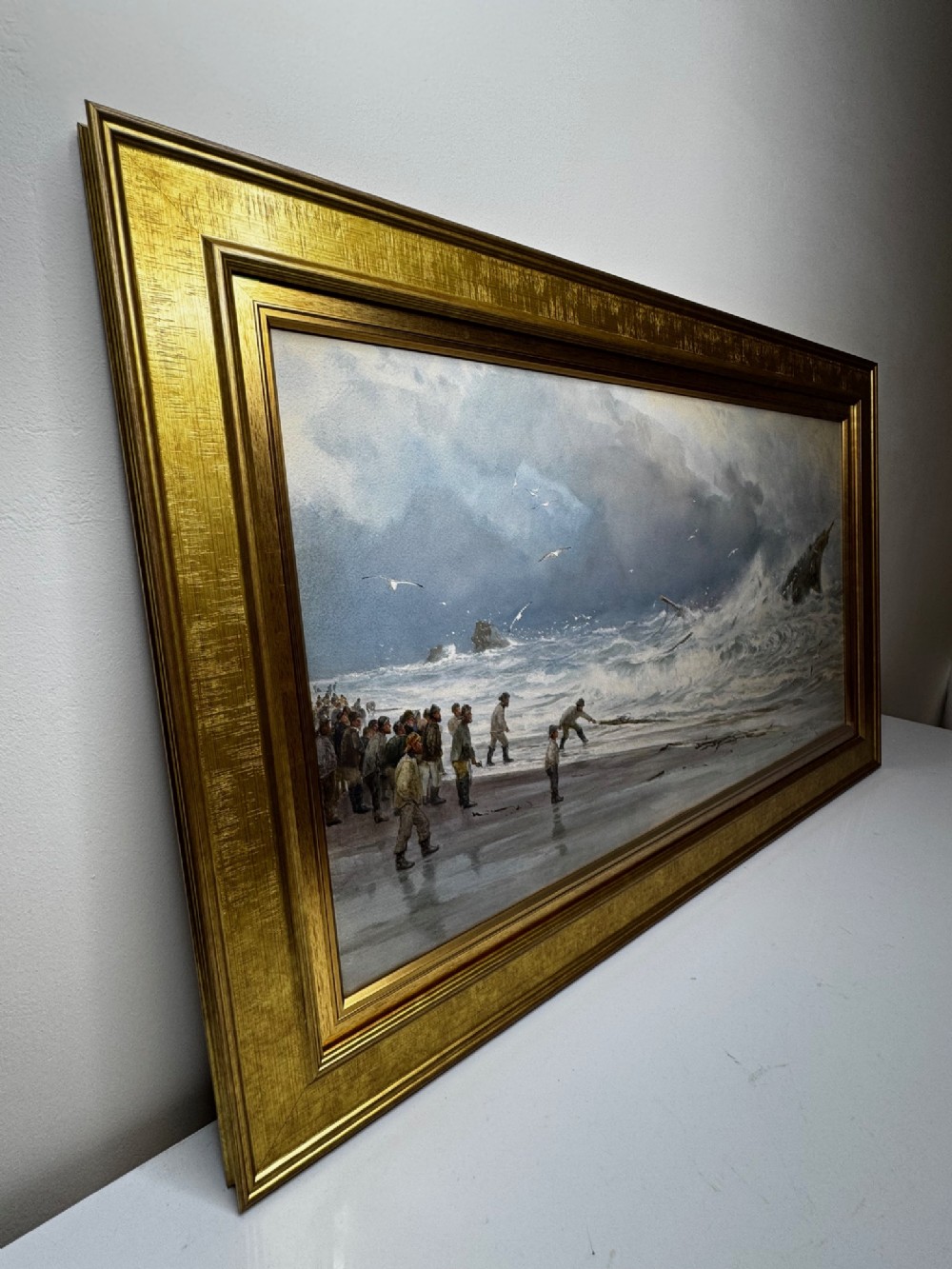
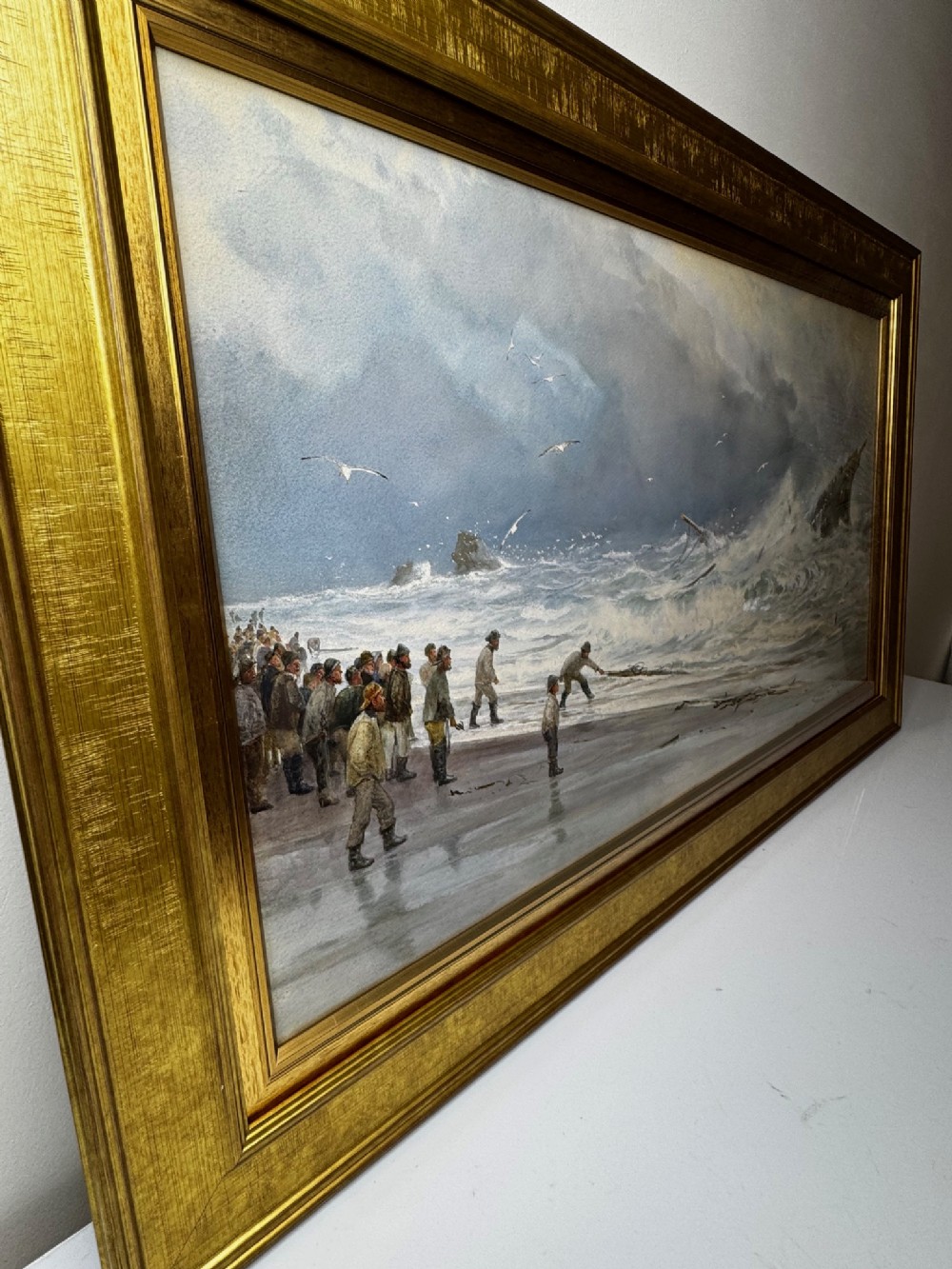
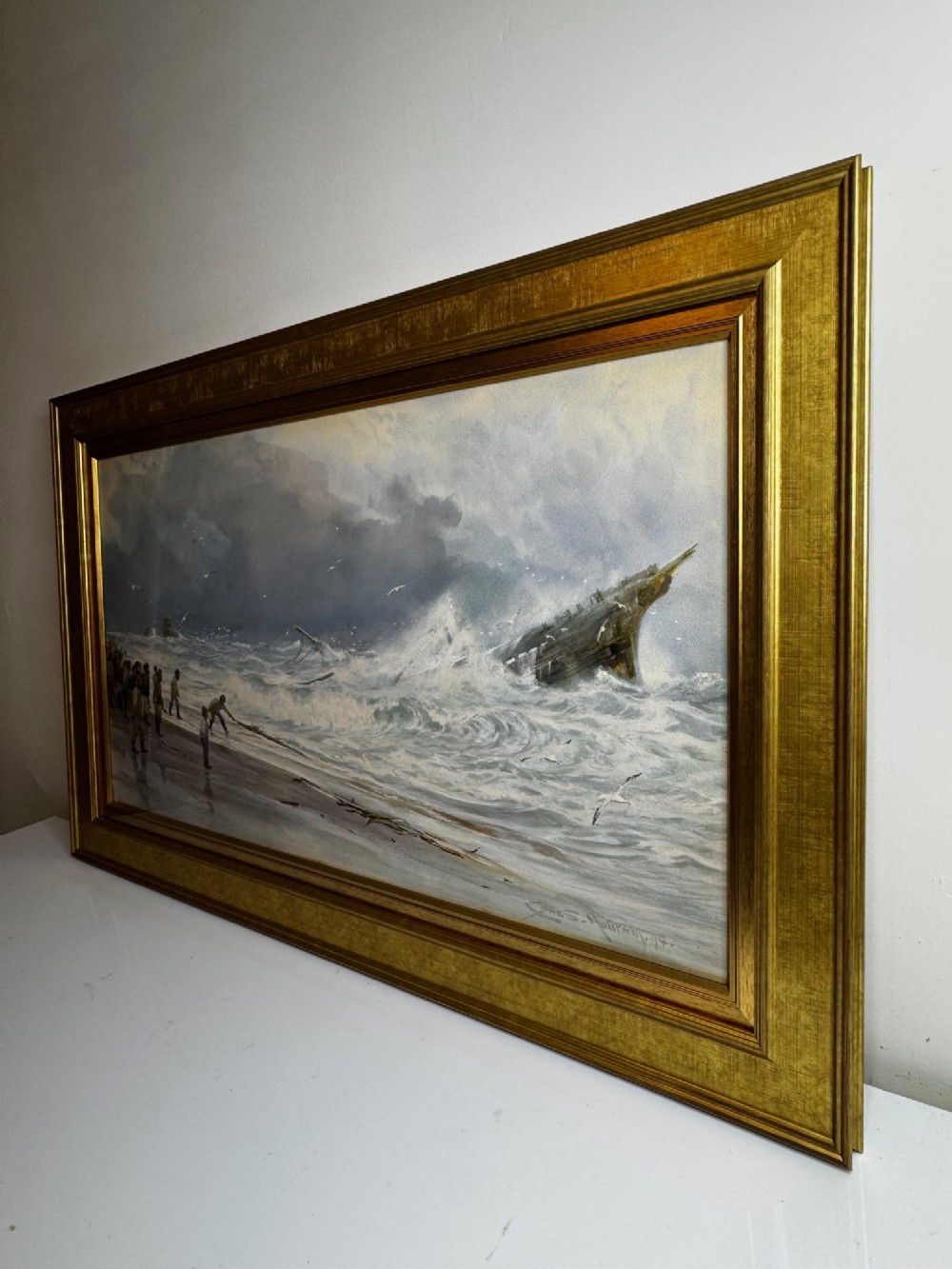
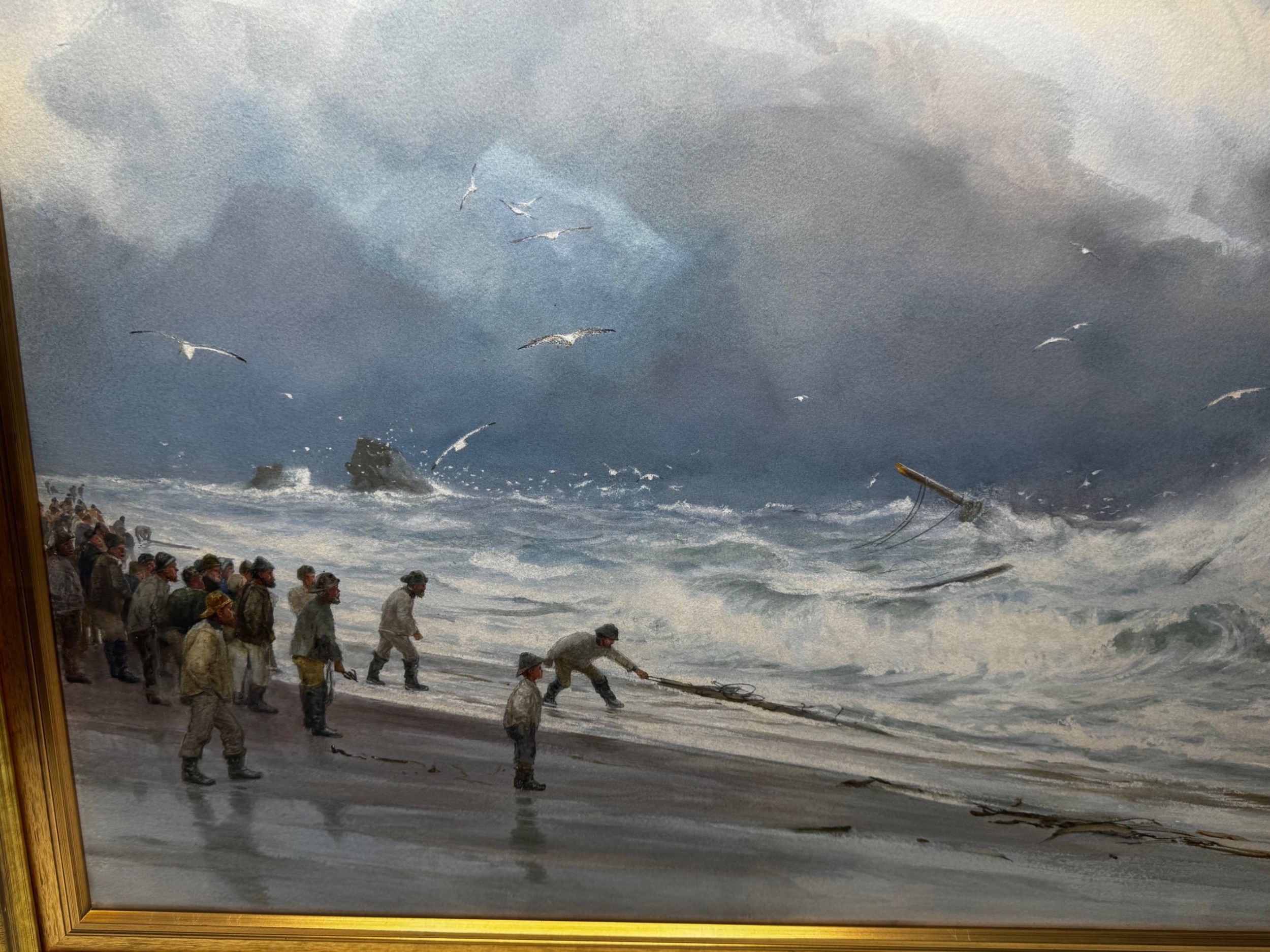
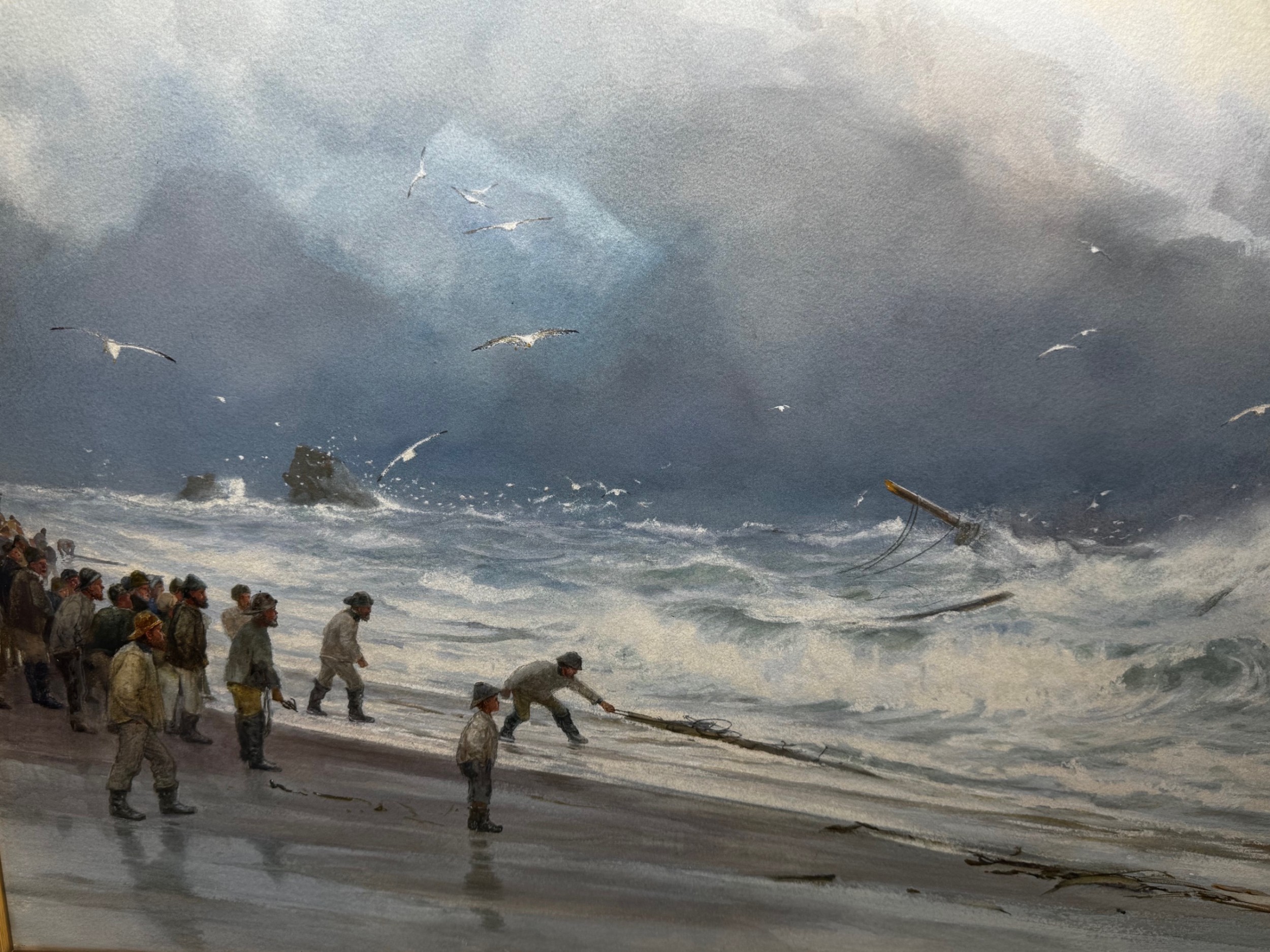
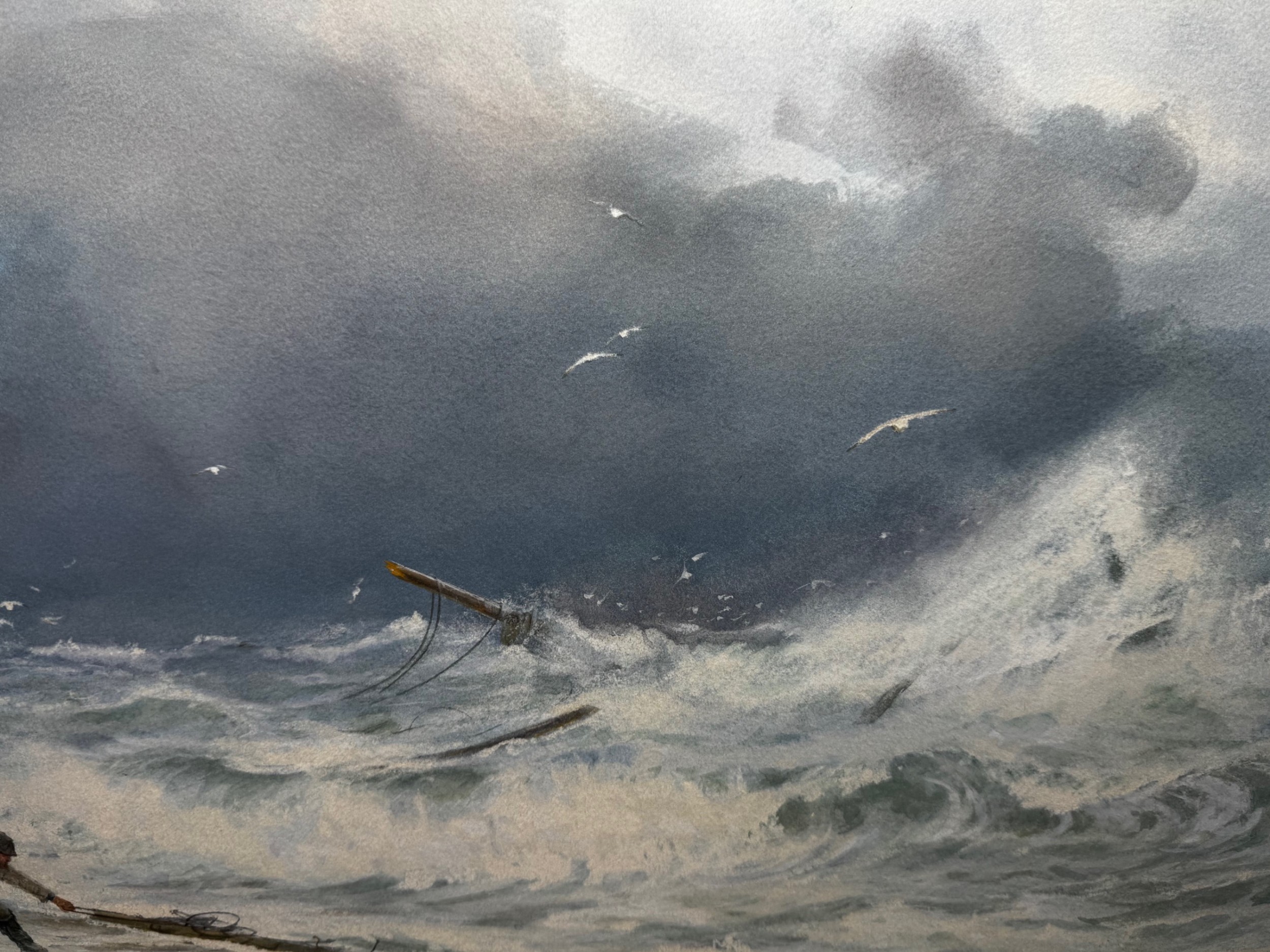
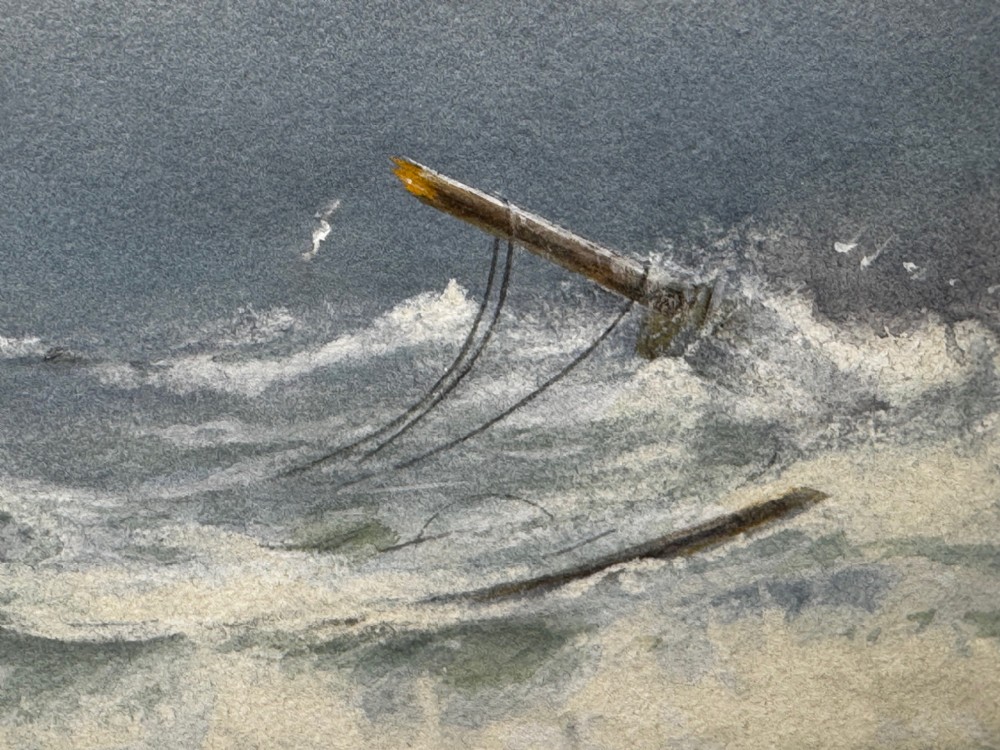
A full-rigged sailing vessel has run aground just beyond the line of surf and is breaking up on unseen rocks. The stern lifts and falls in the swell; shattered masts and spars lean at dangerous angles. On the beach below the cliffs, a crowd of fishermen, lifeboat men and local villagers rush to the water’s edge as the drama unfolds.
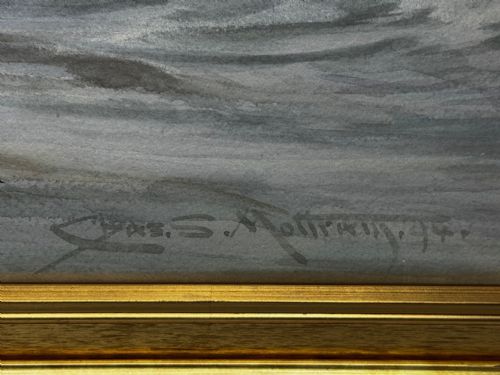
Executed in watercolour with bodycolour (white heightening) on paper, this is an original 19th-century work, not a print or reproduction.
Composition & Technique
Mottram structures the scene as a wide, panoramic strip, allowing the viewer to read the entire story from foreground to horizon.
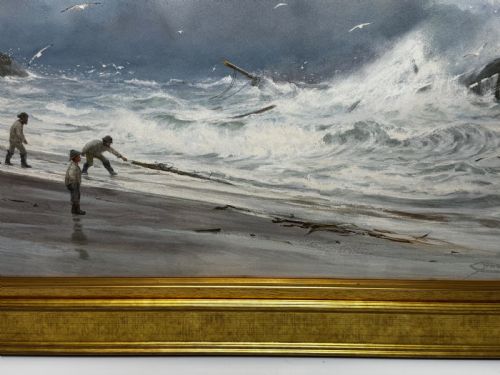
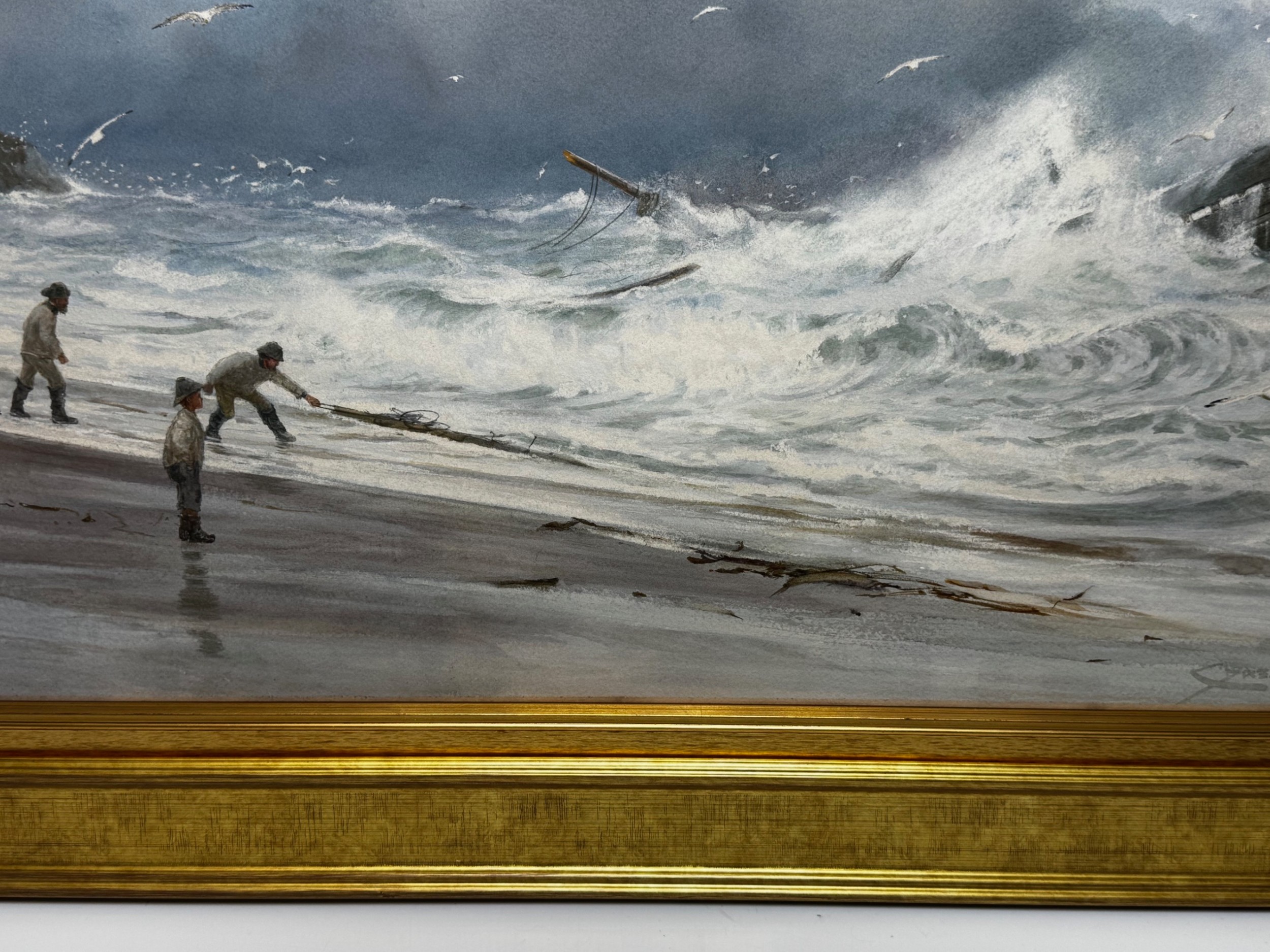
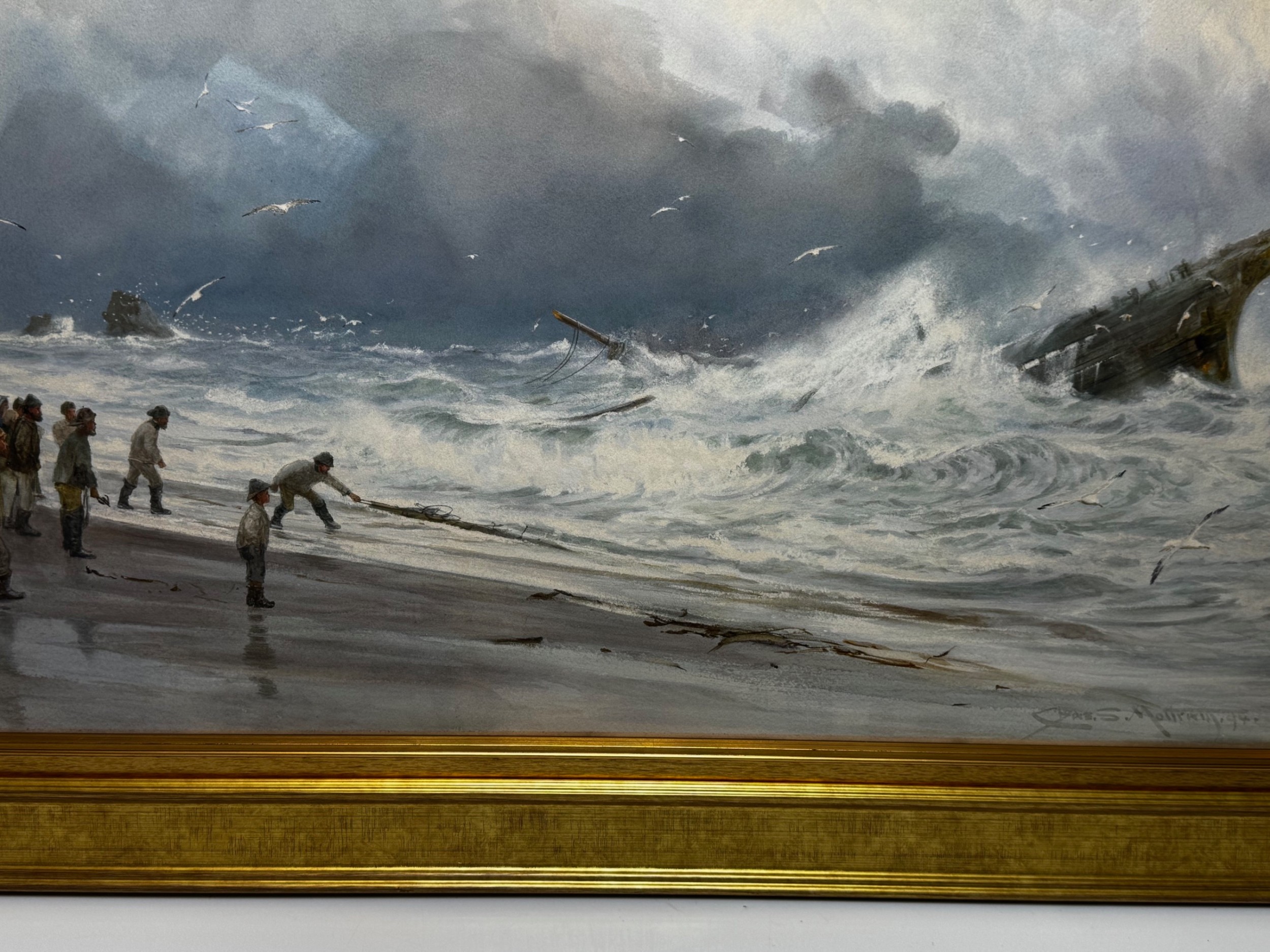
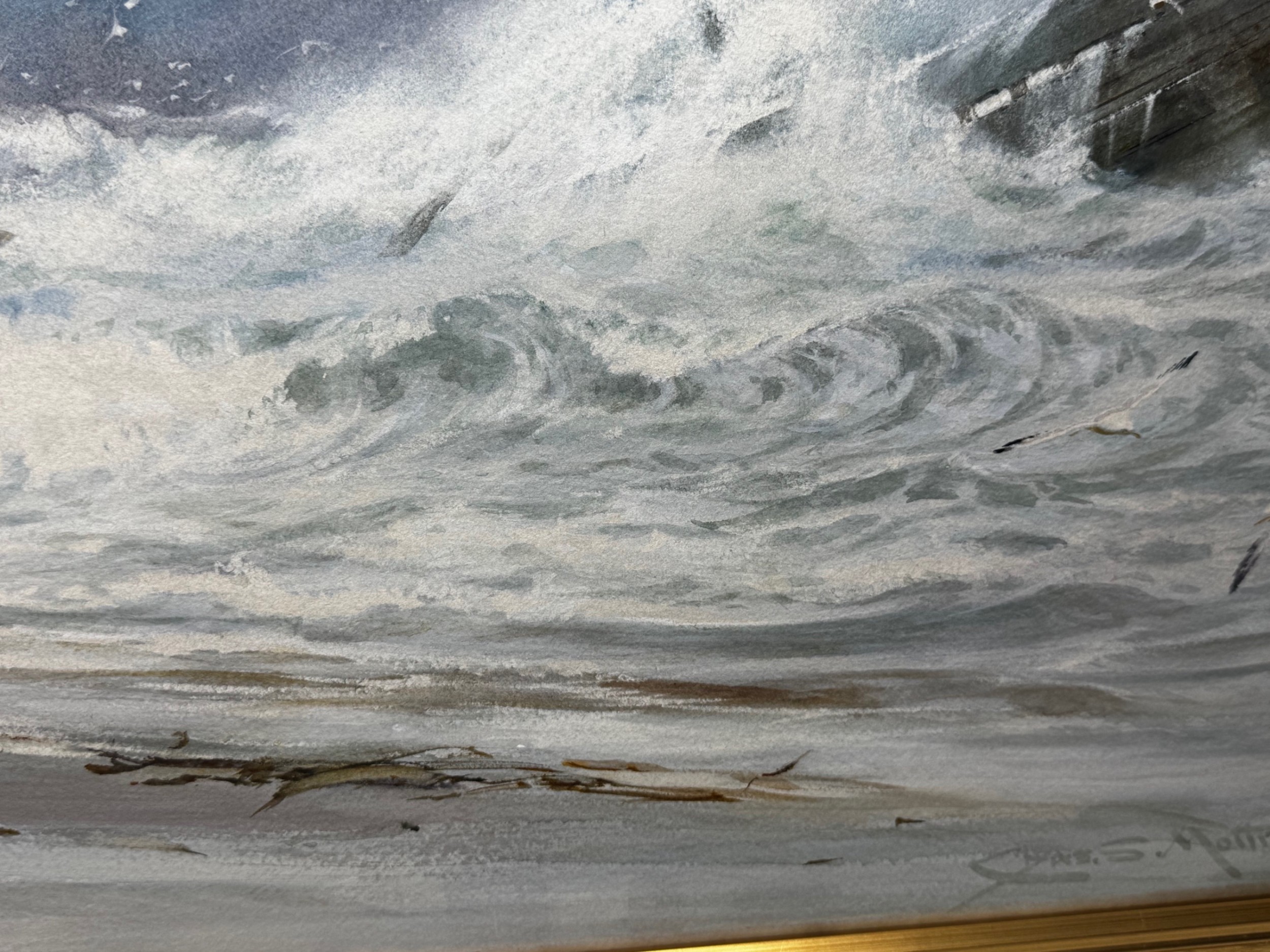
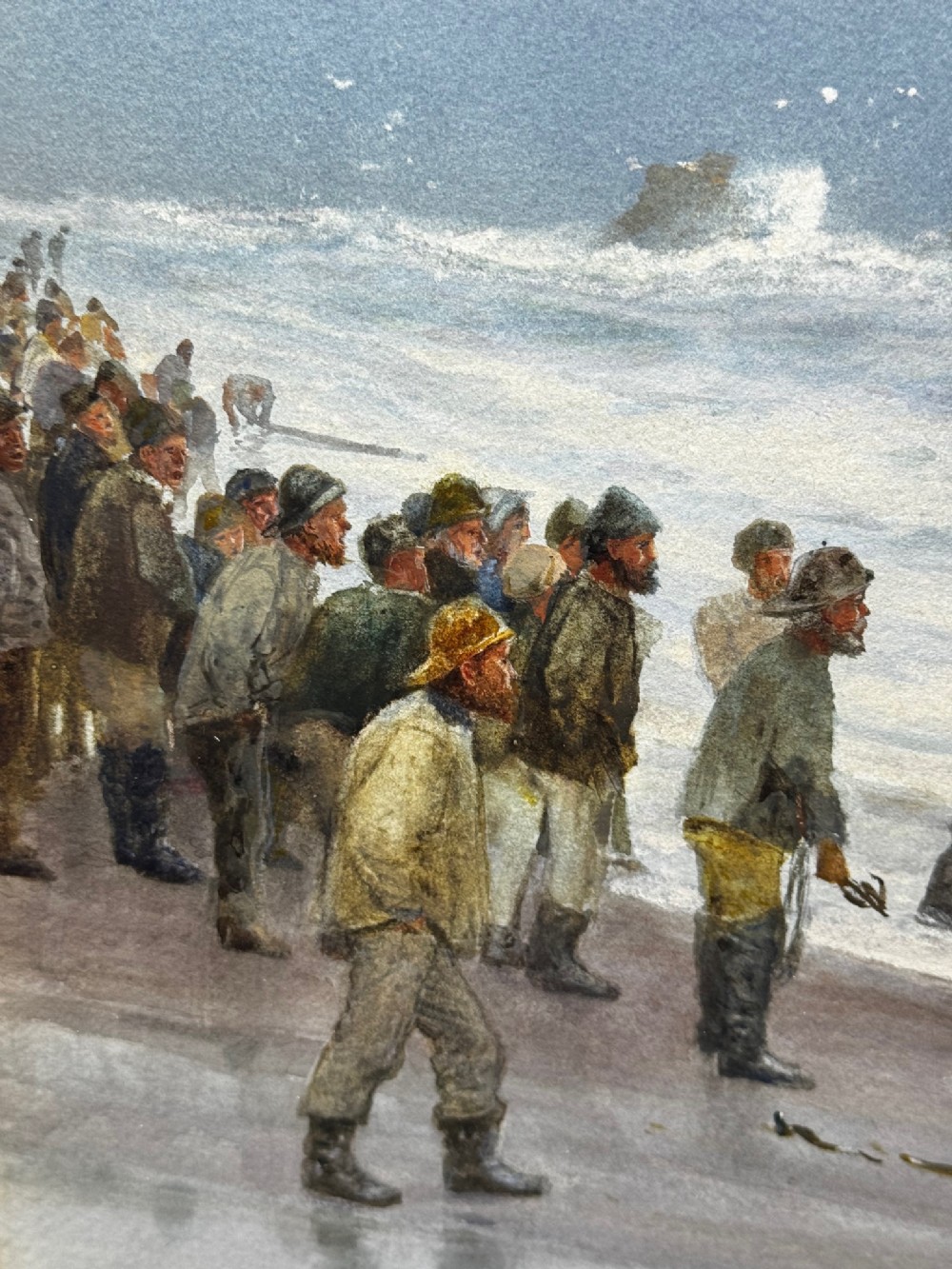
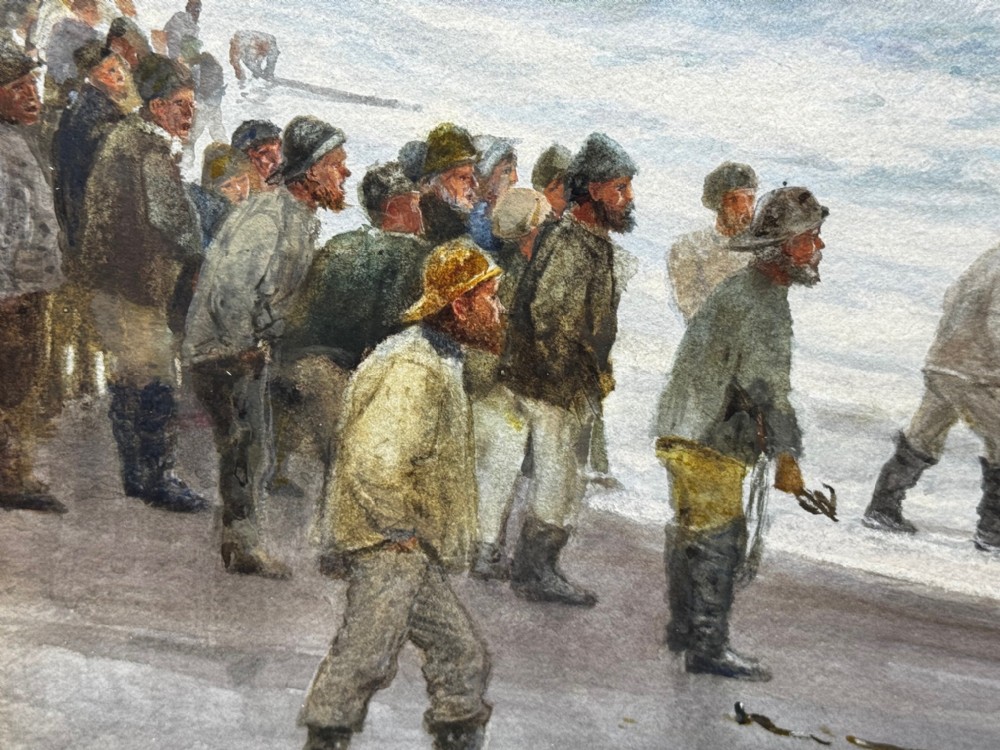
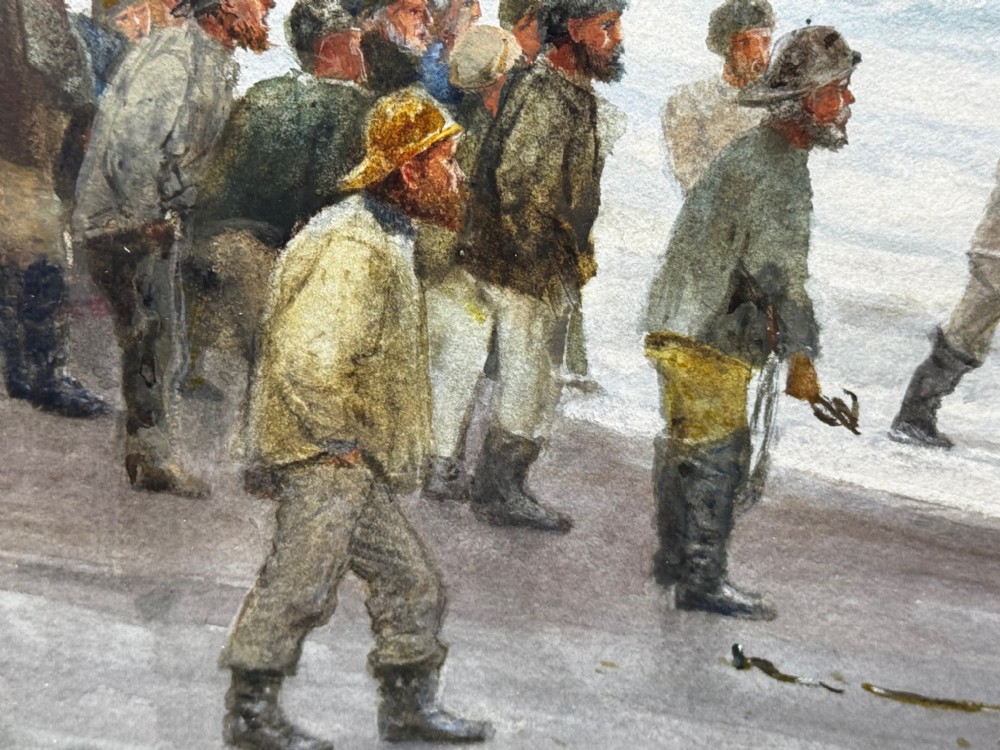
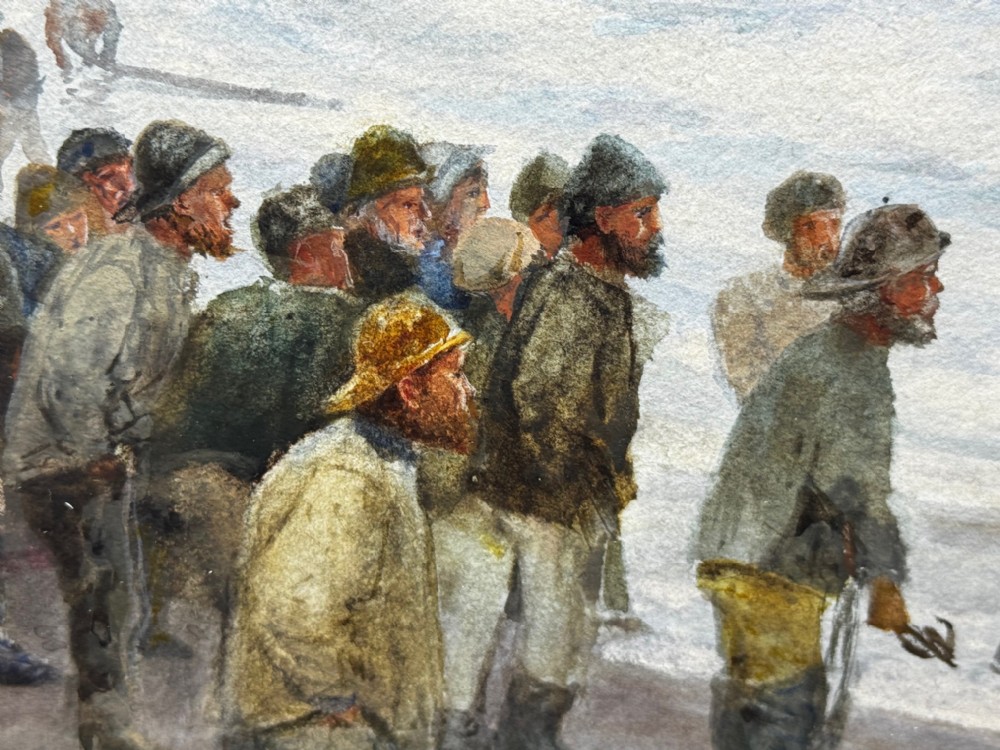
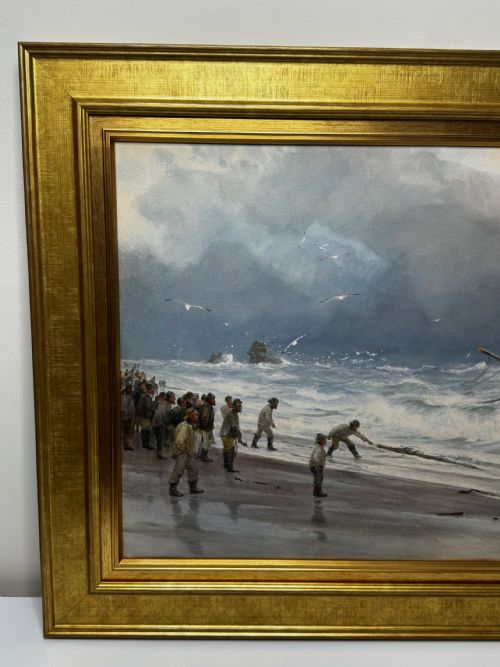
In the foreground, wet sand catches and reflects the light; tracks, footprints and small pools mark where the tide has recently retreated. A strong diagonal of figures leads the eye from the lower left towards the centre: fishermen in traditional sou’wester caps and work clothes brace themselves against the pull of thick, tarred lines and wreckage that disappear into the surf. Some lean forward with their full weight; others steady the line or gesture urgently towards the wreck. Closer to the cliffs, further fishermen and children stand in small groups, hands raised to shade their eyes as they watch events offshore.
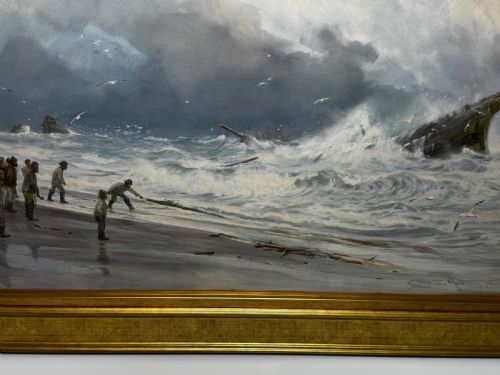
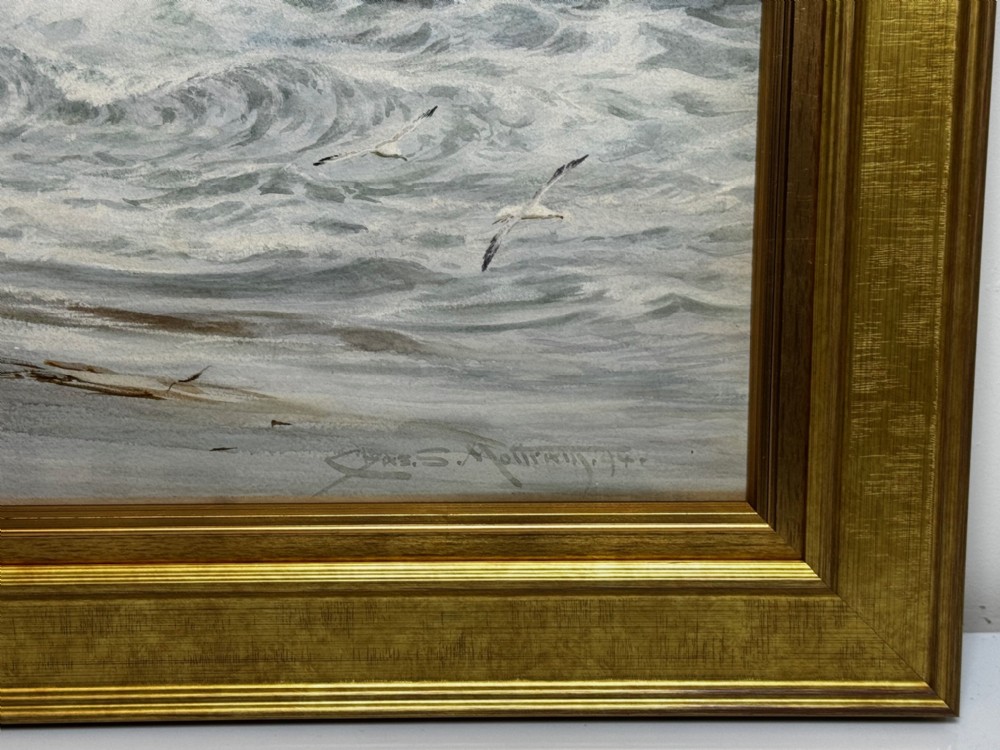
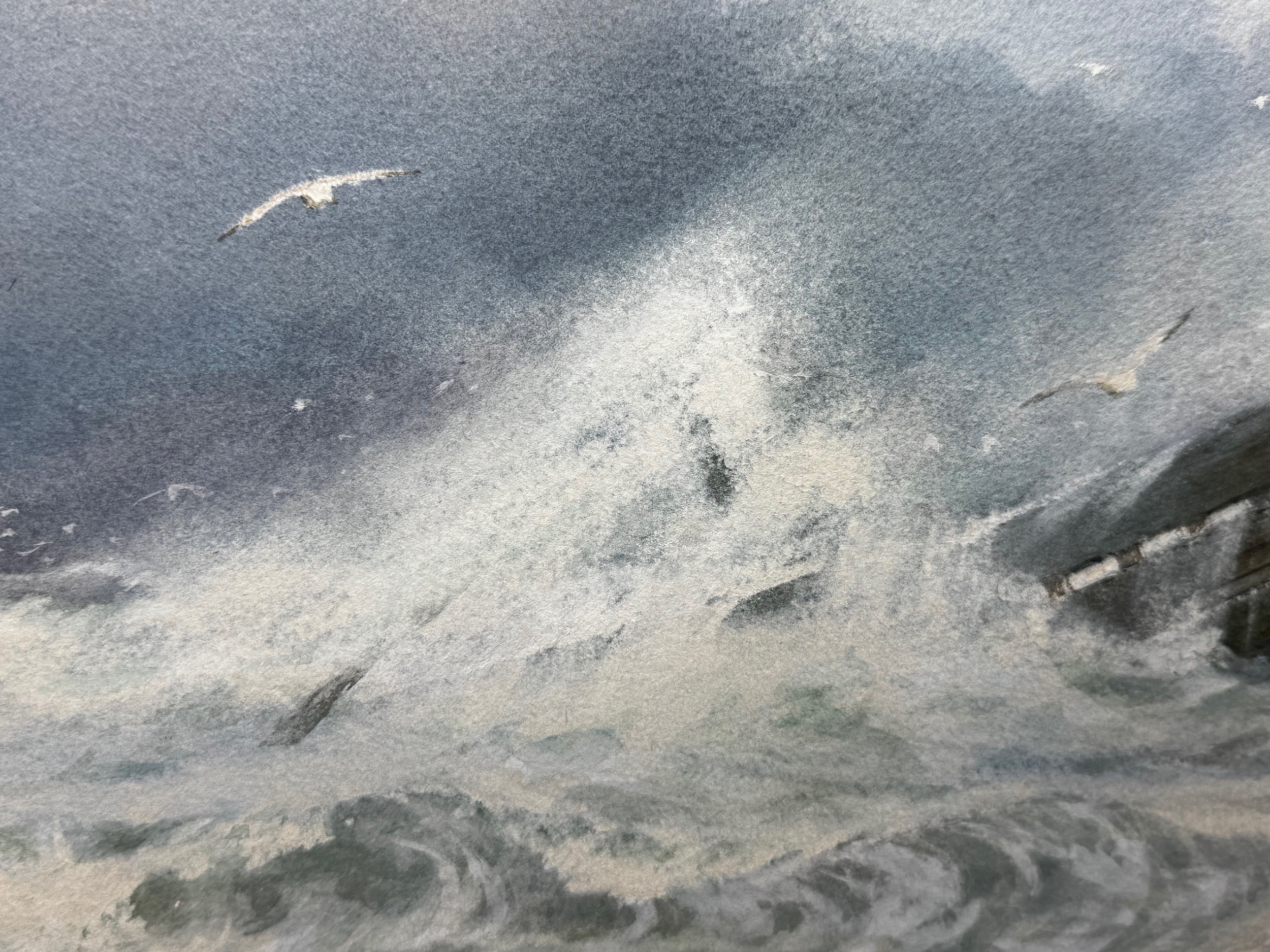
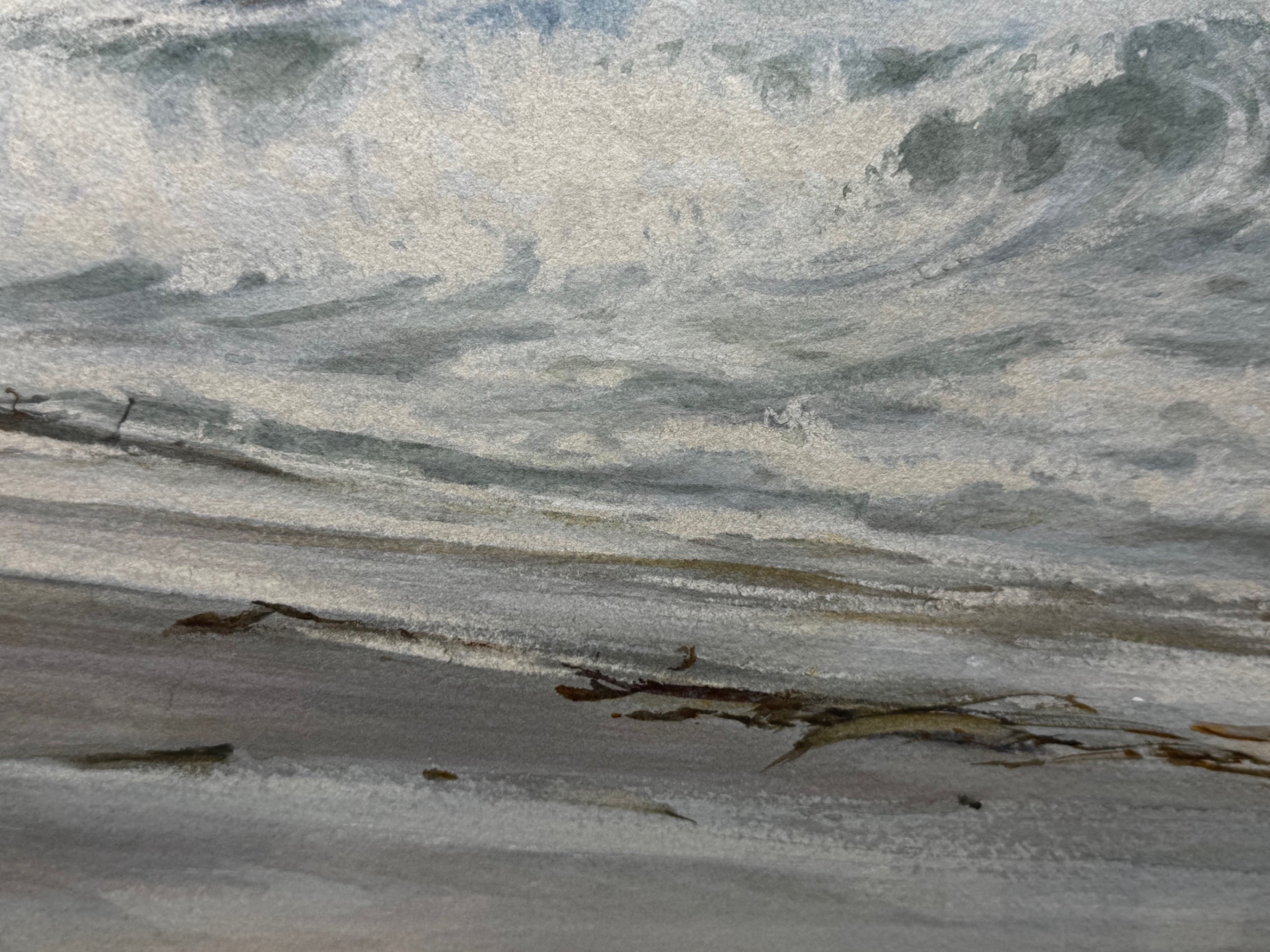
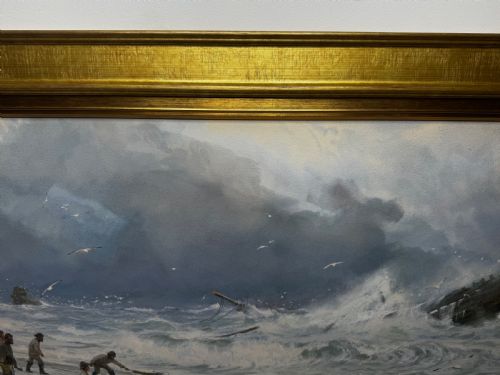
In the middle distance, heavy Atlantic rollers are built up in layered bands of blue-grey and green. Mottram breaks the crests with dense bodycolour to capture foam and flying spray, giving the water real weight and movement. The stricken ship sits just beyond the main line of breakers, its dark hull and jagged spars cutting sharply against the paler surrounding water. Fragments of rigging and broken mast reinforce the sense of chaos and imminent loss.
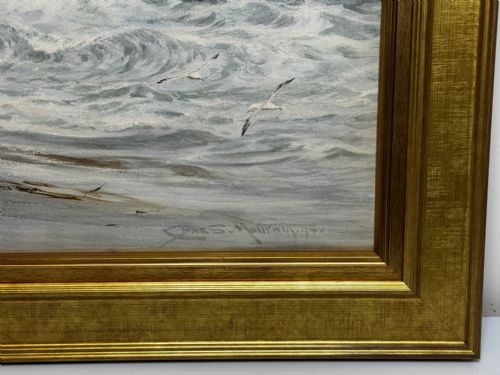
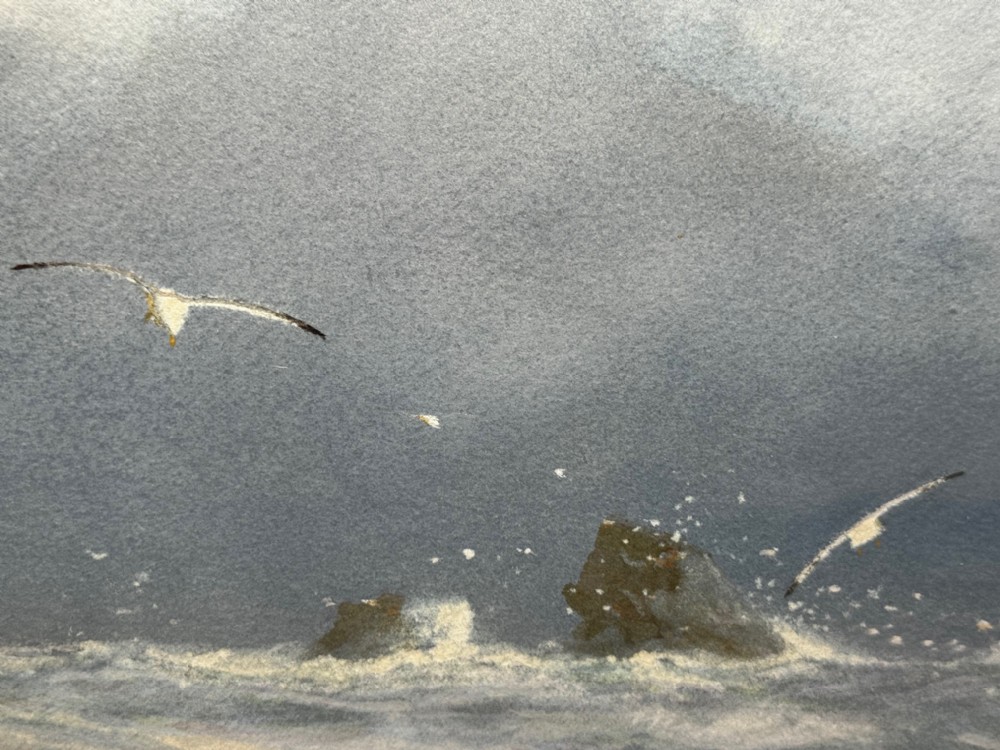
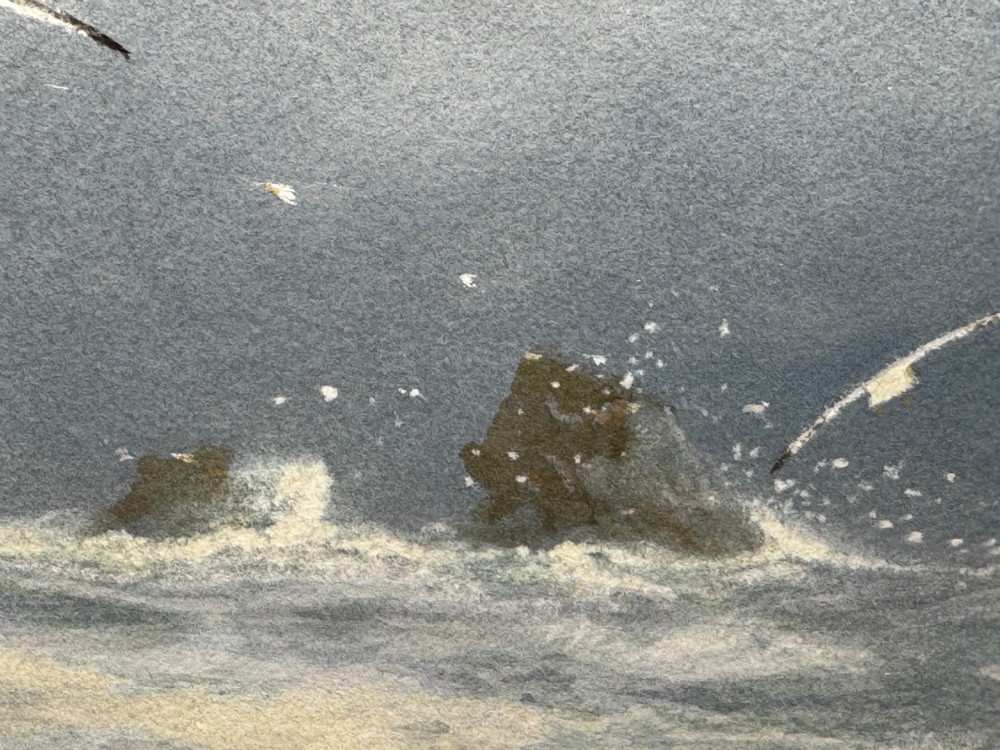
In the distance, a headland and lower cliffs close the composition, anchoring it in a specific Cornish setting, while a low, layered sky presses down over the scene. Gulls wheel above the wreck, described with a few acute strokes that add life and scale.
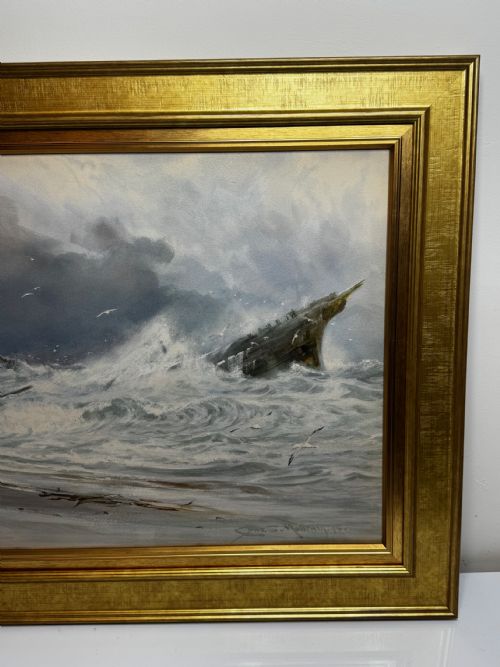
Technically, the work shows confident use of broad transparent washes for sky and distance, firmer modelling for cliffs and figures, and crisp, opaque highlights for foam, spray and key details. The balance between accurate drawing and expressive brushwork is exactly what collectors expect from a serious Victorian marine watercolour.
The Artist
Charles Sim Mottram RBA (British, 1852–1919) was a respected late-Victorian marine and coastal painter. Based in London, he travelled extensively to the west and south-west coasts of Britain, with Cornwall providing some of his most dramatic material.
He specialised in shipwrecks, lifeboat launches and storm-beaten seas, as well as quieter harbour scenes and coastal views. His work was regularly exhibited in London, including at the Institute of Painters in Water Colours (later the Royal Institute), and is valued for its combination of narrative drama and closely observed sea and weather effects.
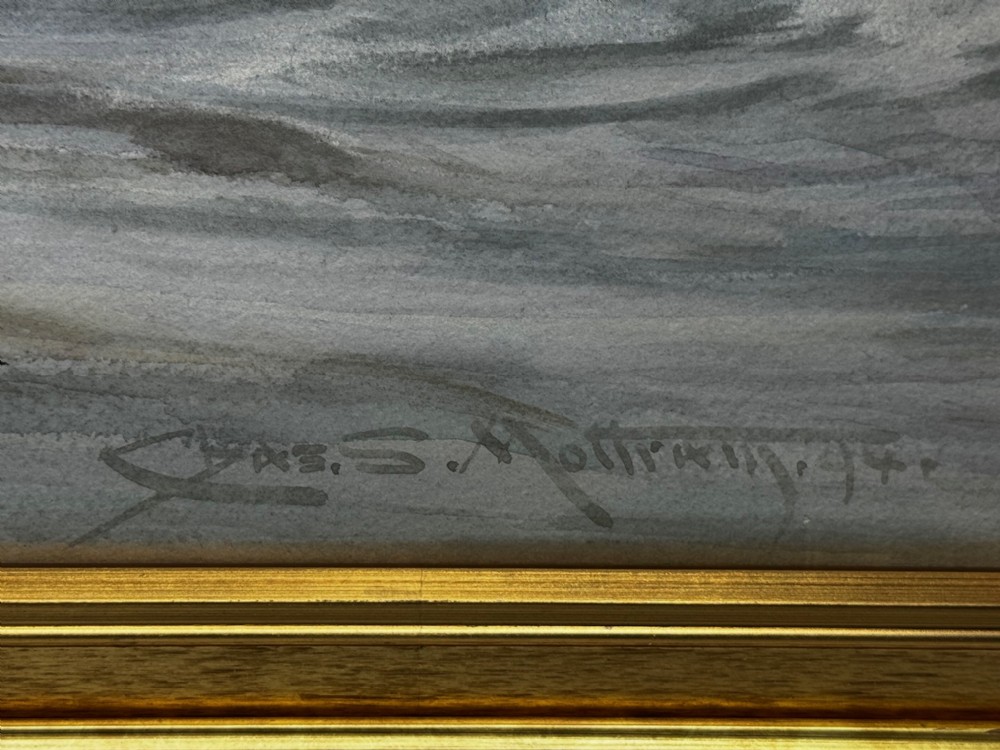
Mottram is sometimes confused with the earlier engraver Charles Mottram, but this painting is unequivocally by Charles Sim Mottram, the marine painter: the signature, subject matter, dating and watercolour handling are all characteristic of his work. His Cornish coastal scenes are particularly sought after, with a St Ives subject achieving $20,129 (USD) at Tennants in 2013.
Historical Significance
This watercolour is a finely judged, securely dated example of Mottram’s mature marine work. It captures not only the raw power of the Atlantic against the north Cornish coas
Cheshire Antiques Consultant Ltd has dated this Maritime Shipwreck Oil Painting to the Victorian era.
Source the historic in 17th, 18th, 19th & 20th century fine arts, painting, sculptures & collectibles
You can view the stock and full dealer information on the Cheshire Antiques Consultant Ltd Profile Page
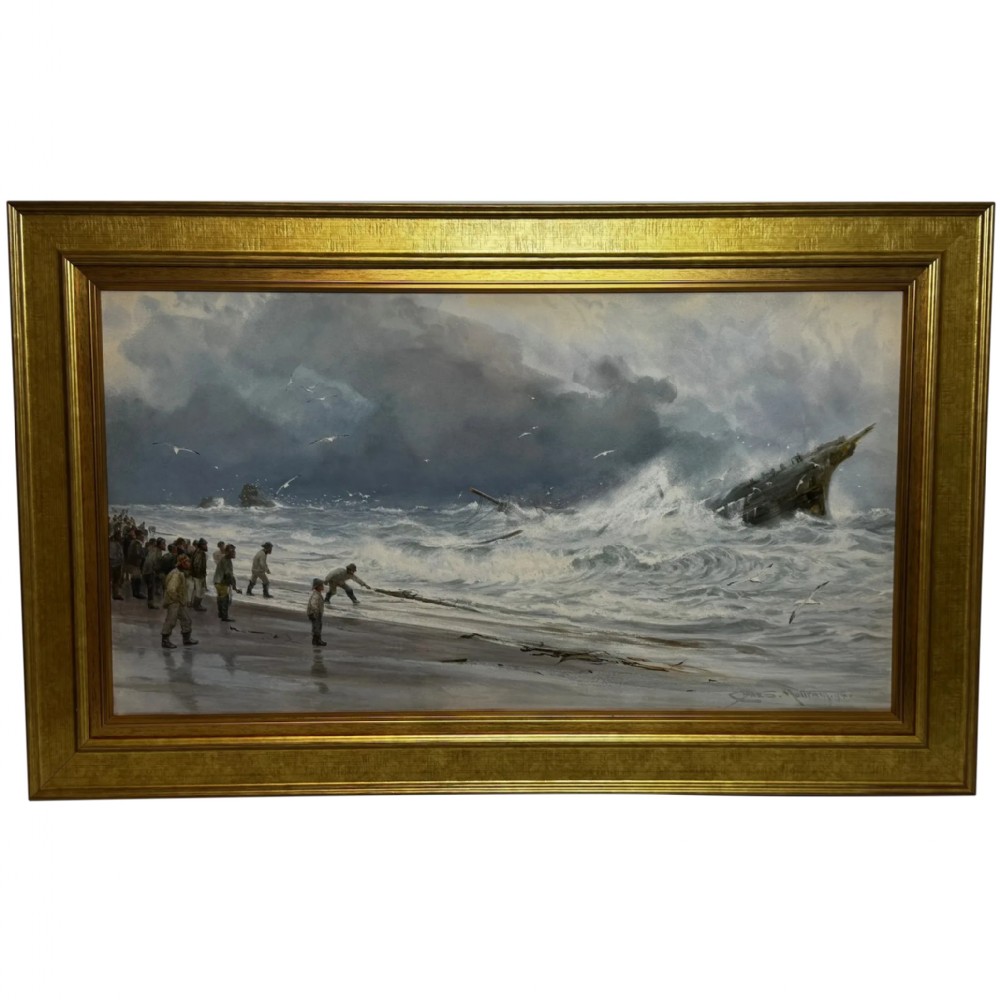
Painting Ship Wreck High Tide Off Trebarwith Strand by Charles Sim Mottram Rba