




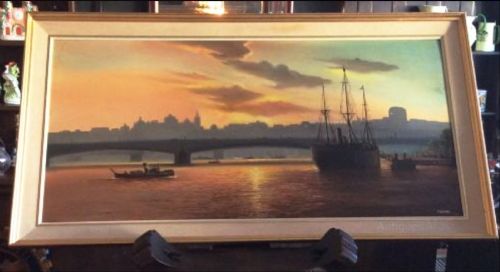
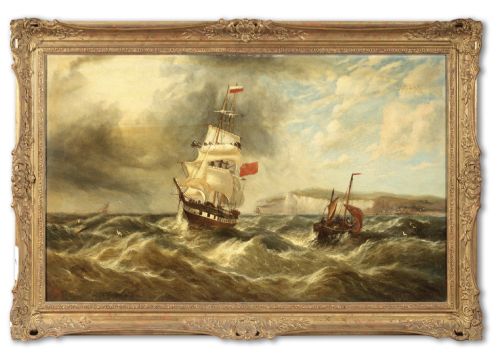
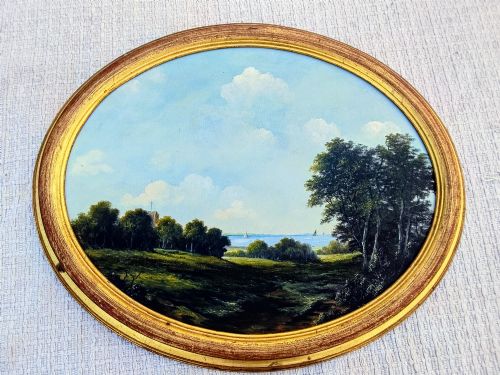
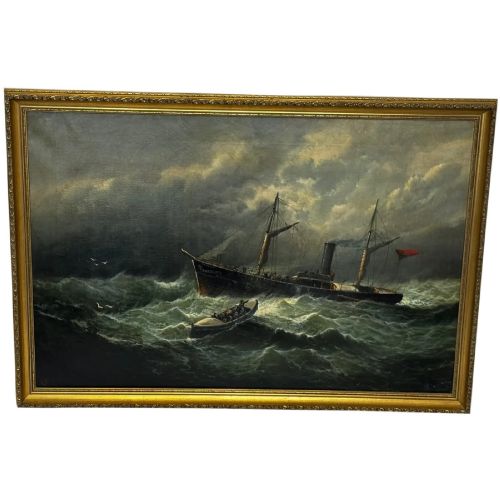
Antique Marine Seascape Canvas
An antique marine seascape canvas brings the movement and weight of open water directly into a room.
Antique Marine Seascape Canvas
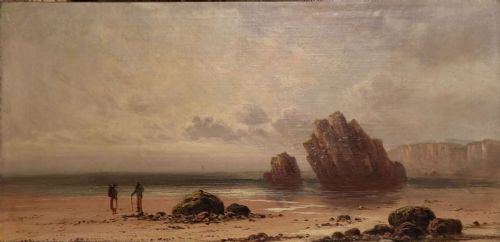
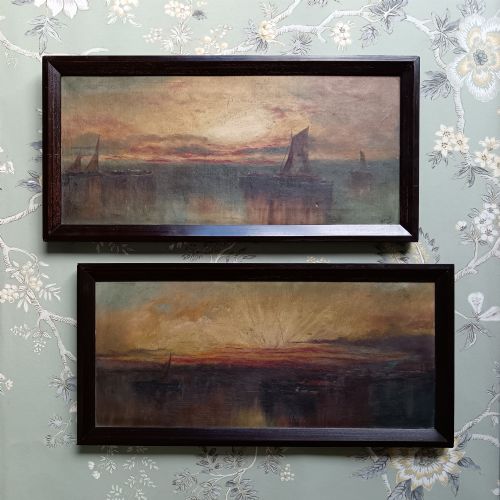
An antique marine seascape canvas captures coastal views, heavy seas, and historical shipping, with Victorian and nineteenth-century examples appearing most frequently on this page. These works range in scale from intimate oval sea views to large panoramic compositions spanning several feet.
Subjects stretch from merchant vessels and naval shipping to quiet harbour scenes and dramatic gales off the coast. Painters document specific locations from the British coast to European waters and distant ports.
The category spans the nineteenth century into the Edwardian period and early decades of the twentieth century, bringing together British, Dutch, and French maritime traditions.
How they were made
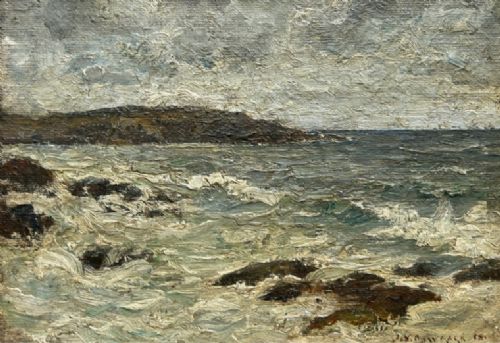
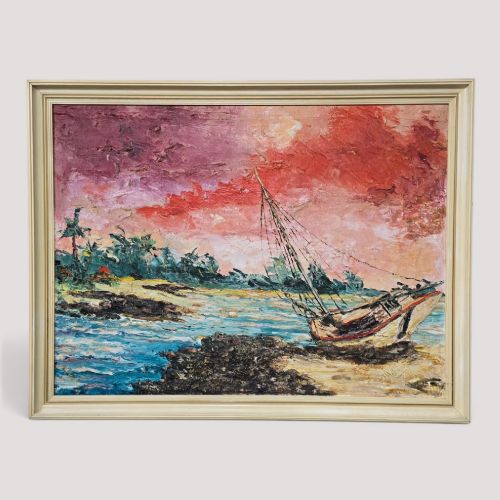
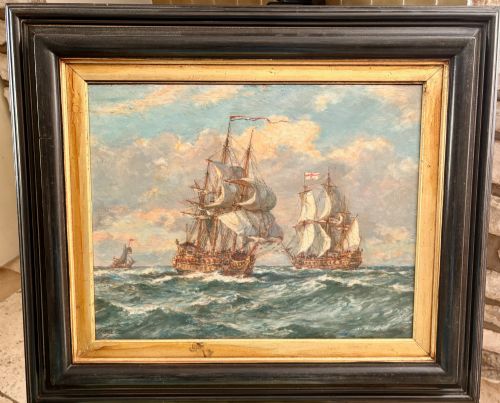
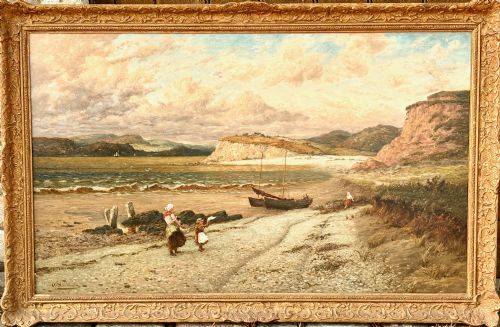
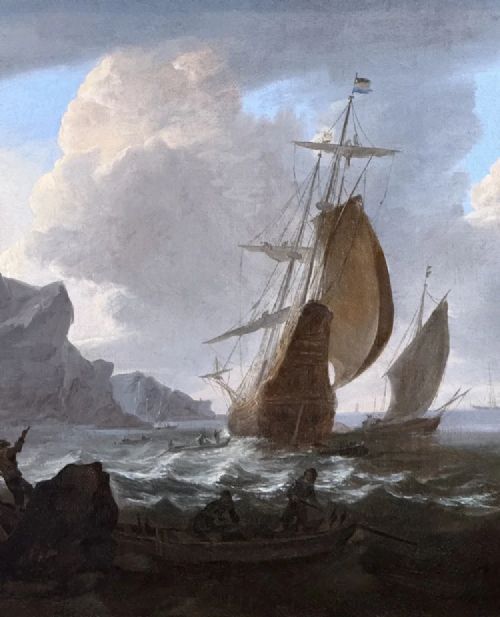
These works are painted in oil paint on woven canvas stretched over wooden frames, often retaining their original giltwood or gilt frames. Artists build up the surface using fluid glazes for deep water and thick impasto paint to render crashing waves and clouds.
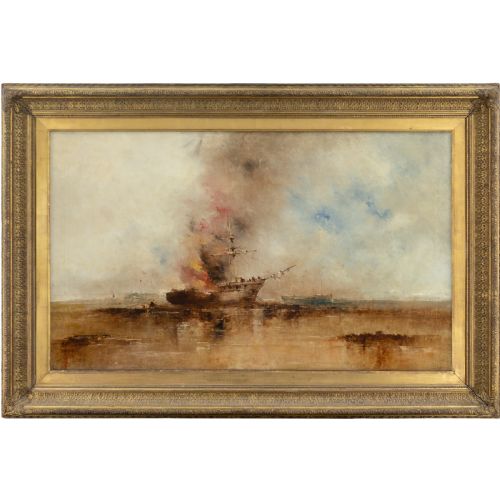
The physical support relies on wood and canvas, while the decorative presentation frequently uses heavy gilt frames designed to catch and reflect light around the painted surface.
Artists painting stormy seas often had to tie their easels down to the deck or cliff edge to stop the wind carrying the canvas away.
What varies in quality
Quality rests on the painter's handling of light, atmosphere, and maritime architecture, where skilled hands capture the exact weight of a ship in heavy seas rather than relying on stiff formulae. The depth of the colour palette and the vigour of the brushwork separate routine workshop output from accomplished fine art.
Preservation of the original canvas and paint surface dictates the integrity of the piece, alongside the quality and period suitability of the surrounding gilt frame.
Eugène-Louis Gillot·William McAlpine·John Rose Miles·Bernard Gribble·Bonaventura Peeters·Bernard Benedict Hemy·Thomas Creswick·Willem Bos·John Wilson Carmichael·William Henry Williamson·John Holland·Abraham Hulk I·Charles William Wyllie·William Edward Webb·Charles Napier Hemy·Louis Suire·Gustave Vidal·Gustave De Bréanski·Daniel Sherrin
The Antique Marine Seascape Canvas Glossary
- Impasto
- Paint applied thickly to a canvas, standing out in relief from the surface and giving visible texture to waves or clouds. This technique adds physical depth to stormy water and atmospheric skies.
- Giltwood
- Timber carved and coated with gold leaf or metallic gilt powder to form a decorative frame. These frames complement the luminous quality of maritime oil paintings.
- Barque
- A sailing vessel with three or more masts, where the foremast and mainmast are square-rigged and the mizzenmast is fore-and-aft rigged. This rig appears frequently in nineteenth-century shipping art.
- Provenance
- The documented history of ownership of a work of art, tracing its path from the artist's studio or original exhibition to the present. Clear records help establish attribution and historical context.
Antique Marine Seascape Canvas: Frequently Asked Questions
How do I care for an oil painting on canvas?
Keep the canvas away from direct sunlight, dampness, and rapid temperature changes that cause the wooden stretcher and paint layers to expand or contract.
Dust the surface very gently with a dry, soft brush and avoid using liquid cleaners or water on the paint or gilt frame.
How can I tell a nineteenth-century canvas from a later copy?
Examine the back of the canvas and the wooden stretcher bars for signs of age, oxidation, and the texture of older woven fabrics.
Twentieth-century and modern reproductions often use uniform modern staples and factory-primed canvases that differ from older preparation methods.
Where were most of these maritime scenes painted?
Artists worked along busy trading rivers like the Thames, at major naval ports such as Plymouth, and across coastal waters in Britain, France, and the Netherlands.
Many painters travelled directly to the coast to record shipping traffic, coastal rescue operations, and changing weather conditions firsthand.
Why are some marine paintings signed while others are attributed?
Signatures can be clearly written by the artist's hand, indistinctly marked, or absent entirely depending on the artist's custom at the time.
Attributions are made by scholars and dealers who match stylistic brushwork, subject matter, and known signatures to historical records.