


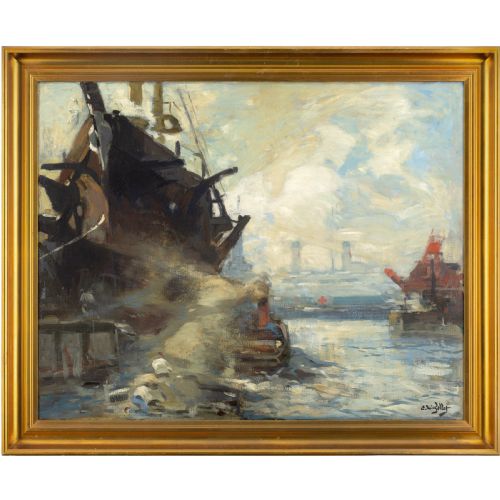

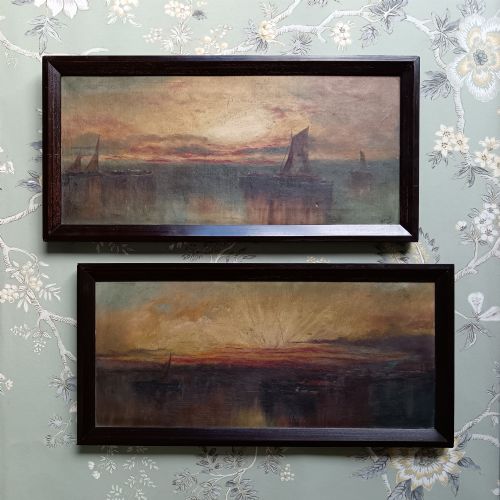
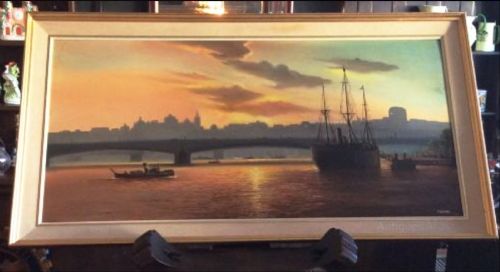
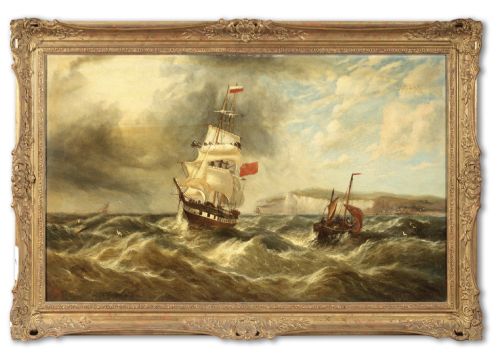
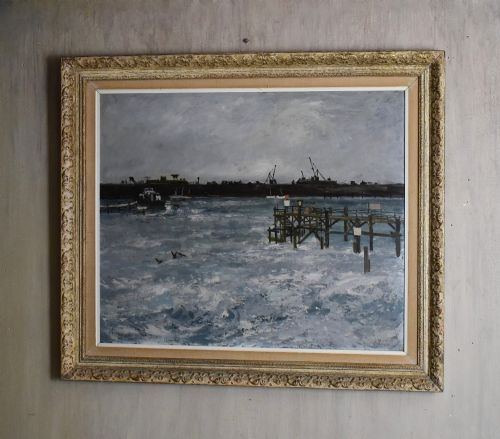
Framed Seascape Canvas
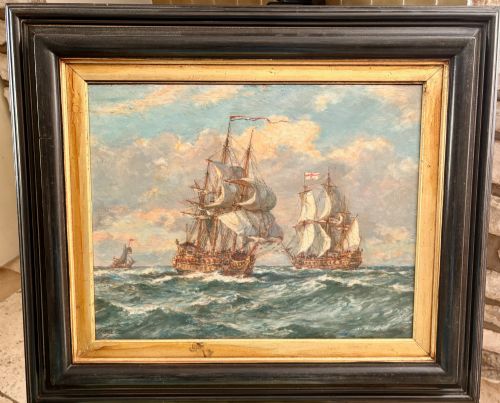
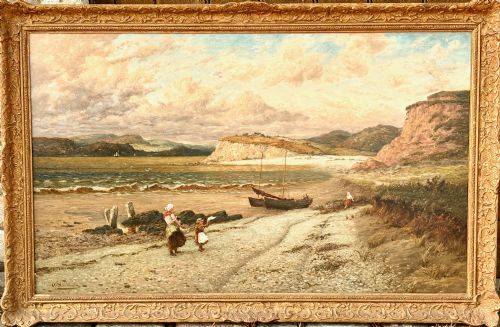
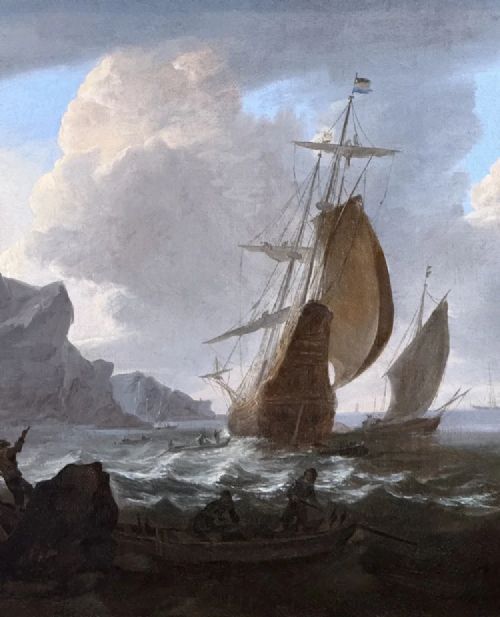
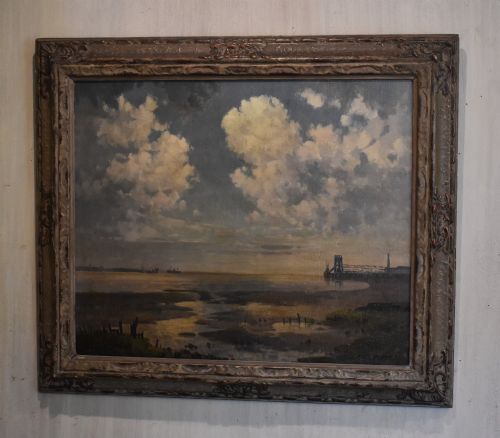
These framed seascape canvas works bring turbulent waters, quiet shores, and historic shipping lanes directly onto the wall.
Framed Seascape Canvas
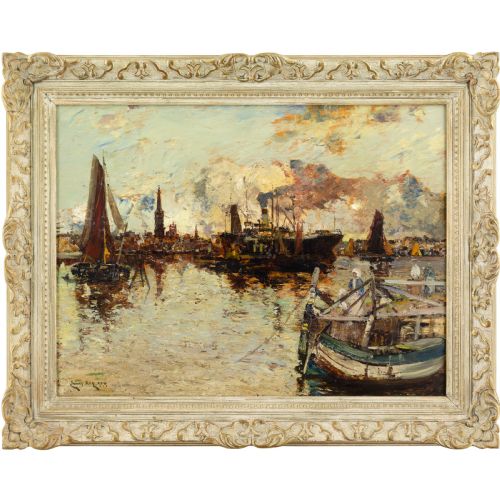
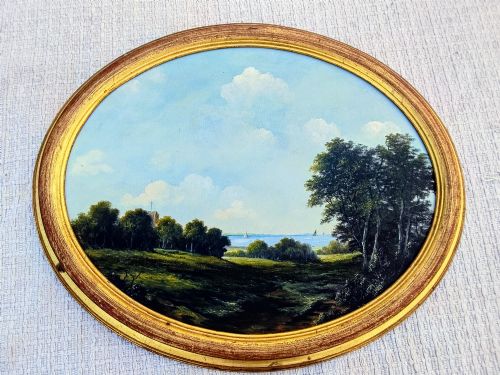
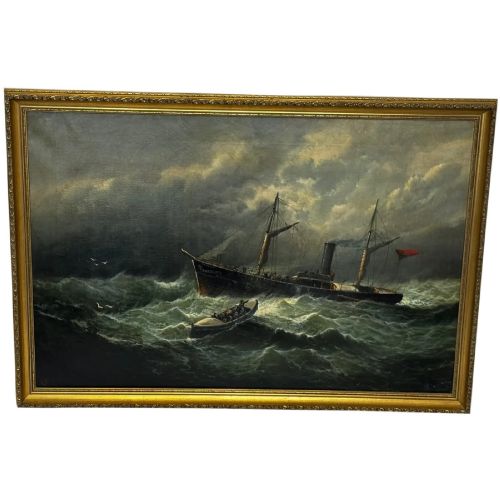
When someone searches for a framed seascape canvas, they find oil paintings on fabric stretched over wooden frames, enclosed in traditional surrounds. The works span the nineteenth century through the mid-twentieth century, recording coastal scenes, naval engagements, and harbour views.
The selection here ranges from large Victorian maritime canvases to mid-century coastal views. Works encompass British Impressionism, Post-Impressionism, and detailed maritime art executed by named artists and regional schools.
Materials and construction
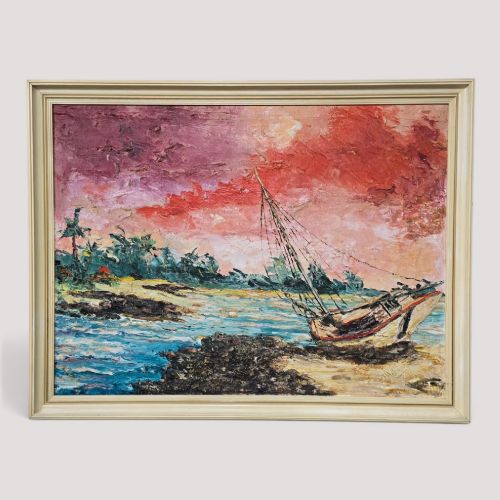
Artists applied oil paint directly onto stretched canvas, building up texture through brushwork and impasto to capture the movement of waves and light on water. Pigments range from deep oceanic blues and greens to warm sunset hues.
Canvases sit within wood frames, frequently finished in gilt or giltwood to complement the maritime subject matter. These surrounds provide structural support and frame the pictorial space.
Listings span periods from the seventeenth century through to the mid-twentieth century, utilising oil on canvas set within wood and gilt surrounds.
Evaluating the works
Quality rests in the handling of light, atmosphere, and maritime detail, distinguishing skilled observation from formulaic studio production. Dynamic composition in difficult weather conditions elevates a painting.
The preservation of the paint surface and the originality of the frame contribute to the standing of a piece. Works retaining their period giltwood surrounds hold greater integrity.
Clifford Hanney·Eugène-Louis Gillot·William McAlpine·James Kay·Bernard Gribble·Bonaventura Peeters·Peter Brannan·Francis Moltino·Bernard Benedict Hemy·Thomas Creswick·Willem Bos·Charles Euphraisie Kuasseg·John Wilson Carmichael·Lai Fong·Joseph Farquharson·Erich Mercker·Nicholas Condy·Thomas Hodgson Liddell·William Henry Williamson
The Framed Seascape Canvas Glossary
- Canvas
- A heavy woven fabric used as a surface for oil painting. It is stretched tightly over a wooden frame before application of the ground and pigments.
- Giltwood
- Wood carved and covered with a thin layer of gold leaf or metal powder. It provides a reflective decorative border common on nineteenth-century frames.
- Impasto
- Paint applied in thick layers that stand out from the canvas. This technique adds literal texture to representations of crashing waves or clouds.
- Maritime Art
- Depictions of the sea, ships, and coastal views. This genre encompasses naval history, commercial shipping, and coastal landscapes.
Framed Seascape Canvas: Frequently Asked Questions
How do I date a framed seascape canvas?
Dating relies on stylistic evidence, artist signatures, and the construction methods of both the canvas and the frame. Costume details on figures or the type of vessels depicted also help narrow the period.
Examination of the stretcher bars and canvas weave provides further clues to the age of the physical object. Comparing the work to known pieces by the same school or artist secures a firmer date.
Where should I hang a marine oil painting?
These works suit rooms with stable humidity away from direct sunlight, which can fade oil pigments and damage gilt frames over time. Wall placement should consider the natural lighting of the room to enhance the painted surface.
Strong wall fixings are necessary for heavier framed canvases, particularly larger Victorian and Edwardian examples. Positioning the centre of the canvas at eye level offers the most natural viewing angle.
What distinguishes Victorian marine art from later periods?
Victorian marine paintings often focus on narrative detail, dramatic weather, and British naval supremacy with meticulous accuracy in rigging and vessel types. Mid-century works tend toward looser brushwork and simplified coastal forms.
The framing styles also shift, moving from ornate, heavy giltwood mouldings toward simpler profiles in later decades. Subject matter broadens over time from historical shipping to everyday coastal leisure.