


Victorian Ship Painting
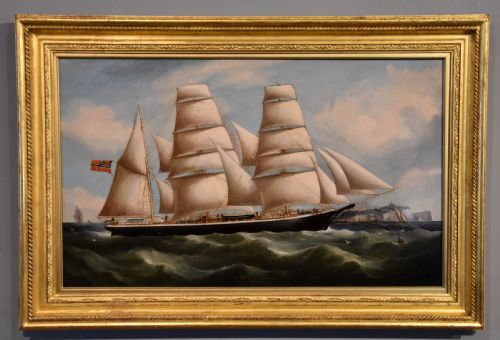
A victorian ship painting captures the raw power of maritime trade and naval might on the nineteenth-century waves.

Victorian Ship Painting
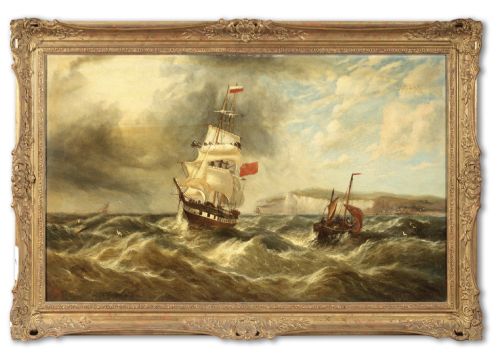
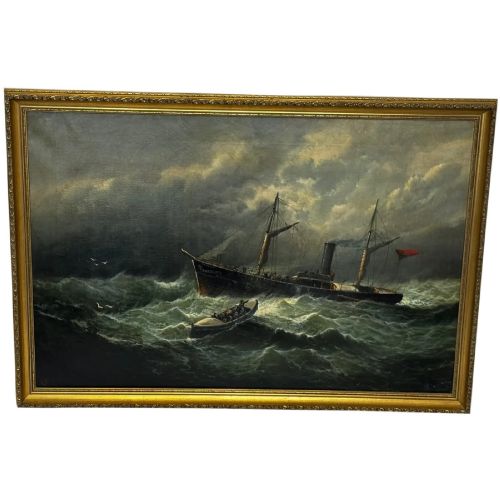
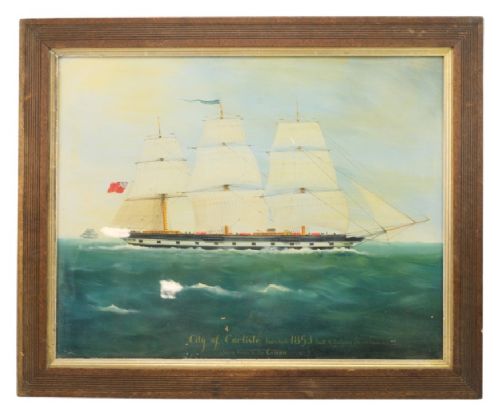
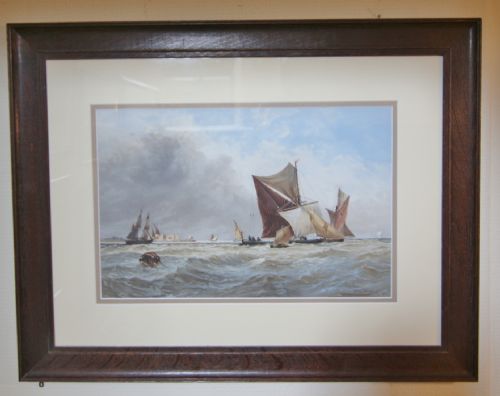
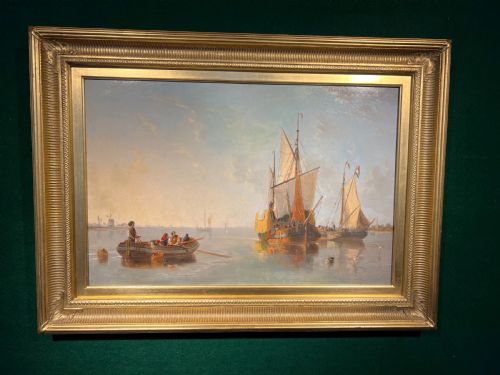
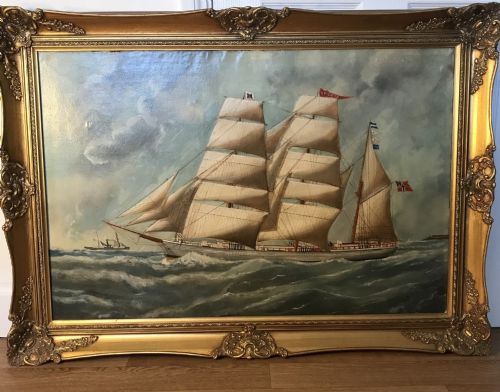
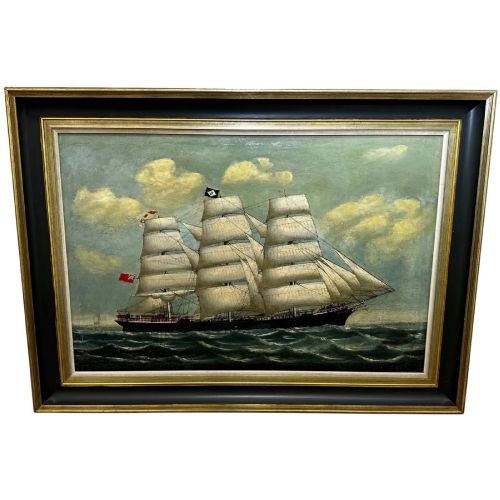
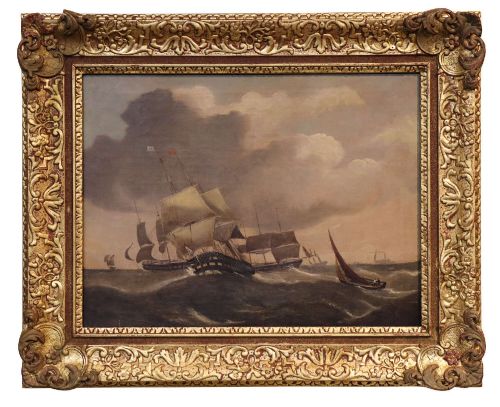
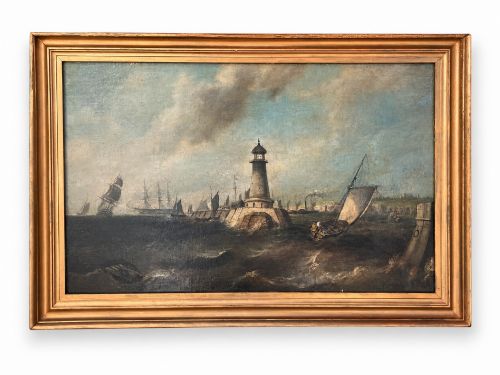
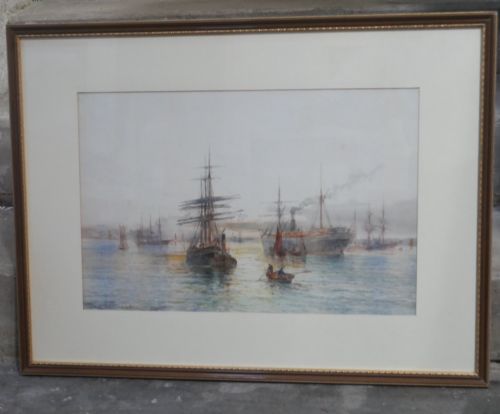
When you search for a victorian ship painting, you encounter maritime artworks created across the nineteenth century, including oil paintings on canvas, board, and card, alongside delicate watercolours. These pieces document named merchant vessels, royal yachts, and fishing boats navigating coastal waters, rough seas, and bustling harbours.
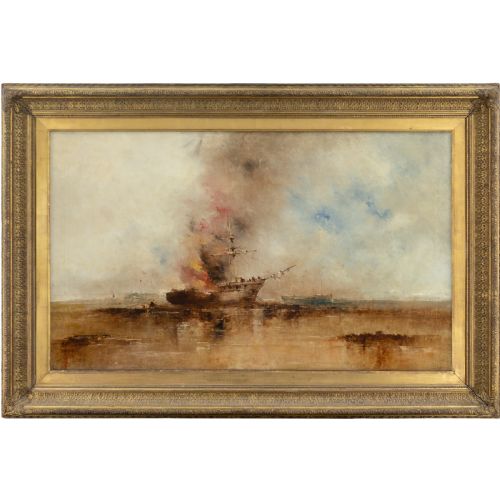
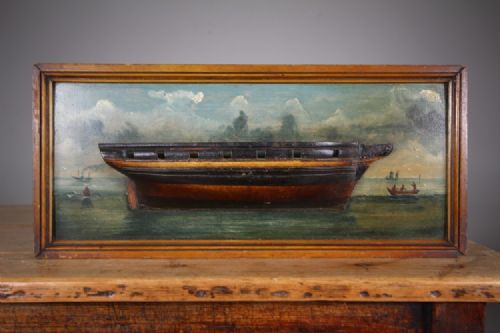
The selections on this page lean heavily towards original oil and watercolour paintings by named British artists, supplemented by cased maritime dioramas and painted pine travel chests. Common subjects range from dramatic shipwrecks and burning ships to quiet scenes of clippers and barques at anchor in bays or rivers.
Materials and construction
Artists relied primarily on oil paint applied to canvas, board, or card, and watercolour pigments laid down on paper, often finished within gilt or wooden frames. The use of oil paint allowed for rich depiction of stormy seas, billowing sails, and atmospheric coastal light.
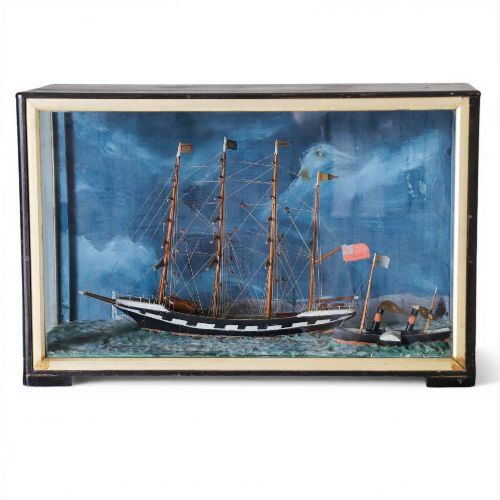
Maritime dioramas and folk art pieces incorporate mixed media, utilising wood, glass, and painted paper elements to create three-dimensional naval scenes housed within protective glazed cases.
Assessing quality and execution
Quality rests upon the artist's command of maritime rigging, hull structure, and the fluid movement of water under varying weather conditions. Superior works display anatomical accuracy in the rendering of three-masted schooners, clippers, and steam packets.
The handling of light, shadow, and atmospheric perspective distinguishes accomplished academic works from simpler folk art representations. Condition of the canvas, preservation of watercolour pigments, and the integrity of original frames further shape the standing of each piece.
William McAlpine·John Rose Miles·William Broome·Bernard Benedict Hemy·TB Hardy·John Wilson Carmichael·Lai Fong·Nicholas Condy·Richard B Spencer·Abraham Hulk I·William Frederick Settle·Charles William Wyllie·Charles William Adderton·Ernest Dade·Daniel Sherrin·Thomas Bush Hardy·Charles Sim Mottram·William Wyld·James Webb·Henry E Tozer
The Victorian Ship Painting Glossary
- Barque
- A sailing vessel with three or more masts having the fore and mainmasts square-rigged and the mizzenmast fore-and-aft rigged. This rig was common for long-distance cargo transport during the nineteenth century.
- Clipper
- A very fast nineteenth-century sailing ship with three masts and a square rig, designed for maximum speed. These vessels are frequently depicted under full sail in open ocean or coastal waters.
- Seascape
- A work of art that depicts the sea, typically including ships, coastal views, and marine weather. These form the primary visual category for nineteenth-century maritime art.
- Diorama
- A three-dimensional scene enclosed in a glass-fronted case, often featuring carved and painted wooden models of ships set against painted backgrounds. Maritime examples frequently show vessels racing or at sea.
- Watercolour
- A painting method in which the paints are made of pigments suspended in a water-based solution, widely utilised for bright coastal sketches and finished marine scenes on paper.
Victorian Ship Painting: Frequently Asked Questions
What subjects appear most often?
The works predominantly feature merchant ships, clippers, barques, and fishing boats actively navigating British coastal waters, rivers, and international trade routes. Scenes range from quiet anchorages in bays to dramatic accounts of rough seas, shipwrecks, and naval vessels off the coast.
Specific historical vessels and named ships engaged in transport or rescue missions frequently serve as the central focus for nineteenth-century marine artists.
How do watercolours differ from oils?
Watercolour paintings utilise water-soluble pigments on paper, yielding luminous, immediate depictions of light and weather that are traditionally mounted under glass within frames. Oil paintings employ pigment bound in drying oils on canvas or board, offering deeper texture and richer tonal layering.
Oils generally endure heavy cleaning more readily than watercolours, which remain sensitive to moisture and direct sunlight.
Where were these maritime scenes painted?
Artists worked both along the British coastline at active ports like Hull, Scarborough, and Portsmouth, and abroad in international waters and foreign harbours. Many painters drew inspiration from the River Thames, the Medway, and various coastal trading hubs across Europe and the colonies.
Maritime dioramas were often constructed by sailors or specialist folk artists working ashore using available wood and glass.
How should framed watercolours be protected?
Keep watercolours away from direct sunlight to prevent the fading of delicate pigments on paper. Ensure they hang in stable environmental conditions with low humidity to avoid paper distortion and mould growth.
Glazing must remain intact to protect the surface from dust and atmospheric pollutants.