
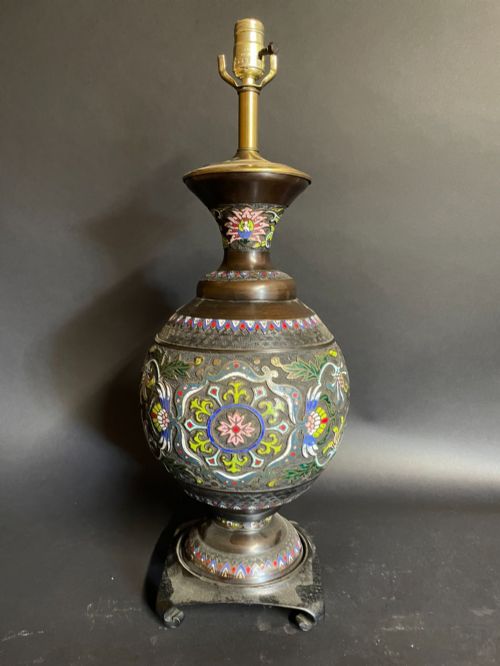


Antique Cloisonne Urn
An antique cloisonne urn brings dense enamel and cast metal together, offering collectors heavy decorative vessels from East Asian and European workshops.
Antique Cloisonne Urn
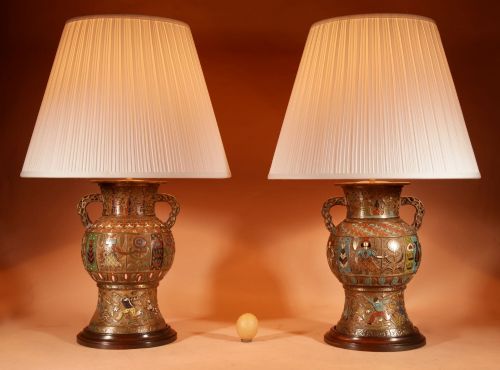
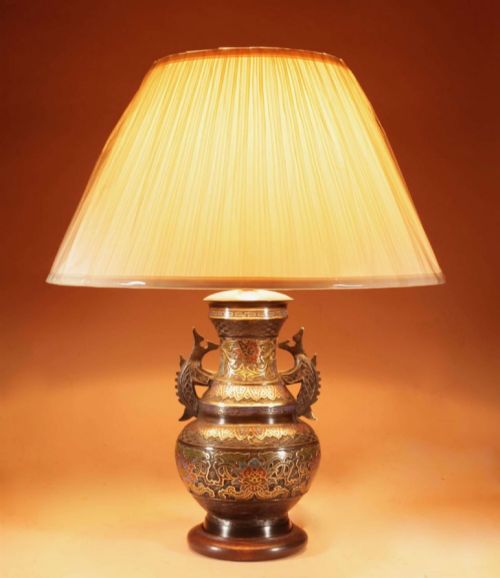
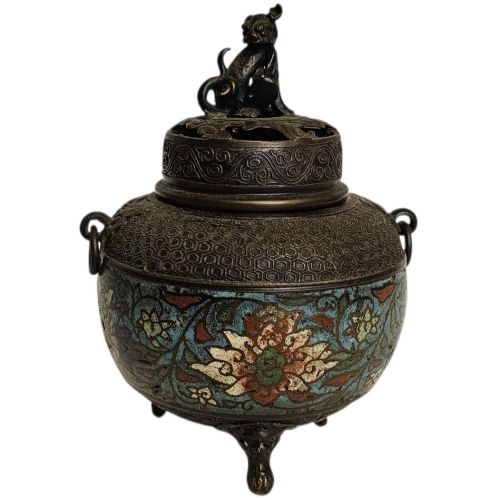
When searching for an antique cloisonne urn, buyers examine hollow vessels designed for display, illumination, or ritual use. These objects range from massive palace vases and temple water dispensers down to small lidded ginger jars and table lamps.
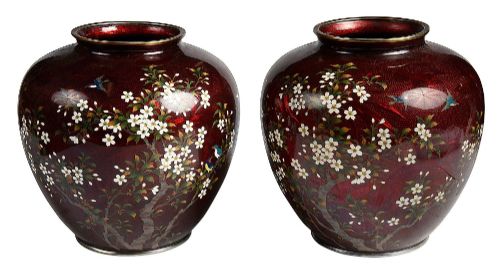
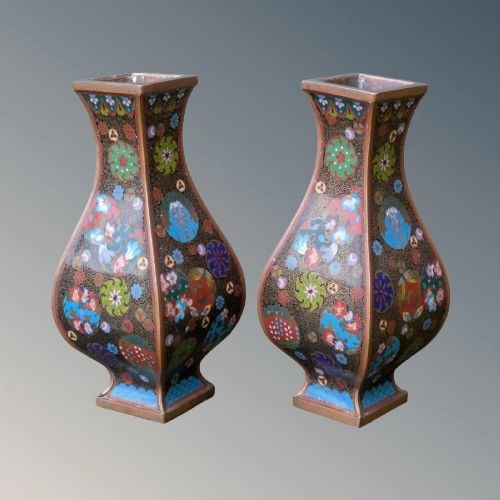
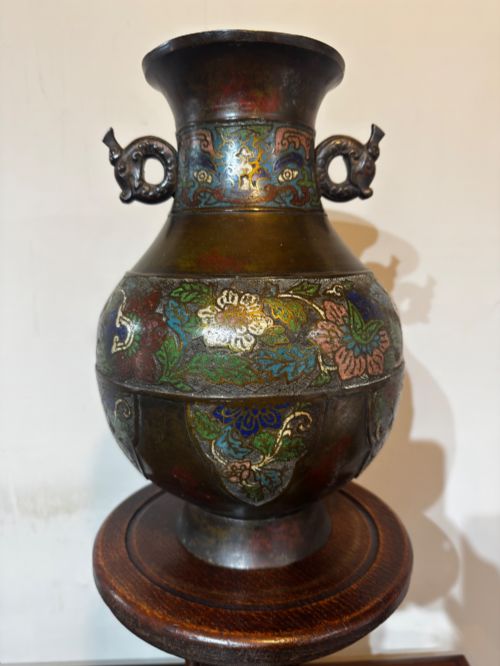
The pieces appearing on this page stem principally from the nineteenth and early twentieth centuries. Japanese Meiji period examples and Chinese Qing dynasty or style vessels dominate the selection.
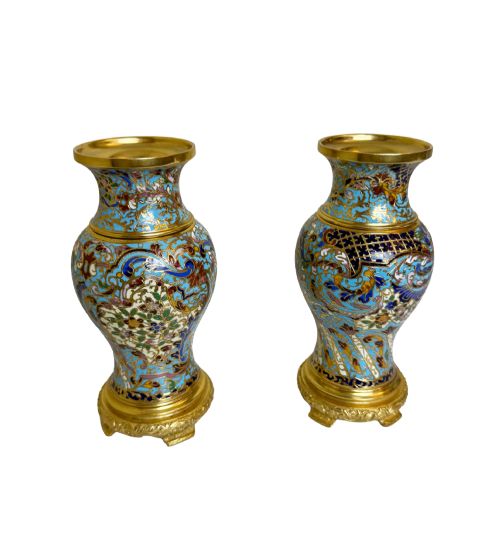
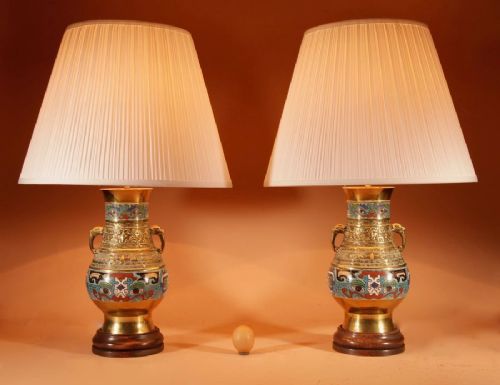
Makers shaped these items as baluster vases, tripods, censers, and jardiniere bowls. Many survive as pairs or matched sets, often mounted later for electrical illumination.
How they were made
Artisans formed the foundational body of an antique cloisonne urn using cast bronze, brass, or copper. Thin metal wires were soldered onto this exterior surface to map out intricate cells for the design.
Coloured enamel pastes filled these individual wire compartments before the vessel underwent high temperature firing. Craftsmen then ground and polished the hardened surface until the metal wires and glass paste formed a smooth plane.
Some massive palace vases stand tall enough to dwarf a small hound, requiring two strong hands just to shift an inch.
What varies in quality
The crispness of the wirework separates standard production from superior examples. Master artisans maintained uniform line thickness and complex botanical or zoological motifs across curving surfaces.
The polish and density of the enamel fill dictate the tactile finish. Superior pieces show minimal pitting within the coloured cells and crisp integration between the metal armature and the glass paste.
The Antique Cloisonne Urn Glossary
- Cloisonne enamel
- A metalworking technique where thin wires create raised compartments filled with coloured glass paste and fired. This method produces detailed cellular patterns across vases and urns.
- Champleve
- A technique where troughs or cells are carved directly into a thick metal surface and filled with enamel before firing. It yields bolder metallic borders than soldered wire methods.
- Meiji period
- The era of Japanese history spanning from eighteen sixty-eight to nineteen twelve, noted for exceptional metalwork and enamel production. Pieces from this time often feature naturalistic bird and dragon motifs.
- Qing dynasty
- The final imperial dynasty of China, lasting until nineteen twelve, which produced heavy bronze and brass vessels. Items from this era frequently utilise archaic forms and rich floral fields.
Antique Cloisonne Urn: Frequently Asked Questions
How do I clean an antique cloisonne urn?
Dust the surface gently with a dry, soft cloth to prevent particulate accumulation within the wire crevices. Avoid water, harsh chemical cleaners, or metal polishes that can discolour the exposed bronze or erode the fired enamel.
Examine the base and rim carefully before undertaking any maintenance. Fragile soldered wires or historical repairs require professional conservation rather than domestic cleaning.
Were these urns made for lighting?
Many surviving examples were originally created as decorative vases, ginger jars, or temple vessels. European and American importers frequently converted these robust metal bodies into table lamps during the late nineteenth and early twentieth centuries.
Original handles, lids, and rims were sometimes drilled or adapted to house electrical fittings during conversion. Collectors often weigh the historic integrity of an unaltered vase against the utility of a period lamp conversion.
How do I distinguish Japanese from Chinese pieces?
Japanese items from the Meiji period frequently employ smooth, polished copper bodies with exceedingly fine silver or brass wirework. Motifs tend to focus on isolated natural subjects like single birds or specific floral sprays against quiet backgrounds.
Chinese vessels from the Qing style tradition generally rely on heavier bronze foundations with thicker wire outlines. Their decorative schemes often cover the entire surface densely with geometric borders and multi-coloured auspicious symbols.
What is Totai Shippo?
Totai Shippo represents a specific Japanese technique translating to wire-less cloisonne or transparent enamel over a textured base. Artisans carved designs directly into the metal or formed tree bark textures before applying translucent enamel layers.
This method allows light to pass through the coloured paste in a distinct manner compared to traditional opaque cells. Such pieces remain scarcer within the surviving historical record.