



Floral Enamel Bronze Urn
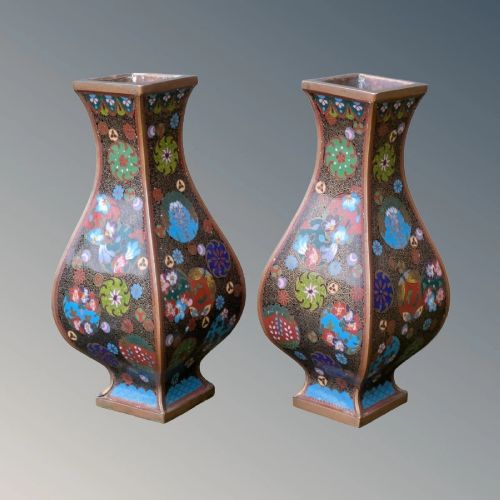
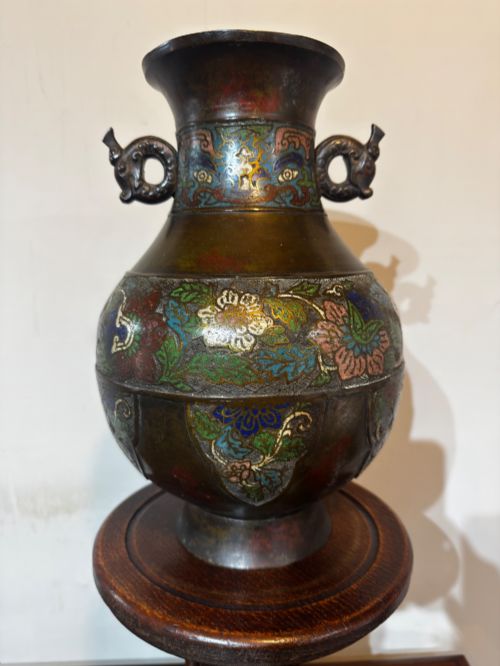
These floral enamel bronze urn pieces bring vibrant cloisonne and champleve surface work into a room.
Floral Enamel Bronze Urn
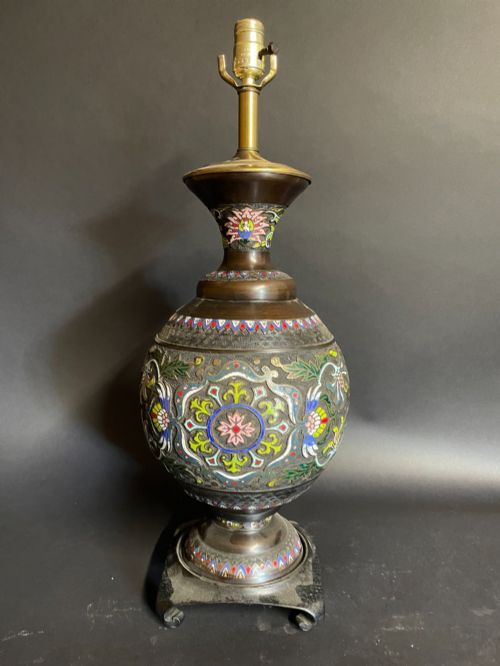
A floral enamel bronze urn encompasses decorative vases, ginger jars, jardinieres, and table lamps fashioned from metal with intricate vitreous decoration. When searching for a floral enamel bronze urn, collectors encounter items spanning the nineteenth century through the early decades of the twentieth century, including Edwardian examples.
The objects frequently originate from Asian workshops, reflecting Qing Dynasty and Meiji Period aesthetics alongside Chinoiserie interpretations. The most common forms on this page are Chinese and Japanese cloisonne or champleve vases, often found as matched pairs or miniature vessels.
How they were made
Maker-artisans formed the body of each vessel in bronze, brass, or copper, sometimes finishing the metal frame with gilt accents. They applied fine wire partitions to create cellular compartments across the metallic surface.
Vitreous enamel paste filled these distinct compartments before firing and polishing produced a smooth, decorative exterior featuring floral motifs.
Floral Enamel Bronze Urn Retail Price Guide 2026
Typical asking prices for floral enamel bronze urn among the pieces listed under this phrase on Sellingantiques today, from the lower quarter to the upper quarter. They describe what is for sale here now, not the wider market.
Miniature pairs sit quietly alongside massive archaic vessels, proving that grand decorative ambition sometimes arrives in miniature.
What varies in quality
The distinction between ordinary and superior pieces rests upon the precision of the wirework and the depth of the enamel colour. Tightly controlled cellular compartments and evenly fired surfaces separate masterwork vases from simpler commercial production.
Proportion and the handling of archaic or traditional motifs also indicate superior execution, where the metallic foundation and the enamel decoration integrate harmoniously.
The Floral Enamel Bronze Urn Glossary
- Cloisonne
- An enamelwork technique where thin metal wires form raised barriers to contain coloured paste before firing. This method creates distinctive patterned cells across bronze or copper surfaces.
- Champleve
- A process where troughs or cells are hollowed directly out of a metal surface to hold enamel colour. The resulting recessed areas produce bold linear designs.
- Jardiniere
- A large ornamental pot designed to hold plants or flowers. These vessels often match the decorative scheme of smaller display vases.
- Gilt Bronze
- Bronze metal treated with a thin layer of gold or gold wash. This finish enhances the decorative brilliance of the piece.
Floral Enamel Bronze Urn: Frequently Asked Questions
What are floral enamel bronze urn pieces?
These items are decorative vessels and lamps made from bronze, copper, or brass featuring enamelled surface designs. They combine metallic bodies with colourful vitreous decoration.
Most examples date from the nineteenth or early twentieth century and showcase Asian manufacturing traditions.
How were these urns and vases used?
Historically, these vessels served as decorative ornaments in formal rooms, displayed on tables or mantelpieces. Some larger forms functioned as jardinieres for holding plants.
Others have since been converted into table lamps while retaining their original decorative enamel bodies.
How do I live with them?
Place these pieces where natural light can catch the enamel colours and metallic wires without exposing them to harsh direct sunlight. Handle them with care during cleaning by using a soft, dry cloth.
Pairing matching vases on a sideboard creates a balanced display that highlights their craftsmanship.
How do I tell periods apart?
Nineteenth-century examples often display heavier bronze casting and deep, complex colour palettes in the enamel work. Pieces from the early twentieth century may feature brighter tones and more standardised wire patterns.
Stylistic cues such as Meiji Period or Qing Dynasty design elements also help establish the origin.