


Antique Cloisonne Charger
When you search for an antique cloisonne charger, you are looking at heavy metal vessels decorated with vitreous enamel cells.
Antique Cloisonne Charger
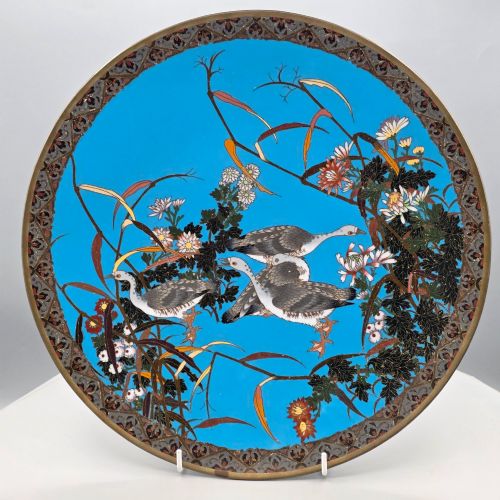
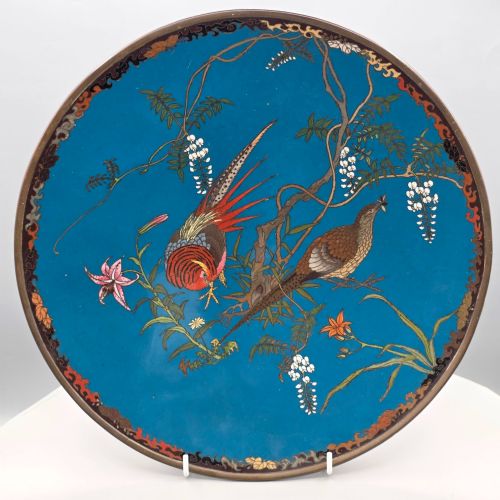
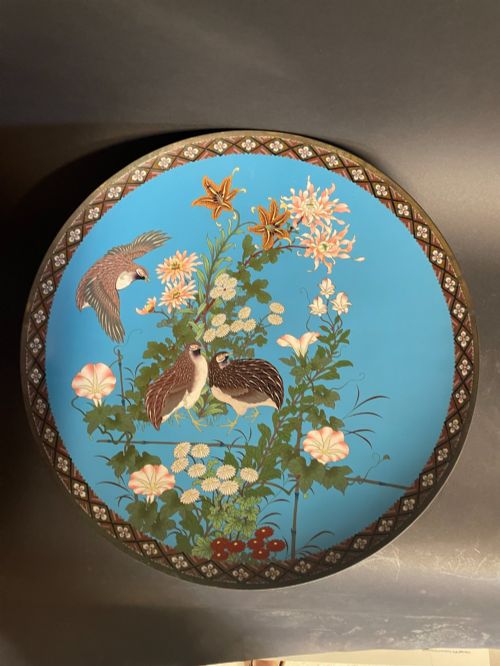
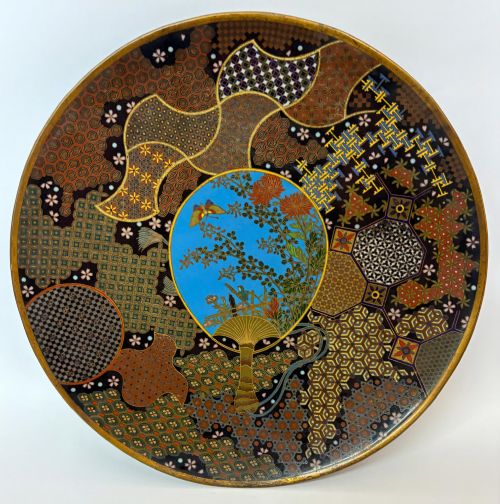
An antique cloisonne charger is a wide, shallow display dish created primarily in Japan during the Meiji and Edo periods, alongside examples from the Qing dynasty. These pieces take the form of large circular plates, trays, and plaques designed for visual impact rather than dining.
The objects on this page span the mid-nineteenth century through to 1900, capturing the height of fine metalwork and enamelling craftsmanship. Collectors encounter motifs ranging from natural subjects like geese, koi, iris, and dragons to complex narrative scenes featuring samurai and deities.
Most entries originate from Japanese workshops spanning the 1850s to the turn of the twentieth century, utilising copper, brass, and porcelain bases. The form serves as a canvas for intricate wirework outlining polychrome enamel fields.
How they were made
Craftsmen formed the body of the charger from beaten copper, brass, or bronze, and occasionally used porcelain for Totai Shippo pieces. Thin metal wires were then bent and soldered onto the surface to create detailed compartments known as cloisons.
These individual cells were filled with vitreous enamel pastes in various colours before undergoing multiple firings in a kiln. Once cooled, the surface was ground and polished down until the metal wire rims and hardened enamel flush into a smooth plane.
At least one unfortunate frog finds itself immortalised in enamel alongside chrysanthemums on a Meiji charger.
What varies in quality
Quality rests in the precision and thinness of the wirework, where finer grids demonstrate superior technical control by the artisan. The complexity of the subject matter, from standard floral patterns to detailed dragons and human figures, distinguishes standard production from masterworks.
The uniformity of the polished enamel surface and the subtlety of the colour shading separate exceptional pieces from simpler utilitarian wares. Signed works by recognised makers often exhibit higher execution standards across the entire composition.
Kinkozan
The Antique Cloisonne Charger Glossary
- Cloisonne
- Enamelling technique where metal wire is soldered to a metal base to form cells for coloured paste. These compartments hold the vitreous material in place during kiln firing.
- Charger
- A large decorative plate or platter intended for display on a wall or surface rather than serving food. They measure considerably wider than standard dining plates.
- Totai Shippo
- Japanese ware using a porcelain body instead of metal, covered in cloisonne enamel and often textured to resemble tree bark. This technique combines ceramic shaping with traditional wirework.
- Meiji Period
- The era of Japanese history lasting from 1868 to 1912, noted for a massive expansion in fine decorative metal exports. Pieces from this time show extraordinary technical refinement.
- Ho-o Bird
- A mythical Chinese and Japanese phoenix frequently depicted in decorative arts. It symbolises virtue and grace, appearing with elaborate tail feathers on numerous chargers.
Antique Cloisonne Charger: Frequently Asked Questions
How were antique cloisonne chargers used?
These large vessels were primarily made for ornamental display rather than culinary use. Wealthy households placed them on stands or hung them on walls to showcase the owner's taste and the maker's technical skill.
Because of their substantial weight and delicate enamel surfaces, they functioned as central decorative statements in formal rooms. Their imagery often carried auspicious meanings intended to bring good fortune to the home.
What is the difference between Meiji and Edo period pieces?
Edo period chargers date from before 1868 and tend to feature heavier construction with bolder, less intricate wirework designs. The palette often relies on deeper, more restrained tones compared to later output.
Meiji period examples, produced after 1868, reflect a sudden leap in manufacturing precision following the opening of trade. Artisans achieved much finer cell work, subtler colour gradients, and vastly more complex pictorial subjects.
What is Totai Shippo?
Totai Shippo refers to a distinct variation where the core material is porcelain rather than copper or brass. Artisans applied the standard wire and enamel process directly onto a ceramic vessel base.
These pieces frequently incorporate textured surfaces designed to mimic natural elements like tree bark beneath the enamel. The technique requires careful firing to bond the glass paste to a ceramic substrate.
How do I identify signed pieces?
Makers and workshops occasionally applied signature stamps or engraved marks to the base or reverse of the charger. These signatures appear in Japanese script and indicate the specific atelier responsible for the work.
Finding a signature often links the object to a known historical producer, though unsigned pieces from the same era can display equal artistic merit.