



Antique Clock and Candelabra
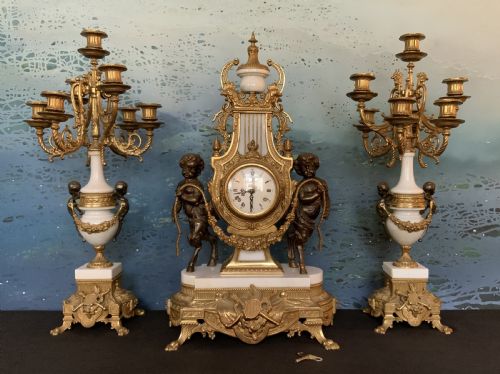
When you seek an antique clock and candelabra, you are looking for matching tripartite sets that anchor a mantelpiece with sculptural presence and timekeeping.
Antique Clock and Candelabra
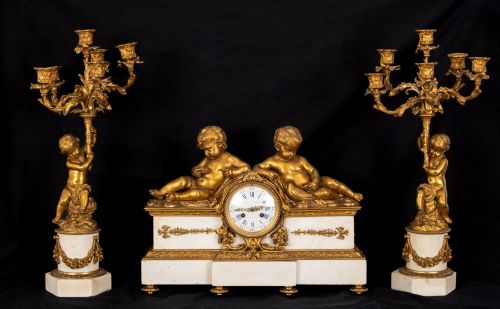
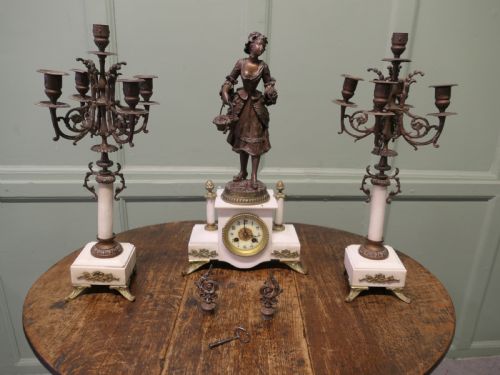
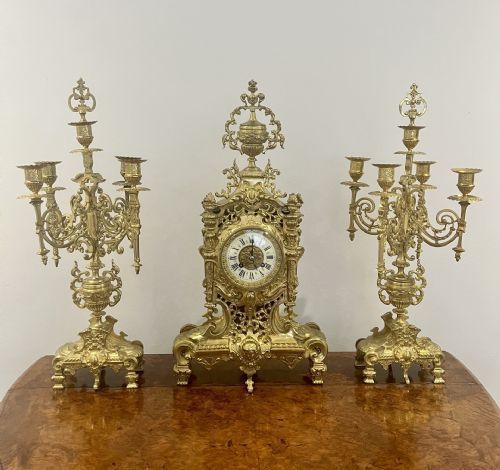
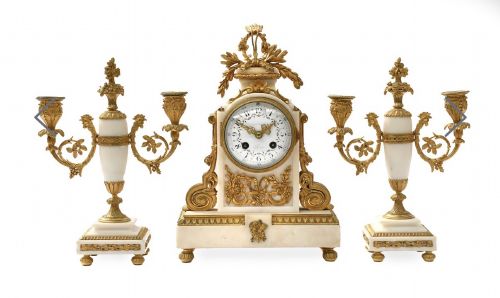
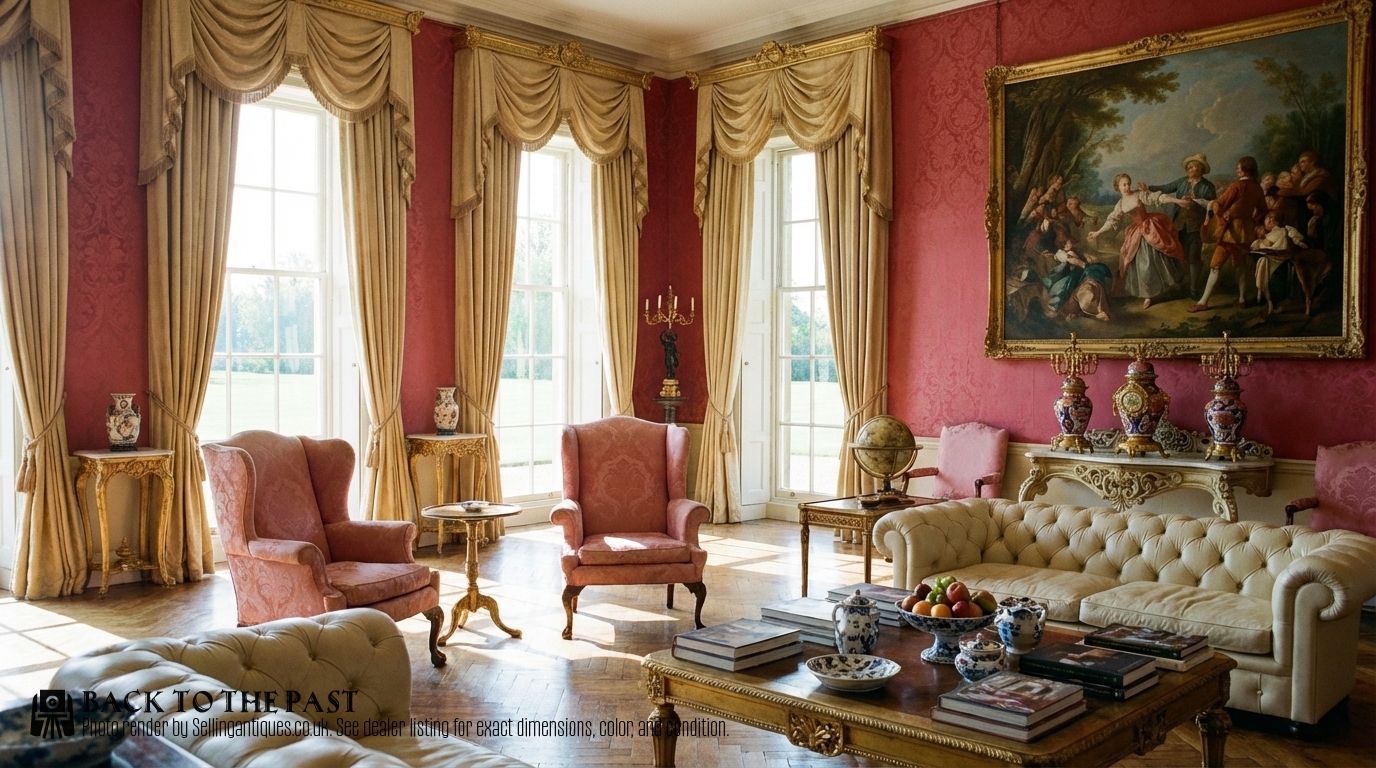
An antique clock and candelabra grouping typically takes the form of a three-piece garniture set, comprising a central mantel clock flanked by matching candelabras or urns. The items seen on this page stem largely from the nineteenth century, reflecting French tastes in periods such as the Second Empire and the Louis XVI revival.
Makers often paired a striking movement with matching light fittings to create a symmetrical centrepiece for formal reception rooms. These arrangements incorporate diverse object types, including mantel clocks, clock garnitures, and comprehensive clock sets accompanied by multi-light candelabras.
Materials and Construction
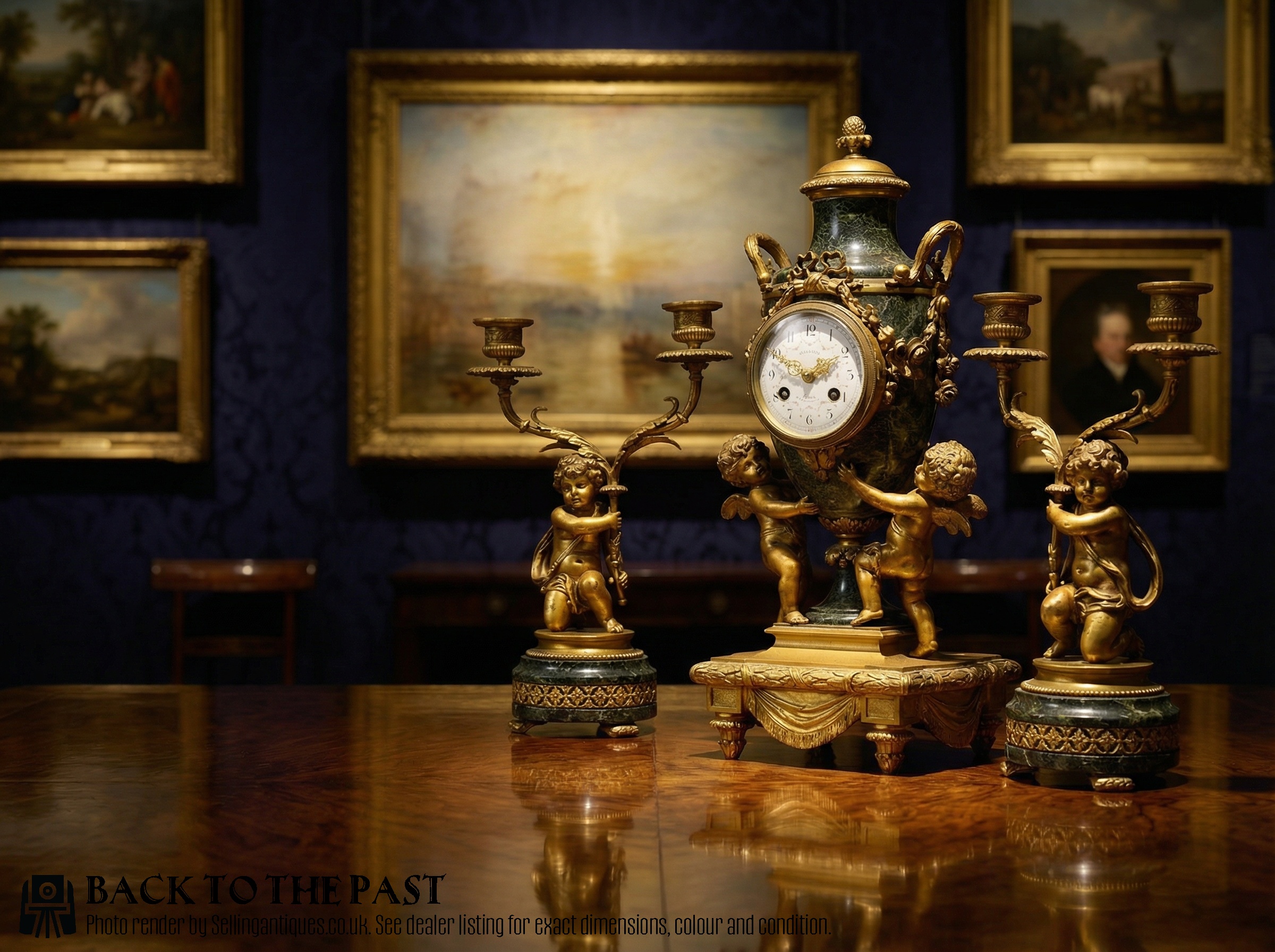
Artisans built these garnitures using heavy metallic foundations like ormolu, gilt bronze, brass, and gilded metal, frequently combining them with white marble, black slate, or onyx bases. Porcelains, including Sevres style panels and Bleu de Roi ceramics, provide colourful contrast alongside enamel dial faces.
Foundry work relied on lost-wax or sand casting for bronze elements, followed by meticulous hand-chasing and fire-gilding to achieve rich metallic finishes. Stonework was cut, turned, and polished to form solid plinths that supported both the clock mechanism and the branching arms of the candelabras.
Antique Clock and Candelabra Retail Price Guide 2026
Typical asking prices for clock and candelabra among the pieces listed under this phrase on Sellingantiques today, from the lower quarter to the upper quarter. They describe what is for sale here now, not the wider market.
Listings feature items spanning the nineteenth century, including specific years like 1860, 1870, 1880, 1890, and 1900, alongside Victorian and Second Empire pieces.
Evaluating the Range
Quality separates ordinary production from exceptional craftsmanship through the crispness of the bronze chasing and the weight of the marble or metal components. Superior examples display deeply sculpted figures like cherubs or cupids with sharp facial details rather than soft, mass-produced contours.
The integration of the set dictates overall desirability, where matching patination across the clock case and the companion candelabras shows unified creation. Signed movements by renowned makers add significant weight to a piece compared to anonymous workshop output.
Henry Dasson·H Luppens Paris·Raingo Fres Paris·Japy Freres·Samuel Marti
The Antique Clock and Candelabra Glossary
- Garniture
- A set of matching ornamental objects designed for display together on a mantelpiece or sideboard, usually consisting of a central clock flanked by two candelabras or urns.
- Ormolu
- Finely ground high-carat gold applied to a bronze base using a mercury amalgamation technique. This historic process yields a durable, warm metallic lustre.
- Candelabra
- A branched candlestick holder designed to support multiple taper candles. In these sets, they repeat the decorative motifs of the central clock.
- Bleu de Roi
- A deep, rich royal blue ceramic glaze developed at the Sevres porcelain manufactory. It frequently serves as a vibrant backdrop for gilt metal mounts.
- Striking clock
- A timekeeper equipped with a mechanical train that sounds the hours or half-hours on a bell or gong. Most nineteenth-century examples utilise eight-day movements.
Antique Clock and Candelabra: Frequently Asked Questions
How do I identify French revival styles?
French revival styles borrow architectural and decorative elements from earlier royal periods like the reign of Louis XVI or the Rococo era. Look for symmetrical neoclassical lines, ribbon twists, and urn motifs in Louis XVI pieces, or asymmetrical scrolling foliage in Rococo designs.
Nineteenth-century makers often reinterpreted these historical vocabularies with heavier casting techniques and distinct nineteenth-century mechanical movements.
What materials were used in these sets?
Maker workshops relied heavily on cast bronze, brass, and ormolu for the primary structural cases and candelabra arms. These metallic elements were frequently mounted upon heavy bases fashioned from white marble, black slate, or onyx.
Additional decorative elements often included hand-painted porcelain panels, enamelled clock dials, and glass domes designed to protect delicate mechanical components from dust.
How do these clocks keep time?
Most nineteenth-century examples utilise mechanical movements driven by wound springs, often featuring eight-day striking mechanisms. These systems require periodic winding with a specific key to maintain accurate time and bell strikes.
Professional servicing helps keep the internal gears, escapements, and striking trains functioning smoothly over decades of domestic use.