




Antique Church Oil Painting
When you search for an antique church oil painting, you find centuries of pigment on canvas, wood and board capturing sacred architecture and rural spires.
Antique Church Oil Painting
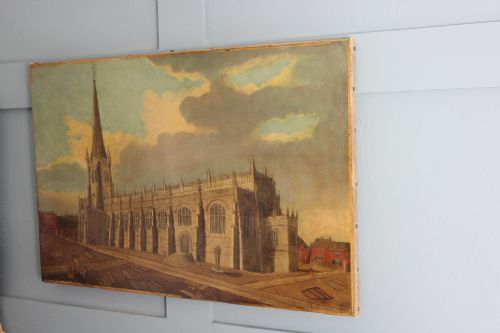
An antique church oil painting captures ecclesiastical architecture, rural parishes and grand cathedrals within landscapes or intimate interior scenes. These works range from naive folk art and regional townscapes to academic realism spanning the eighteenth, nineteenth and early twentieth centuries.
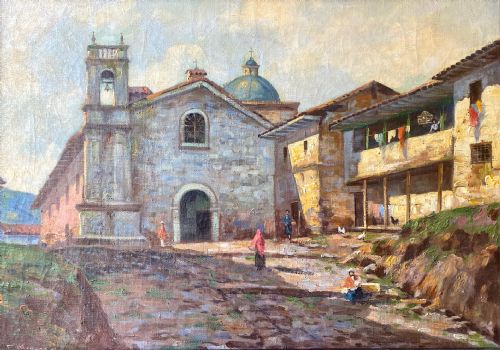
The most common examples on this page are nineteenth-century British and European landscapes featuring village churches, alongside architectural studies and occasional religious icons painted on wood panels. Artists frequently placed rural parishes as focal points in river scenes, holiday views and pastoral settings.
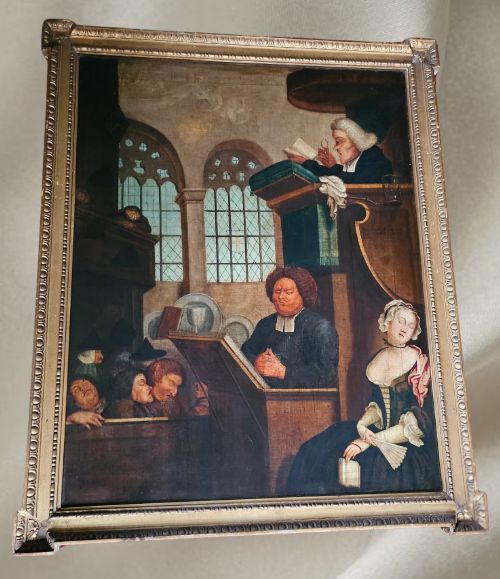
Beyond exterior landscapes, subjects extend to church interiors depicting rood screens, pews and figures gathered in prayer or daily worship. These paintings record historical buildings as they appeared decades or centuries ago, preserving lost details of local topography and ecclesiastical life.
How They Were Made
Artists painted these works primarily using oil paint applied to stretched canvas, wooden panels or thick board. Grounds were prepared to receive the oil medium, allowing painters to build rich layers of pigment for skies, stone masonry and foliage.
Many surviving pieces retain their original frames constructed from gilded wood or substantial period timber mouldings. Some works incorporate gold leaf details, particularly in devotional panels and Russian icons from the early twentieth century.
Listings feature works spanning the eighteenth century through to the mid-twentieth century, executed in oil on canvas, wood and board.
What Varies in Quality
Quality rests upon the artist's command of perspective, light and brushwork when rendering stone, glass and surrounding landscapes. Skilled painters capture the atmospheric weight of evening light or moonlight upon medieval walls with precision and depth.
The sophistication of the composition and the preservation of the original paint surface define the standing of each piece. Works by named academic painters or documented regional artists demonstrate finer draughtsmanship than anonymous folk art examples.
Renato Moretti·William Greaves·Walter Meegan·Kershaw Schofield·John Cawthorn·John Jaques·Henri Therme·Frederick Underhill·Stephanie Cooper·Daniel Sherrin·William Marlow·AF de Breanski·Eugène Galien Laloue·Frank Wood·Everhardus Koster·Michael Dahl·Carl Budtz Møller·Clement Morris·Ary Scheffer·George Hervey Garraway·James Herbert Snell·Frederick Golden Short·RP Bonington·William Bell·Harry Kluge
The Antique Church Oil Painting Glossary
- Canvas
- A heavy woven fabric stretched across a wooden frame to serve as a support for oil painting.
- Oil Paint
- Pigment mixed with a drying oil, typically linseed, allowing for smooth blending and rich colour depth.
- Icon
- A panel painting depicting a sacred subject, commonly executed on wood with traditional gilding techniques.
- Rood Screen
- An ornate wooden or stone partition separating the nave from the chancel in a church, often featured in interior studies.
- Academic Realism
- A style of painting produced under the influence of European academies, noted for accurate draughtsmanship and lifelike detail.
Antique Church Oil Painting: Frequently Asked Questions
How do I date an old church painting?
Dating relies upon stylistic clues, artist signatures, framing materials and canvas preparation methods. Costume details of any figures present also help narrow the decade.
Examine the reverse of the canvas or panel for old labels, stamps or inscriptions left by previous owners or framers.
Are all these paintings British?
The selection includes British regional scenes alongside continental European landscapes and Russian religious icons. English school artists dominate the landscape views, depicting familiar rivers and village parishes.
Check individual listings for specific regional attributions and town names mentioned in the titles.
What is the difference between canvas and board?
Canvas offers a flexible woven surface stretched over a wooden frame, typical of larger landscape works. Board provides a rigid wooden or composition support, frequently found in smaller studies and naive works.
Both materials were widely used across the nineteenth and twentieth centuries by professional and amateur artists alike.
How should I care for an oil painting?
Keep paintings away from direct sunlight, high humidity and sudden temperature fluctuations that can crack the oil paint. Dust the surface gently with a soft, dry brush without applying pressure.
Avoid using water or cleaning solutions on the paint surface and leave conservation work to professional restorers.