


Antique Chinese Pedestal
An antique chinese pedestal brings solid timber and marble into a room to hold a plant, a vase or a lamp.

What these pieces are
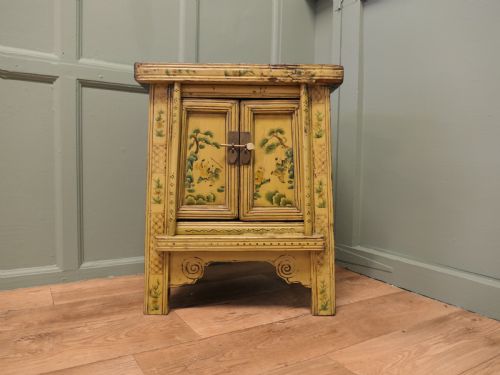
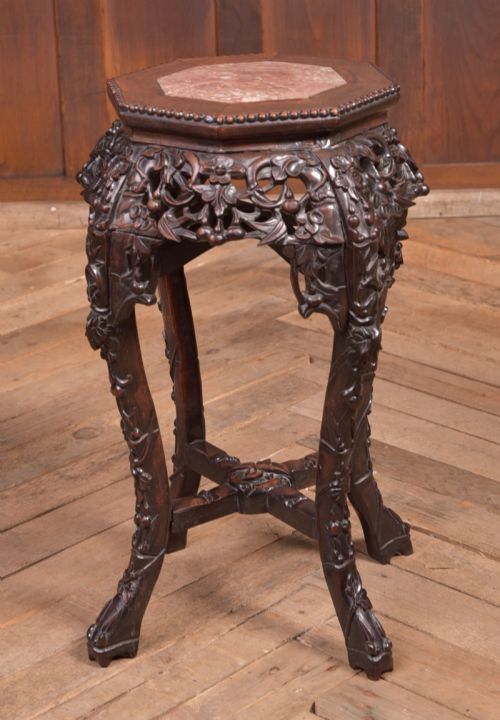
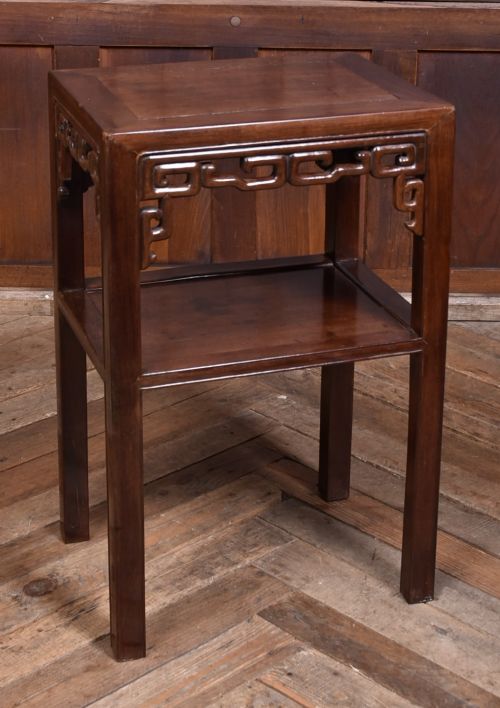
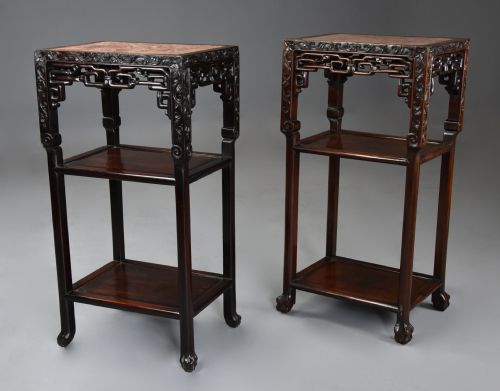
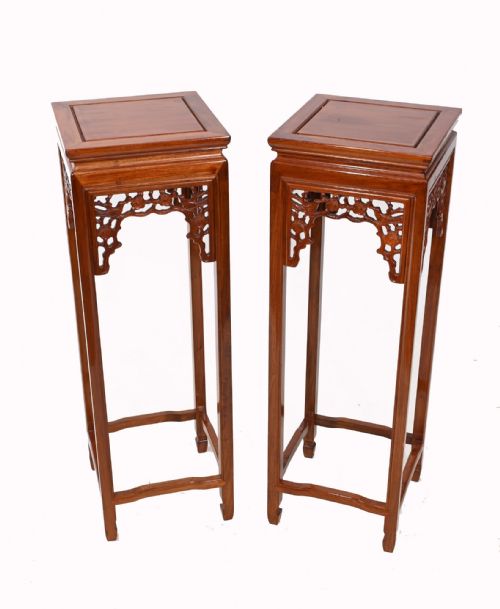
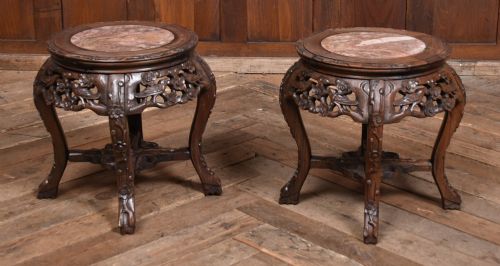
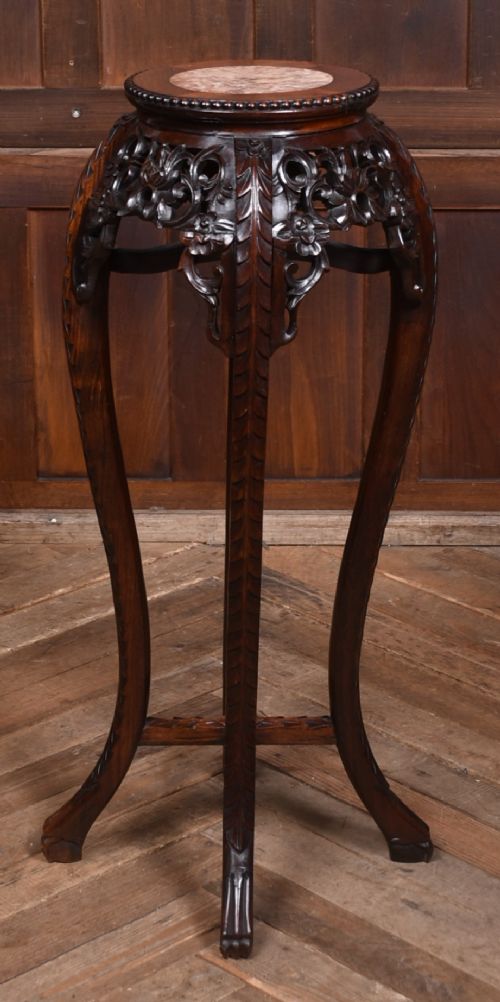
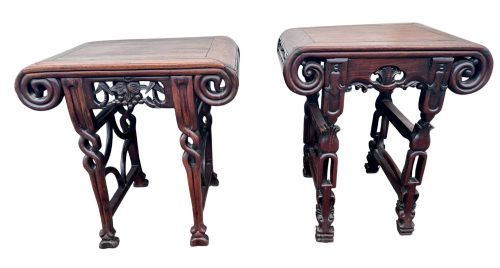
When you search for an antique chinese pedestal, you look at items built to elevate objects in a room. These include plant stands, vase stands, jardiniere stands, side tables, occasional tables and pedestal stands.
The versions you meet most often on this page come from the nineteenth century, with Victorian pieces and items dated around eighteen ninety, nineteen ten, nineteen twenty and nineteen thirty also appearing. Styles span the Qing dynasty, Chinese export and Qing dynasty style.
Makers and workshops constructed these stands to serve functional display roles in domestic interiors. They combine sturdy frames with inset stone surfaces designed to handle heavy pots and vessels.
How they were made
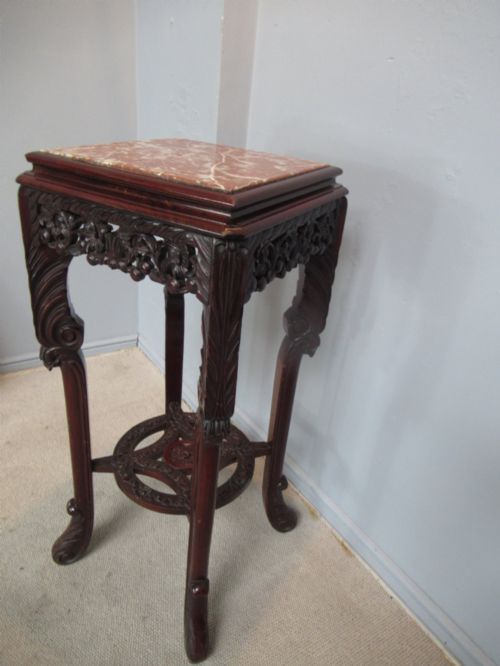
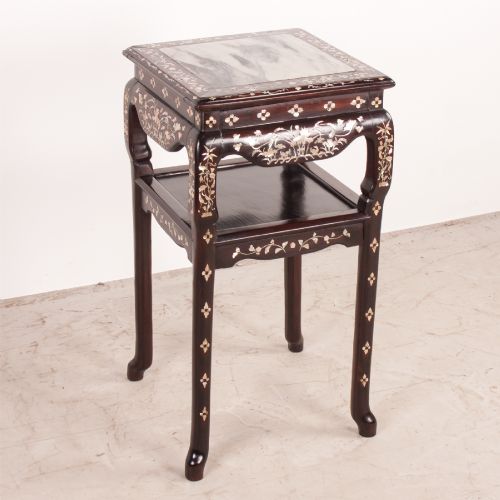
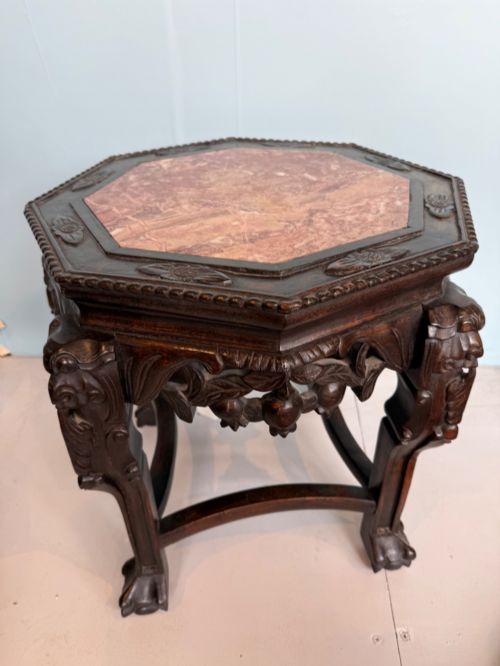
Craftsmen built these pieces using dense timbers including hardwood, huali hardwood, rosewood, hongmu and padauk. They combined these dark woods with inset marble tops to create firm platforms for display.
Makers applied intricate carving techniques to the wooden frames and legs, following traditional Qing dynasty motifs. These methods produced sturdy structures capable of supporting substantial weight while displaying refined surface detail.
Retail Price Guide 2026
Typical UK retail prices for chinese pedestal, calculated from the Sellingantiques database of over a million retail prices indexed since 2003. This retail price guide relies exclusively on Sellingantiques data; no external sources or auction records are used, so the figures do not describe the wider market.
Listings feature items from the nineteenth century, eighteen ninety, nineteen ten, nineteen twenty, and Victorian periods.
What varies in quality
The distinction between standard examples and the top of the range rests on the selection of timber and the depth of the carving. Dense woods like huali and padauk with crisp, deep relief work represent the higher tier of production.
Quality also appears in the fit of the marble top within the wooden frame and the overall stability of the structure. Finer pieces demonstrate precise joinery and balanced proportions that hold up through decades of daily use.
The Antique Chinese Pedestal Glossary
- Jardiniere stand
- A low table or pedestal specifically designed to hold a large ceramic plant pot or flower bowl. These pieces feature water resistant stone or marble inserts to protect the wood.
- Huali
- A prized aromatic hardwood utilised in traditional Chinese furniture making. It displays distinct grain patterns and high natural density.
- Marble top
- A polished stone insert fitted flush into the wooden surface of a table or stand. This provides a cool, durable platform for heavy vases and plants.
Frequently Asked Questions
What is an antique chinese pedestal used for?
These pieces function primarily as elevated surfaces for displaying plants, ceramic vessels and decorative objects in a room.
Their solid construction allows them to support heavy items securely while adding sculptural form to an interior space.
How do I identify a Qing dynasty stand?
Identification relies on observing traditional carved motifs, dense timber construction and the presence of inset marble panels.
Many examples from this era date from the nineteenth century and reflect classic export or domestic design standards.
Are these stands suitable for daily use?
The robust hardwood frames and stone inserts make them durable enough to hold heavy pots and lamps every day.
Their compact footprints allow them to fit easily into corners, hallways or beside seating areas.
What woods were used in these pieces?
Makers utilised heavy tropical timbers such as huali hardwood, rosewood, hongmu and padauk for their strength and rich colour.
These materials provide the dense foundation required for intricate hand carving.