







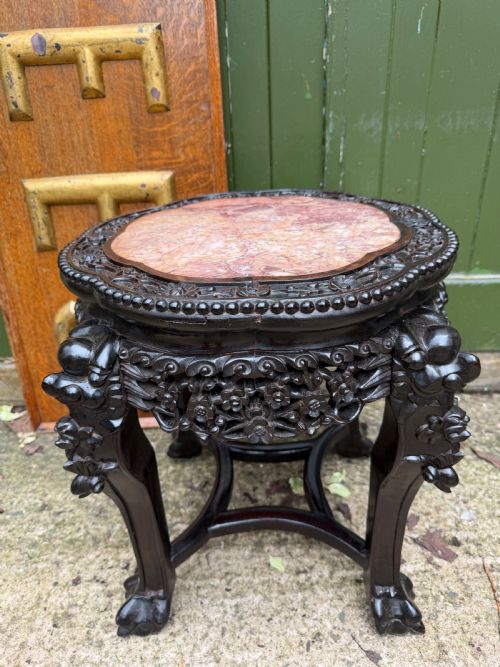


Pink Marble Top Stand
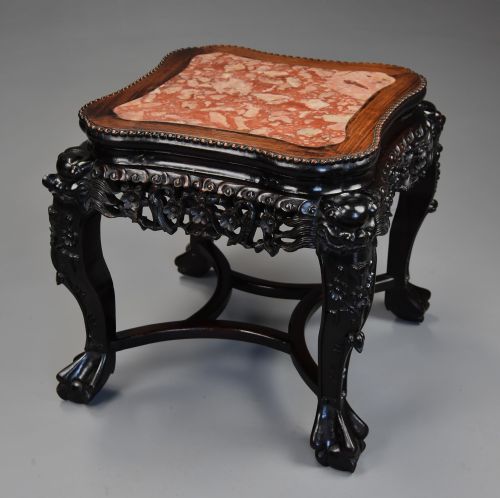
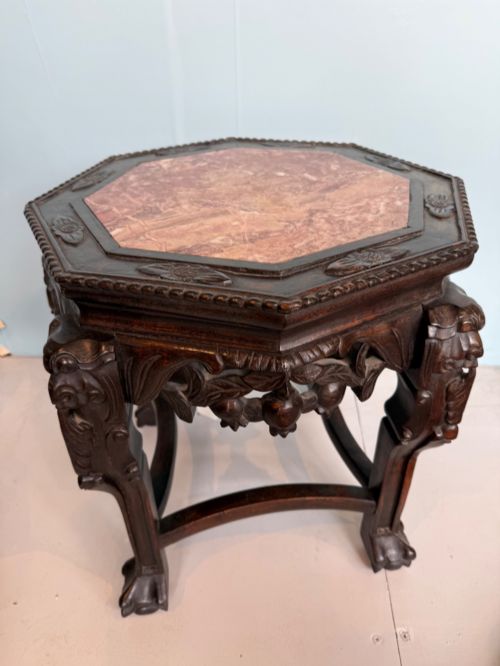
A pink marble top stand brings rich timber and cool stone together to hold a vase, lamp or urn.
Pink Marble Top Stand
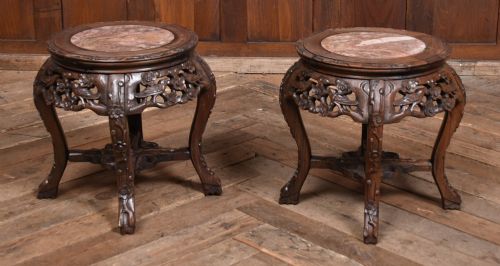
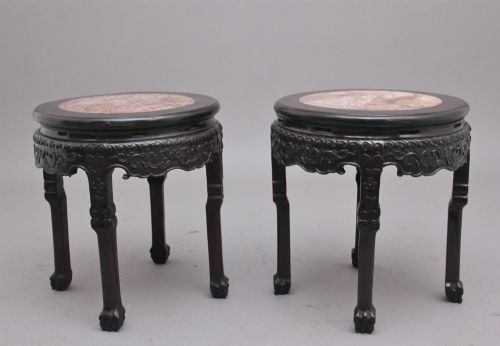
Forms vary from low plant stands and urn tables to side tables and coffee tables, often featuring shaped or inset stone tops. The marble itself typically exhibits a variegated rouge or pink tone, set flush into a solid timber frame. These items served practical purposes in historic interiors, holding heavy ceramic planters, lamps and display pieces without risking water damage to lower furniture.
What varies in quality
Quality rests principally in the depth and crispness of the wood carving, the weight of the timber, and the visual character of the stone. Superior examples display deeply undercut foliage and robust structural framing that remains rigid under heavy vessels. Lesser pieces show shallower, mechanical carving and lighter secondary timbers.
The marble insert itself dictates much of the visual appeal. Highly prized pieces feature striking, unbroken rouge veining that complements the dark grain of the surrounding rosewood or ebonised hardwood. Mismatched repairs or dull, uniform stone lower the overall standard of the object.
Pink Marble Top Stand Retail Price Guide 2026
Typical asking prices for pink marble top stand among the pieces listed under this phrase on Sellingantiques today, from the lower quarter to the upper quarter. They describe what is for sale here now, not the wider market.
Listings for this phrase span the nineteenth and twentieth centuries, uniting Victorian European styles with Qing Dynasty Chinese export woodwork.
The Pink Marble Top Stand Glossary
- Hongmu
- A dense, dark traditional Chinese hardwood used for fine furniture and decorative stands. It translates directly to red wood and ages to a deep lustre.
- Jardiniere stand
- A tall or low table specifically built to support a heavy ceramic plant pot or flower bowl. These stands protect interior floors and furniture from moisture.
- Gueridon
- A small French occasional table, often round and supported by a single central pillar or slender legs. They frequently feature marble tops and decorative metal mounts.
- Rouge marble
- A richly coloured decorative stone featuring varied pink, red and white veining. It provides a durable, contrasting surface inset into timber frames.
Pink Marble Top Stand: Frequently Asked Questions
What were pink marble top stands used for?
These pieces primarily served as pedestals for heavy porcelain jardiniere bowls, bronze urns and heavy lamps. Raising plants and water vessels protected fine carpets and wooden floorboards from dampness and leaks.
Over time, collectors adapted them into general side tables, coffee tables and bedside furniture. Their sturdy stone surfaces made them ideal for placing hot drinks, candles and decorative objects.
How do I identify Chinese export stands?
Chinese export stands of the nineteenth century typically utilise dense hardwoods like rosewood or hongmu. They often feature characteristic carved apron details, scrolled feet and deep recessed framing for the marble insert.
Many pieces reflect traditional Qing Dynasty design motifs, focusing on floral carvings and geometric borders. The combination of heavy timber construction and inset rouge marble is a hallmark of this regional output.
Are the marble inserts original?
Original marble inserts fit flush within the recessed wooden channel of the tabletop and show consistent wear patterns matching the timber base. The edges of the stone are usually bevelled or hand-finished to meet the wood precisely.
Replacement marble often sits slightly unevenly or displays modern machine cutting marks on the underside. Examining the fit and the ageing of the stone relative to the frame helps determine originality.
How do I care for my stand?
Clean the hardwood frame with a soft, dry cloth and avoid applying modern silicone polishes that build up over time. Natural wax can be used sparingly to nourish dense timbers like rosewood.
Protect the marble insert by using coasters and wiping up moisture promptly to prevent staining. Avoid harsh chemical cleaners, as acidic solutions can etch the polished surface of the stone.