

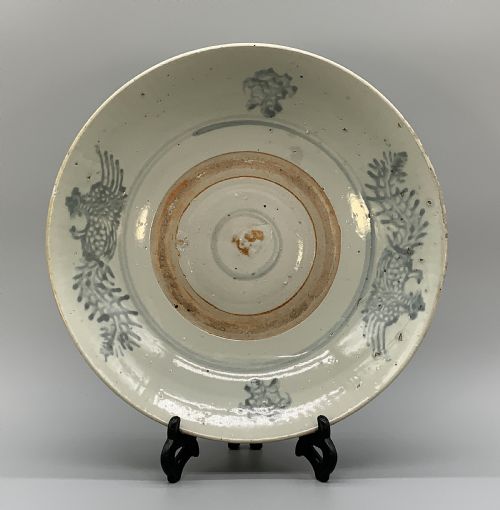


Antique Chinese Charger Dish
When you handle an antique chinese charger dish, you touch centuries of kiln craft designed to command the centre of a formal table.
Antique Chinese Charger Dish
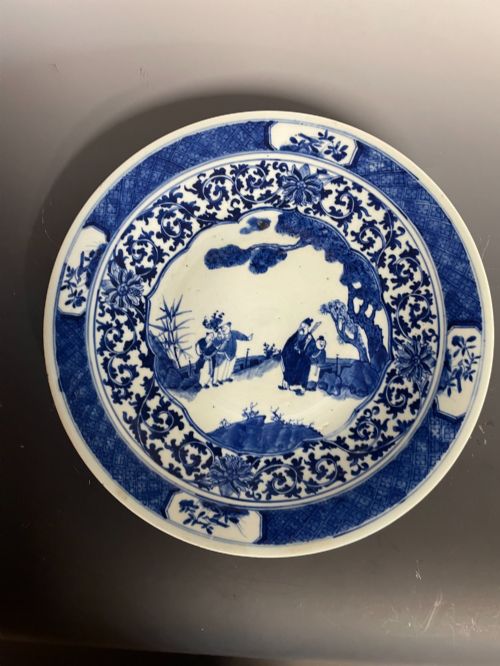
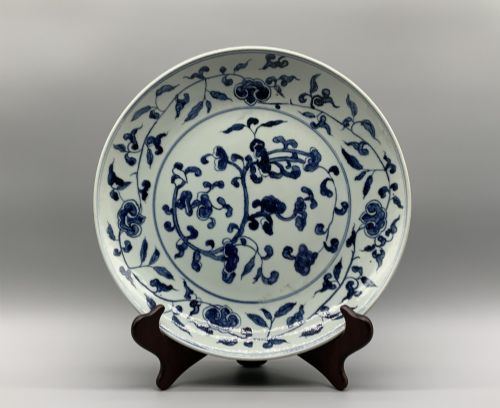
An antique chinese charger dish represents large-scale ceramic production intended for display or ceremonial service rather than everyday dining. These sizeable plates and platters appear across various historical eras, stretching from the Ming Dynasty through the Qing Dynasty and into later export periods.
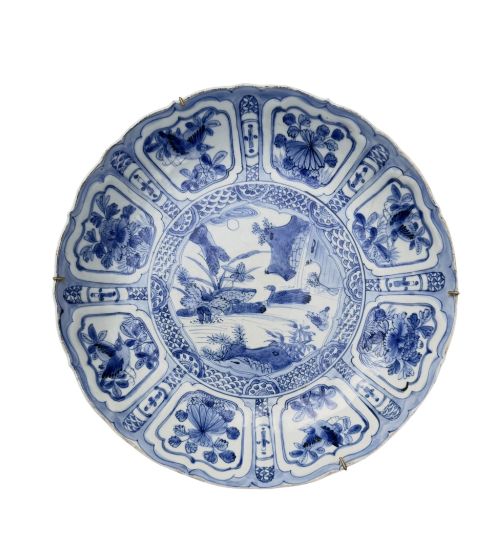
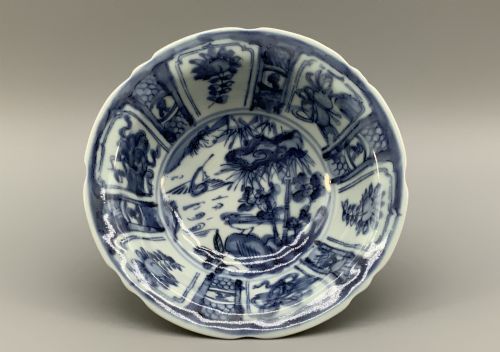
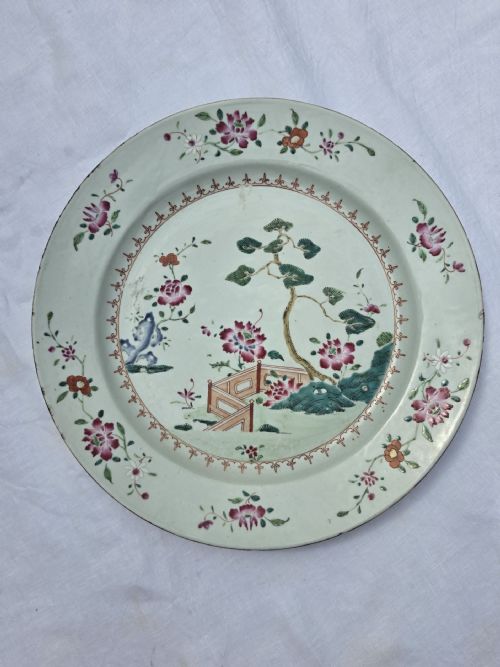
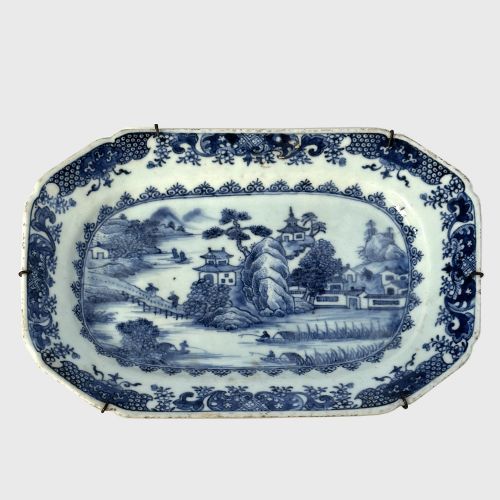
Buyers encountering this category frequently meet blue and white porcelain chargers from the Kangxi period alongside vibrant famille rose or Chinese Imari plates made for Western markets. The forms range from deeply potted Kraak bowls and Swatow ware to foliated celadon dishes bearing moulded floral scrolls.
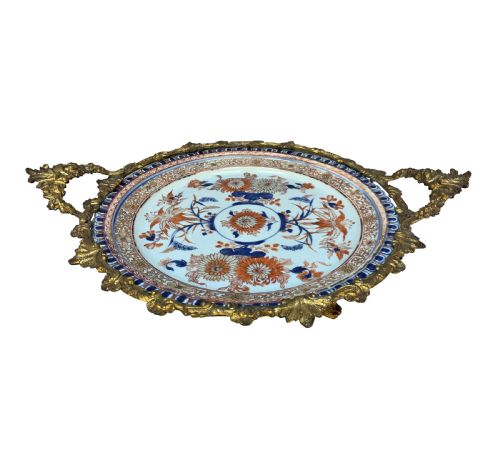
Examples also cross into European adaptations, including Georgian armorial pieces and ormolu-mounted items that reveal how these grand ceramics travelled into Western interiors. The physical presence of a true charger commands attention through sheer scale and painted pictorial depth.
Materials and Kiln Techniques
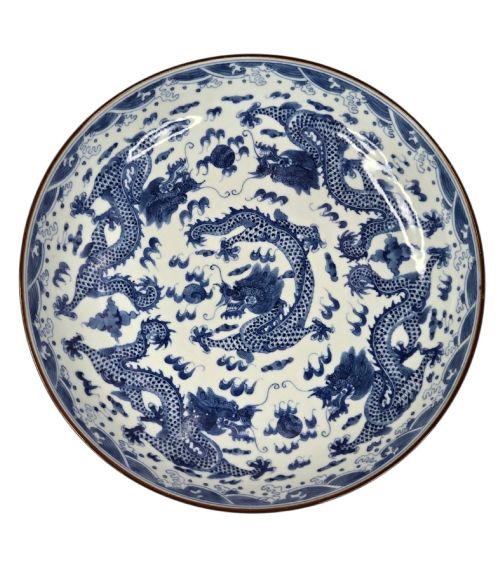
Hard-paste porcelain forms the structural core for the majority of these pieces, fired at high temperatures alongside cobalt underglaze pigments that produce the deep blues seen in Ming and Kangxi productions. Enamel colours and gold leaf were frequently added in subsequent low-temperature firing stages for famille rose and iron-red designs.
Certain heavy wares rely on bronze or brass mounts added later in European workshops to elevate the status of the dish. Celadon pieces achieve their distinctive green hue through iron-bearing glazes fused directly into the ceramic body during reduction firings.
Certain chargers carry European armorial bearings painted by Chinese artists who faithfully copied pencil sketches sent across oceans on sailing ships.
Distinctions in Execution
The division between standard domestic wares and top-tier imperial productions rests entirely upon the precision of the brushwork and the purity of the porcelain body. Imperial dishes display meticulously painted five-clawed dragons and controlled six-character marks executed by court painters.
Export pieces made for Western trade show varying degrees of decorative haste, whereas pieces created for domestic Chinese use or specific dynastic periods maintain stricter standards of symmetry and glaze consistency. The complexity of moulded relief work and the depth of cobalt blue further separate ordinary vessels from masterworks.
C.J. Mason
The Antique Chinese Charger Dish Glossary
- Charger
- A large decorative plate or serving dish exceeding standard dining dimensions, usually measuring over thirty centimetres across. These pieces hung on walls or anchored table displays.
- Famille Rose
- A palette of opaque enamel colours introduced during the Qing dynasty, dominated by pink and rose shades derived from colloidal gold. This technique allowed for nuanced botanical and figurative painting.
- Kraak Porcelain
- Chinese export porcelain produced mainly during the Wanli period, characterised by panelled borders and central motifs of birds, flowers, or aquatic landscapes. These dishes arrived in Europe via captured Portuguese merchant ships.
- Celadon
- A term for ceramics featuring a pale green jade-like glaze applied over a thick white body. The subtle coloration results from iron oxide interacting within a reduction kiln.
- Chinese Imari
- A hybrid style where Chinese kilns copied Japanese Imari patterns using underglaze blue, iron-red, and gilt highlights. This aesthetic proved immensely popular across eighteenth-century European households.
Antique Chinese Charger Dish: Frequently Asked Questions
What is an antique chinese charger dish used for?
These large vessels served primarily as centrepieces for formal dining tables or decorative display chargers mounted on walls and cabinets in wealthy households. Their substantial surface area allowed master painters to execute elaborate court scenes and floral displays.
Over subsequent centuries, European collectors prized them for display in cabinets or mounted them in gilt bronze to integrate them into period drawing rooms.
How do you date an antique chinese charger dish?
Dating relies upon examining the base materials, foot rims, style of underglaze blue, and any imperial reign marks present on the reverse. Earlier Ming and Wanli pieces show gritty base sands and spontaneous brushwork, while Kangxi and Qianlong examples exhibit refined porcelain bodies and crisp cobalt tones.
Changes in export tastes and trade patterns across the eighteenth and nineteenth centuries also help place undated pieces into specific historical windows.
How should I care for porcelain charger dishes?
Display these heavy ceramic plates using secure, padded wall hangers or stable plate stands designed to support their significant weight. Dust them gently with a dry, soft cloth and avoid chemical cleaners that might damage delicate enamel and gilt highlights.
Keep them away from direct sunlight and areas subject to sudden temperature shifts to protect the glaze and ancient ceramic body.
What is the difference between export and domestic wares?
Domestic wares were made for the Chinese imperial court or local markets, often featuring specific auspicious symbols, reign marks, and precise brushwork tailored to Eastern aesthetic standards. Export wares were tailored to European tastes, frequently incorporating armorial crests or adapted floral patterns.
While both utilise high-fired porcelain, export pieces often display stylistic hybrids influenced by Western trade demands.