
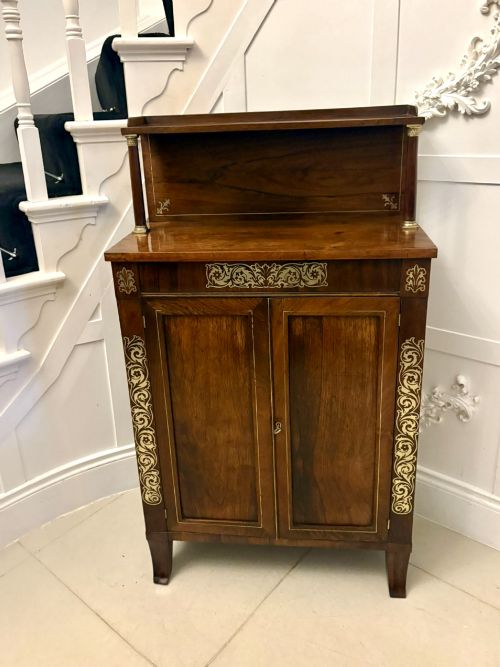
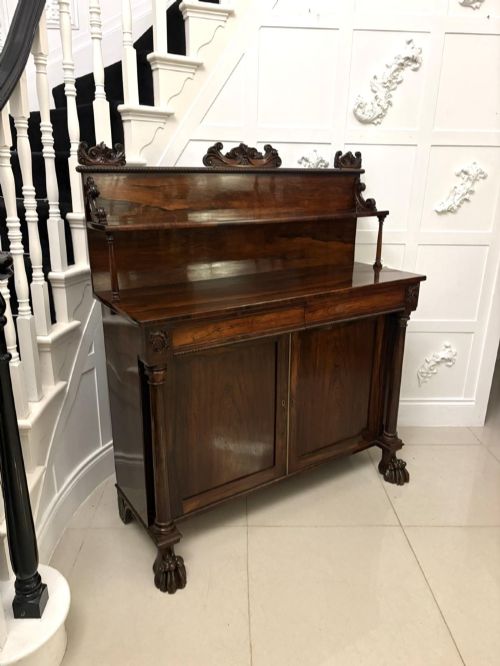
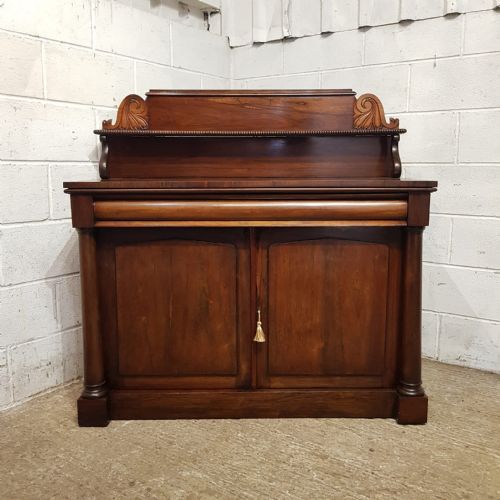
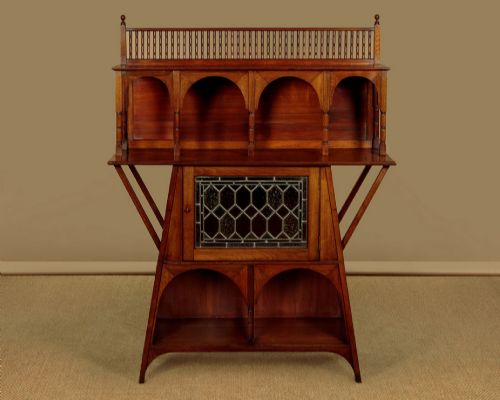

Antique Chiffonier with Shelf
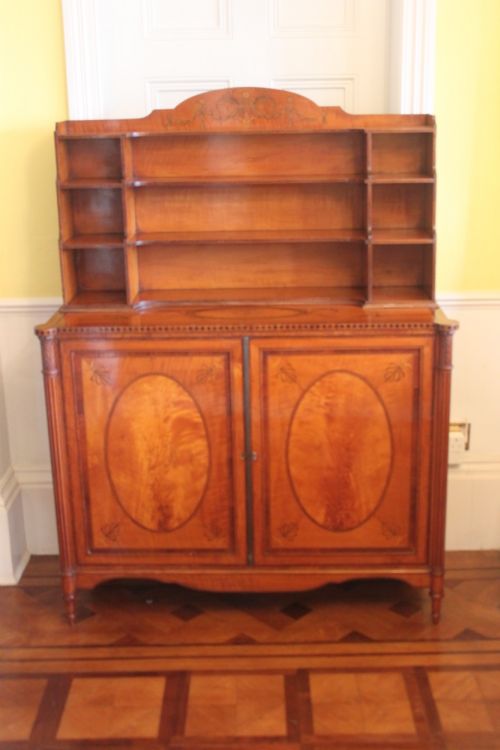
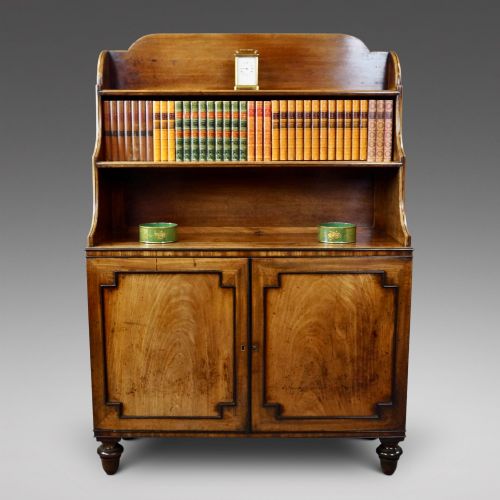
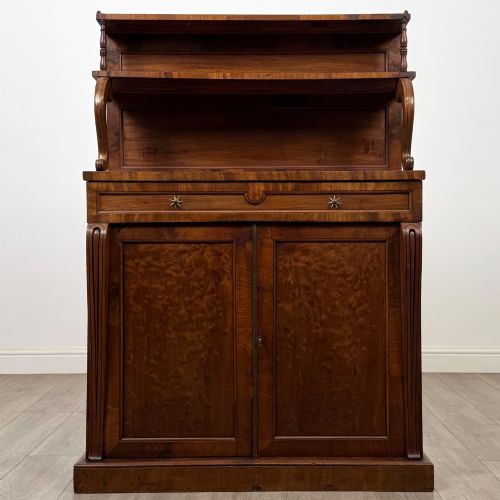
An antique chiffonier with shelf is a compact nineteenth-century cabinet built for display and storage, offering the refined proportions collectors seek.
What an antique chiffonier with shelf is
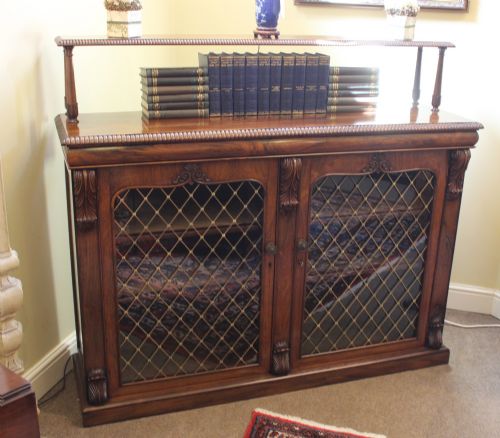
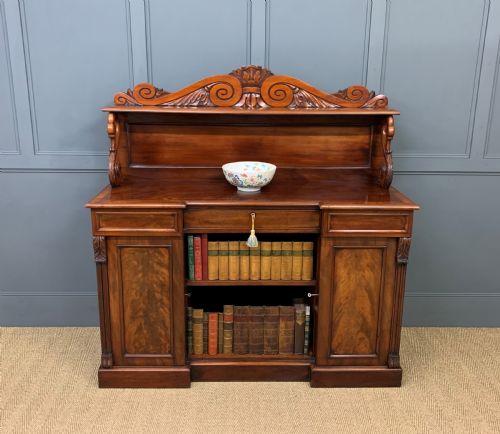
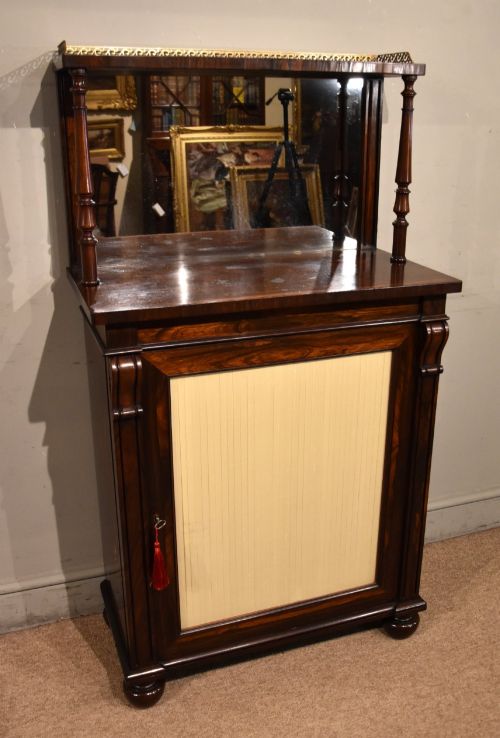
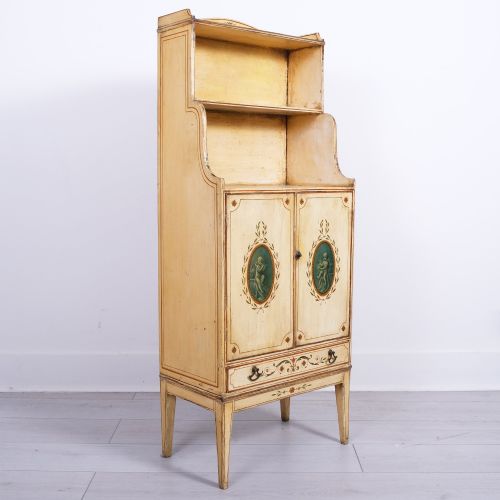
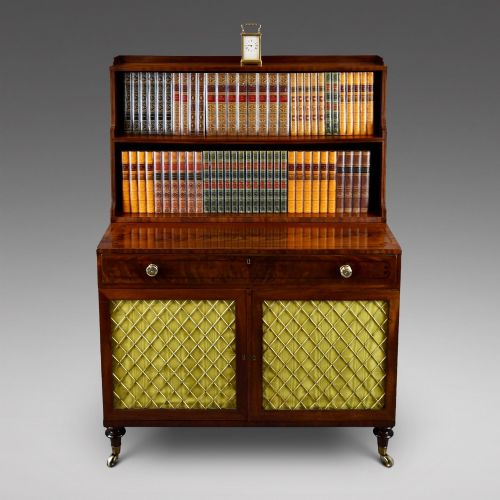
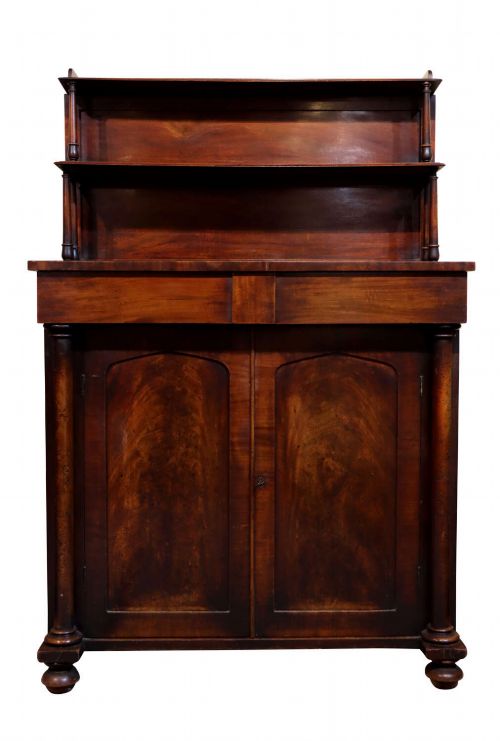
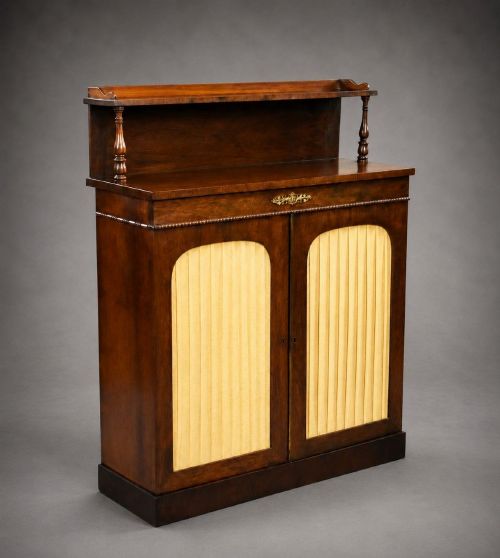
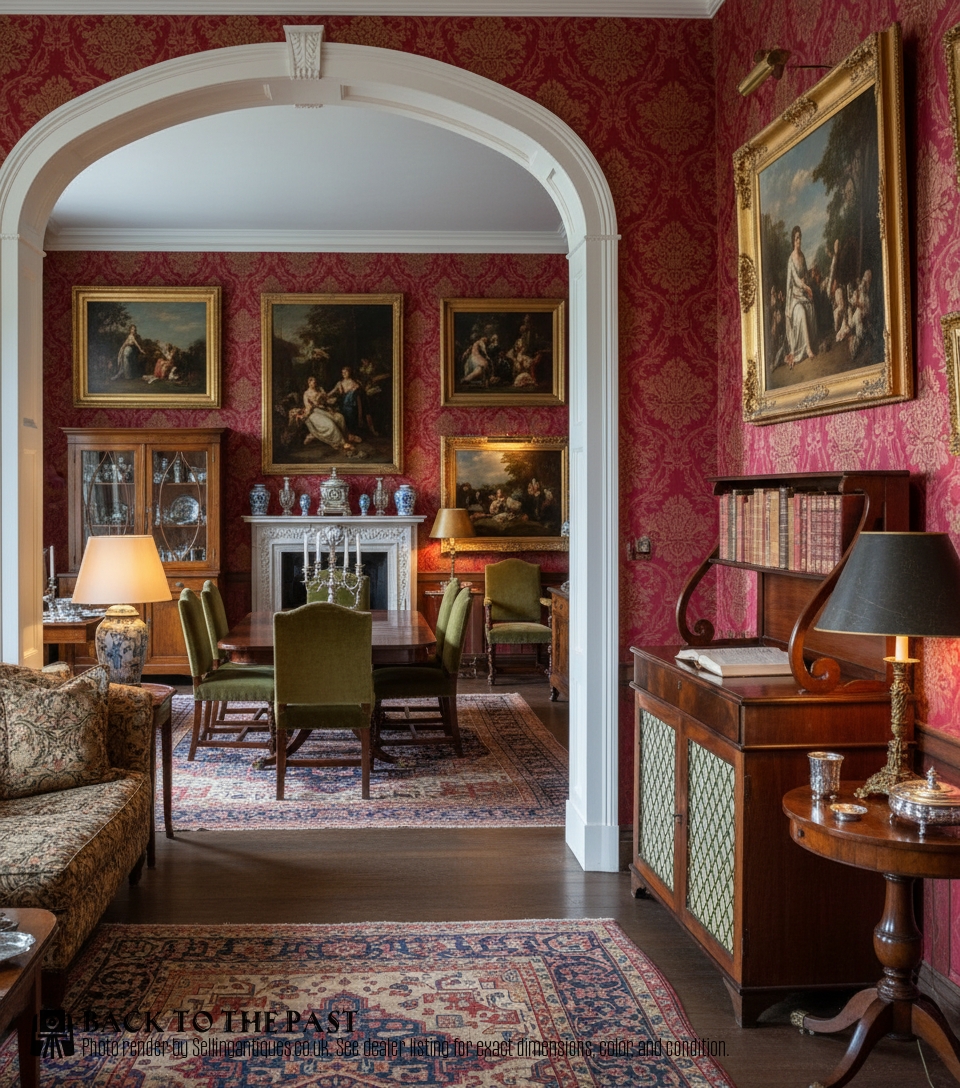
An antique chiffonier with shelf combines a low enclosed base cabinet with an upper tier supported by pillars or brackets, providing a surface for books and decorative objects. These pieces appear most frequently from the nineteenth century, spanning the Georgian, Regency, William IV, and Victorian periods.
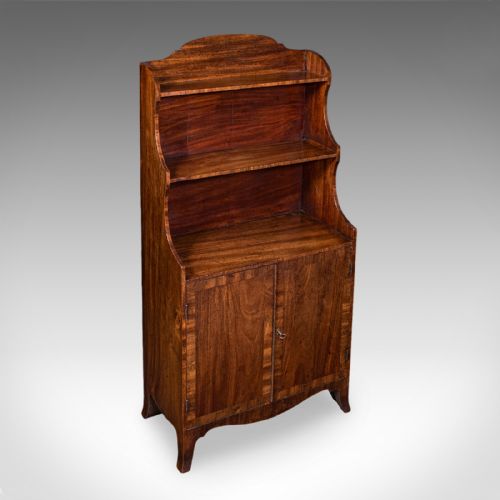
Forms on this page range from standard side cabinets to smaller sideboards, often constructed with distinctive architectural profiles. You will find these items classified under sideboards and cabinets as well as dedicated side cabinet categories.
The Regency and Victorian examples demonstrate how these cabinets evolved from formal dining room service pieces into versatile sitting room furniture. Makers utilised rich timbers to create functional surfaces that suited smaller domestic spaces.
How they were made
Cabinet makers constructed these pieces using solid hardwoods and decorative veneers over secondary foundations, applying flame mahogany and rosewood to achieve striking grain patterns. Satinwood and solid satinwood also appear in specific regional styles such as Anglo-Indian work.
Metal components such as brass fittings and fabric panels are integrated into the design, particularly behind glazed or grille doors where textiles soften the interior view. Joinery techniques from the nineteenth century ensure stability across the base and the upper shelf structures.
Retail Price Guide 2026
Typical UK retail prices for chiffonier with shelf, calculated from the Sellingantiques database of over a million retail prices indexed since 2003. This retail price guide relies exclusively on Sellingantiques data; no external sources or auction records are used, so the figures do not describe the wider market.
Current listings feature pieces spanning the Georgian, Regency, William IV, and Victorian periods, constructed from mahogany, rosewood, and satinwood.
What varies in quality
The grade of timber selection determines the visual impact, with matched flame mahogany veneer representing a higher standard of craftsmanship than plain surfaces. The crispness of carved details on the pillars supporting the upper shelf distinguishes finer workshop output from standard production.
Proportion and scale dictate desirability, with neat Georgian and Regency examples commanding attention for their balanced dimensions. Finer pieces demonstrate seamless integration between the lower cabinet and the upper display tier.
The Antique Chiffonier with Shelf Glossary
- Chiffonier
- A low nineteenth-century cabinet with doors enclosing shelves, topped by a raised shelf structure. This form developed to serve as a sideboard alternative in smaller rooms.
- Flame mahogany
- A veneer cut from the fork of the mahogany tree to create a distinctive flickering flame pattern. Cabinet makers reserved this timber for primary display surfaces.
- Satinwood
- A durable hardwood yielding a golden-yellow timber with a lustrous sheen. It appears in specialist furniture including Anglo-Indian interpretations.
- Regency
- A British design period spanning the early nineteenth century defined by classical restraint and archaeological influence. Furniture from this era often incorporates bold architectural lines.
- Side cabinet
- A versatile low storage item designed to stand against a wall in a dining room or parlour. These pieces frequently share functional traits with chiffoniers.
Frequently Asked Questions
What is an antique chiffonier with shelf used for?
These cabinets served historically for storing tableware, linens, or books while displaying decorative items on the upper shelf.
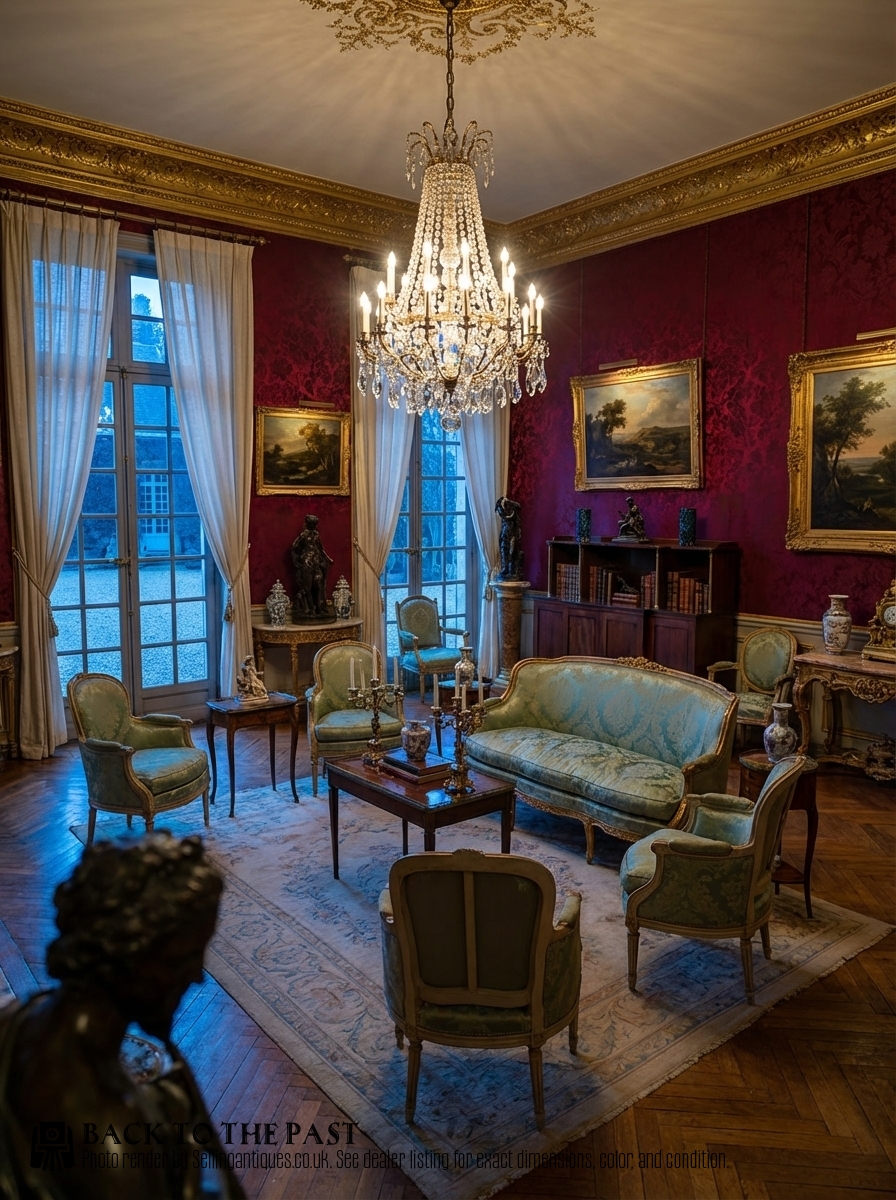
Today they function effectively in modern interiors as hallway units, media consoles, or living room display surfaces.
How do I identify a Regency chiffonier?
Regency pieces typically display classical architectural proportions, restrained brass details, and dark timber grains reflecting early nineteenth-century tastes.
They often feature simpler pillar supports for the upper shelf compared to heavily carved later Victorian iterations.
What is the difference between a chiffonier and a sideboard?
A chiffonier is generally smaller and lower than a traditional sideboard, incorporating an enclosed cabinet base beneath an upper shelf tier.
Sideboards were designed primarily for formal dining rooms to assist with food service, whereas chiffoniers suit general parlour or sitting room use.
Where should I place a chiffonier in my home?
A chiffonier works well against any prominent wall in a living room, dining room, or entrance hall where its surface can be utilised for display.
Ensure the room humidity remains stable to protect nineteenth-century wood veneers and polished timber finishes.