



Antique Chemist Bottles
Antique chemist bottles are practical vessels of the past, offering tactile history and striking colour for modern interiors.
Antique Chemist Bottles
Antique chemist bottles encompass utilitarian pharmacy glassware and storage vessels from the Georgian, Victorian, and Edwardian eras. Buyers searching for antique chemist bottles encounter everything from diminutive tincture containers to large display carboys and complete travelling cases.
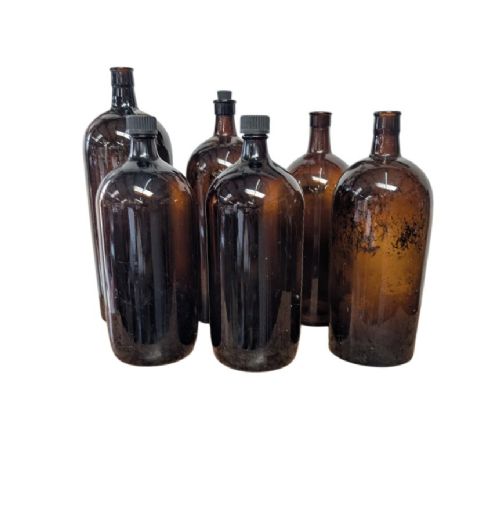
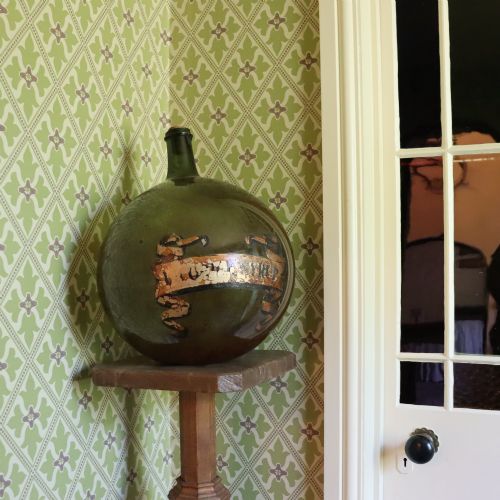
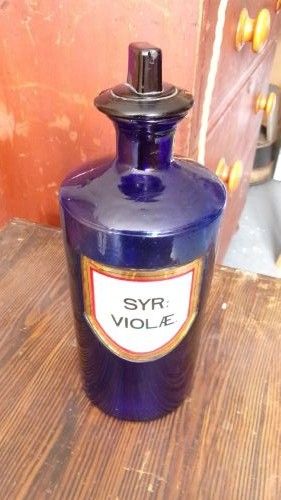
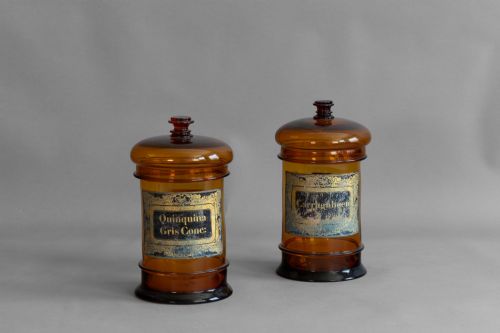
The selection ranges across clear, amber, Bristol blue, and green glass, alongside ceramic faience jars and wooden boxes containing original bottles. Many examples retain paper labels or gold leaf inscriptions denoting historical medicinal contents.
Most pieces date from the nineteenth and early twentieth centuries, reflecting the commercial and domestic medicine practices of the period. Forms include cylindrical drug bottles, stoppers, and jars designed for apothecary shelves.
How they were made
Glass production relied on hand blowing techniques, resulting in varied wall thicknesses, slight surface bubbles, and individual character in each vessel. Makers utilised clear, amber, blue, and green glass formulations to protect contents from light degradation.
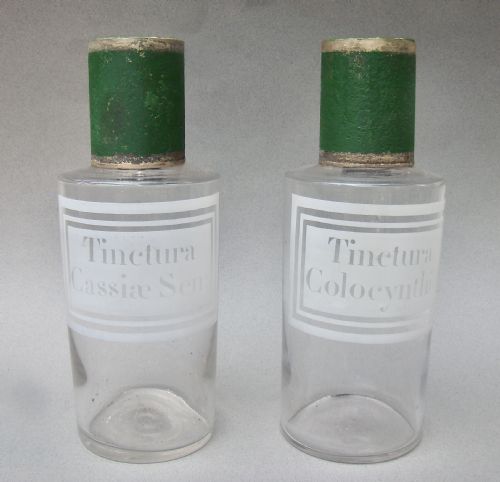
Surface decoration involved etching, painting, paper labeling, and gold leaf application to identify specific pharmaceutical preparations. Associated wooden items like mahogany and oak travelling cases involved traditional cabinetry joining and fitted interior compartments.
The listings span from Georgian examples up to 1930s amber glass, utilising materials including brass, oak, mahogany, and painted paper.
What varies in quality
Quality rests on the integrity of the glass, the preservation of original stoppers, and the legibility of any remaining paper labels or gold leaf script. Intact sets and larger display pieces demonstrate superior survival rates from their original dispensary environments.
Rarer colours such as Bristol blue or deep amber, combined with French etching or specialised forms like carboys and campaign boxes, elevate the significance of individual items.
The Antique Chemist Bottles Glossary
- Carboy
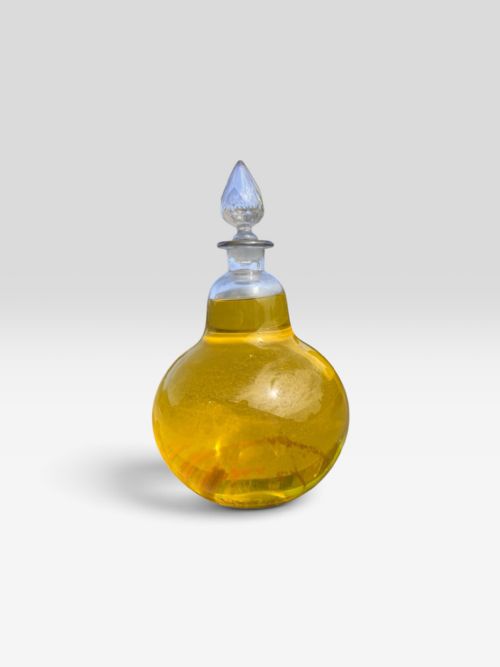
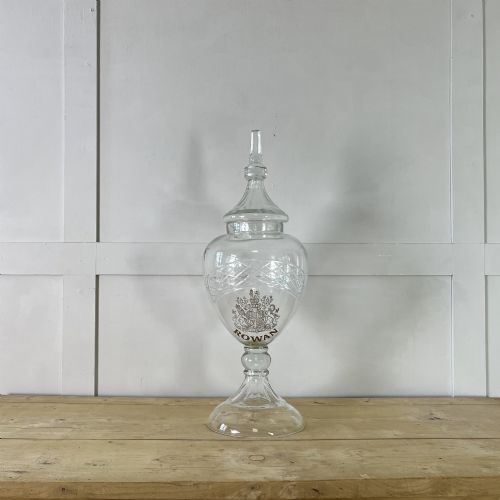
- A large globular glass bottle used in laboratories and dispensaries for holding liquids. These substantial vessels often served as window displays for chemists.
- Tincture
- A medicine made by dissolving a drug in alcohol. Tincture bottles held these specific alcoholic medicinal preparations securely on dispensary shelves.
- Faience
- Tin-glazed earthenware produced in Europe. Faience apothecary jars display opaque white ceramic surfaces suited for hand-painted drug inscriptions.
- Bristol Blue
- A deep cobalt blue glass produced historically in the English city of Bristol. This distinctive glass protected light-sensitive medicines while offering decorative appeal.
Antique Chemist Bottles: Frequently Asked Questions
How were chemist bottles used?
Apothecaries and chemists used these glass vessels and ceramic jars to store dry drugs, liquid tinctures, and chemical compounds safely behind the counter.
Larger carboys sat in shop windows filled with coloured water to advertise the chemist's trade to passersby on the street.
What are travelling apothecary boxes?
Travelling apothecary boxes are compact wooden chests fitted with internal compartments designed to hold glass bottles and pharmacy tools securely.
Physicians and officers utilised these portable kits to transport necessary medicines and remedies while away from permanent dispensaries.
How do I date glass bottles?
Dating relies on manufacturing characteristics such as pontil marks on the base, hand-blown glass irregularities, and the style of the stopper.
Contextual clues like original paper labels, gold leaf lettering, and the specific material of associated boxes help narrow the period.
How do I clean old bottles?
Preserving historical integrity means avoiding harsh abrasives that might damage delicate interior residues, original paper labels, or painted surfaces.
Gentle rinsing with warm water usually suffices to remove surface dust without compromising the fragile antique glass.