

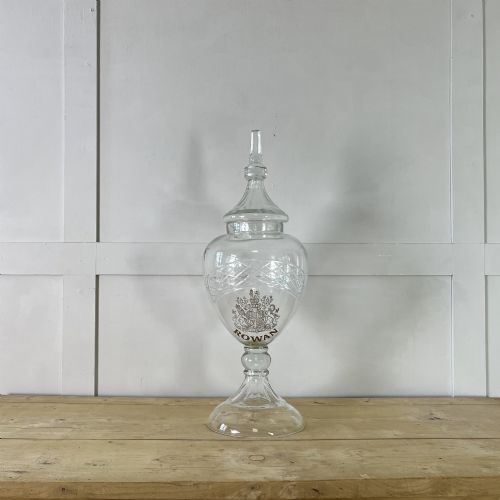


Vintage Chemist Jar
These vintage chemist jar examples bring the striking presence of nineteenth and early twentieth century dispensaries straight into a modern interior.
Vintage Chemist Jar
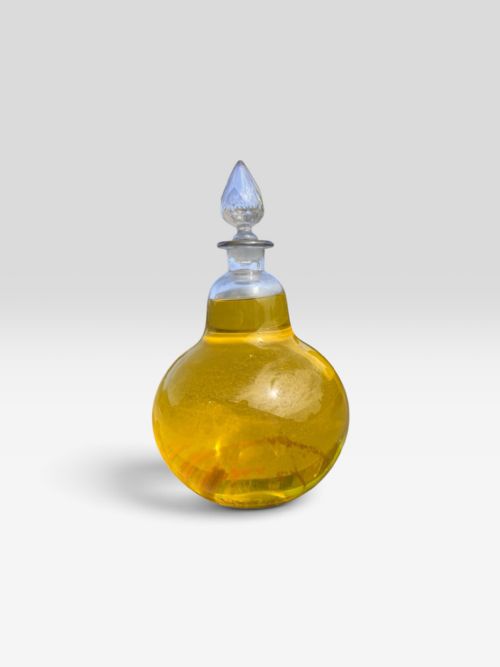
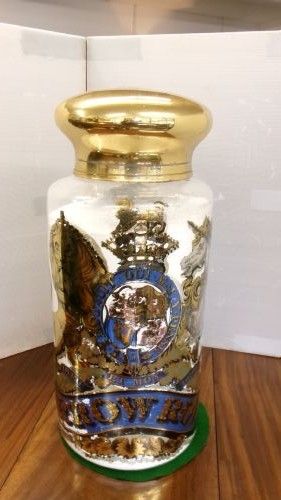
A vintage chemist jar serves as a tangible link to historical apothecary shops, dispensary counters, and clinical interiors from past centuries. When searching for this phrase, a buyer encounters a diverse range of glass and ceramic vessels, from large display carboys to smaller tincture bottles.
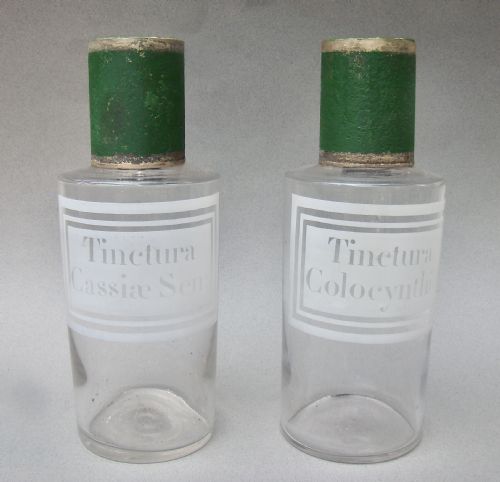
The selections span distinct periods including the Georgian era, Victorian times, Edwardian years, and the 1930s. The most frequent discoveries are glass apothecary bottles and jars, often featuring characteristic stoppers and remnants of paper or gold leaf labels.
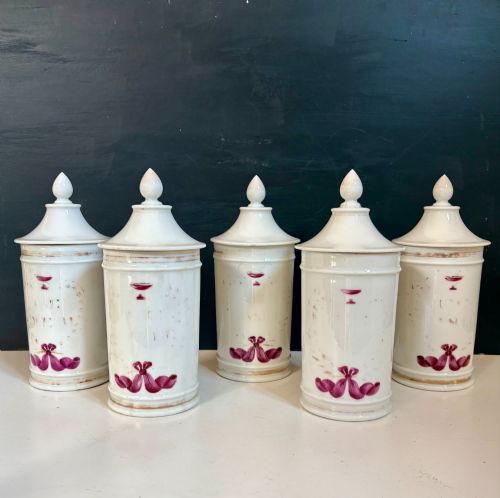
Origin and form vary widely across the inventory, encompassing English, French, and Scandinavian examples. Pieces range from simple utilitarian drug bottles to decorative display items and adapted table lamps.
Materials and construction methods
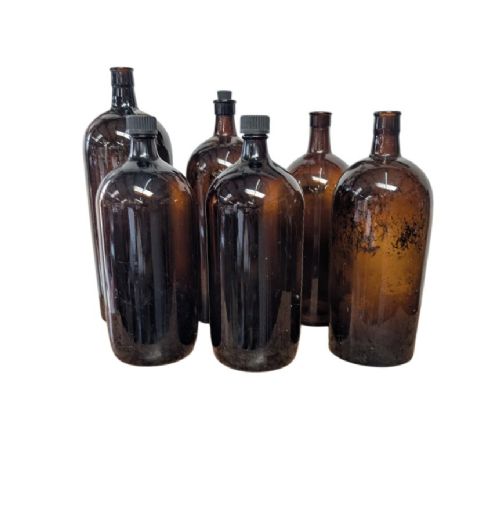
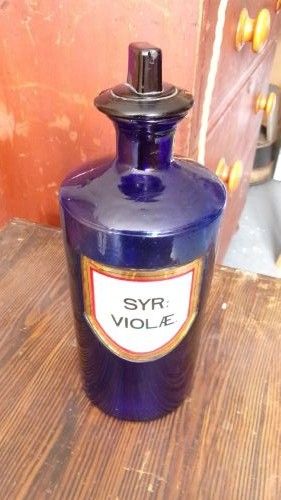
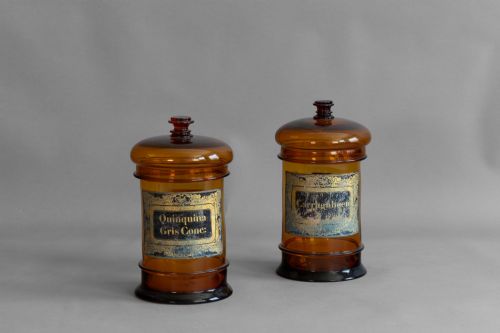
Glass production dominates these items, utilising techniques such as hand blowing to create organic forms with subtle surface irregularities. Clear, amber, Bristol blue, and green glass provide the primary visual mediums for these vessels.
Secondary materials include ceramic and faience bodies, applied gold leaf, and painted finishes. Lids and stoppers feature ground glass fittings, while labels incorporate paper and direct paint.
Metal components appear where vessels intersect with later functional conversions, notably brass used in table lamp fittings.
Arrowroot and specific medicinal extracts live on through surviving paper labels, preserving centuries-old prescription ingredients.
Distinctions in quality and execution
Quality rests upon the integrity of the material, the crispness of hand-blown bubbles and pontil marks, and the survival of original stoppers and labels. Vessels displaying rich coloured glass or intricate etched details stand apart from standard utilitarian containers.
Samuel Alcock and Co
The Vintage Chemist Jar Glossary
- Carboy
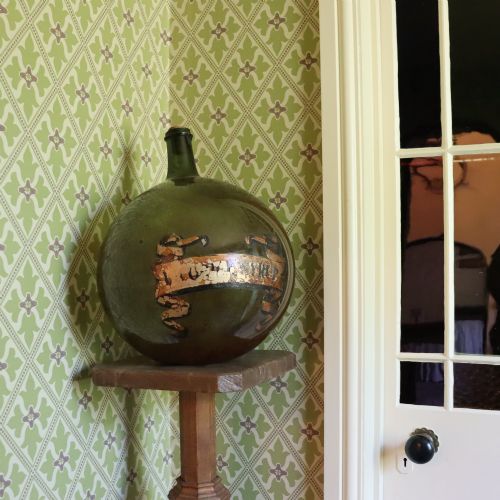
- A large globular glass or plastic bottle used for holding liquids. In an apothecary context, these stood in windows to signal a chemist's shop.
- Tincture bottle
- A smaller glass vessel designed to hold medicinal extracts dissolved in alcohol. These typically feature tight stoppers to preserve the contents.
- Faience
- Tin-glazed earthenware produced in Europe. These ceramic apothecary jars often feature hand-painted drug inscriptions.
- Bristol blue
- A deep cobalt blue glass produced in England during the eighteenth and nineteenth centuries. It protected light-sensitive medicines while offering a striking appearance.
Vintage Chemist Jar: Frequently Asked Questions
How were chemist jars originally used?
Apothecaries utilised these jars and bottles to store dry drugs, herbal remedies, ointments, and liquid tinctures safely behind the counter.
Large carboys and display jars sat prominently in shop windows, filled with coloured water to advertise the chemist's trade to the street.
How do I style them at home?
Grouping bottles by colour or height on open shelving creates a strong decorative focal point in a kitchen, study, or living space.
Larger carboys work well placed on the floor near a light source to showcase the depth of the hand-blown glass.
How can I tell the period of a jar?
Mould seams, pontil marks, and the weight of the glass offer primary clues to the manufacturing era, with earlier pieces showing greater organic irregularity.
Styles of lettering on labels and the specific shades of amber, blue, or green glass also help narrow down the decade of production.
Are original stoppers important?
Original matched stoppers significantly enhance the integrity and visual balance of an apothecary bottle or jar.
Many surviving pieces lost their stoppers through heavy daily use in the dispensary, making complete examples particularly sought after.