


Antique Medicine Bottle
An antique medicine bottle connects you directly to the domestic and professional medicine of the Georgian, Regency, and Victorian eras.
Antique Medicine Bottle
When you search for an antique medicine bottle, you encounter glass vessels, fitted chests, and vanity flasks from the Georgian and Victorian periods. The selection here ranges from single chemists' jars and cobalt glass bottles to complete travelling cases fitted with internal compartments and original stoppers.
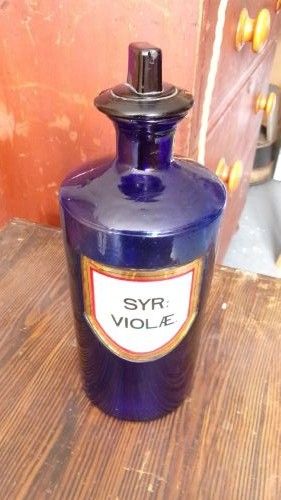
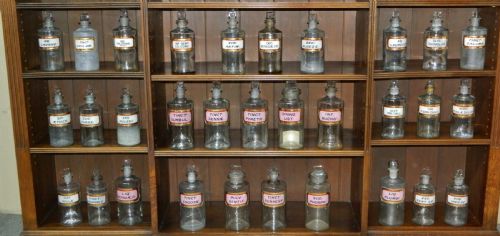
You are most likely to meet 19th-century glass chemist bottles, often in deep blues or greens, alongside mahogany apothecary boxes containing multiple smaller vials. These pieces reflect both utilitarian shop use and wealthy personal travel during the 1800s and 1900s.
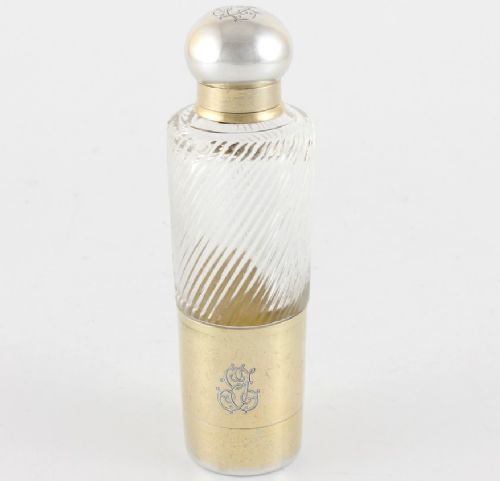
The objects span simple pharmacist storage jars and elaborate French silver-capped flasks to Chinese rock crystal snuff bottles. Each form reveals how medicines and personal remedies were contained, transported, and displayed.
What varies in quality
Quality rests upon the completeness of the set and the originality of its contents, such as surviving paper labels, matching stoppers, and untouched fitted trays within mahogany chests. Complete apothecary boxes retaining all their original glass bottles outrank assembled sets.
Artisanal execution separates standard utilitarian phials from superior cabinet pieces, seen in master-carved rock crystal work or sterling silver caps bearing hallmarks. The precision of the internal woodwork and the clarity and depth of the coloured glass further distinguish finer examples.
Materials recorded across the archive include mahogany, brass, paper, velvet, gold leaf, and cut glass alongside standard vessel glass.
Tonnel Paris
The Antique Medicine Bottle Glossary
- Pontil mark
- The rough scar left on the base of a glass bottle where the pontil rod was snapped off after blowing. Older blown glass exhibits this physical trace of hand manufacture.
- Lollipop stopper
- A flat, circular glass top shaped like a sweet, fitted tightly into the neck of a chemist bottle to seal the contents. These stoppers are often ground by hand to match individual bottle necks.
- Apothecary chest
- A portable wooden box fitted with internal slots, drawers, and bottles designed for storing medicinal ingredients. Georgian and Victorian examples frequently feature brass campaign handles and secret compartments.
- Bristol blue
- A deep cobalt glass colour produced historically in the Bristol region during the Georgian and Victorian eras. Apothecary bottles utilised this pigment to protect light-sensitive medicines.
- Linglong
- An openwork or hollowed carving technique seen on Chinese crystal and jade pieces. This decorative method requires intricate hand-carving skill.
Antique Medicine Bottle: Frequently Asked Questions
What is an antique medicine bottle used for?
These vessels and chests held liquid medicines, pills, powders, and personal remedies used by apothecaries, doctors, and private households. They served both as working pharmacy containers and as portable medical kits for travel.
Today, collectors use them to display period glassware, study historical pharmacy practices, or furnish interiors with authentic nineteenth-century cabinetry and coloured glass.
How do I date an antique medicine bottle?
Dating relies on manufacturing characteristics such as pontil marks, glass colour, lip finish, and associated packaging like mahogany boxes or paper labels. Hand-blown glass with irregular thickness generally points to the Georgian and early Victorian eras.
Turn-of-the-century pieces often show more uniform mould seams and machine-finished tops. Fitted wooden boxes can sometimes be dated through brass hardware styles and maker inscriptions.
Are the stoppers original?
Many surviving bottles retain their matched glass stoppers, which were individually ground to fit a specific bottle neck during manufacture. Checking for matching wear patterns and matching glass hue helps determine originality.
Replacement stoppers are common in older apothecary glassware due to breakage over decades of handling and cleaning.
Why are some apothecary bottles blue?
Deep cobalt blue glass, often called Bristol blue, shielded light-sensitive chemical compounds and medicines from harmful ultraviolet rays. Apothecaries and chemists relied on coloured glass before modern amber formulations became standard.
Beyond practical utility, the vibrant colour made these bottles visually striking on pharmacy shelves and inside doctor's travelling chests.