


Victorian Pharmacy Bottles
These victorian pharmacy bottles are functional relics of nineteenth-century medicine, offering collectors tactile history and striking interior decoration through deep glass colours and worn paper labels.
Victorian Pharmacy Bottles
Victorian pharmacy bottles encompass a range of utilitarian glass vessels, from small chemist bottles and drug jars to large display carboys designed for shop windows. These pieces originate primarily from the nineteenth century and the early twentieth century, spanning Georgian roots up to Edwardian examples.
The items found here include individual chemist bottles, matched sets, and complete apothecary boxes and chests fitted with mahogany and brass. Buyers will frequently encounter French nineteenth-century jars alongside British glasswares, reflecting the broad European trade in medical storage.
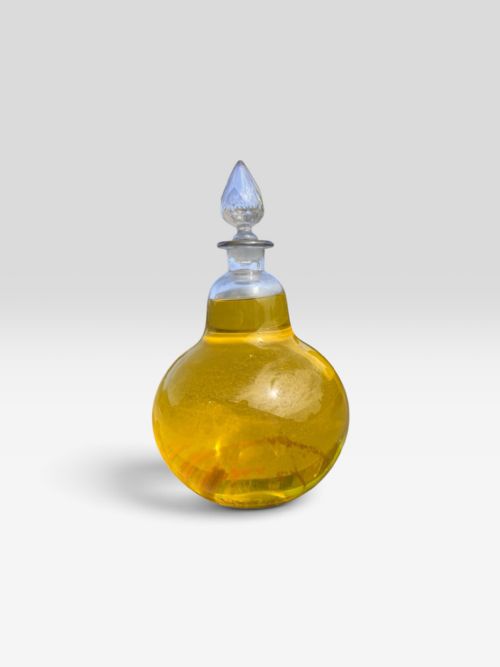
Vessels take many forms, including tall carboys with lollipop stoppers, gelatine jars with covers, and compartmented campaign boxes containing original internal bottles. Collectors select these items for their authentic display potential and their direct connection to historical apothecary practices.
Materials and Manufacture
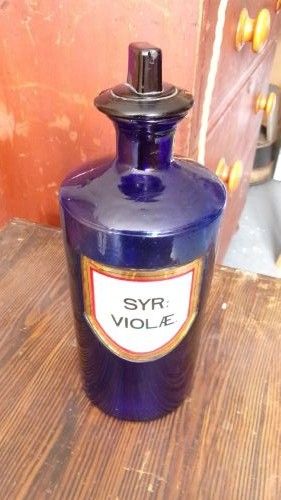
Production relies heavily on hand-blown glass, creating characteristic bubbles, surface ripples, and slight asymmetries unique to nineteenth-century manufacture. Master glassmakers utilised rich cobalt blue, Bristol blue, and green glass formulations to protect light-sensitive medicines from degradation.
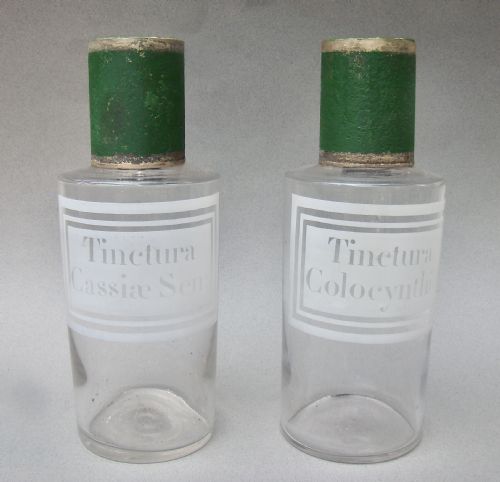
Details include etched glass surfaces, applied gold leaf, and painted or printed paper labels identifying specific drugs and compounds. Fitted storage incorporates mahogany timber, brass hardware, and specialised internal partitions to secure fragile glass vessels during transit.
Some miniature campaign boxes still contain traces of mysterious old powders hidden behind tiny cabinet doors.
Judging Quality and Completeness
Quality rests on the presence of original stoppers, matching sets of multiple bottles, and intact historical labels rather than isolated glass bodies. Superior examples retain their original gold leaf lettering or crisp paper drug descriptions, whilst heavily worn or unmarked pieces offer simpler utility.
The inclusion of fitted wooden housings, such as inlaid mahogany apothecary chests containing complete sets of internal bottles, elevates the importance of the piece. Craftsmanship shows in the depth of colour within Bristol blue or green glass and the clarity of French etching.
The Victorian Pharmacy Bottles Glossary
- Carboy
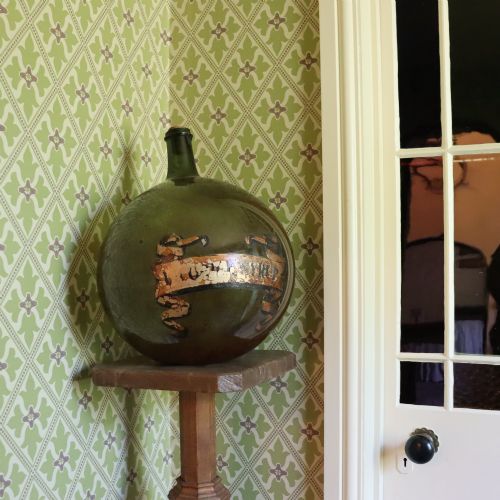
- A large glass vessel used by chemists to display coloured liquids in shop windows. These decorative pieces typically feature broad bodies and distinct stoppers.
- Lollipop Stopper
- A rounded, flat-topped glass closure designed to seal large chemist bottles securely. This specific stopper shape characterises many nineteenth-century display vessels.
- Bristol Blue
- A deep cobalt glass associated with the Bristol region during the eighteenth and nineteenth centuries. Apothecaries valued this dark material for storing light-sensitive compounds.
- Campaign Box
- A portable wooden cabinet fitted with brass hardware designed for travel. These chests contain organised sets of small medicine bottles for field use.
- Gelatine Jar
- A specialised apothecary container intended for holding pharmaceutical preparations. These jars usually include matching glass covers.
Victorian Pharmacy Bottles: Frequently Asked Questions
How were pharmacy bottles used?
Apothecaries and chemists utilised these glass vessels to store dry drugs, liquid medicines, and chemical compounds safely on shop shelves. Large carboys filled with coloured water also served as prominent window advertisements for the trade.
Smaller bottles were kept within fitted wooden chests for travel or dispensed directly to patients. Each container protected its contents from light and moisture using ground glass stoppers.
How do I care for antique glass bottles?
Clean glass surfaces gently using warm water and a soft cloth to avoid damaging fragile paper labels or painted details. Avoid harsh chemical cleaners that might strip historical finishes or degrade the aged glass.
Protect bottles from direct physical impacts and extreme temperature shifts, particularly when dealing with hand-blown pieces. Wooden boxes and chests benefit from occasional light waxing to preserve the mahogany grain.
Are original stoppers important?
Original matching stoppers significantly enhance the integrity and visual balance of nineteenth-century chemist bottles. Finding a piece with its correct, period-made glass closure is much preferred by collectors.
Many surviving vessels have lost their original stoppers over decades of handling and use. Matched sets where all stoppers remain intact command particular attention.