



Vintage Chemist Bottles
Vintage chemist bottles bring utility and rich colour to interiors, offering heavy glass vessels shaped by practical pharmacy work.

Vintage Chemist Bottles
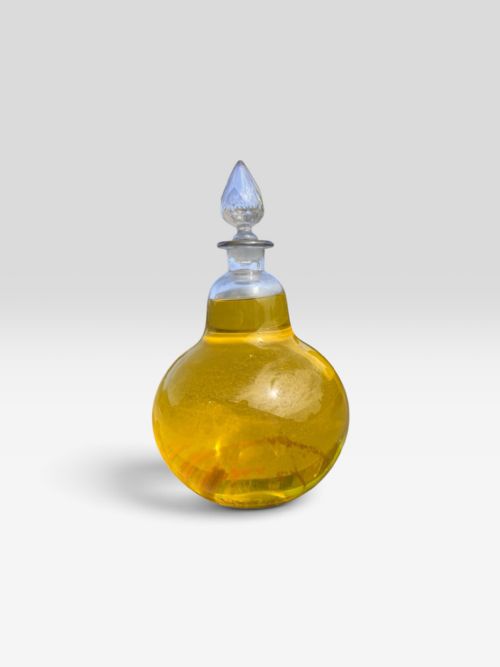
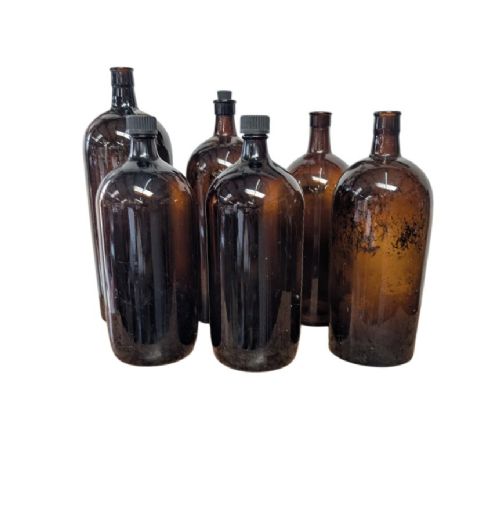
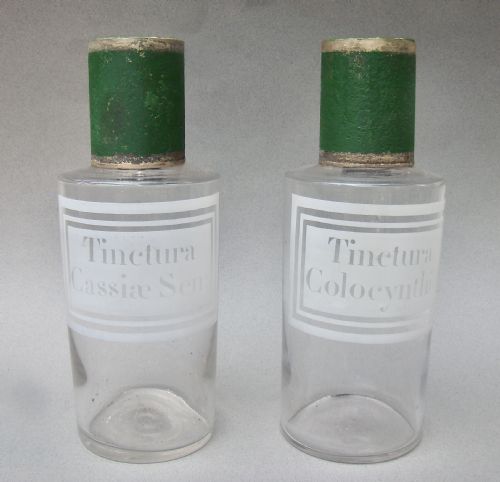
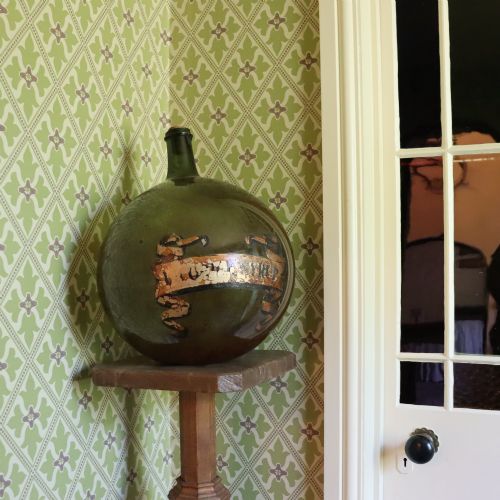
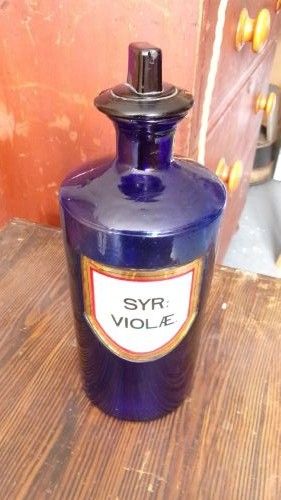
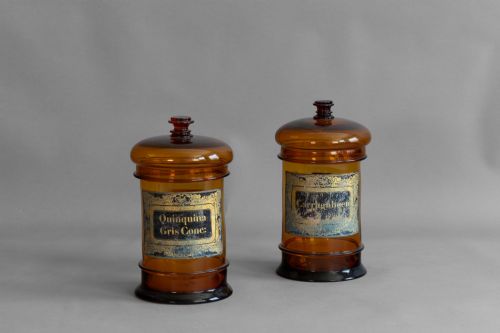
Vintage chemist bottles serve as functional glass containers originating from pharmacy and apothecary use across the nineteenth and twentieth centuries. These vessels appear in forms such as tall carboys, tincture bottles, and lidded jars designed to hold medicines and dry drugs. Collectors encounter pieces spanning Georgian, Victorian, Edwardian, and 1930 periods, reflecting changing medical storage needs.
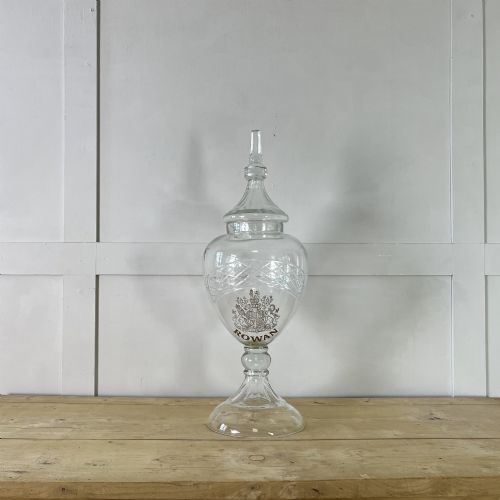
The selection on this page focuses on glassware ranging from small pharmacy bottles to large display carboys and sets of matching jars. Pieces frequently incorporate labels, stoppers, and fitted travelling cases made from mahogany or oak. French and English origins dominate the available items, displaying industrial utility alongside decorative display qualities.
Materials and construction methods
Glass production dominates these items, utilising clear, amber, cobalt blue, Bristol blue, and green glass formed through hand-blowing and cutting techniques. Manufacturers applied gold leaf, paint, and paper labels to identify contents, whilst ceramic faience appears on specific inscribed vessels. Cork stoppers and metal components complete the functional assembly of the containers.
Carrying cases and specific tools combine glass vessels with timber construction using mahogany and oak. Etched glass techniques adorn specific French jars, creating permanent surface decoration rather than relying on applied labels. These traditional methods ensure durability and distinct visual character across every surviving specimen.
Some Victorian chemist bottles still contain traces of mystery potions behind their stubborn glass stoppers.
Distinctions in quality and finish
Quality rests upon the depth of the glass colour, the integrity of original stoppers, and the clarity of hand-blown forms. Bristol blue and deep amber examples show superior pigment saturation that alters the light passing through the vessel. Intact paper labels or crisp gold leaf lettering elevate the historical value of individual items.
The presence of matching sets and original fitted wooden cases marks out higher tiers of craftsmanship. Etched detailing and heavy cut glass formations require greater skill than plain blown vessels, distinguishing utilitarian containers from display pieces intended for prominent apothecary shelves.
The Vintage Chemist Bottles Glossary
- Carboy
- A large globular glass bottle usually enclosed in a protective basket or standing independently on the floor. These heavy vessels held bulk liquids in dispensaries and chemists' shops.
- Tincture bottle
- A small glass container specifically designed to hold alcoholic medicinal extracts. They usually feature ground glass stoppers to prevent evaporation.
- Faience
- Tin-glazed earthenware used for ceramic apothecary jars. This technique provides an opaque white surface suitable for painted inscriptions denoting medical contents.
- Lollipop stopper
- A flat, circular glass stopper resembling a confectionery shape. They provide an airtight seal for large pharmacy and chemist jars.
Vintage Chemist Bottles: Frequently Asked Questions
What did chemist bottles store?
Chemists utilised these vessels to hold liquid medicines, dry drugs, tinctures, and chemical compounds safely. The glass protected contents from light and moisture degradation.
Larger carboys displayed in shop windows advertised the profession of the apothecary to the street. Smaller jars sat on interior shelving within easy reach of the dispenser.
How do I clean old glass bottles?
Warm water and a soft brush remove interior dust without damaging delicate old glass surfaces. Avoid harsh abrasives that scratch the patina of hand-blown vessels.
Keep paper labels and gold leaf dry during cleaning to prevent detachment. Original stoppers should be washed separately and stored carefully.
Are stoppers usually original?
Many surviving bottles retain their matching ground glass or cork stoppers, particularly in matched sets. Replacements do occur due to centuries of daily pharmacy use.
Examining the wear around the neck and stopper seating helps determine authenticity. Perfect colour and glass consistency between bottle and stopper suggest a matched pair.
How do I date these bottles?
Dating relies on manufacturing techniques, pontil marks, label styles, and the specific blue or amber glass hues of the period. Georgian and Victorian pieces exhibit heavier hand-blown irregularities than later 1930s examples.
Fitted wooden cases often include maker plaques or construction details that narrow down the timeline. Comparing form against known apothecary styles confirms the era of production.